• Get involved.
    We want your input!
    Apply for Membership and join the conversations about everything related to broadcasting.

    After we receive your registration, a moderator will review it. After your registration is approved, you will be permitted to post.
    If you use a disposable or false email address, your registration will be rejected.

    After your membership is approved, please take a minute to tell us a little bit about yourself.
    https://www.radiodiscussions.com/forums/introduce-yourself.1088/

    Thanks in advance and have fun!
    RadioDiscussions Administrators

Burk Arc Touch

I have a Burk Arc Touch remote control and am having all sorts of issues. I was wondering if anyone else was having these problems:

1) Locks up and has to be reset at least a couple of times a day

2) Will intermitently not perform scripted switches. It usually doesn't throw out an error, it just doesn't make the switch.

3) Although I have changed the port number, it is constantly being hammered from the Internet.

I have spoken to Burk three or four times and (even though they are very nice and usually helpful) they have not been able to provide a lot of clarity other than try this and try that.
 
I have a Burk Arc Touch remote control and am having all sorts of issues. I was wondering if anyone else was having these problems:

1) Locks up and has to be reset at least a couple of times a day

2) Will intermitently not perform scripted switches. It usually doesn't throw out an error, it just doesn't make the switch.

3) Although I have changed the port number, it is constantly being hammered from the Internet.

I have spoken to Burk three or four times and (even though they are very nice and usually helpful) they have not been able to provide a lot of clarity other than try this and try that.
What did they tell you to try? When you say 'locks up' do you mean the touch display, or is the entire remote control non-functional? How do you resolve it being locked up?

I believe the logging feature should log meter readings and status, but actions/control too. If you turn on the logging, you should easily be able to tell if a switch command is being sent. That would eliminate the remote control from the equation.

What does being "hammered from the Internet" mean? It's an IP address, probably natted to an IP through your ISP that the other end connects to. Unless the Internet connection drops for long periods of time, it's a constant connection.

Sure sounds to me like a problem with your ISP's network security (as in modem/router firewall) at one end or both, or some sort of issue with the way the local IP is NATed to your ISP that isn't stable. Make sure all the ports necessary are opened in your router/cable modem.
 
I had issues with the burk touch doing pattern changes. I was using an older IP-8 relay panel and the IP-8 interface from Burk for the Touch. They came out with a new firmware that fixed that issue. Also make sure you unit is running the latest firmware.

Mine don't lock up. Make sure you have a ground wire from the chassis to ground. I use several that are at 50KW sites with 2 stations diplexed at 2 of the sites. High power FM sites too with no problems.

Is it running on a UPS? all of the sites I work with have them on a UPS. The two units I can hit from the internet are behind a firewall and router using port forwarding to get to them.
 
When you say 'locks up' do you mean the touch display, or is the entire remote control non-functional? How do you resolve it being locked up?

I cannot access it via the Internet. I remotely reboot it via dial-up and then I can access it.

What does being "hammered from the Internet" mean? It's an IP address, probably natted to an IP through your ISP that the other end connects to. Unless the Internet connection drops for long periods of time, it's a constant connection.

All sorts of different IPs keep trying to get in. Luckily my password is strong. It's a static IP that is NATted to my LAN IPs.

I use the Internet to deliver the audio using a Comrex and it does not experience drop outs, so I feel the connection is solid.

The Burk Arc Touch connects to the different modules via a LAN. Today I moved that LAN from a Cisco switch to a NetGear switch to see if that resolves the problem. Even though it is grounded, it is possible the Cisco switch is less tolerant of a high (50 kW AM) field.

We shall see.
 
When you say 'locks up' do you mean the touch display, or is the entire remote control non-functional? How do you resolve it being locked up?

I cannot access it via the Internet. I remotely reboot it via dial-up and then I can access it.

What does being "hammered from the Internet" mean? It's an IP address, probably natted to an IP through your ISP that the other end connects to. Unless the Internet connection drops for long periods of time, it's a constant connection.

All sorts of different IPs keep trying to get in. Luckily my password is strong. It's a static IP that is NATted to my LAN IPs.

I use the Internet to deliver the audio using a Comrex and it does not experience drop outs, so I feel the connection is solid.

The Burk Arc Touch connects to the different modules via a LAN. Today I moved that LAN from a Cisco switch to a NetGear switch to see if that resolves the problem. Even though it is grounded, it is possible the Cisco switch is less tolerant of a high (50 kW AM) field.

We shall see.
Needs to be behind a firewall no exceptions. Use a VPN Tunnel between sites that's inside the firewalls.
(That's beyond my pay grade but Corporate takes care of that.)
So you've "... set the data port to (example 4090) from the default of 2000 for all Burk units..." Seems port 2000 is used by Cisco and other switches and will cause issues with the Burks.
Yes to latest firmware on the Arc+ and the IP-8 etc..
 
OK, I moved the unit to a NetGear switch and have had only 2 errors in the last 24 hrs. So, ieither there was too much traffic going through the Cisco (doubt it as it's a gig switch) or Burk just does not play well with Cisco. Still having trouble with people trying to get into the system. Any suggestiond for a VPN I can use on my lap top and smart phone?
 
I fixed a similar problem by setting my router so that the it always assigns the remote control the same local IP address. After doing the settings, you must restart the router and remote control.

I also use a static local IP for the EAS unit. Any device that you want to find and control needs a static local IP.

I did not set a static IP in the devices. Instead I set my router to always assign them the same local IP. I don't directly control these things through the internet. I have a computer on the local network that I access through the internet. I must get into it first before I can control these devices. That computer is only turned on when I'm away from the site.

A VPN does not save one from a virus. It does keep the bad guys from obtaining your real IP. It may also prevent a virus from spreading to other computers.
 
Last edited by a moderator:
Barracuda firewalls have VPN. Have no idea what the cost is.
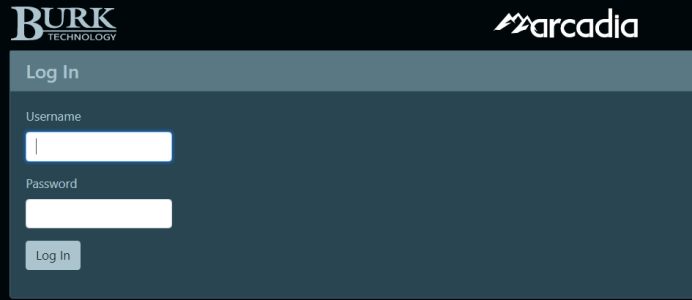
Burk's Arcadia, their remote access, is a work in progress. Might want to wait a while.
1661542955290.png
 
This is an aside opinion; but unless I had a private or company IP WAN, I'd not put my station remote control on the public Internet.
A cell or dial-up POTS line for remote controlling some radio transmitter is just fine, and a lot more secure.
 
There are some bad guy hackers out there. Their main target is a radio or TV station's EAS that has to be connected to the internet.
Keep in mind they have to know the IP address the EAS is using to get in first.

I know of a station that had it's EAS taken over with a false message. Their EAS was using the same IP as their stream. Their IP was publicly posted on the internet. They were using the default password in the EAS. The FCC has asked stations to change the default password in the EAS.

Ninety percent of the time when a broadcast station is sabotaged, it's someone you know. A disgruntled former or current volunteer or employee. Someone you trusted with codes, user names, and passwords.
 
Last edited by a moderator:
There are some bad guy hackers out there. Their main target is a radio or TV station's EAS that has to be connected to the internet.
Keep in mind they have to know the IP address the EAS is using to get in first.
Unfortunately, too many station 'engineers' just leave the default 192.168 address in place, and stick it on line. A pre-teen could determine the IP address with a simple command line query.
I know of a station that had it's EAS taken over with a false message. Their EAS was using the same IP as their stream. Their IP was publicly posted on the internet. They were using the default password in the EAS. The FCC has asked stations to change the default password in the EAS.
And some can't be bothered. Just keep it on the air and don't spend any money. Good enough!
 
They were using the default password in the EAS. The FCC has asked stations to change the default password in the EAS.
This is a good lesson for everyone, business and personal. A few years back when "smart homes" were becoming a thing and consumers could first connect everything from thermostats to refrigerators and microwaves to lighting controls, burglar alarms, baby monitors, etc. to the internet, one of the magazines with a computer guru on their staff gave him a bunch of devices to connect up, test and run through their paces. Before doing so, he first set up his network so he could monitor all the traffic, as he was interested to see how often things like thermostats and refrigerators tried to connect and push data and information, and what exactly they might be sending out. What surprised him the most was the amount of traffic from external sources trying to connect in to those smart devices as soon as he powered them on and connected them. On some he changed the IP addresses and passwords. Others he left with the default settings as an experiment. There were also cases a few years ago where bad actors were connecting into people's baby monitors and talking to their kids. In one case, the hacker told the kid he was Santa, and the only way he'd get presents that year is if he'd trash his room. The did did as 'Santa" demanded.
Ninety percent of the time when a broadcast station is sabotaged, it's someone you know. A disgruntled former or current volunteer or employee. Someone you trusted with codes, user names, and passwords.
Again, this is applicable to many businesses and people. In the majority of "identity theft" cases, or when someone has their accounts hacked or taken over, it's by someone close to them or someone they once trusted.
 
Status
This thread has been closed due to inactivity. You can create a new thread to discuss this topic.


Back
Top Bottom