• Get involved.
    We want your input!
    Apply for Membership and join the conversations about everything related to broadcasting.

    After we receive your registration, a moderator will review it. After your registration is approved, you will be permitted to post.
    If you use a disposable or false email address, your registration will be rejected.

    After your membership is approved, please take a minute to tell us a little bit about yourself.
    https://www.radiodiscussions.com/forums/introduce-yourself.1088/

    Thanks in advance and have fun!
    RadioDiscussions Administrators

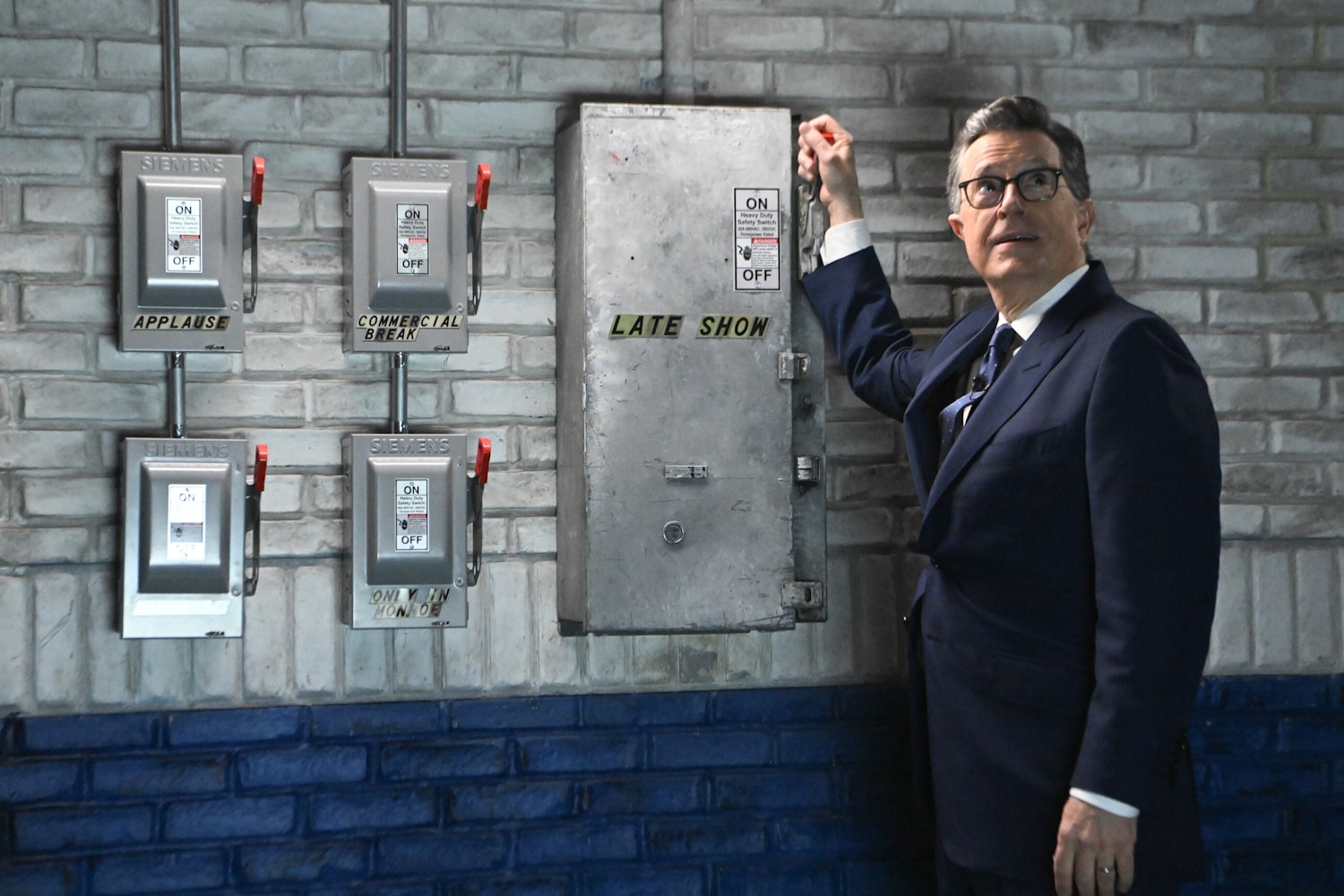
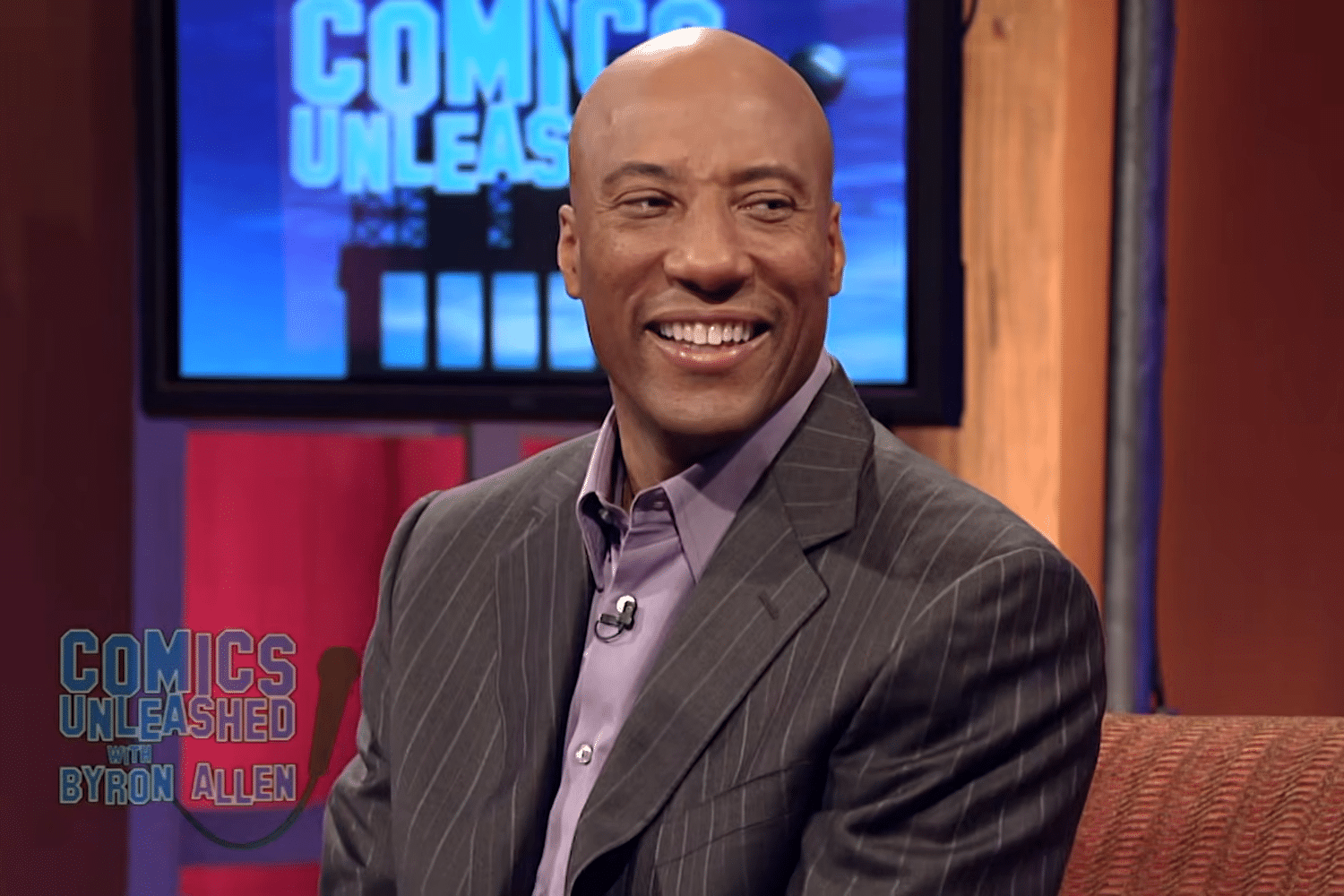
Byron Allen gets the Colbert timeslot

Wow, only 6M for the finale? That pales in comparison to what Letterman pulled and is a small fraction of what Leno and Carson pulled for their final shows.

9.1 million when counting DVR playback within 7 days.


Add 5.6 million who have watched it in the past 7 days on YouTube:

IMG_8241.jpeg

And you’re at 14.7 million, plus whatever viewing has happened on Paramount Plus…and that puts
Colbert at least one million viewers ahead of Dave’s 13.76 million viewers 11 years ago.

So let’s cut the crap.
 
Last edited:
The context is the audiences for the finales of those hosts. That is a basis to compare what Colbert got, which was much lower.
Carson was 34 years ago. There is no analogy to be had with which to compare audiences for broadcast TV in that third of a century.

Leno was 12 years ago. He got 14.6 million—which is 100,000 fewer than Colbert without counting whatever the number is for Paramount Plus viewing (see my post above).


So—-the truth is Colbert got more than Dave, and more than Jay.

Call the doctor—-your hardon for Colbert has lasted way more than four hours….and, as with Susan Rice, every one of your posts has a major disconnect from the truth.
 
CBS says they'll make $15 million off Comics unleashed, compared to losing $40 million on Colbert.
Maybe. Essential pull-quote:

“But the numbers being shared by the network raise a larger question: what exactly is being counted, what’s being left out, and how much can ratings really be separated from the economics of a commercial broadcast network?

CBS has not publicly broken down how it arrived at the $40 million annual loss figure for The Late Show. The network’s statement does not say whether that calculation includes only the direct cost of producing the show against national advertising revenue, or whether it accounts for other forms of value a No. 1 late-night franchise provided CBS and its affiliates.

That distinction is not academic. Network late night has never existed in a vacuum. The shows generate national ad sales, yes, but they also sit inside a broader broadcast ecosystem that includes affiliate fees, local advertising, tune-in for the late local news, and viewing habits that can carry into the next daypart.

If Comics Unleashed continues to draw a smaller audience than The Late Show, local stations will have less audience to sell around the hour. If CBS affiliates are being compensated in some other way for the change—perhaps in the form of a reduced affiliate fee—that too would play a part in the broader economics of the decision. And if viewers switch to NBC or ABC at 11:35, those habits could matter beyond the late-night hour itself.

The central question is not whether a time-buy model can make CBS’ 11:35 hour immediately more profitable. By CBS’ own accounting, it can. The question is whether the company’s $55 million swing captures the full cost and value of exiting the traditional late-night business.

There is a real argument that the traditional model no longer works. Late-night audiences have declined across the board, production costs remain high, and the online clips that drive cultural conversation are difficult for networks to monetize at the same scale as linear advertising.

But the ratings still matter, even if they matter differently. They matter to affiliates. They matter to advertisers. And losing viewers in one time period makes it that much harder to get them back in the next.

One veteran network executive compared CBS’ logic to NBC’s short-lived 10pm Jay Leno experiment, when the network argued that cheaper programming did not need to win the hour to make financial sense—only to see weaker rating ripple into affiliate newscasts and Conan O’Brien’s newly launched Tonight Show, and eventually force a messy reversal. While allowing that the stakes are much lower in this case, “this feels like the same kind of financial logic with blinders on,” the executive said.“

Full story:

 
There's another piece to this, too.

The fragile economic model of broadcast TV these days is heavily dependent on retransmission consent money flowing from cable/sat/OTT providers through local stations to the networks.

And of course the underlying logic of retrans consent is that when there's a dispute between station ownership groups and a provider, viewers will want the network programming badly enough to put pressure on the provider to reach a new deal, even if it's at a higher cost.

The huge danger of CBS making the decisions it's making is this: the next time there's a retrans consent fight between a group that owns CBS affiliates and a provider, who's going to put pressure on the provider to settle, if there's less and less on the network that they care about seeing?

Nobody's going to go to the mat just to be able to see Comics Unleashed, or a neutered 60 Minutes, or Tony Dokoupil. Which pretty much leaves NFL in season and a handful of prime time shows as the last big mass-appeal offerings that could keep viewers fighting to retain CBS access.

There's a very real risk there. Because if the next big retrans fight finds viewers shrugging and saying "ehhh, the things I used to watch on CBS are gone, who cares?," that could create a real hit to the bottom line of both affiliate groups and the network.
 
The huge danger of CBS making the decisions it's making is this: the next time there's a retrans consent fight between a group that owns CBS affiliates and a provider, who's going to put pressure on the provider to settle, if there's less and less on the network that they care about seeing?

Combine that with the ongoing cheapening of local news brought on by the Nexstar merger, and it becomes even worse.

I can't imagine any viewers care that CBS is making more money with Comics Unleased than they were with Colbert. I can't imagine any affiliates care. But what everyone sees is a cheapening of the product. They're paying for 12 ounces of coffee and instead getting 10. That realization isn't good for business. We see it in radio. People don't like the fact that radio isn't what it was. But they don't pay for radio. They pay for cable.

As far as the NFL is concerned, they're covering their bases by making their games available in other ways.
 
There's another piece to this, too.

The fragile economic model of broadcast TV these days is heavily dependent on retransmission consent money flowing from cable/sat/OTT providers through local stations to the networks.

And of course the underlying logic of retrans consent is that when there's a dispute between station ownership groups and a provider, viewers will want the network programming badly enough to put pressure on the provider to reach a new deal, even if it's at a higher cost.

The huge danger of CBS making the decisions it's making is this: the next time there's a retrans consent fight between a group that owns CBS affiliates and a provider, who's going to put pressure on the provider to settle, if there's less and less on the network that they care about seeing?

Nobody's going to go to the mat just to be able to see Comics Unleashed, or a neutered 60 Minutes, or Tony Dokoupil. Which pretty much leaves NFL in season and a handful of prime time shows as the last big mass-appeal offerings that could keep viewers fighting to retain CBS access.

There's a very real risk there. Because if the next big retrans fight finds viewers shrugging and saying "ehhh, the things I used to watch on CBS are gone, who cares?," that could create a real hit to the bottom line of both affiliate groups and the network.

With CBS News now a highly unreliable source, 60 Minutes apparently about to forsake what made it great for 58 years, Colbert gone, we watch exactly ONE show on CBS—-Elisabeth. Its producers, Robert and Michelle King are keen satirists and as far from MAGA as possible, so there’s a temptation to hang in and see how they thread the needle/bite the hand that feeds, but, as with every show since TV began, it’s also really easy to walk away during summer re-runs and just not come back for the new season.

If we do that, then there is literally NOTHING we’d watch on CBS. No offense to the local O&O, but they’re up against the mighty KCRA for local news viewing.
 
There is a real argument that the traditional model no longer works. Late-night audiences have declined across the board, production costs remain high, and the online clips that drive cultural conversation are difficult for networks to monetize at the same scale as linear advertising.

One of my favorite late night shows of all time was The Late Late Show with Craig Ferguson. He deconstructed the "traditional" show, lampooned CBS (even had a character called "Beth the CBS Executive" on the show) and routinely made fun of the show's budget. He really built up some steam in the later years of his run, with a robot skeleton sidekick, puppets, a pantomime horse (I mean, he got serious author Salman Rushdie and notorious curmudgeon Russel Crowe to to the "Secretariat dance") and even had a long-form interview with Bishop Desmond Tutu. It was absurd....and awesome.

 
One of my favorite late night shows of all time was The Late Late Show with Craig Ferguson. He deconstructed the "traditional" show, lampooned CBS (even had a character called "Beth the CBS Executive" on the show) and routinely made fun of the show's budget. He really built up some steam in the later years of his run, with a robot skeleton sidekick, puppets, a pantomime horse (I mean, he got serious author Salman Rushdie and notorious curmudgeon Russel Crowe to to the "Secretariat dance") and even had a long-form interview with Bishop Desmond Tutu. It was absurd....and awesome.


Craig was the best——and so was Geoff Peterson, the gay dead robot (and for that matter, Sid the cussing bunny):

 
One of my favorite late night shows of all time was The Late Late Show with Craig Ferguson.

You probably know that this show was part of Letterman's company. The same was true for James Corden. In fact the whole thing began with Tom Snyder. Then Craig Kilborn. Then Ferguson. Letterman owned all of it. The series ended when Corden retired. At that point, CBS decided to drop the Late, Late Show branding. That freed them from the obligation to Letterman for that time period. In the same way that canceling The Late Show with Stephen Colbert freed them from the previous Letterman obligations.
 
You probably know that this show was part of Letterman's company. The same was true for James Corden. In fact the whole thing began with Tom Snyder. Then Craig Kilborn. Then Ferguson. Letterman owned all of it. The series ended when Corden retired. At that point, CBS decided to drop the Late, Late Show branding. That freed them from the obligation to Letterman for that time period. In the same way that canceling The Late Show with Stephen Colbert freed them from the previous Letterman obligations.
WWP gave up control when Corden took over. That’s why he had a bigger budget. Letterman might have owned the show but stopped running it.
 
The successor in the timeslot, After Midnight, was executive produced by Stephen Colbert. It only lasted a year.
Did CBS not want to have to pay Letterman for either show. Use ratings as the excuse but if they had an out to not license it from Letterman.
 
The successor in the timeslot, After Midnight, was executive produced by Stephen Colbert. It only lasted a year.
At the time (2025), it was reported that it was the choice of the host, Taylor Tomlinson, to stop doing the show. A more recent report indicates there was, at the very least, some miscommunication between her and the network, though it still says that she stepped down from the show on her own accord.

 
At the time (2025), it was reported that it was the choice of the host, Taylor Tomlinson, to stop doing the show. A more recent report indicates there was, at the very least, some miscommunication between her and the network, though it still says that she stepped down from the show on her own accord.

She wanted to do standup full time but didn’t want the show to end. She was hoping they would find another host.


Back
Top Bottom