Follow along with the video below to see how to install our site as a web app on your home screen.
Note: This feature may not be available in some browsers.
Get involved. We want your input!
Apply for Membership and join the conversations about everything related to broadcasting.
After we receive your registration, a moderator will review it. After your registration is approved, you will be permitted to post. If you use a disposable or false email address, your registration will be rejected.
A better term is "rolloff" rather than "cutoff". There are some modern DSP-based tuners which have a brickwall-like hard cutoff of audio response, but most analog tuners have a sloping response that will still let higher frequencies through, often up to or even beyond 10 kHz, even if the response is only truly flat up to 3 or 4 kHz.
AM stations had been attempting to compensate for this by boosting the high frequencies since the 1960s, sometimes to extreme levels, further contributing to the sideband splatter. So in addition to the 10 kHz frequency response limit, the NRSC standard also included a modified 75 µS pre-emphasis curve that was designed to be a compromise between improving the sound quality of narrowband receivers while reducing sideband splatter, which (at least in theory) would allow receiver manufacturers to open up the audio response of their AM tuners without leading to complaints of excessive interference from adjacent stations on the dial.
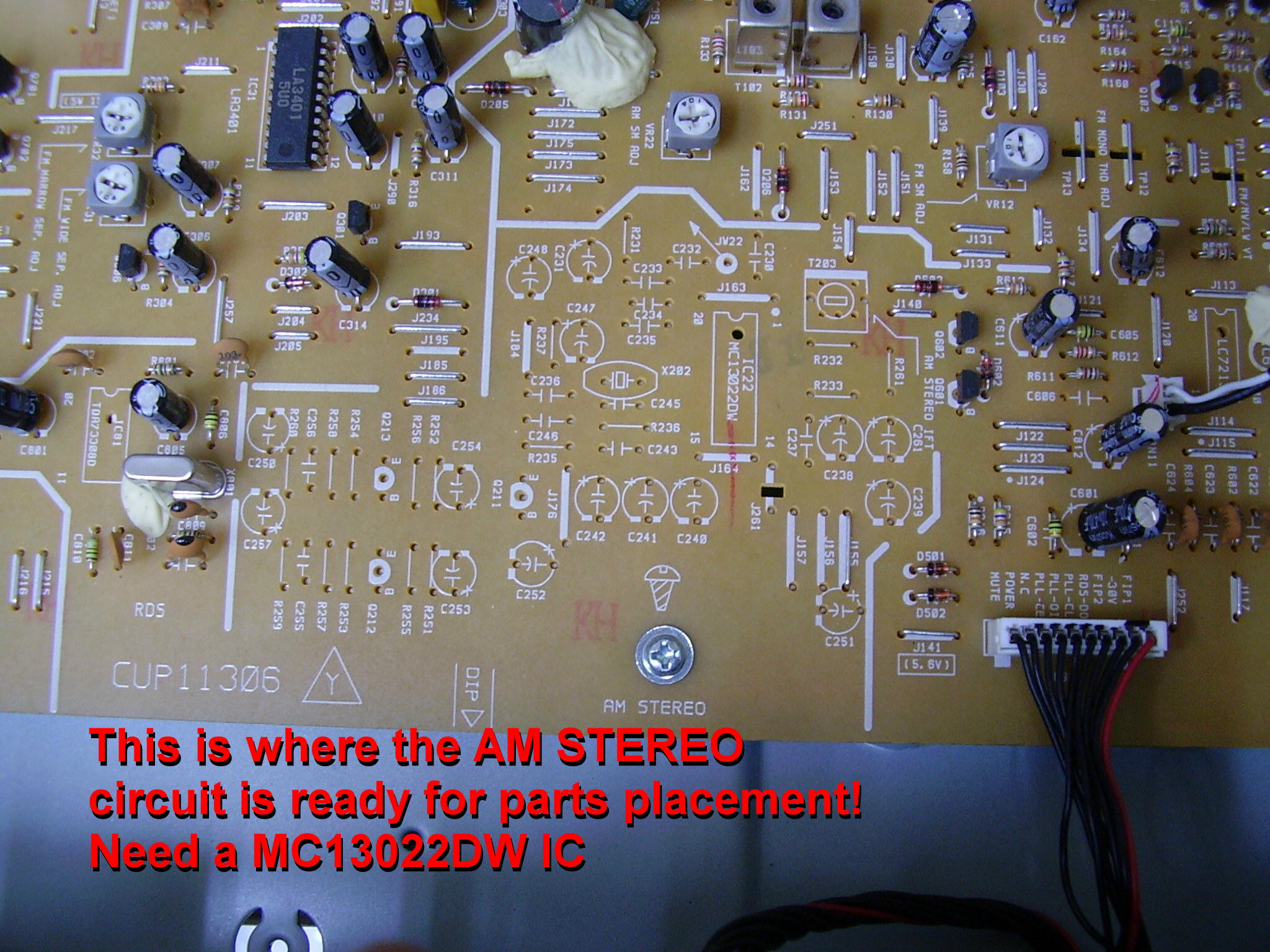
Unfortunately these changes arrived 10-15 years too late to have any meaningful impact on the design of AM receivers. In fact, even as Japan was rolling out C-Quam AM Stereo in 1992, many tuners that were designed to support it purposely left out the C-Quam decoder chip on U.S. models (you can see the blank section of the circuit board marked "AM Stereo"), because "AM stations in the U.S. are all switching to talk formats, which doesn't require stereo or hi-fi audio".
Huh? The FCC has imposed a limit of 10 kHz on the top end to avoid hetrodynes with the next adjacent channels. That means that stations might be able to be relatively flat from around 60 to 100 Hz but they can't do anything above that high end limit.
This site uses cookies to help personalise content, tailor your experience and to keep you logged in if you register.
By continuing to use this site, you are consenting to our use of cookies.