-
Get involved.
We want your input!
Apply for Membership and join the conversations about everything related to broadcasting.
After we receive your registration, a moderator will review it. After your registration is approved, you will be permitted to post.
If you use a disposable or false email address, your registration will be rejected.
After your membership is approved, please take a minute to tell us a little bit about yourself.
https://www.radiodiscussions.com/forums/introduce-yourself.1088/
Thanks in advance and have fun!
RadioDiscussions Administrators
You are using an out of date browser. It may not display this or other websites correctly.
You should upgrade or use an alternative browser.
You should upgrade or use an alternative browser.
Canada to close most 162 MHz WeatherRadio stations
- Thread starter Mediafrog+
- Start date
You would need to do research as to how many people have weather radios and actually use them. I suspect that number is tiny. Such receivers had some publicity in the 1970s and 80s, but in recent decades? Pretty much invisible.This is different than shortwave. Canada does not need Radio New Zealand International in an emergency, but they sure do need the weather radio service. There needs to be attention brought to MPs across the country.

I believe DOGE gutted NOAA last year. What I want to know is since it takes an act of Congress to change the budgets of these gutted federal agencies and the money is still going out and we're still taxed accordingly, where is the money going?Great, once cell phone towers go down during a crippling tornadic event, a severe thunderstorm, a blizzard, an earthquake, etc. no one will have access to Weather Radio. Way to go, Canada.
Can't wait to see death tolls rise during Canada's major weather disasters to come.
NOAA in the USA better not be next. It's a lifeline for many Americans.
That's billions.
I put nothing past this current administration. If they decide folks don't need weather radio. Boom! It's gone. And heaven help the people in Kansas and Oklahoma. And it will be weeks of legal fighting to get to a judge who rules in favor of weather radio (who wouldn't?) Meanwhile, people are at risk.
I can't speak for Canada. They have their own reasons. Here, people still depend on weather radio in terrestrially challenged areas. But nothing seems out of bounds with the current administration. So it's always safer to assume and prepare for the worst.

And those "billions" are far less than the increases this year in Social Security benefits.I believe DOGE gutted NOAA last year. What I want to know is since it takes an act of Congress to change the budgets of these gutted federal agencies and the money is still going out and we're still taxed accordingly, where is the money going?
That's billions.
In any case, a government has two choices: increase taxes to cover higher costs or cut obsolete and unneeded expenditures.
Do you have a NOAA radio? I'll bet if I went up and down my block and asked my neighbors, none would have them, either.
Last edited:

In the Coachella Valley? Probably not.Do you have a NOAA radio? I'll bet if I went up and down my block and asked my neighbors, none would have them, either.
But across a huge swath of the country where tornadoes can form with very little notice, often in the middle of the night when you really want to be awakened to get somewhere safe in a hurry? I think you'll find those NOAA SAME-enabled receivers are not only common but almost essential.
I don't know if that's the case north of the border in the Canadian plains, but I wouldn't be at all surprised.
There aren't a lot of weather phenomena for which there's as perfect a use case - if a huge earthquake hits where you are, it's hitting without any warning at all and so you won't get an alarm from a NOAA receiver. If you're on the coasts and subject to hurricanes or tsunamis, you probably have a day or more in which to get a warning via other means. Maybe flash flooding like the disaster in central Texas last year is another example - but tornadoes, in particular, are exactly what NOAA weather radio is designed to warn about.
And Canada gets them, too.
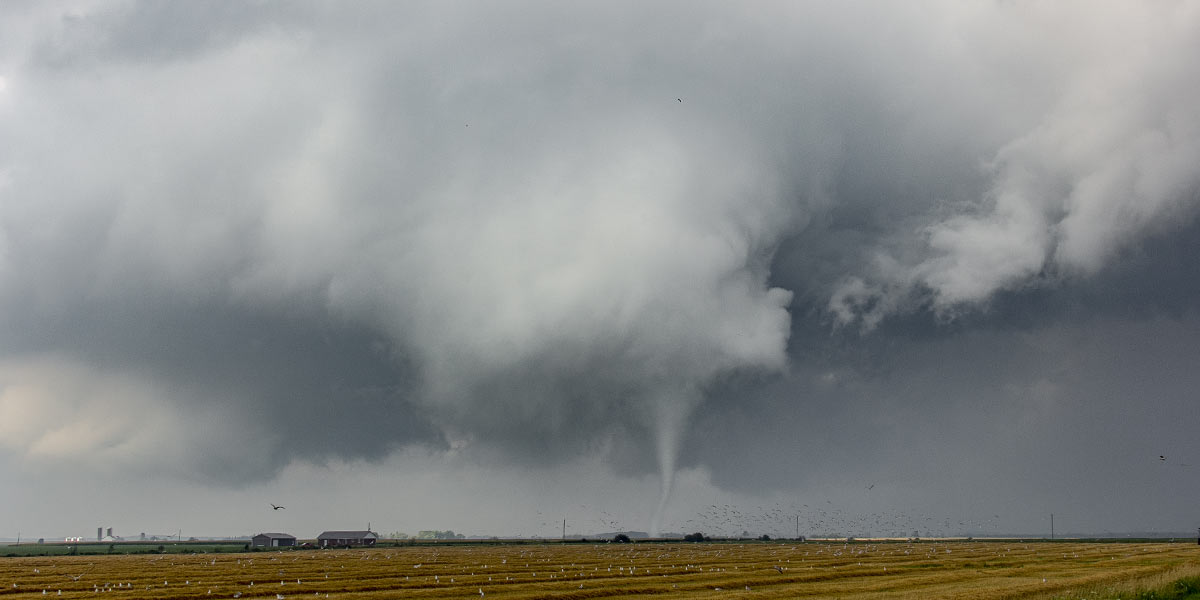
Northern Tornadoes Project
The Northern Tornadoes Project (NTP) at Western University aims to better detect tornado occurrence in Canada and improve severe weather prediction
 www.uwo.ca
The important part is this: in a severe thunderstorm, power may go out. And cell towers. AB, MB, SK, and ON all get severe thunderstorms depending on where.
Many deadly tornadoes in the past decade have occurred very late at night. The December 2021 tornado in Bowling Green KY (17 dead) struck past 1AM local time. This was the same event that killed dozens in Mayfield. At least most of these communities have tornado sirens, but not all of them...
Many deadly tornadoes in the past decade have occurred very late at night. The December 2021 tornado in Bowling Green KY (17 dead) struck past 1AM local time. This was the same event that killed dozens in Mayfield. At least most of these communities have tornado sirens, but not all of them...
Severe Thunderstorm warning in the Summer. When the radio goes off at 4:00 Am, I pay attention. Just last week the radio went off for a Severe Snow Squall warning. Didn't even know there was such a thing. Got my daughter one up near Denver for the same reason. Maybe what we need is just some more visibility.
PSA from the weather industry:The important part is this: in a severe thunderstorm, power may go out. And cell towers. AB, MB, SK, and ON all get severe thunderstorms depending on where.
Many deadly tornadoes in the past decade have occurred very late at night. The December 2021 tornado in Bowling Green KY (17 dead) struck past 1AM local time. This was the same event that killed dozens in Mayfield. At least most of these communities have tornado sirens, but not all of them...
A storm siren should not be relied on for indoor alerting. Storm sirens tell people who are outdoors to seek information and/or seek shelter. Golfers, roofers, lacrosse games. But unless your home/business is very close to a siren, like within half a mile or so, it will not be heard indoors. And it is even less likely to awaken someone from sleep at 1AM.
A weather radio, or wireless emergency alerts on your phone, can wake you up in the middle of the night if needed.
I think that the point needs to be made that schools, fire and police departments, hospitals, radio and TV stations and a lot more monitor NOAA weather radio. While not that many individuals have receivers, quite a few places do have them and use them. It is one way for the weather service to get information out to those who need it quickly regardless of Internet connectivity.
During Hurricane Wilma in south Florida we lost power, cell service, wire-line phone service and (of course) Internet for over a week. We never lost NOAA radio.
During Hurricane Wilma in south Florida we lost power, cell service, wire-line phone service and (of course) Internet for over a week. We never lost NOAA radio.
With the current chain saw/ DOGE mentality in the US, I am never surprised (but usually disappointed) in what will be eventually cut.Keep in mind Canada, not the USA, is doing this. In the USA, Weather Radio is tied to the Emergency Alert System, something thst makes it unlikely it will go away anytime soon.
And in many deep red rural areas, the only local radio station is an NPR affiliate.I cannot see the Trump administration cutting NOAA Weather Radio or the EAS. Much of tornado alley is deep red. They would go livid, and so would dozens of TV meteorologists.
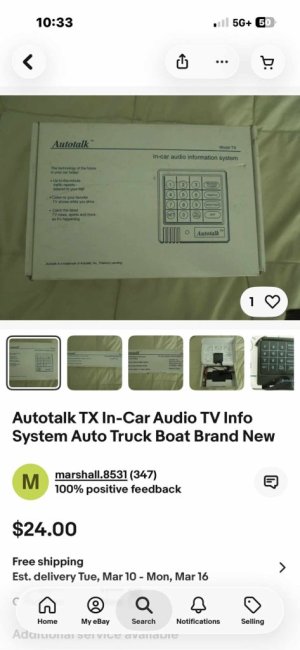
Somewhat related here.... I have always wondered why NOAA Weather-Radio is/was never offered on Car Radios...The only time I ever saw one was back in 1970's in an old J.C. Whitney catalog (Remember them??) ...It had an AM/FM/Weather Band, and VHF-TV Audio feature. It cost like $100 back then. I should have bought it.
BTW...last week while visiting Southern Florida I noticed that WEZF HD3 was still carrying NOAA Weather radio,
BTW...last week while visiting Southern Florida I noticed that WEZF HD3 was still carrying NOAA Weather radio,
It definitely has been:Somewhat related here.... I have always wondered why NOAA Weather-Radio is/was never offered on Car Radios.
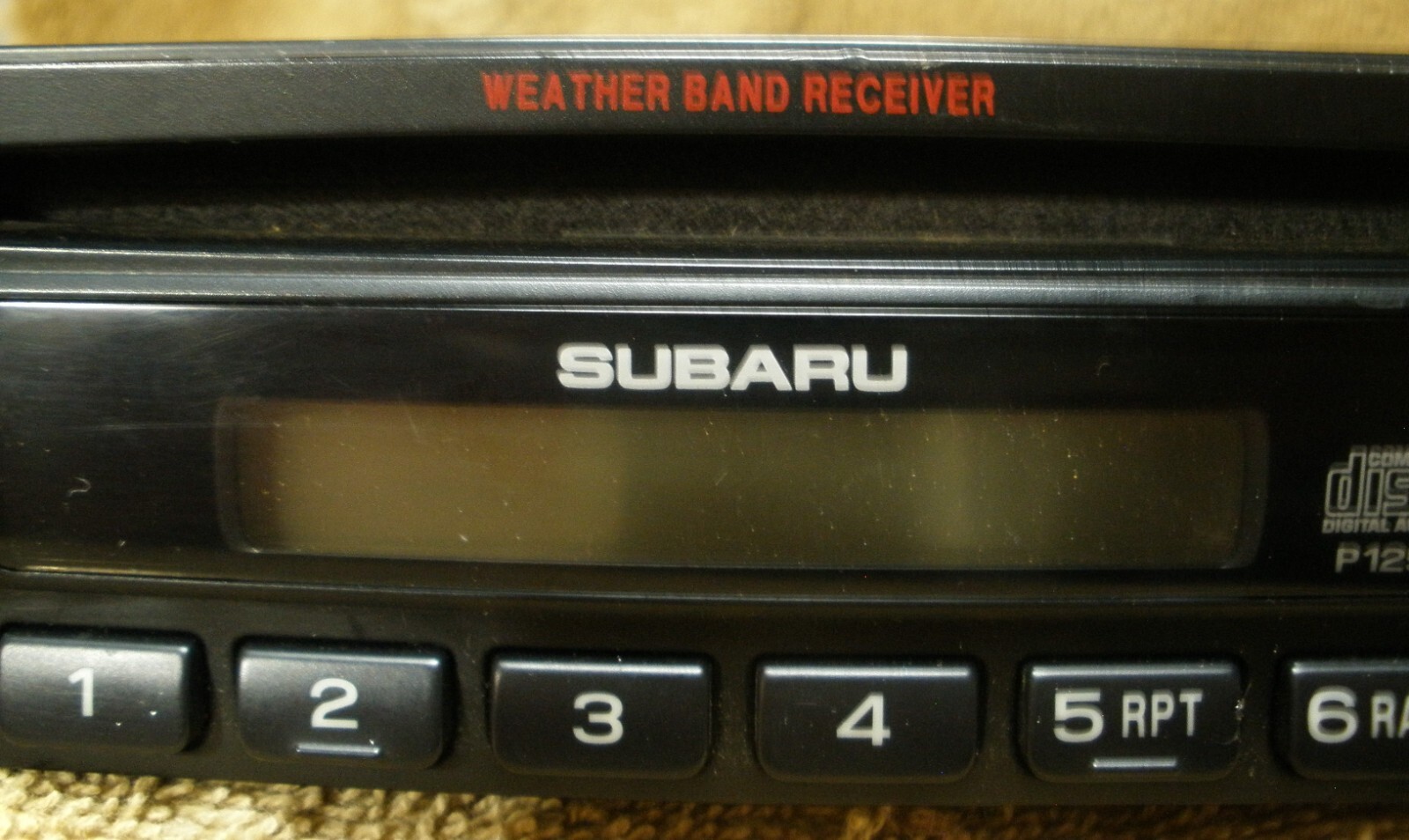

Demonstrated at 6:20 in this video:
Thanks!!! that's the first I have ever heard of it in a new car! and it has a CD player too, those are hard to find in new cars now.It definitely has been:
Demonstrated at 6:20 in this video: