
And when you consider a replacement transmission for a Honda or Toyota gas vehicle costs more than $5K, combined that there is much less maintenance with an EV over the life of the vehicle, the expensive battery argument falls on it's face.The knock on the Prius hybrid when it started to take off was "What are you gonna do in seven years when the battery dies?" At that time, battery pack replacement was estimated at $8,000.
The first Priuses (Prii?) are now 22 years old...I see at least one a week in traffic here in Sacramento, and some cursory research indicates more than a few are still running on the original battery pack. Replacements via Toyota are down to about $3,000 and remanufactured units can be less than half that.

-
Get involved.
We want your input!
Apply for Membership and join the conversations about everything related to broadcasting.
After we receive your registration, a moderator will review it. After your registration is approved, you will be permitted to post.
If you use a disposable or false email address, your registration will be rejected.
After your membership is approved, please take a minute to tell us a little bit about yourself.
https://www.radiodiscussions.com/forums/introduce-yourself.1088/
Thanks in advance and have fun!
RadioDiscussions Administrators
You are using an out of date browser. It may not display this or other websites correctly.
You should upgrade or use an alternative browser.
You should upgrade or use an alternative browser.
Car Makes & Models with No AM Band.
- Thread starter davideduardo
- Start date

Interesting. It's possible that earlier forecasts were more conservative about battery life due to an abundance of caution, and possible fear of liability.We need to address this, because it's simply not accurate.
Eight years is the federally-mandated (US) warranty period for EV batteries. In California, it's ten years.
Tesla has a policy where it will replace any battery that falls below 70% capacity during that warranty period free of charge.
The majority of 2012 Tesla Model S vehicles are still on their original batteries.
Tesla claims 88 percent battery capacity after 200,000 miles (13.3 years at the national average 15,000 miles per year driven). I'd be skeptical of manufacturer claims, but independent tests and real-world data suggests that's accurate.
In fact, Tesla owners who've put 300,000 miles on their vehicles report an average of 80% battery capacity.
There's reason to believe most EV batteries in mass-production cars will do as well.
I'd love to go electric but a few things stop me. First, distribution of chargers. Second, the preponderance of non-Tesla electric models seem to be SUVs and I want nothing to do with an SUV. Finally, I want nothing to do with Tesla. When there's an electric Audi A4, then I can reconsider the matter.
Being a big fan of the original VW bus, I'm on a waiting list for the new EV version, the VW ID Buzz:Interesting. It's possible that earlier forecasts were more conservative about battery life due to an abundance of caution, and possible fear of liability.
I'd love to go electric but a few things stop me. First, distribution of chargers. Second, the preponderance of non-Tesla electric models seem to be SUVs and I want nothing to do with an SUV. Finally, I want nothing to do with Tesla. When there's an electric Audi A4, then I can reconsider the matter.

2025 VW ID.Buzz in U.S. Spec Is Nostalgic but Full of Modern Conveniences
Volkswagen's retro bus comes to the States with a longer wheelbase, a bigger battery, a third row of seats, and more power.

When there's an electric Audi A4, then I can reconsider the matter.
Might be a while. For now, this is the closest thing to it:
"i" Is For "Electric": The 2022 BMW i4 M50
Ha!You're too old for something as modern as a Tesla anyway.
I'm squarely in the middle of the millennial generation, so I'm not that old yet!
That said, I do feel like I have more in common with Boomers and Gen X than any other group, so maybe I am old!
c
I think one study stated 20 percent of adult Americans listened to AM at least once a month. But given most news, sports, and talk radio is on AM in the US, that 20% number might consist of many listeners checking the weather or sports score once or twice a month. I wonder if AM average quarter hour is higher or lower than 20 percent adults.

All those supposed studies are just data extracted from Nielsen surveys. The share of listening to AM stations ranges from a low of under 2% of average quarter hour listening in some markets to a bit over 10% in some others. The average, weighted for market size, is about 6% of all radio listening going to AM.I think one study stated 20 percent of adult Americans listened to AM at least once a month. But given most news, sports, and talk radio is on AM in the US, that 20% number might consist of many listeners checking the weather or sports score once or twice a month. I wonder if AM average quarter hour is higher or lower than 20 percent adults.
While a greater percentage of people listen at some time during a month (which is where those high figures come from), on average only about one radio listener out of 20 total radio listeners is listening to an AM station.
(And real data is likely even lower, as many AMs in an FM simulcast with a full FM list the AM as the "lead station". And those AMs with translators always show the originating AM station as the credited one in ratings.)

I’m the same but also would rather not have to get a new breaker and wiring installed for a fast home charger. Plus I like my 2 door hatchback and as far as I’ve seen, the only 2 door electric cars are sportscars like the Tesla roadster or the 2025 Porsche 718, both of which aren’t affordable for me.Interesting. It's possible that earlier forecasts were more conservative about battery life due to an abundance of caution, and possible fear of liability.
I'd love to go electric but a few things stop me. First, distribution of chargers. Second, the preponderance of non-Tesla electric models seem to be SUVs and I want nothing to do with an SUV. Finally, I want nothing to do with Tesla. When there's an electric Audi A4, then I can reconsider the matter.
House hearings will take place Tuesday on the AM In Every Vehicle bill:

 www.insideradio.com
Tomorrow’s House Hearing On AM Radio Will Set The Stage For Lobbying Blitz Next Week.
June is shaping up as a potentially pivotal month for the future of AM radio in vehicles. On Tuesday a Congressional subcommittee will host an educational hearing on the issue,
That, and because it's such an inane, not-impactful topic.Given the relatively broad bipartisan support this bill seems to have, I would be somewhat surprised if it doesn't pass.
c
This morning on Fox News Radio at the top of the hour there was a story about AM radio in cars. It was mentioned that car makers saved money by not having to solve interference problems.
Uh, yes. That's what it's all about. Plus the limited interest in AM radio anymore.This morning on Fox News Radio at the top of the hour there was a story about AM radio in cars. It was mentioned that car makers saved money by not having to solve interference problems.

Of course. They won’t do a damn thing about actual issues, but saving a dinosaur on its way to the boneyard…well, that the fellow dinosaurs can support.That, and because it's such an inane, not-impactful topic.
Quite true!That, and because it's such an inane, not-impactful topic.
c
How about mandatory 8-track players?
Be honest, how many remember these devices that allowed you to play the newfangled cassette tapes in your 8-Track player?
How many still have them??

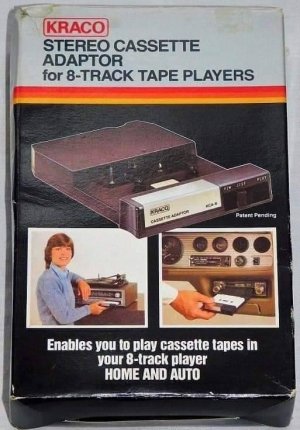
Be honest, how many remember these devices that allowed you to play the newfangled cassette tapes in your 8-Track player?
How many still have them??
Keep in mind that 8 tracks and cassettes were invented at about the same time. However the 8 track tape was almost immediately installed in cars. But cassettes were mainly for home recording. Their use in cars came later. Which is why people needed these adapters to play their home cassettes in their cars.
Or, how about an FM tuner that plugged into an 8-track tape player?
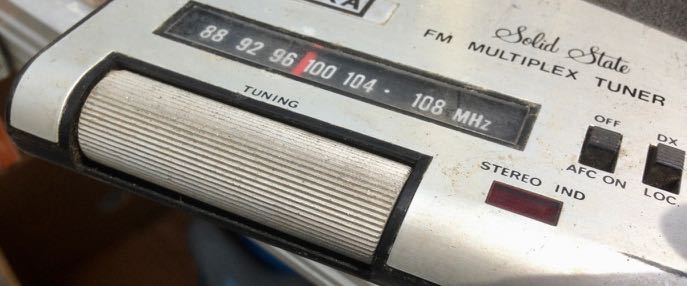
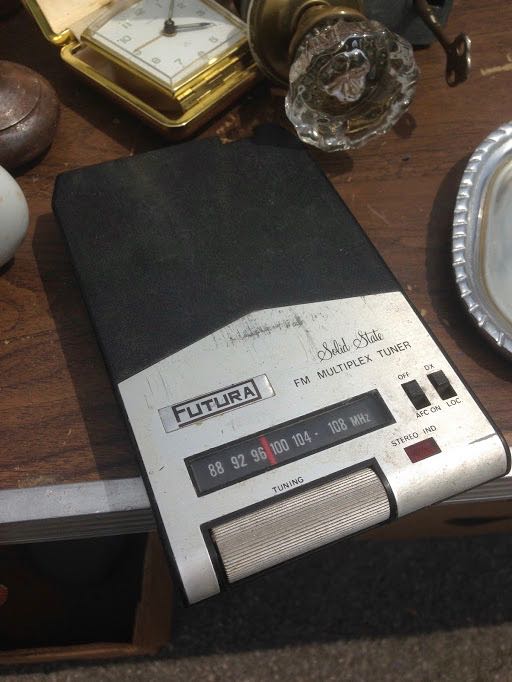
Mystery solved: Remember the 8 Track FM radio converter?
Sunday morning, I attended the Sainte-Foy flea market in Québec City. When I’m in QC, I love attending this particular market because of the amazing variety of things for sale. It’s a p…
swling.com
Yes I do remember. FM converters tooBe honest, how many remember these devices that allowed you to play the newfangled cassette tapes in your 8-Track player?
How many still have them??
View attachment 5072
Some interesting testimony today on Cap Hill about minority interest in AM Radio. Most of the posts here talk about AM being irrelevant for them. But there are groups for whom AM radio is their only source of information and entertainment. I think of WVOX Chicago or WOL in DC as examples. Also the numerous ethnic stations around the country. It's one thing to generalize that AM is all conservative talk, but it's worth pointing out that AM radio is more than that.
 www.insideradio.com
MMTC Deems AM Radio 'Especially Significant For Underrepresented Groups.'
The Multicultural Media, Telecom and Internet Council, in conjunction with ALLvanza, National Association of Black Owned Broadcasters, National Urban League and OCA-Asian Pacific American Advocates, have added one more letter
- Status
- This thread has been closed due to inactivity. You can create a new thread to discuss this topic.