• Get involved.
    We want your input!
    Apply for Membership and join the conversations about everything related to broadcasting.

    After we receive your registration, a moderator will review it. After your registration is approved, you will be permitted to post.
    If you use a disposable or false email address, your registration will be rejected.

    After your membership is approved, please take a minute to tell us a little bit about yourself.
    https://www.radiodiscussions.com/forums/introduce-yourself.1088/

    Thanks in advance and have fun!
    RadioDiscussions Administrators

Carr Orders Investigation into NPR and PBS Over Underwriting

The chairman of the FCC is ordering investigation into NPR and PBS over their underwriting practices.


"There's an internal inconsistency with complaining about underwriting paying for public broadcasting and simultaneously objecting to public funding," Schwartzman adds. "There's an illogic to those two positions unless you don't really want the nation's audiences served by public broadcasting at all."

And there you have what the real point of all of this is.

 
Maybe I missed it, but I didn't see any specific examples in Carr's letter.

Neither NPR nor PBS have any responsibility for the local funding announcements read by member stations. Those stations are all independently owned, and many of them are owned by state governments. Perhaps Chairman Carr should direct his comments to the state governors who oversee those stations, and not independent companies that he doesn't regulate.

We all know how he feels about federal funding. We all read it in Project 2025. But the FCC doesn't have anything to do with federal funding of anything, even it's own agency. I find it completely inappropriate for the chairman of a regulatory agency to be making political statements to companies he doesn't regulate about a matter that is none of his concern.

“This appears to be yet another Administration effort to weaponize the power of the FCC,” agency Commissioner Anna M. Gomez said in a post on the social platform X linking to the Times’ report. “The FCC has no business intimidating and silencing broadcast media.”


The most recent FCC fine for commercials on a non-commercial station was for WBAI, which is not an NPR station, and doesn't accept any federal money.

 
Last edited:
Maybe I missed it, but I didn't see any specific examples in Carr's letter.

Neither NPR nor PBS have any responsibility for the local funding announcements read by member stations. Those stations are all independently owned, and many of them are owned by state governments. Perhaps Chairman Carr should direct his comments to the state governors who oversee those stations, and not independent companies that he doesn't regulate.
Why play strictly by the rules when you know there are judges and justices who'll support your questionable logic and tactics regardless?
 
Regarding Carr's involvement in Project 2025, it has been pointed out that it was inappropriate for a federal employee, paid by taxpayer dollars, to write and represent a purely political document for a political organization. Under normal ethics rules, that would not have been allowed. It's clear that he's still working for Project 2025, and not the FCC or the American people.
 
Regarding Carr's involvement in Project 2025, it has been pointed out that it was inappropriate for a federal employee, paid by taxpayer dollars, to write and represent a purely political document for a political organization. Under normal ethics rules, that would not have been allowed. It's clear that he's still working for Project 2025, and not the FCC or the American people.
Get used to it. SOP going forward I would think.

EDIT:
Sorry, Scott. I typed this out while you were sending the warning.
 
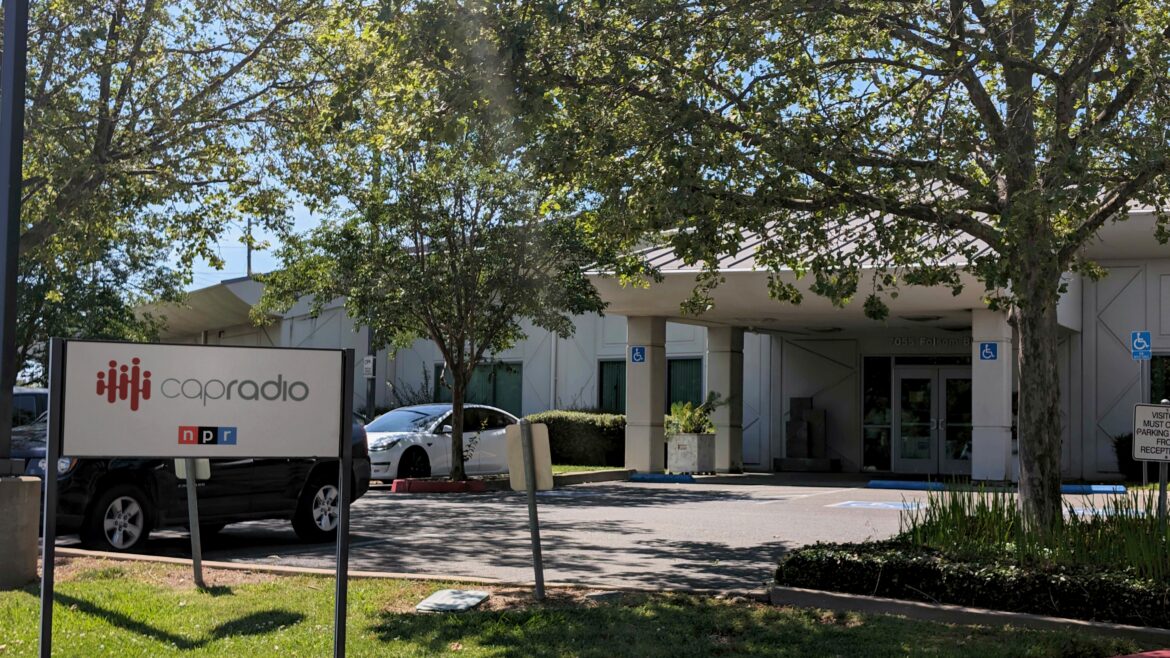
Running commercials? OK but this is really underwriters to local affiliates though. We have seen this road before when Ted Cruz falsely accused NPR for Money Laundering even though there was no evidence in that case. It was a disgruntled NPR staff member who had an ax to grind with Katherine Maher in that case. If we are taking about the former General Manager of CapRadio in Sacramento and his mishandling of donor money in the Sacramento area and CPB money then you would have a case to wonder how California State University board and CPB could have prevented Jun Reina from making questionable purchases with CapRadio money then you would have a better explanation here.


Attachments

  • Underwriting_1.2011_1.pdf
    128.1 KB · Views: 0
Here's the issue I have with what Carr is suggesting: loss of revenue. Commercial radio is having a really tough time, losing dollars to digital sources and the loss of mom and pops thanks to national chains.

Public radio has made it no secret that listener donations are down and the underwriting is really taking a hit with many traditional underwriters dropping.

If he represents us, and although radio is a small part of the FCC, he should be looking at where the industry is, commercial and non-commercial. He should be looking at ways to bolster radio in general, not hurt the industry by regulating the hell out of it. Sure, there are some bad ones out there but most are dedicated and trying to find creative ways to survive without sacrificing the service we provide. And that is getting tougher.
 
If he represents us, and although radio is a small part of the FCC, he should be looking at where the industry is, commercial and non-commercial.

He doesn't represent "us." He's not Ajit Pai. He's not a broadcaster. He likely doesn't own a radio. He's an ideologue. He's not pushing for a healthy industry. He's pushing an ideology. He obviously doesn't understand how CPB funding works. He thinks NPR owns and controls public radio. It's the other way around. The stations control NPR. They run the board and they hire the CEO. He obviously doesn't know that. These next four years will not be easy for anyone in media. Because as you say, it's a very difficult business environment. But it's even worse when the government is fighting you.
 
If I'm at the NAB, I would put out a press release about this quote:

For my own part, I do not see a reason why Congress should continue sending taxpayer dollars to NPR and PBS given the changes in the media marketplace since the passage of the Public Broadcasting Act of 1967.”

For the first time, someone at the FCC is admitting there have been changes in the media marketplace. For 25 years and numerous court battles, the FCC has defended it's antiquated and obsolete ownership rules by saying that the media marketplace hasn't changed. Now, all of a sudden, they just realized that there have been changes in the media marketplace. Broadcasters have been unfairly penalized by obsolete regulations while new media has been allowed to flourish completely unregulated.

Thank you Brendan Carr for finally admitting there have been changes in the media marketplace in the last 50 years. Maybe now you'll accept our view that ownership rules are obsolete, and should be revised, as required by congress.

As for needing a reason why congress should continue to send tax dollars, I would ask the commissioner to read the Public Broadcasting Act. If it's obsolete, then congress should repeal it. But I doubt they could get the votes to do it. Otherwise, the congress should follow it's own law. And the FCC should review its ownership rules as stipulated by law.
 
If we are going in that direction that means that the FCC has to look at how WGBH-TV, KQED-TV, WETA-TV underwriting practices are handled. This is given that PBS shows are owned by the affiliate such as PBS Frontline is owned by WGBH-TV, PBS Newshour is owned by WETA-TV and KQED-TV gets mentioned as the West Coast bureau for PBS Newshour and Frontline.

Also for NPR shows that would often mean look at how WBUR-FM, WAMU-FM, KPCC, KXJZ and KPBS-FM do their underwriting.


There needs to be better examples similar to the CapRadio using Donor, Underwriter and CPB money for unauthorized purchases and questionable books here if we are to question how Public Media operates.
 
If we are going in that direction that means that the FCC has to look at how WGBH-TV, KQED-TV, WETA-TV underwriting practices are handled.

The FCC doesn't "have" to do anything. This is a targeted investigation. The chairman laid out the targets. They are NPR and PBS.

Here is a link to the actual letter:


This is his last paragraph:

To the extent that these taxpayer dollars are being used to support a for profit endeavor or an entity that is airing commercial advertisements, then that would further undermine any case for continuing to fund NPR and PBS with taxpayer dollars.

He has reached his conclusion in advance of doing the investigation. And he has conveyed that conclusion to congress.

The case for funding isn't determined by the FCC. It's determined by the Public Broadcasting Act. If congress wants to repeal it, they can. It will take 60 votes in the senate. I don't think they have 60 votes. But if they don't repeal it, that will lead to a legal battle over the law.
 
The focus of this investigation is on NPR and PBS. But what about the stations? If federal funding is cut, 70% of the money goes to local stations. What would that mean? Here's an analysis of federal funding at the local station level:


Of course some of those stations are owned by states or state universities. If that funding is also cut, the impact could be even greater.
 
Status
This thread has been closed due to inactivity. You can create a new thread to discuss this topic.


Back
Top Bottom