• Get involved.
    We want your input!
    Apply for Membership and join the conversations about everything related to broadcasting.

    After we receive your registration, a moderator will review it. After your registration is approved, you will be permitted to post.
    If you use a disposable or false email address, your registration will be rejected.

    After your membership is approved, please take a minute to tell us a little bit about yourself.
    https://www.radiodiscussions.com/forums/introduce-yourself.1088/

    Thanks in advance and have fun!
    RadioDiscussions Administrators

CPB to cease operations

PRSS will be handled by PMI, which was judged to have provided the superior proposal to do so as compared to NPR. CPB and NPR reached an agreement on this matter.

Actually that's not correct.

NPR will also continue to receive CPB funding to operate the PRSS satellite network, supporting current operations and potential service enhancements.

The PRSS is the satellite system that NPR created and will continue to operate. The funding to PMI is for a newer non-satellite distribution system.

Affiliates were concerned about a disruption in service from satellite to non-satellite. This will basically provide for an overlap.
 
Actually that's not correct.
That's what the article said. If it's wrong take it up with the author. I'm more inclined to believe IR than you on this topic.

"The conflict dates back to 2024, when independent consultants recommended CPB create a new interconnection entity independent of NPR. After months of unsuccessful negotiations over governance changes to PRSS, CPB launched a competitive RFP. Both NPR and PMI submitted bids; Deloitte, hired to evaluate the proposals, found PMI’s submission superior. CPB’s Board voted in September to begin negotiations with PMI, ultimately awarding the grant."

PMI will develop an improved distro system it seems. The only reason for this must be that PRSS has gaps. Presumably, the public stations will migrate to the PMI solution once online.
 
That's what the article said. If it's wrong take it up with the author. I'm more inclined to believe IR than you on this topic.

The quote I provided in my post came from the article. Nowhere in the article does it say that PMI will handle PRSS. They are two different things.

"NPR will also continue to receive CPB funding to operate the PRSS satellite network, supporting current operations and potential service enhancements."

The new interconnection system will not use satellite. The article is correct. Your interpretation is not.
 
John Oliver sums up Public Media well:


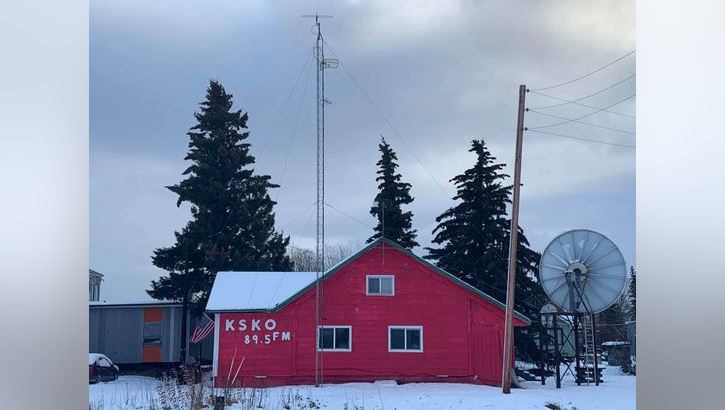
We have already had some positive outcomes because of that story on tv. Read my facebook post on the KSKO FB Page:
 
We have already had some positive outcomes because of that story on tv. Read my facebook post on the KSKO FB Page:

Weve now had 10-12 orders directly because of johns show, people seeing the show, and going to adopt a station and either being shown our station at random or specifically picking us.
 
I heard on All Things Considered yesterday that MSNow (formerly MSNBC) is a financial supporter of NPR... and then in a news story involving Google's parent company Alphabet, they mentioned that Google is a supporter as well.
 
I heard on All Things Considered yesterday that MSNow (formerly MSNBC) is a financial supporter of NPR... and then in a news story involving Google's parent company Alphabet, they mentioned that Google is a supporter as well.

Both Google and Facebook are supporters of the NPR network as well as some other big-name companies. However, I haven't heard of any major companies supporting individual stations.

All that said, having that kind of corporate support for NPR is a double-edged sword. For example, there could be pressure by corporate supporters to pull or edit negative stories about them. Also, President Trump could lean on his corporate friends who are still supporting the network to stop doing so and he could do so through what would otherwise be considered illegal means.
 
I haven't heard of any major companies supporting individual stations.

Because primarily local stations seek funding from local companies and businesses, rather than national corporations.

If the local stations are involved in national programming, the way WGBH or WETA are, then they might seek national funding.
 
All that said, having that kind of corporate support for NPR is a double-edged sword. For example, there could be pressure by corporate supporters to pull or edit negative stories about them.

That could happen, IE: someone can ask at the local station or corporate station level, but it wont actually end up with negative stories pulled or edited
 
Weve now had 10-12 orders directly because of johns show, people seeing the show, and going to adopt a station and either being shown our station at random or specifically picking us.
Weve now had 15 orders because of his show, all from the US except one from South Australia
 

WORT lays off staff and cites CPB recissions as a factor.

Poster @TheBigA would probably point out that the cuts at WORT are examples of fallout from the CPB cuts that do not affect NPR-affiliated stations. While that's true, it should be noted that Pacifica, the network the station *is* affiliated with, is agreat deal more left-wing than NPR is, and so I think the current administration will consider these cuts (if it considers them at all) with a great deal of satisfaction. It and its supporters really want, as the late Rush Limbaugh used to say on his show, the left to be defunded.
 
Poster @TheBigA would probably point out that the cuts at WORT are examples of fallout from the CPB cuts that do not affect NPR-affiliated stations.

Correct. There was no requirement by CPB to carry NPR News in order to receive funding.

One interesting story about this is today the congress is hearing testimony about the AMFA from the music industry. In the $2 billion the congress cut from CPB, there was a big chunk that went to pay music royalties. Both broadcast and digital. Congress cut that money. How would they explain that to the music industry, who is demanding a new radio royalty?
 
NPR was in court on Thursday for its lawsuit against the president's executive order:


One might say the lawsuit is moot, given the defunding of CPB. But there are other federal grants that could be affected, including one from NEA and other grants from DOE and FEMA.
 
WORT hasn't really been relevant for 20 years. As their donations have shown.
You can't go back 20 years, but more recent history is here:


I didn't check every year, but donations seem to be increasing year-over-year. WORT looks to be a music-intensive format, likely with many volunteers who are passionate about what they play, and judging from the playlists it's not very political. Some of the show titles are pretty awesome. I especially like "The Vinyl Resting Place" with Vinyl Ritchie. Interesting that they call themselves a "Pacifica Affiliate" - they run Democracy Now but so do several hundred other stations. I certainly hope they land on their feet.

Dave B.
 
You can't go back 20 years, but more recent history is here:


I didn't check every year, but donations seem to be increasing year-over-year. WORT looks to be a music-intensive format, likely with many volunteers who are passionate about what they play, and judging from the playlists it's not very political. Some of the show titles are pretty awesome. I especially like "The Vinyl Resting Place" with Vinyl Ritchie. Interesting that they call themselves a "Pacifica Affiliate" - they run Democracy Now but so do several hundred other stations. I certainly hope they land on their feet.

Dave B.
I stand corrected on the donations part Sir.


Back
Top Bottom