• Get involved.
    We want your input!
    Apply for Membership and join the conversations about everything related to broadcasting.

    After we receive your registration, a moderator will review it. After your registration is approved, you will be permitted to post.
    If you use a disposable or false email address, your registration will be rejected.

    After your membership is approved, please take a minute to tell us a little bit about yourself.
    https://www.radiodiscussions.com/forums/introduce-yourself.1088/

    Thanks in advance and have fun!
    RadioDiscussions Administrators

Did TV Engineers Know How Digital TV Would Love UHF and Hate VHF?

When the transition from analog television to digital began in the early 2000s, TV stations could sort of choose where their new digital signals would transmit, UHF or VHF. In analog days, VHF was far superior to UHF. VHF signals traveled better and were received in more distant parts of the coverage area. And to even attempt to be competitive, UHF transmitters had to have crazy power levels.

To the surprise of many television professionals, the opposite turned out to be true for digital signals. UHF is superior. And even among VHF stations, channels 7 to 13 are better than 5 and 6. And channels 2, 3 and 4 are almost worthless. Some VHF stations, during the transition period, put their digital signals on UHF, thinking it would be temporary. When analog signals were turned off in 2009, they'd move their digital signals to their old VHF channels. Uh-oh. They quickly asked the FCC, can't we just stay on our "temporary" UHF channel permanently?

For a time, WHDH-TV 7 in Boston was given permission to broadcast on both channels, 7 and 42. It eventually convinced the FCC to allow it to stay on 42 when many over-the-air viewers said they couldn't receive the digital signal on 7. Other stations that put their digital signals on VHF were not so lucky. By then, there was no room for them on UHF in their markets.

How did this catch so many TV engineers off guard? Didn't anyone do tests before this happened? I guess nobody predicted this?
 
Last edited:
Yes, it was well understood even before a real ATSC facility was constructed.

I will quote from the FCC's Sixth Report and Order, as ordered April of 1997:

In the Sixth Further Notice, we stated
our belief that channels 7-51 are the most suitable frequencies for DTV service. We noted
that TV operations on the lower VHF channels 2-6 are subject to a number of technical
penalties, including higher ambient noise levels due to leaky power lines, vehicle ignition
systems, and other impulse noise sources and interference to and from FM radio service.

Television broadcasters pushed back on that, and eventually won:

The Joint Broadcasters also contend that the selection of permanent channels for
DTV is premature. They argue that excluding channels 2-6 from the ultimate DTV
spectrum is particularly problematic. They argue that in the absence of evidence that the
lower VHF band is unsuitable for DTV operation, it is unwise and could be extremely
disruptive to inform stations operating on the lower VHF channels -- long among the most
desirable for their longer propagation range and lower power requirements -- that they will
have to abandon their facilities at the end of the transition.

The FCC's band plan associated with the Sixth Report and Order reduced the number of broadcasters on VHF low (2-6) by 90% and VHF high (7-13) by 77%. Boston was to be an all UHF market. Many of the facilities left on channels 2-6 were outside the continental United States, such as Alaska, the Florida Keys, or the USVI.

It turned out the nerds at the FCC's OET were right, and the TV broadcasters who elected to operate on VHF were hoisted by their own petard.
 
"We stated our belief that channels 7-51 are the most suitable frequencies for DTV service."

It turned out the nerds at the FCC's OET were right, and the TV broadcasters who elected to operate on VHF were hoisted by their own petard.

So it was the TV station and network engineers, not the FCC, who didn't realize. But it turns out even channels 7-13 weren't so great. I've seen some comments that ABC made their 2nd mistake during the digital transition. First mistake was made in the 1940s and 50s, putting so many of their early TV stations on Channel 7, thinking the U.S. government would want channels 1-6.

The second mistake was keeping so many of the company's stations on VHF. New York still on 7, Los Angeles still on 7, San Francisco on 12, Houston on 13, Philadelphia is on awful channel 6.
 
Last edited:
Had the digital TV transition been done correctly back in the 2000s there might have been a real possibility of clearing the AM band and expanding the FM band down to 78 Mhz (Japanese FM band and how Brazil actually did expand theirs) or even 54 Mhz.

Now that's all just a pipedream: full power stations have mostly abandoned VHF-Low it's true, but the band quickly filled up with LPTV stations - both new, move-ins, and relocated. Locally, WVUA was a low-powered VHF station owned by the U. of Alabama 45 miles away in Tuscaloosa, that now occupies RF 6 as a full-powered Birmingham station.
 
So it was the TV station and network engineers, not the FCC, who didn't realize.
No, it was far more likely TV station managers that didn’t realize the shortcomings of VHF. They merely looked at the cost of UHF versus VHF, and had no clue about propagation issues and differences.

The bulk of TV station managers come up through various sales and marketing positions before being elevated to top station management. Such people may be very good at marketing and selling advertising for their stations, and are competent leaders when it comes to financial and business operations, but are woefully ignorant as to the technical side of television engineering and operations.

A much lesser number of managers take a news reporting and executive news manager/director positions path to station management. They have a bit more technical knowledge of news operations as they have hands-on experience, but are still deficient on understanding transmission and propagation.

Station managers who came up through the engineering ranks are extremely rare, almost unheard of.

Even engineers can have shortcomings when trying to understand reception characteristics. I have posted in the past that while engineers can possess solid technical knowledge, they can be “book smart, street stupid” when it comes to signal propagation. Years ago engineers might also be ham radio operators, DX and monitoring enthusiasts who had extensive real world experience with radio/TV reception quirks and characteristics, and had a thorough understanding of electromagnetic propagation for various frequencies and transmission modes. I don’t think that is as common these days.
The second mistake was keeping so many of the company's stations on VHF. New York still on 7, Los Angeles still on 7, San Francisco on 12, Houston on 13, Philadelphia is on awful channel 6.
Houston’s KTRK (ABC) on RF13 is a lousy signal, as are KHOU (CBS) on RF11 and KUHT (PBS) on RF8. However KPRC (NBC) on RF35 (virtual 2) is perhaps the best signal in the market, along with many of the other stations on UHF RF channels.

KHOU has a simulcast on duopoly sibling KTBU RF33 (as virtual 11.11j to provide an alternative to the deficient RF11 option (virtual 11.1).
Had the digital TV transition been done correctly back in the 2000s there might have been a real possibility of clearing the AM band and expanding the FM band down to 78 Mhz (Japanese FM band and how Brazil actually did expand theirs) or even 54 Mhz.
Had things been done correctly, an expansion of the FM band down to 76 MHz would have been planned in the 1990s to coincide with the digital TV transition. Radios that tuned 76-108 MHz could have been manufactured in anticipation of the change, which would have involved most AM stations moving to the expanded FM band once the TV transition took place. Blown opportunity, likely too late to implement such a scheme now.
 
I don't think ABC going with high-V for its analog O&Os was a mistake at all.

High-V was a sweet spot for good analog reception. It was much less likely than low-Vto be disrupted by electrical noise from car ignitions, vacuum cleaners and such, and with a high-gain antenna you didn't need that much more TPO for a 316 kW ERP signal on 7 than for a 100 kW ERP signal on 2-6.

E-skip is very rare on high-V, so you don't get the signal disruptions that so often hit rural areas on low-V. It's fun for DXers to see Miami on 2 or 4, but viewers in Western NY were actually depending on Buffalo instead and found the interference to be a nuisance.

Plus the antennas were smaller for both transmit and receive, and ABC got to enjoy the branding uniformity of being "7" in so many big markets.
 
I don't think ABC going with high-V for its analog O&Os was a mistake at all.

High-V was a sweet spot for good analog reception. It was much less likely than low-Vto be disrupted by electrical noise from car ignitions, vacuum cleaners and such, and with a high-gain antenna you didn't need that much more TPO for a 316 kW ERP signal on 7 than for a 100 kW ERP signal on 2-6.

E-skip is very rare on high-V, so you don't get the signal disruptions that so often hit rural areas on low-V. It's fun for DXers to see Miami on 2 or 4, but viewers in Western NY were actually depending on Buffalo instead and found the interference to be a nuisance.

Plus the antennas were smaller for both transmit and receive, and ABC got to enjoy the branding uniformity of being "7" in so many big markets.
I know I'm mixing apples and oranges, but here I go.

I'm saying Channel 7 was bad for ABC because it would prefer to be first or second on the list of TV stations in each market. CBS got Channel 2 in NYC and LA. NBC got Channel 4 in NYC and LA as well. These stations were listed first and second on channel guides, in TV Guide and other marketing and advertising forums. By the time you got down to Channel 7, viewers may have lumped in the ABC station with lesser also-rans.

I'm also thinking of Canada and Mexico. Channel 2 was the home of Canada's first TV station, CBFT, the flagship of Radio-Canada in Montreal. Channel 2 was also the home of XEW-TV in Mexico City, La Canal de las Estrellas (The Channel of the Stars).

It may be true that Channel 7 is better for analog television for reasons Scott cited. But ABC only chose it thinking that the government would someday bump private broadcasters off Channels 1 through 6 for its own stations. In a crowded market, there might not be a place for you except on UHF if you lost your spot on the VHF dial. It turns out the U.S. government is one of very few that doesn't own TV stations and never claimed any of those channels ABC avoided.
 
When the transition from analog television to digital began in the early 2000s, TV stations could sort of choose where their new digital signals would transmit, UHF or VHF. In analog days, VHF was far superior to UHF. VHF signals traveled better and were received in more distant parts of the coverage area. And to even attempt to be competitive, UHF transmitters had to have crazy power levels.

To the surprise of many television professionals, the opposite turned out to be true for digital signals. UHF is superior. And even among VHF stations, channels 7 to 13 are better than 5 and 6. And channels 2, 3 and 4 are almost worthless. Some VHF stations, during the transition period, put their digital signals on UHF, thinking it would be temporary. When analog signals were turned off in 2009, they'd move their digital signals to their old VHF channels. Uh-oh. They quickly asked the FCC, can't we just stay on our "temporary" UHF channel permanently?

For a time, WHDH-TV 7 in Boston was given permission to broadcast on both channels, 7 and 42. It eventually convinced the FCC to allow it to stay on 42 when many over-the-air viewers said they couldn't receive the digital signal on 7. Other stations that put their digital signals on VHF were not so lucky. By then, there was no room for them on UHF in their markets.

How did this catch so many TV engineers off guard? Didn't anyone do tests before this happened? I guess nobody predicted this?
How about this one Digital Cable became a big deal around the early 2000's as part of the contingency to deal with the transition with analog shutdown. In fact the former KCSM-TV now known as KPJK-TV San Francisco was one of the first TV Stations in the San Francisco area to shut down their Analog signal as mentioned in a 2004 article for economic reasons and the tower lease was about to expire when that happened. Yes the current KPJK-TV/then known as KCSM-TV shut down their analog signal 5 years before the nationwide analog TV signal shutdown of 2009.


It was a matter of economics, Opson said, explaining how KCSM lost its analog signal.

The station's lease on the tower on San Bruno Mountain was expiring in a couple of months. KNTV, the NBC affiliate based in San Jose, was looking for a new tower location so its signal would better reach viewers in San Francisco and on the Peninsula. American Tower, which owns the tower, hopes to get more money and a long-term commitment from KNTV, Opson said. Because it's part of the college, KCSM is prohibited from signing a long-term lease.

Cable viewers will still be able to get KCSM, which is shown on Channel 17 in San Jose and many other Comcast cable systems in the Bay Area. KCSM is on Channel 41 in Los Altos Hills, Channel 21 in Sunnyvale and Channel 24 in Union City.

If you have a newer digital television or a separate digital tuner, you can still get KCSM over the air at Channel 43.1 or get the station's new Jazz TV programming at 43.2.
 
Usually in TV, lower channel numbers are more favored than higher ones because that's where people start looking for things to watch, from Ch. 2 up.

This had a real effect on the psyche of some long time TV station managers back then to this day that probably resonated hard with them in the late 1990s/2000s. It was why UHF was an automatic nonstarter for many radio operators wanting to get into TV in the 1950s, on top of UHF's analog signal propagation weirdness, need for a set top box until 1964 when UHF reception was mandated into all TVs and insane power levels. Plus the reputation of independent UHF as "the college radio of TV", long before the Weird Al movie, made them cringe.. My established, network affiliated VHF TV station? On THAT dial? With those???......Fetch me my fainting couch, Percival.....
 
I know I'm mixing apples and oranges, but here I go.

I'm saying Channel 7 was bad for ABC because it would prefer to be first or second on the list of TV stations in each market. CBS got Channel 2 in NYC and LA. NBC got Channel 4 in NYC and LA as well. These stations were listed first and second on channel guides, in TV Guide and other marketing and advertising forums. By the time you got down to Channel 7, viewers may have lumped in the ABC station with lesser also-rans.

I'm also thinking of Canada and Mexico. Channel 2 was the home of Canada's first TV station, CBFT, the flagship of Radio-Canada in Montreal. Channel 2 was also the home of XEW-TV in Mexico City, La Canal de las Estrellas (The Channel of the Stars).

It may be true that Channel 7 is better for analog television for reasons Scott cited. But ABC only chose it thinking that the government would someday bump private broadcasters off Channels 1 through 6 for its own stations. In a crowded market, there might not be a place for you except on UHF if you lost your spot on the VHF dial. It turns out the U.S. government is one of very few that doesn't own TV stations and never claimed any of those channels ABC avoided.
Didn't hurt ABC in the 70's- early 80's
 
Usually in TV, lower channel numbers are more favored than higher ones because that's where people start looking for things to watch, from Ch. 2 up.
Not in the days of mechanical rotary VHF tuners, which were essentially a loop, no “top” or “bottom”. People would just tune around from whatever channel was last watched.
 
Not in the days of mechanical rotary VHF tuners, which were essentially a loop, no “top” or “bottom”. People would just tune around from whatever channel was last watched.
Yes, the rotary dial was a circle. No beginning or end. But maybe it was more psychological. You just naturally start at the lowest channel and go around from that point. You're more likely to begin at 2 and not at 13, even though they're next to each other on a continuous dial.

And when you looked at TV Guide magazine or a similar supplement in your Sunday newspaper, they all start at the lowest channel in your market and work their way higher for each hour's listings.

The only TV Guide I ever saw that was different was the Scranton-Binghamton edition. That TV Guide started with the highest channel and worked its way down. But that's probably because Scranton was all UHF and Binghamton was UHF except for the CBS station at Channel 12. This way, the Philadelphia stations included in the TV Guide came last, at Channels 10, 6 and 3.
 
Yes, the rotary dial was a circle. No beginning or end. But maybe it was more psychological. You just naturally start at the lowest channel and go around from that point. You're more likely to begin at 2 and not at 13, even though they're next to each other on a continuous dial.

And when you looked at TV Guide magazine or a similar supplement in your Sunday newspaper, they all start at the lowest channel in your market and work their way higher for each hour's listings.

The only TV Guide I ever saw that was different was the Scranton-Binghamton edition. That TV Guide started with the highest channel and worked its way down. But that's probably because Scranton was all UHF and Binghamton was UHF except for the CBS station at Channel 12. This way, the Philadelphia stations included in the TV Guide came last, at Channels 10, 6 and 3.
Thanks Gregg, that was what I was trying to illustrate. The general natural psychology of it (save for those in Scranton-Binghamton.)

The lower-end channels was also where the networks wanted to be in the early days of TV. Until 1964, you needed a set top converter box for UHF. Remember how damn hard as it was to keep a steady B&W picture of anything on those TVs in those days? The last thing anybody wanted was more confusing controls and antennas to deal with

This was also why our parents passionately told us not to mess with the TV controls when we were little. You can call those 1948-1960 TVs anything but solid state.

And wonky as analog UHF stations were , the networks would give preference to the VHF stations wherever they could (there were of course the "UHF Islands" where the only local TV one could get was UHF), But VHF was preferred. And from there, that original bias was set. On both the broadcaster and viewer ends.

Today, it's pretty redundant. But that I'm pretty sure that mindset didn't go away quietly in the early days as everything HDTV was being discussed and implemented.

And it is psychological. It's something one's conditioned to do over their lives that's now pointless and they know they can do better. But they still do it out of force of habit. Like Stockholm Syndrome By Remote Control.
 
ABC didn't really gain parity until 1977!
They got lucky or really good with their programming. Folks would put up with a little static to get their "Happy Days fix."

Also I don't know if ABC O & Os ever used circular polarized antennas, but channel 11 Atlanta got almost OTA parity when they swapped out their antenna.
 
Had the digital TV transition been done correctly back in the 2000s there might have been a real possibility of clearing the AM band and expanding the FM band down to 78 Mhz (Japanese FM band and how Brazil actually did expand theirs) or even 54 Mhz.

Now that's all just a pipedream: full power stations have mostly abandoned VHF-Low it's true, but the band quickly filled up with LPTV stations - both new, move-ins, and relocated. Locally, WVUA was a low-powered VHF station owned by the U. of Alabama 45 miles away in Tuscaloosa, that now occupies RF 6 as a full-powered Birmingham station.
Had things been done correctly, an expansion of the FM band down to 76 MHz would have been planned in the 1990s to coincide with the digital TV transition. Radios that tuned 76-108 MHz could have been manufactured in anticipation of the change, which would have involved most AM stations moving to the expanded FM band once the TV transition took place. Blown opportunity, likely too late to implement such a scheme now.
Actually, the time to move AM to FM was before 1980 not long after AM listenership began the downward trend and before Docket 80-90 was a thing. One could argue that it should have happened in the 1960s.

I haven't looked into it to see how many AMs could have switched and how many would have been left behind (class As maybe), but that would have been the last best time.

I don't believe expanding the FM downward would have fixed AMs ills. Perhaps, if it was expanded no later than the early 1970s, it may have had impact. Not now.
 
I’ll say that FM band expansion as part of the digital transition was the last chance to save these stations. The internet will probably make it a moot point for a lot of stations anyway.


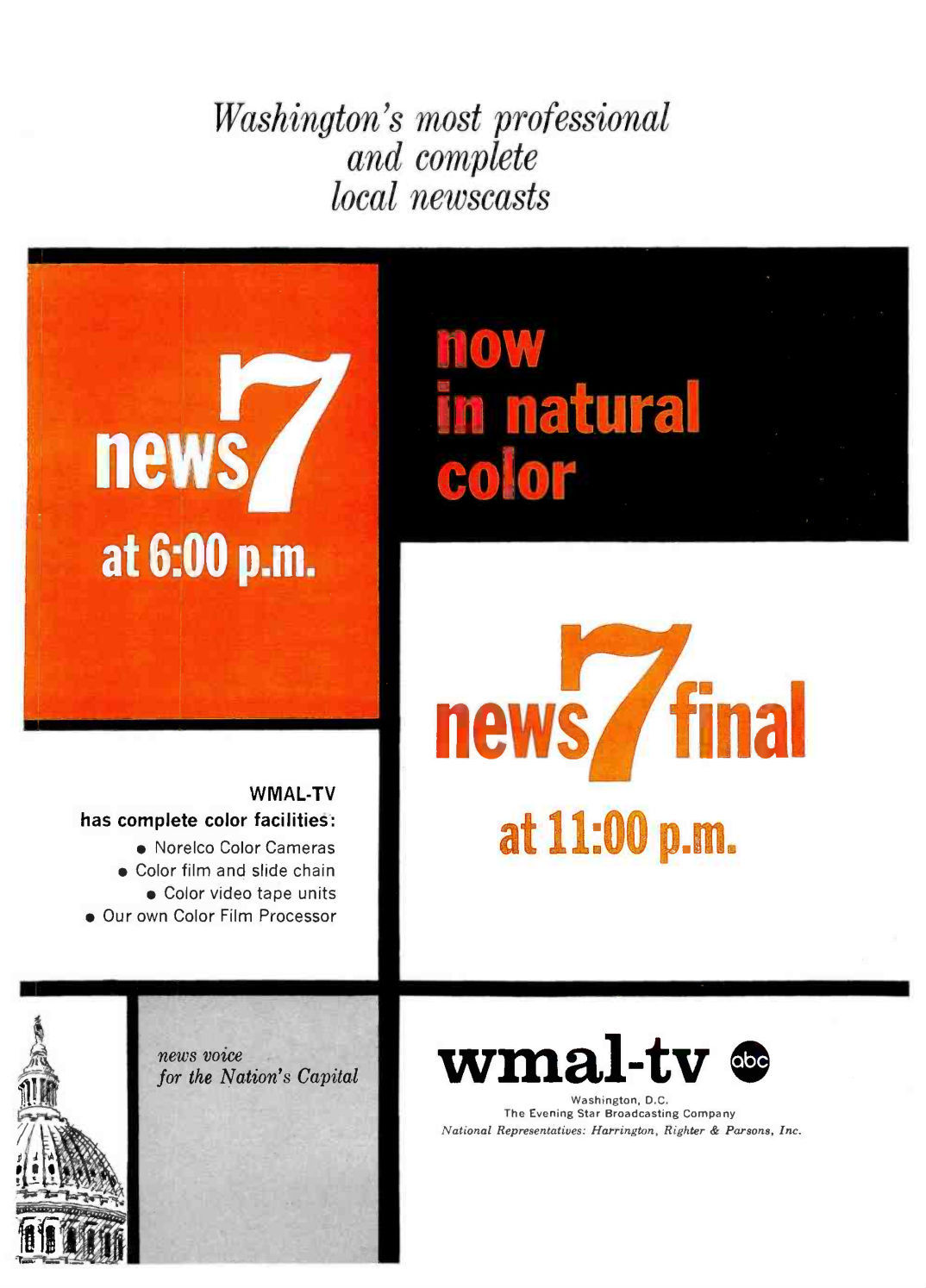
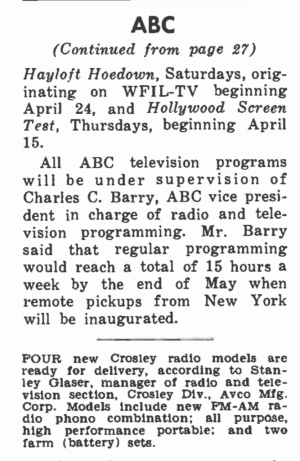
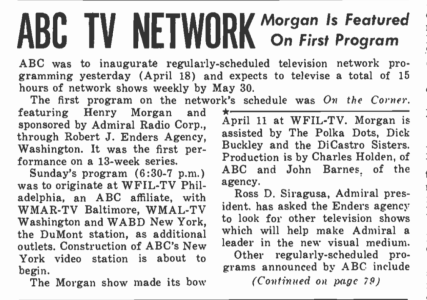
Here is something interesting WJLA-TV Washington DC was one of the first TV Stations to be on high VHF 7-13 when it signed on in 1947. Also WJLA-TV became an affiliate of ABC Network in April 1948 before ABC itself signed on their TV Stations between 1948-1949 TV seasons WJZ, WXYZ, WENR, KGO and KECA. One would think ABC would have considered owning a TV station in Washington DC at some point but then again we are in the era where TV apps are the main destination here.IMG_1136.png
 

Attachments

  • IMG_1135.png
    IMG_1135.png
    482 KB · Views: 4
I’ll say that FM band expansion as part of the digital transition was the last chance to save these stations. The internet will probably make it a moot point for a lot of stations anyway.
That being said, I can still conceivably see - and would support - 87.9 and 87.7 as frequencies-of-last-resort for existing LPFMs displaced by larger stations or translators only in areas without a TV station on RF 6. No new stations licensed there, no translators, just a clinging-to-the-edge-of a cliff holdout for the displaced.
 
Status
This thread has been closed due to inactivity. You can create a new thread to discuss this topic.


Back
Top Bottom