• Get involved.
    We want your input!
    Apply for Membership and join the conversations about everything related to broadcasting.

    After we receive your registration, a moderator will review it. After your registration is approved, you will be permitted to post.
    If you use a disposable or false email address, your registration will be rejected.

    After your membership is approved, please take a minute to tell us a little bit about yourself.
    https://www.radiodiscussions.com/forums/introduce-yourself.1088/

    Thanks in advance and have fun!
    RadioDiscussions Administrators

FCC Opens Investigation into NPR and PBS

the FCC and Carr's efforts to diminish left and centrist media voices using the power of intimidation.
Doing the work that all good authoritarian regimes must to gain and retain their power.

It's surreal to witness what is happening to the US right now.

Historically, the US has been exceptionally stable; despite some close calls (the Civil War, the Great Depression, two World Wars, unrest in the second half of the 20th century (Vietnam, Watergate, etc.), 9/11, the Great Recession), and of course the Cold War, the fundamental reliability and stability of the US government was never in doubt.

Not anymore it seems. And it is a genuinely terrible thing to see.

c
 
Doing the work that all good authoritarian regimes must to gain and retain their power.

It's surreal to witness what is happening to the US right now.

Historically, the US has been exceptionally stable; despite some close calls (the Civil War, the Great Depression, two World Wars, unrest in the second half of the 20th century (Vietnam, Watergate, etc.), 9/11, the Great Recession), and of course the Cold War, the fundamental reliability and stability of the US government was never in doubt.

Not anymore it seems. And it is a genuinely terrible thing to see.

c
Your post has no radio or TV content. Please, if you are going to post make it relevant to electronic media, not politics.
 

Here is NPR’s response when their own CEO is in the congressional hearing.
 
WHYY's Studio 2 had Uri Berliner and Brian Stelter on the show today to debate NPR/PBS funding:

Berliner repeated his grievances against NPR, brushed off criticism from his former colleagues, and said that NPR should voluntarily give up government funding, which will free them to become an openly liberal media outlet. Stelter said that just like in the past, Republicans will ultimately fund public broadcasting because of the service it provides to red states, and any news outlet which fact-checks Trump's daily barrage of lies is seen as having a left-wing bias by his supporters.
 
Berliner repeated his grievances against NPR, brushed off criticism from his former colleagues, and said that NPR should voluntarily give up government funding, which will free them to become an openly liberal media outlet.

You don't see Berliner on conservative media anymore because they realized he's not really on their side on this issue. He was quoted a lot during the hearings, but his views were taken out of context.
 
You don't see Berliner on conservative media anymore because they realized he's not really on their side on this issue. He was quoted a lot during the hearings, but his views were taken out of context.
This is, again, some obtuse far-righters believing that the FCC and government has some say over content other than profanity and obscenity. Those people should never have been named to the Commission or to the various boards that oversee NPR, VOA, etc.
 
It might be interesting to look at why we have public radio and TV in the first place. At one point, newspapers were overwhelmingly conservative editorially and this often spilled over into the news hole. Hearst. Pulitzer. McCormick and others. Today Murdoch is unique but he would have been typical before. Radio news was mostly commentary and conservative commentators dominated (Paul Harvey was the last of these and the only one most people today remember).

Public radio today is most widely associated with news. When public radio started, commercial radio still had lots of news. All news radio was starting up in several major markets and full service, MOR and top 40 stations had active, often excellent, news departments.

BBC Radio 4 on the other hand emphasizes drama, documentaries, fine arts (including classical music, opera, jazz...). In the beginning, this what was anticipated for US public radio.

Back then, liberals, progressives, anti-war activists, civil rights activists and women's lib activists, environmental did not believe their views were being presented by the conservative, corporate "traditional" media. Voila: All Things Considered.

Charges of "liberal bias" began when reports of "questionable actions" by the Nixon administration started to emerge and the administration's response was to invalidate such reports by screaming "liberal bias."
 
It might be interesting to look at why we have public radio and TV in the first place.

The reason we have public radio and TV in the first place is because the FCC's Newton Minow said "TV is a vast wasteland." He was upset that commercial broadcasting was more about profit than public service. So he wanted to create media that was more about public service than profit.

The two words you did not hear at all during the hearings yesterday were PUBLIC SERVICE. Why? Because this administration doesn't see government as providing public service. They see it the same way corporate radio owners see live & local talent: As an expense that should be cut.
Back then, liberals, progressives, anti-war activists, civil rights activists and women's lib activists, environmental did not believe their views were being presented by the conservative, corporate "traditional" media. Voila: All Things Considered.

Huh? None of that is true. NBC and CBS covered civil rights marches and anti war marches. It was all covered on network TV and radio. That's why we have all that archival footage you see in documentaries. The reason ATC was created was to have long form news coverage without commercial interruption. It had nothing to do with politics. The Public Broadcasting Act of 1967 was a bi-partisan bill that was supported by liberals and conservatives alike. And it existed in both red and blue states without opposition until the far right created an issue about it.

But it's still very popular with a majority of Americans. Only 24% of the country want to end government funding. It's a small, fringe wing of the repubs. They're the ones running things now.
 
The reason we have public radio and TV in the first place is because the FCC's Newton Minow said "TV is a vast wasteland." He was upset that commercial broadcasting was more about profit than public service. So he wanted to create media that was more about public service than profit.

The two words you did not hear at all during the hearings yesterday were PUBLIC SERVICE. Why? Because this administration doesn't see government as providing public service. They see it the same way corporate radio owners see live & local talent: As an expense that should be cut.


Huh? None of that is true. NBC and CBS covered civil rights marches and anti war marches. It was all covered on network TV and radio. That's why we have all that archival footage you see in documentaries. The reason ATC was created was to have long form news coverage without commercial interruption. It had nothing to do with politics. The Public Broadcasting Act of 1967 was a bi-partisan bill that was supported by liberals and conservatives alike. And it existed in both red and blue states without opposition until the far right created an issue about it.

But it's still very popular with a majority of Americans. Only 24% of the country want to end government funding. It's a small, fringe wing of the repubs.
Newton made for a nice sound bite. The Carnegie Commission provided the impetus for public broadcasting.

The "traditional" networks covered marches, murders, bombings, police attacks on marchers but they paid little attention to actual issues, especially from the "other viewpoint." I was lucky to live on the border and get from the CBC what history has since shown to be the actual facts of the Viet Nam war, while Cronkite was cheer leading (until expedience forced him to change his tune).

Support in congress came because the NAB wanted it and had all sorts of lobbying bucks to spend. They, especially the networks, no longer wanted to do "public service," fine arts or high culture programming, which was the original expectation for public broadcasting.
 
Newton made for a nice sound bite. The Carnegie Commission provided the impetus for public broadcasting.

The point is everyone was angry at commercial broadcasting. CBS chose to air I Love Lucy reruns instead of live coverage of the Tonkin Gulf resolution. That was the last straw with the folks in congress. The truth is that commercial broadcasting is still a vast wasteland. The only bright spot is subscription-based streaming such as Netflix or HBO Plus. All of the cable channels are a total waste. These boards are filled with complaints about commercial radio. Ad-based media is still a vast wasteland.

Support in congress came because the NAB wanted it and had all sorts of lobbying bucks to spend. They, especially the networks, no longer wanted to do "public service," fine arts or high culture programming, which was the original expectation for public broadcasting.

Once again, the two words that weren't spoken yesterday: Public Service. It's still true now. Which is why the majority don't support cutting government funding. Public broadcasting is more popular than MTG.

Charges of "liberal bias" began when reports of "questionable actions" by the Nixon administration started to emerge and the administration's response was to invalidate such reports by screaming "liberal bias."

But the charges of liberal bias were aimed at the Washington Post, NY Times, and CBS. Not public broadcasting. Why? Because no one knew it was there. It only became popular as commercial radio cut back on news and talk radio became more strident. The non-commercial aspect is also more popular now that it was 50 years ago.
 
Last edited:


Here are multiple station Managers and President's issue similar statements in defense for Public Broadcasting. All of them are in support for the CEO's of PBS and NPR.
 
No surprise the president says he wants federal funding to NPR stopped:


The problem is they would have to also stop funding hundreds of local radio stations.

It would also lead to an instant lawsuit.
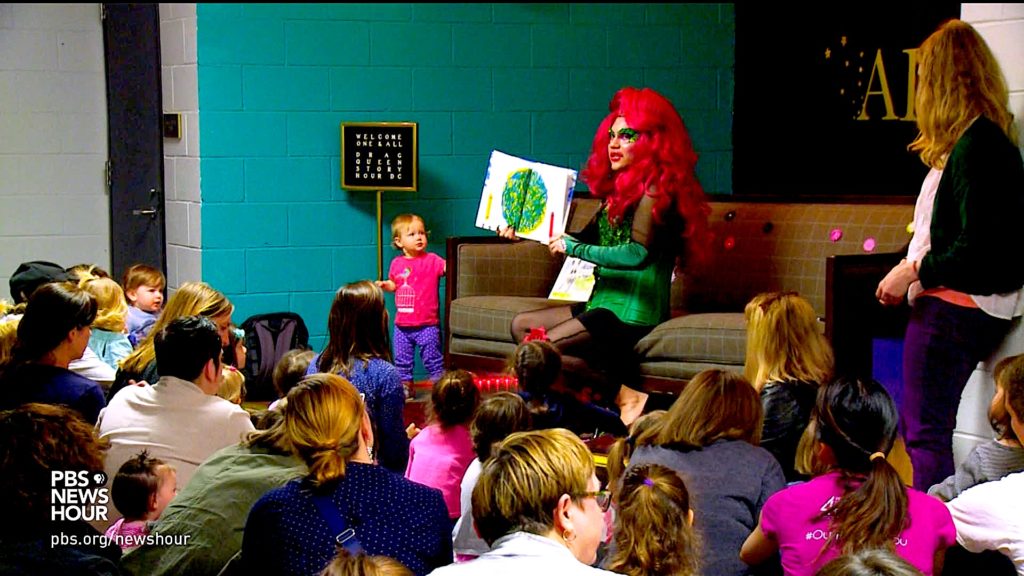
True and yes it will lead to the affiliates of NPR and PBS suing CPB over funding that is owed to them. Also it's a crazy one Marjorie Taylor Greene falsely accuses PBS of airing something that didn't even air nationwide such as a "Drag Queen" is Predator type stuff.


However we had to fact check that one and tie it to whatever PBS Newshour was airing at that time that sparked the allegations. Ok but it's about civil rights issues specific to Trangender people that was brought up there where some of the false allegations came from.
 
WHYY's Studio 2 had Uri Berliner and Brian Stelter on the show today to debate NPR/PBS funding:

Berliner repeated his grievances against NPR, brushed off criticism from his former colleagues, and said that NPR should voluntarily give up government funding, which will free them to become an openly liberal media outlet. Stelter said that just like in the past, Republicans will ultimately fund public broadcasting because of the service it provides to red states, and any news outlet which fact-checks Trump's daily barrage of lies is seen as having a left-wing bias by his supporters.
The funniest thing to me is that all of the focus is on NPR. The whole truth is that NPR is really pretty moderate when you look at the perspectives it chooses to air. What the network really strives for is journalist accuracy and factual information, ideas not liked very much by the current administration.

If these people really wanted to go after the radical left, then the network to go after would be Pacifica. While the network only owns seven stations, some of its programming, especially Amy Goodman's "Democracy Now," is aired by a whole host of independent and low power community stations around the U.S. and several other countries.

But the right doesn't publicly go after Pacifica. Why? Because Pacifica still doesn't have the reach that NPR does, and (probably more importantly), Pacifica is not a household name as NPR is.
 
Pacifica also doesn't accept any federal or corporate money. Neither does the nationally syndicated show Democracy Now.
That is true now but it wasn't always so.


Also, CPB is still allowing Pacifica stations to advertise jobs through its website.


The funniest thing to me is that all of the focus is on NPR. The whole truth is that NPR is really pretty moderate when you look at the perspectives it chooses to air. What the network really strives for is journalist accuracy and factual information, ideas not liked very much by the current administration.

If these people really wanted to go after the radical left, then the network to go after would be Pacifica. While the network only owns seven stations, some of its programming, especially Amy Goodman's "Democracy Now," is aired by a whole host of independent and low power community stations around the U.S. and several other countries.

But the right doesn't publicly go after Pacifica. Why? Because Pacifica still doesn't have the reach that NPR does, and (probably more importantly), Pacifica is not a household name as NPR is.
More important is, as BigA mentions, Pacifica and Democracy Now don't get Federal funding. The approach taken with NPR is that it can continue on its own, but without national government funding.

There is nothing that can be "done" about Pacifica without getting into First Amendment issues.
 
Status
This thread has been closed due to inactivity. You can create a new thread to discuss this topic.


Back
Top Bottom