• Get involved.
    We want your input!
    Apply for Membership and join the conversations about everything related to broadcasting.

    After we receive your registration, a moderator will review it. After your registration is approved, you will be permitted to post.
    If you use a disposable or false email address, your registration will be rejected.

    After your membership is approved, please take a minute to tell us a little bit about yourself.
    https://www.radiodiscussions.com/forums/introduce-yourself.1088/

    Thanks in advance and have fun!
    RadioDiscussions Administrators

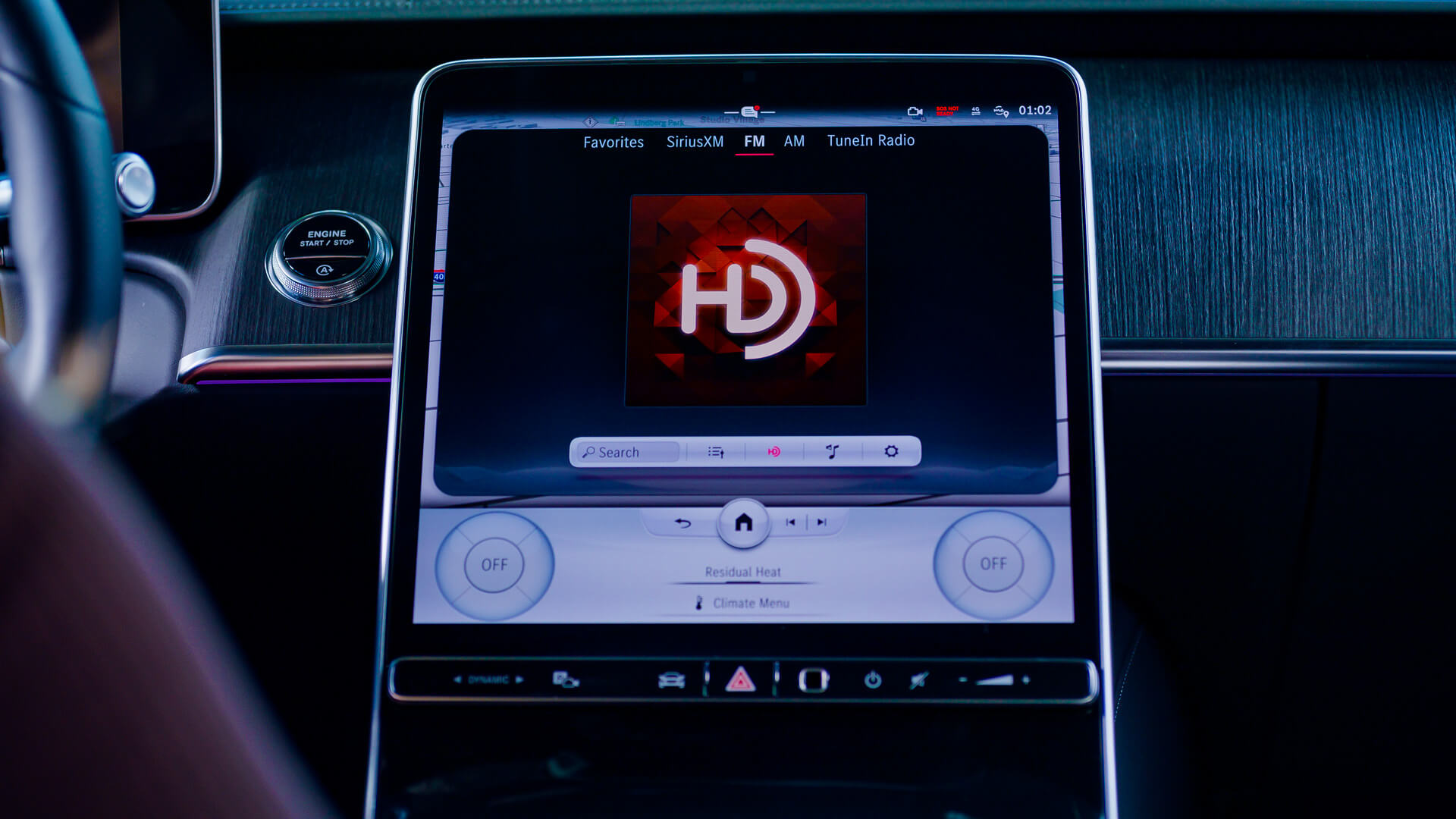
GM No Longer Installing HD Radios

An article in InsideRadio quotes an N.A.B. executive, “General Motors has, by and large, stopped putting HD Radio in their cars.” Naturally there is concern other auto manufacturers may follow their lead.
The article indicates that radio broadcasters may be partially to blame, stating that only around 25% of U.S. stations broadcast in HD.

A Significant Loss For HD Radio
 
Here is the article:


The fact of the matter is that HD Radio is a trademarked technology that requires radio stations and radio manufacturers to pay a royalty to Xperi. The responsibility for the success of that technology is with the trademark holder, not the users. The radio industry has no responsibility to make money for Xperi, If Xperi wants to see its technology embraced, they should loosen their restrictions on it. Radio stations don't need to pay xPeri for digital radio when they can stream on the internet for free with no restrictions.


GM continues to install FM radio because the technology is free to install and doesn't require them to pay a royalty. Thank the Armstrong estate for not renewing the patent in the 60s.

If the NAB is so concerned about this, perhaps they should amend the AM In Every Vehicle act to include HD.
 
I just purchased a brand new Jeep Grand Cherokee and shame on me for ASSUMING that HD radio was included because my 2017 Tacoma came with HD radio.
I was wrong No HD Radio and I can not upgrade the factory radio to include HD. To get HD I need to replace the factory radio with an after market radio.
Unless HD radio will become FREE it is doomed.
I can listen to my favorite stations using Andriod Auto or Apple car play in a better quality than HD radio. How terrible for HD future
 
From the article:

That puts pressure squarely back on broadcasters. Without broader adoption of digital radio, Layer suggested, the industry risks losing ground in the one place where it has historically been dominant.

“We want to make radio look as good as it sounds,” he said.

Somebody should point out to the NAB that radio companies aren't in the device business. It's not like Westinghouse and RCA. Radio companies have no control how radio looks. That's up to the manufacturers.
 
HD radio is going down the same path as AM stereo. At one time, many cars came standard with a radio capable of decoding C-QUAM. I believe the stock Ford AM/FM/CD stereos produced by Visteon until 2004-2005 were the last to have AM stereo.

I'm not a fan of HD on AM, it increases noise on analog receivers, and requires a local strength signal to maintain lock on an HD radio. It does provide a service on FM though with the added HD sub-channels.

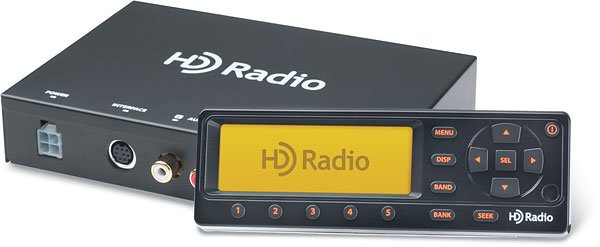
With the HVAC, backup cameras, heated seat settings, etc... it's nearly impossible to replace the factory car stereo with an aftermarket one in today's new cars. A few years ago, I bought one of those Directed DMHD-1000 "HD Car Connect" add-on AM/FM/HD tuners off eBay when someone was selling off a bunch of new-old-stock units for $20. You can still find them for cheap if you set an eBay watch. It can be connected to you car via an aux audio input, or you could find the antenna input on the back of your factory head unit and connect it there as the add-on tuner has an FM stereo RF modulator built in. I really thought it would be useful in the event I ever get a new car that doesn't include AM. As an added bonus, this add-on tuner also decodes C-QUAM AM stereo, one of the few HD radios that can.

DMHD-1000.jpg
 
HD radio is going down the same path as AM stereo.

I agree with that, and it's going that way for the same reason. The problem with AM stereo was the competing technologies. Had the FCC chosen one, it would have been a windfall for that particular technology. We went through that with color TV. We even went through it with TV audio. David Sarnoff wanted TV audio to be on AM, and the FCC decided for FM. Sarnoff was forever angry about that, just as Paley was angry about losing the color TV battle.

There are no competing HD radio systems. But if the FCC or congress were to mandate it, it would provide a financial windfall for Xperi.
 
I agree with that, and it's going that way for the same reason. The problem with AM stereo was the competing technologies. Had the FCC chosen one, it would have been a windfall for that particular technology.
As far as AM Stereo in car radios was concerned, that really wasn't an issue. GM's Delco began putting Motorola C-Quam in their radios in 1984, and by then there really was no competition anymore; virtually everyone was convinced that Motorola had won the battle, aside from Leonard Kahn himself. The problem was that the technology arrived a decade too late to save music on AM, and as AM shifted to talk formats, stations, receiver manufacturers, and consumers all agreed that talk radio didn't need stereo (even on FM).
 
That means NO PRE-ROLL ADS and apps that include most content without subscriptions and tracking.

The advantage of pre-roll is it doesn't interrupt content. As you know, the alternative is what Tune In does, and I find that more annoying.

The internet is built on subscriptions and tracking. That is just the reality of it. If broadcasters could require subscriptions, they wouldn't be in the financial state they're in now.
 
HD disappeared from a lot of car radios due to COVID-era chip shortages, and afterwards they never saw a reason to re-implement a feature that nobody missed when it was gone.
“General Motors has, by and large, stopped putting HD Radio in their cars. That’s a big problem,” said Layer. The issue with the largest U.S. automaker began during the COVID-era supply chain shortages and has only gotten worse for supporters of digital radio. But rather than framing it solely as an automaker’s decision, he tied it directly to the industry’s slow uptake of the technology.


With only about 20% to 25% of U.S. stations broadcasting in HD Radio, Layer said the industry has weakened its ability to make a compelling case to automakers. “Knowing that it’s a 25% adoption rate among broadcasters just makes the argument to GM to keep it in the cars, or put it back in the cars, a little more difficult,” he said."
 
With only about 20% to 25% of U.S. stations broadcasting in HD Radio, Layer said the industry has weakened its ability to make a compelling case to automakers. “Knowing that it’s a 25% adoption rate among broadcasters just makes the argument to GM to keep it in the cars, or put it back in the cars, a little more difficult,” he said."

As I said, that's an Xperi problem, not a broadcasting problem. Xperi and iBiquity both screwed the pooch on getting its technology in devices. When they launched it over 20 years ago, thousands of radio stations were broadcasting in HD. But nobody could hear it, because there were no cars with HD and no portable HD receivers. That experience destroyed HD Radio's credibility forever.

It's why nobody cares about their now-obsolete technology. Had iBiquity made it freeware for manufacturers, I believe it would have extended the life of broadcast radio at least ten more years. But they wanted to make their money on the front end, rather than the back end.
 
The advantage of pre-roll is it doesn't interrupt content. As you know, the alternative is what Tune In does, and I find that more annoying.

The internet is built on subscriptions and tracking. That is just the reality of it. If broadcasters could require subscriptions, they wouldn't be in the financial state they're in now.
I think this requires some thinking outside the box. Allowing listeners easy access to content so that they will consume the ads of the content providers is what's needed.

Suppose you wanted to make a purchase on
Amazon but you had to sit through an ad first. That would be a barrier to entry and likely hurt business. But Amazon is smarter than broadcasters IMO.
 
Allowing listeners easy access to content so that they will consume the ads of the content providers is what's needed.

My response is that if the content is good enough and exclusive enough, then you will sit through the ad in order to get to it.

Suppose you wanted to make a purchase on
Amazon but you had to sit through an ad first. That would be a barrier to entry and likely hurt business. But Amazon is smarter than broadcasters IMO.

Only in the fact that Amazon is a retail site, and broadcasters are not in the retail business. But that may change.

I often say broadcasters need other revenue streams, and you may start seeing them selling the products they advertise.
 
Couple this move with the previously announced GM removal of Apple CarPlay and Android Auto functionality in favor of GM's crappy locked down "pay to play" ecosystem, and it's clear what is happening.
We had seriously considered a GM brand when we bought a new car some months ago. As soon as I discovered that CarPlay was not available we crossed that one off our list.
 
The article indicates that radio broadcasters may be partially to blame, stating that only around 25% of U.S. stations broadcast in HD.
I don't doubt that as a total statistic, but that's not really a statistic that matters.

If you take a major market like NYC, essentially all the FMs are transmitting in HD Radio, and none of the AMs. So that right there gets you to around half of all US stations.
Then you account that few stations in Duluth, MN or Wheeling, WV transmit HD, you get to a pretty low number of stations.

The statistic that matters is how many people are in range of HD stations like those in New York and Chicago, who want to listen.
Tons of people are in listening range of WPLJ-HD2, but few actually listen - not enough to even appear in the ratings.
 
As I said, that's an Xperi problem, not a broadcasting problem. Xperi and iBiquity both screwed the pooch on getting its technology in devices. When they launched it over 20 years ago, thousands of radio stations were broadcasting in HD.
Actually, the conversion to HD capability was relatively slow outside of the very top markets.
But nobody could hear it, because there were no cars with HD and no portable HD receivers. That experience destroyed HD Radio's credibility forever
The lack of portable devices was due mostly to the high energy requirements of the DAC chips in that era. Today they are more efficient but back then they reduced the battery life of any potential HD portable to just a few hours. That part is not the fault of Xperi.
It's why nobody cares about their now-obsolete technology. Had iBiquity made it freeware for manufacturers, I believe it would have extended the life of broadcast radio at least ten more years. But they wanted to make their money on the front end, rather than the back end.
The only way iBiquity could monetize their creation was by charging a fee for the use of the technology in radio receivers. Defeat for radio stations was relatively limited and their entire profit center was focused on the sale of receivers. How else could they possibly have made money otherwise?


Back
Top Bottom