
• Get involved.
    We want your input!
    Apply for Membership and join the conversations about everything related to broadcasting.

    After we receive your registration, a moderator will review it. After your registration is approved, you will be permitted to post.
    If you use a disposable or false email address, your registration will be rejected.

    After your membership is approved, please take a minute to tell us a little bit about yourself.
    https://www.radiodiscussions.com/forums/introduce-yourself.1088/

    Thanks in advance and have fun!
    RadioDiscussions Administrators

House Hearing on Radio Royalty & AI

Next week, there will be a hearing in the House of Representatives on Artificial Intelligence in Music and a new royalty for radio:


The radio royalty has been a contentious issue, with neither side budging on their positions. The music industry wants radio stations to pay labels, artists, and musicians in addition to their current payment to writers and publishers. Right now radio negotiates a royalty with writers & publishers. The new additional royalty would be imposed by the courts, rather than negotiated. Radio stations already pay that second royalty for their digital streaming signals, but not for their broadcast signal.
 
The Artists that think they will get big money from this are mistaking. If they look back at their record company royalties from record, cassette, 8trak, CDs or down loads verses what the record company made most would agree they should have had a better lawyer. If this thing passes I seriously doubt they will see 5 cents on the dollar on their recordings' royalties from radio. The record company's didn't get big by not screwing their artists.
 
If you are an artist that recorded songs that were written other folks, you make money by touring. Not your record deal.

Artists have multiple revenue streams available to them. Touring is one. Randy Travis will testify in this hearing that his touring revenue has been severely diminished because of his stroke. But artists also have name/image/likeness revenue from merchandise and branding, other appearance revenue (speeches, TV, video, movies), and of course the digital royalty. Lately we've seen a lot of country stars start their own liquor brands. I always say if you're an artist who gets played on the radio, and you're not making millions of dollars, you need a new manager.

Record labels don't receive publishing or touring royalties. However, in the last ten years, they've developed 360 deals, where artists who sign label deals also agree to share a portion of their publishing, touring, and/or merchandise revenue with the label. This is in addition to the digital royalty. Labels get 51% of all digital royalties. So the label is taken care of.
 
Last edited:
So the recording industry has 360 deals with artists, and still want to put another expense on radio. Talk about greed.

They started doing 360 deals when physical sales were disappearing, and streaming hadn't taken off. I don't know if they're still doing this now. My sense is they only do 360 deals with artists who get radio airplay, and it pays for radio promotion. This is the labels' way of getting a royalty without a royalty. Nowhere in the proposed law does it say they would have to relinquish their 360 deals. It never comes up in these hearings. My point is they're getting paid, and the artists who get radio airplay are able to make a lot of money. Those who don't end up either getting dropped from the label, or they find some other way to make money, perhaps by writing hits for radio acts. It all comes back to the fact that radio airplay still drives a lot of money to the artists who get that airplay. At least for now.
 
Here's an advance look at today's royalty hearings on Cap Hill. It includes the transcript of the NAB's testimony:

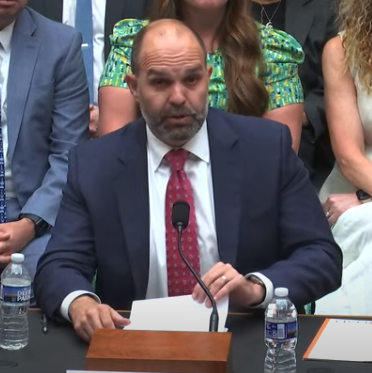
NAB’s LeGeyt To Testify Before House Panel, With Radio Royalty Payments In Focus.

LeGeyt makes a good point. Traditionally royalties are imposed on new technologies, not on heritage services such as broadcast radio. AM & FM stations pay artist & label royalties on their digital streams as required by the DMCA. Nobody's complaining about that. What the labels want to do is charge broadcast radio as though it's a digital streaming service.

“Such an abrupt change in law that governs relationships between incumbent rights holders and users would be wholly inconsistent with Congress’s long-held approach to copyright policy,” LeGeyt says. “Whether it was the emergence of player piano rolls, copy machines, VHS recordings, streaming services or search engines, Congress has consistently focused its major copyright reforms on updates to law that are needed to account for new or emerging technologies — not mediums that have existed for more than 100 years. It would be unprecedented for Congress to upend copyright laws that have governed decades-long relationships, on which entire industries have been built to the mutual benefit of stakeholders as well as the public, and where the fundamental nature of each remains intact.”
 
Here is some coverage of today's hearing on the radio royalty:


Huppe pondered why AM/FM doesn’t pay the same royalty rates as audio streaming companies such as Spotify and Apple, saying radio provides the “same consumer experience”

The answer is simple: The streaming services are digital, and broadcasting is not. That's the answer. When broadcasters stream, they pay the digital royalty just like everyone else.
 
More coverage of the Randy Travis testimony:


Randy's wife was basically reading a script written for her by the recording industry. It's clear she doesn't know the issues. Someone should ask why the recording industry didn't do what the publishers did 100 years ago and set up a royalty structure. This isn't ''correcting a wrong,'' because in fact nothing was done.
 
Another article on yesterday's hearing. Congress was looking for a compromise, and the two sides are far apart. Mainly because the music industry has refused any compromise to what they want. They want the digital royalty law to apply to broadcast radio. They see the two platforms as the same.

 
Is this issue even a priority in Washington right now?

No. It's a lose-lose situation, unless you're in one of four music industry states: California, Tennessee, Michigan, and New York.

Congress wants a deal both sides agree on, as they did with the Music Modernization Act. Unless both sides agree, nothing gets done.
 
Throw out the payola rules and have the artists purchase airtime. If you can have brokered ethnic, brokered religion, and brokered finance formats, why not brokered music?😳😳😳🤣🤣🤣🤣🤣
 
I understand the concern about AI. On YouTube there are clones of artists voices. Many are political songs that might offend the cloned artists.

A clone can also make you say things you never said. I love new technology. But, it can be abused.
 
Many of these artists who want radio to pay more are old dogs who are no longer on the air. That's the opinion of me, another old dog.
 
If you don't write your own music, you're going to be broke once you stop touring. That's why songs these days have like a dozen people given songwriting credits on them. Even the guy who delivered donuts to the studio gets a songwriting credit.
 
Another article on yesterday's hearing. Congress was looking for a compromise, and the two sides are far apart. Mainly because the music industry has refused any compromise to what they want. They want the digital royalty law to apply to broadcast radio. They see the two platforms as the same.

Around 15 years ago, the NAB was willing to agree to a royalty deal. I can't remember all of the details, but it seemed like it called for a cap on over-the-air royalty rates at roughly 1/2 what composers are paid with the option of fixed rates for lower revenue stations, established a consent decree for setting future rates for both over-the-air and streaming, rolled back streaming rates to what they had been roughly a year or two earlier, and phased the rates in over several years with a clause speeding up the phase-in depending on how many cell phones had radios.

To me, it seemed like a pretty good deal for the music industry, and the major broadcasters thought it was at least reasonable. The music industry, however, immediately said, "NO!", and, unless it wasn't reported by the trades, didn't make any sort of counter offer. It just went to Congress screaming for something better.
 
Around 15 years ago, the NAB was willing to agree to a royalty deal.

Correct. They got the ten biggest radio companies to agree to a negotiated royalty and a discount on streaming. When the NAB made their announcement, a number of smaller, independent radio stations quit the NAB and flipped formats to talk. MusicFirst not only refused the deal, but ridiculed it. They want what they want, no discount or compromise. This is coming from Sony and Universal, the two biggest record labels. They want the kind of royalty they have in Europe and Asia, and it's simply not going to work here.

 
Status
This thread has been closed due to inactivity. You can create a new thread to discuss this topic.


Back
Top Bottom