
There were lawsuits that alleged streamers like Disney and Max misled investors as to their profitability. The content on those platforms is expensive (Friends and South Park were worth 1 billion combined), not to mention Game of Thrones and numerous other shows Warner pours money into. There aren't many advertisements (not nearly as much as cable) and is a lot cheaper than their cable offerings (ESPN cost cable carriages very high.) Is it smoke and mirrirs to investors or is it even possible they are profitable?

-
Get involved.
We want your input!
Apply for Membership and join the conversations about everything related to broadcasting.
After we receive your registration, a moderator will review it. After your registration is approved, you will be permitted to post.
If you use a disposable or false email address, your registration will be rejected.
After your membership is approved, please take a minute to tell us a little bit about yourself.
https://www.radiodiscussions.com/forums/introduce-yourself.1088/
Thanks in advance and have fun!
RadioDiscussions Administrators
You are using an out of date browser. It may not display this or other websites correctly.
You should upgrade or use an alternative browser.
You should upgrade or use an alternative browser.
How is it even possible for newer streamers like Max to be even close to profitable?
- Thread starter tall_guy1
- Start date

The way I see it, video streaming is a bubble. When streaming by the networks was initially offered, it was a supplemental thing. Where one could watch reruns and movies/specials on demand. But now, streaming has literally become the big bad cable everybody has been trying to get away from. They nickel and dime you for everything now.
Wanna watch Amazon Prime now without an avalanche of commercials? That'll be an extra $2.98, please. On top of the $15 per month they already rip you off for. But add that to the Netflix, Paramount+, Peacock, Disney+, Max, etc. apps all doing the same thing now and look at the bill. It's crazy.
Wanna watch Amazon Prime now without an avalanche of commercials? That'll be an extra $2.98, please. On top of the $15 per month they already rip you off for. But add that to the Netflix, Paramount+, Peacock, Disney+, Max, etc. apps all doing the same thing now and look at the bill. It's crazy.
Max certainly isn't a "newer streamer". They've been at it for almost 15 years, starting as "HBO Go" then "HBO Max" and now simply "Max".
The answer is that they mostly aren't profitable. But it is similarly untenable among Big Media executives to allow Netflix to become dominant, like it was in ~2012.
The price of Friends is an example of irrational exuberance in a new market.
The answer is that they mostly aren't profitable. But it is similarly untenable among Big Media executives to allow Netflix to become dominant, like it was in ~2012.
The price of Friends is an example of irrational exuberance in a new market.
Many streamers in general are not profitable - but remember that, in the grand scheme, that whole business segment is still in its infancy. One reason you're seeing so many ongoing adjustments - various streaming services teaming up with others to create "packages" or having streaming services thrown in as a bonus if you subscribe to another service - or something additional tossed in as a bonus if you buy the streaming service - and also situations where they're adjusting plans to now include commercials and advertising, then offering higher-priced tiers without, is because they're trying to find ways to get more revenue and stop losing (in some cases large amounts of) money.

The way I see streamers is that they are what cable used to be in the 2000's. Places like Hulu, Max, Paramount+, Peacock, Disney+, Netflix and Amazon prime are emphasing first rate content.
But the streamers themselves have to respond to places like Tubi, Pluto TV, Freevee, Xumo, where they are free streaming outlets without requiring the viewer to activate their credit card info for activation. Also there are places like Fubo and YouTube TV where they function like Xfinity, and Spectrum cable TV subscription but for newer TV's.
But the streamers themselves have to respond to places like Tubi, Pluto TV, Freevee, Xumo, where they are free streaming outlets without requiring the viewer to activate their credit card info for activation. Also there are places like Fubo and YouTube TV where they function like Xfinity, and Spectrum cable TV subscription but for newer TV's.
When people first began to "cut the cord" it was at a time when a lot of programming - back episodes of popular TV programs and series, popular sporting events and the like, could be found for free on the internet. That, along with an OTA antenna for folks who were able to pick up those signals and maybe a subscription to Netflix seemed enough. Now, a lot of those back episodes that one could watch at no charge, are only available via a streaming subscription. Back episodes of stuff from HGTV, Discovery and the Food Network (along with a bunch of other content, including some attractive original programming) is only available via paid subscription. Want old episodes of NBC programming or series? You need to pay for Peacock, etc. and each of those subscriptions typically comes at a cost, and those costs are going up. So people who were complaining that they had to pay $120/month for cable that came with 1,500 channels they never watched, and they said they wanted an "a la carte" option to pick and choose only the channels or content they wanted, sort of got their wish - but now all those channels and content choices will sometimes require them to pay for at least a few individual streaming services. For us, in our case, we'd only save about $15/month if we dumped Comcast and went with other options, and we'd lose the sheer convenience of a "one stop shop" for everything we get through our cable box, so as of now, we're sticking with that.

No one has mentioned the fact that Max has the advantage of the HBO channels. A lot of their shows are from HBO and are shown there first, and this just gives cord cutters a way to watch HBO shows. They also still have people that pay a premium/extra charge for HBO on cable or satellite so the programming costs gets a big support from that.

Exactly. Plus, you have to "flip" to another streaming service and go thru the login process and stuff. With DirecTV or the cable companies, you just turn the channel. It's still easier to use. I knew all this cut the cord mess would eventually be the same price as cable. You still have to pay for internet access, plus all the streams you subscribe to. I did not want 5 different bills. Plus, I don't really have time to watch television on my cellular telephone. I have bundled services via AT&T and the cost of breaking that up for TV did not make sense to me.When people first began to "cut the cord" it was at a time when a lot of programming - back episodes of popular TV programs and series, popular sporting events and the like, could be found for free on the internet. That, along with an OTA antenna for folks who were able to pick up those signals and maybe a subscription to Netflix seemed enough. Now, a lot of those back episodes that one could watch at no charge, are only available via a streaming subscription. Back episodes of stuff from HGTV, Discovery and the Food Network (along with a bunch of other content, including some attractive original programming) is only available via paid subscription. Want old episodes of NBC programming or series? You need to pay for Peacock, etc. and each of those subscriptions typically comes at a cost, and those costs are going up. So people who were complaining that they had to pay $120/month for cable that came with 1,500 channels they never watched, and they said they wanted an "a la carte" option to pick and choose only the channels or content they wanted, sort of got their wish - but now all those channels and content choices will sometimes require them to pay for at least a few individual streaming services. For us, in our case, we'd only save about $15/month if we dumped Comcast and went with other options, and we'd lose the sheer convenience of a "one stop shop" for everything we get through our cable box, so as of now, we're sticking with that.

Exactly. Plus, you have to "flip" to another streaming service and go thru the login process and stuff.
Well, once.
You don't log in every time. And, on most TVs, the streamers are on tiles at the bottom of your screen when you hit the "Home" button on the remote:
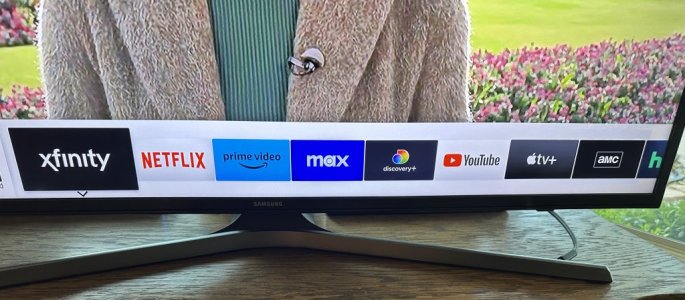
I don't own a smart tv. I don't need one. My TV's that I bought 15 years ago work perfectly.Well, once.
You don't log in every time. And, on most TVs, the streamers are on tiles at the bottom of your screen when you hit the "Home" button on the remote:
View attachment 6766
I don't own a smart tv. I don't need one. My TV's that I bought 15 years ago work perfectly.
Good. We were in the same situation until our 26-year old Sony gave up the ghost five years ago.
Until they don't.I don't own a smart tv. I don't need one. My TV's that I bought 15 years ago work perfectly.
- Status
- This thread has been closed due to inactivity. You can create a new thread to discuss this topic.