
• Get involved.
    We want your input!
    Apply for Membership and join the conversations about everything related to broadcasting.

    After we receive your registration, a moderator will review it. After your registration is approved, you will be permitted to post.
    If you use a disposable or false email address, your registration will be rejected.

    After your membership is approved, please take a minute to tell us a little bit about yourself.
    https://www.radiodiscussions.com/forums/introduce-yourself.1088/

    Thanks in advance and have fun!
    RadioDiscussions Administrators

How many per market?

That is certainly an interesting set up for WMVR. I'm familiar with those big carts. I worked a lite rock satellite delivered station and had the task of recording the breaks on a big cart. Usually 40-48 minute carts. Entire 3 and 3.5 minute breaks had to be recorded. As you might imagine, it made for some late nights as you tried to whittle down the 33 second of 63 second spot to 30 on real time to land precisely at 3 or 3.5 minutes. And there was always somebody that labeled the outcue as the phone number but failing to not say it was repeated twice and should have showed an outcue of phone number 2nd time.

I understand there was one FM in a small town that was a record changer behind a desk where the person manually grabbed the microphone for the legal ID or to read a spot of which there were very few. The story was the operator had an AM that was doing okay but the FCC practically forced them to take an FM. The operator ran it as economically as possible. I've seen the call letters years ago but can't recall them but it seems it was a small town in Georgia, Alabama or Mississippi.

A more modern primitive automation was an AM station in Ashland City, Tennessee where the owner would throw on what was essentially a CDX type CD (one with current releases of certain formats by various artists). He'd toss in a gospel CD and run out to sell advertising, coming back to fire off the legal ID and join network news before playing about 6 to 8 commercials before starting another CD to repeat the process. If something happened, the CD player would go to disc 2 and then 3.

KDCY in Cotulla, Texas was ultra low budget: two Radio Shack mixers, 2 dual cassette decks and a $20 Radio Shack microphone. Music was recorded on C-60s, 26 minutes more or less per side. Jocks played a side, read and played about 4 or 5 minutes of commercials (all on cassette) and then back to a side of a cassette of music. They didn't last more than about 3 to 5 years. I worked with the co-owner who sold advertising at the desk in front of mine.
 
That is certainly an interesting set up for WMVR. I'm familiar with those big carts. I worked a lite rock satellite delivered station and had the task of recording the breaks on a big cart. Usually 40-48 minute carts. Entire 3 and 3.5 minute breaks had to be recorded. As you might imagine, it made for some late nights as you tried to whittle down the 33 second of 63 second spot to 30 on real time to land precisely at 3 or 3.5 minutes. And there was always somebody that labeled the outcue as the phone number but failing to not say it was repeated twice and should have showed an outcue of phone number 2nd time.

I understand there was one FM in a small town that was a record changer behind a desk where the person manually grabbed the microphone for the legal ID or to read a spot of which there were very few. The story was the operator had an AM that was doing okay but the FCC practically forced them to take an FM. The operator ran it as economically as possible. I've seen the call letters years ago but can't recall them but it seems it was a small town in Georgia, Alabama or Mississippi.

A more modern primitive automation was an AM station in Ashland City, Tennessee where the owner would throw on what was essentially a CDX type CD (one with current releases of certain formats by various artists). He'd toss in a gospel CD and run out to sell advertising, coming back to fire off the legal ID and join network news before playing about 6 to 8 commercials before starting another CD to repeat the process. If something happened, the CD player would go to disc 2 and then 3.

KDCY in Cotulla, Texas was ultra low budget: two Radio Shack mixers, 2 dual cassette decks and a $20 Radio Shack microphone. Music was recorded on C-60s, 26 minutes more or less per side. Jocks played a side, read and played about 4 or 5 minutes of commercials (all on cassette) and then back to a side of a cassette of music. They didn't last more than about 3 to 5 years. I worked with the co-owner who sold advertising at the desk in front of mine.
Indeed it was. Recording all the breaks on a cart sounds a little like what we did at a TV station I worked at, where we would "spot reel" all the breaks that were to run in the newscasts, instead of playing them out of the insertion system, which had a lot of misfires. At least with a one-inch reel, we could re-cue it manually.

A lot of radio stations I worked at left a lot to be desired but I never worked anywhere with examples like the stations you mentioned. One I didn't work for, but visited in my initial radio job search, was in Columbia City, Indiana. They had a small mixer board, a reel-to-reel machine and a turntable. They took currents off American Top 40, meaning there were no intros. Weird. I know of an AM in southern Ohio that just ran a CD changer.
 
In Dallas/Fort Worth at one point, Beautiful Music was airing on KRLD FM, WBAP FM, KWXI, WFAA FM, KTLC, KFWT, KIXL FM and KXXK all on FM. KWXI was Beautiful Music but obviously going for the younger side as was KXXK calling itself Music for Groovy Grownups. KXXK was no MOR station as they littered the AM dial: WFAA, KKDA, WBAP, KJIM, KIXL, KRLD, WRR and KTER (Terrell but good through Dallas). KIER, the Elkins Institute station was on 9am to 11pm except Sundays at 102.9 playing MOR commercial free. This would have been around 1970. I think WBAP was only MOR during the day because I know they were country by about 10pm.

WBAP FM played 30 minutes of uninterrupted music starting on the hour. They interrupted to remind you of this at 15 past.

WFAA FM was, at one point, 'music only for a woman'

KWXI liked "Bright in the middle" to designate their more youthful approach.

KFWT used jingles that mixed seamlessly with their lush music selections.

KXXK back announced songs, playing 2 in a row. Weather was on the hour and 5 minutes of news 4 times a day. Very few commercials back in late '69 and early 1970. Played more combos and small groups than big orchestras. They would have played Love Is Blue by Paul Mauriat when it was a hit, had they been around.

KLIF, KXOL and KFJZ fought it out in top 40. KBOX, KBUY and KCWM (KXOL's FM) duked it out in country. Freeform/Underground was on KFAD but they would wait until about '71 to go 24/7 Freeform. In 1969 it was Top 50 6am to Noon, Freeform Noon to 6 and Jazz all night. The Top 50 was exactly like a freeform radio jock playing top 40 and even playing and reading all the commercials on the hour to get them out of the way (maybe 2 or 3 for head shops and water beds, etc.) KNUS was sort of the alter ego of KLIF.

Things would change fast. By 1973, KRLD had tried Hit Parade, Top 40 and Album Rock (real tight playlist), WBAP became Silver Country, an easy country station. KWXI would become top 40 KFJZ, WFAA became KZEW, The Zoo, a legendary rocker. KTLC became KMEZ, still beautiful music with the calls going to KIXL FM. KFWT became Adult Top 40 KFWD (no heavy rockers), KXXK became KOAX, a long running Beautiful Music station. KEIR sold and moved to 91.7 which had been silent. 102.9 became KDTX with, I recall, ministries 6am to Noon, Christian music Noon to 6 and top 40 until midnight sign off.

On the AM, WFAA was top 40, KKDA was Soul Sockin' 73, WBAP 100% country, KJIM was old country, KRLD was Top 40 days and Album Rock at night. WRR was a year away from going talk, I think. They ran a comedy feature at :45 every hour called Library of Laffs. KTER would be all country by then. KCWM had become KXOL FM with automated oldies daytimes (50% currents; 50% gold) then carried the AM signal after about 6pm. KFAD would have sold and become a country station. KNUS dropped album rock after McClendon sold KLIF and took the station to a 'more hip top 40' (for example weather was KNUS environment)
There was a fascinating article about KIXL many years ago in "Popular Communications," you can probably find it on David Eduardo's site. They were one of the nation's pioneering beautiful music stations, starting the mood-music format in the late '40s. They also aired on 1040 AM (making them "104 on both dials").
 
How many Beautiful Music stations were there in your market? I the Greater Cleveland, Ohio area I can, off the top of my head come up with these... Additions welcome:
WDBN-FM Medina, Ohio, (Kiss-FM), WKSS? 99.5 FM (didn't last too long), WDOK 102.1 FM, WQAL 104.1 FM, and ... WBEA 107.3 FM, Elyria, Ohio (When I first heard them while dialing around, they had a monsterous, booming signal that "ate up" a larger part of the dial, as I dialed from station-to-station, than the others, and I was in Southwestern Cuyahoga County. not Lorain County where Elyria is located. Were they 100,00 watts?).

Might WJW-AM 850 have been one too, or partially? What about WEOL AM930 in Elyria whose owners, I think, owned WBEA? What about WERE-AM 1300 and WHK, 1420 AM before the 1970s? What did WDOK-AM 1260 air before switching formats to the iconic WIXY? Heck, what about WGAR AM1220?
I've heard a signoff from WJW-AM 850 from sometime in the early '60s (probably) where they identified as "Beautiful Music Radio." 104.1 was WJW-FM then and I assume were a full simulcast. Owner Storer Broadcasting even advertised WJW on their Detroit sister station (WJBK 1500) although that station had a Top 40 format, as heard on a 1962 WJBK aircheck on ReelRadio. Two years later, WJBK, beaten down by the Keener 13 onslaught and other misfortunes, would themselves flip to Beautiful Music, which if I'm not mistaken left WIBG in Philly as Storer's only Top 40 station. I get the impression Storer only tolerated Top 40 as long as it was bringing in the money, and once WJBK lost its dominance as a pop music station its fate was sealed. (WJBK would make a second (brief) try at Top 40 in 1969 before going Country as WDEE. Their former FM station (93.1) later became WDRQ and gave the "Big 8" some heated competition during the '70s.)
Speaking of Cleveland B/EZ stations, Detroit's most successful B/EZ AM station, 560 WQTE, was reportedly modeled after WDOK. (The WQTE calls would later be picked up by an FM station in Adrian, MI, which also had a B/EZ format and later went Country.)
 
A lot of radio stations I worked at left a lot to be desired but I never worked anywhere with examples like the stations you mentioned. One I didn't work for, but visited in my initial radio job search, was in Columbia City, Indiana. They had a small mixer board, a reel-to-reel machine and a turntable. They took currents off American Top 40, meaning there were no intros. Weird. I know of an AM in southern Ohio that just ran a CD changer.
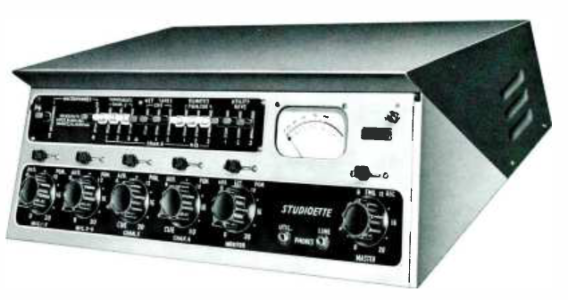
The worst I every worked for was my first job. Little Gates Sudioette board, two truntables and an old 7" reel Magnecorder
 

Attachments

  • 1679787278293.png
    1679787278293.png
    229.1 KB · Views: 3
I've heard a signoff from WJW-AM 850 from sometime in the early '60s (probably) where they identified as "Beautiful Music Radio." 104.1 was WJW-FM then and I assume were a full simulcast.
WJW in the early 60's was MOR, with personality jocks like Big Wilson who even played a grand piano in the studio. I loved "Biggie" and listened when I was old enough to drive to school around 1962.

Of course, after school I drove to where I part-timed, WCUY. But mornings was WJW and some true old-fashioned radio.
 
I get the impression Storer only tolerated Top 40 as long as it was bringing in the money, and once WJBK lost its dominance as a pop music station its fate was sealed. (WJBK would make a second (brief) try at Top 40 in 1969 before going Country as WDEE. Their former FM station (93.1) later became WDRQ and gave the "Big 8" some heated competition during the '70s.)
Storer later did Ten-Q in LA in the mid-70's when they were able to upgrade daytime KGBS on 1020 to 50 kw fulltime. It only lasted a few years until it was sold to the Liberman brothers.
 
Oh that's right... I forgot about KTNQ.
Don't say thank you... say Ten Q.

David (former and later Ten Q PD and OM and janitor)
 
Status
This thread has been closed due to inactivity. You can create a new thread to discuss this topic.


Back
Top Bottom