
Always love to see these old studio photos. Any idea what's up with the 2 clocks that are a half-hour off from each other?
I didn't notice that until you mentioned it.
I'll go with Escondido is half an hour behind San Diego.

Always love to see these old studio photos. Any idea what's up with the 2 clocks that are a half-hour off from each other?
Actually, I thought it worked. What was more surprising to me was hearing an AM station in a major market doing a cold segue in 1973.
Example: WCAU-FM Philadelphia used localized patter, with a reference to the Atlantic City Expressway.I’ve heard a couple versions of the song where the spoken DJ chatter is replaced by a localized version for a particular radio station’s market.
Using the words "f**k", "s**t", "p**s", "c**t", "c**ksucker" and "motherf***er" does violate the standards,
As I said in an earlier post, even with a complaint, that’s not likely to result in FCC action.You forgot t**s!
I'm not sure it's really seven words anymore. And there's clarification that the words have to be used in a sexual or excretory context. So the "S" word, as long as it's figurative and not literal ("what a bunch of" as opposed to "I'm gonna take a") probably doesn't get you fined, though most radio stations won't risk it.
Ditto the "P" word. If you're angry, it's actually pretty common. If you're taking one, far less so.
And the "T" word---well, I've heard it on the air. As early as 1974. But "boobs" won't raise an eyebrow, so why risk it?

And even the list of dirty words from the Carlin bit has not been segregated into acceptable and not acceptable words by the FCC. Simply, running that bit was considered a violation.As I said in an earlier post, even with a complaint, that’s not likely to result in FCC action.
TV kicked that door in decades ago and I’ve heard it on the radio, but it’s interchangeable with “boobs”, which is the safer choice because it never was on the list.


I didn't notice that until you mentioned it.
I'll go with Escondido is half an hour behind San Diego.
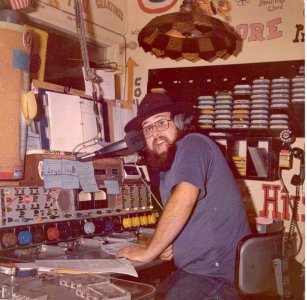
I don't know. I would assume so. Four yellow pots for the four cart decks...Were the pots on that board color coded to indicate whether they were for cart machines or turntables etc?
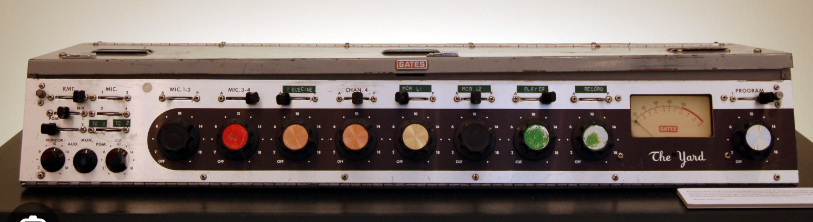
I think the first board that allowed color coding was the Gates Yard that came out around 1960. There were a variety of colored circular aluminum inserts that fit into the indented top of each knob.Were the pots on that board color coded to indicate whether they were for cart machines or turntables etc?
I wonder if either of those songs were censored more not on the coasts back then or if everyone just played the less cut versions?From that document:
And since Alanis doesn't describe his private organs or her technique, it doesn't meet the indecency standard. It's how stations have managed to play the long version of Lou Reed's "Walk on the Wild Side", which includes the phrase "giving head", for 52 years now.
I think, generally speaking, that the phrase "going down" is milder than "giving head."
"Walk on the Wild Side"---generally the Top 40 stations played the 45, which didn't have the phrase. The 45 was 3:37, the album version 4:13, so Top 40 loved that. Most album stations I'm aware of played the album version because...I wonder if either of those songs were censored more not on the coasts back then or if everyone just played the less cut versions?
“Hot in the City” also had customized city shout outs at the part where he shouts out New York."Come On Eileen" (Dexys Midnight Runners) always makes me cringe, since I was a kid when it was brand new. I don't care for "Hot In The City" (Billy Idol) much more. I find that strange because I really enjoy most of the rest of his catalog. Those two are way worse to my ears than any of the '80s Starship hits. I really liked "We Built This City", and thought the custom radio station thing was very cool. But I was already a 12 year old radio nerd, so that feature made me enjoy it even more. I just can't recall which Chicago station did the custom cut- B96, or WLS-FM?
I think the first board that allowed color coding was the Gates Yard that came out around 1960. There were a variety of colored circular aluminum inserts that fit into the indented top of each knob.
View attachment 8997
You could even buy an extra set of inserts. For some reason, the studio mike had the red insert and was always at the far left.
I bought my first one in 1964 directly at Gates on Hampshire Street in Quincy from Larry Cervone and then lugged it back 3,000 miles to Quito.
The color coding was so useful that other maker's boards I installed got "paint jobs" to identify the pots.
I worked with plenty of Gates equipment the first 7 or 8 years of my career, which were also spent within a two hours drive from Quincy, Illinois. The first station I worked for full time bought one of the first MW-1A solid-state transmitters. When it was installed, replacing a Sparta tube transmitter, the station got much colder: the AC wasn’t working against the heat generated by the transmitter any more. (The transmitter was literally just steps from the newsroom.)I had that board in the production studio at KSLY in San Luis Obispo, and the RCA in the black and white KFMB photo was the same board we had at KOLO in Reno until 1981, when we replaced it with a 14-channel Pacific Recorders slide-pot board.
The reference to KSD points to another instance of a radio-TV combo where the TV station was successful and the radio station….um, not so much. In KSD’s case, the TV station beat the freeze, enabling it to establish a dominant position for decades; there was no FM; the AM held its own for a couple of decades but ultimately had to contend with the mighty KMOX. in the 1970s, it was adult-contemporary but the desired audience never really materialized. Pulitzer didn’t seem too heartbroken when it dealt the station to Combined Communications, which in turn was sucked up by Gannett. It was unfortunate in a way since KSD was well programmed and had good people, but trends were just working against it.San Diego wasn't really a major in those days---almost on the bubble between medium and large, probably #30-35.
And a cold segue wasn't that unusual, either. If I recall, KFMB did one an hour until '76, when Scott Burton came in as PD from KDS in St. Louis and made the format more rigid.
I think the first board that allowed color coding was the Gates Yard that came out around 1960. There were a variety of colored circular aluminum inserts that fit into the indented top of each knob.
View attachment 8997
You could even buy an extra set of inserts. For some reason, the studio mike had the red insert and was always at the far left.
I bought my first one in 1964 directly at Gates on Hampshire Street in Quincy from Larry Cervone and then lugged it back 3,000 miles to Quito.


