• Get involved.
    We want your input!
    Apply for Membership and join the conversations about everything related to broadcasting.

    After we receive your registration, a moderator will review it. After your registration is approved, you will be permitted to post.
    If you use a disposable or false email address, your registration will be rejected.

    After your membership is approved, please take a minute to tell us a little bit about yourself.
    https://www.radiodiscussions.com/forums/introduce-yourself.1088/

    Thanks in advance and have fun!
    RadioDiscussions Administrators

It’s going to change the industry

Status
Not open for further replies.
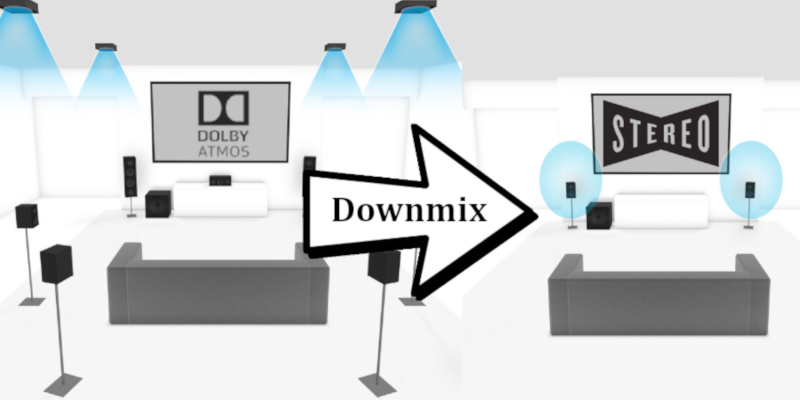
Record companies create the content that radio stations broadcast, currently, the record companies create stereo mixes to send to the radio stations, these same record companies could instead send "stereo" mixes that are actually SQ matrix encoded quad downmixes of Atmos immersive mixes.

So now you say they "could instead send." "Could" is different from "would." So you think they'd just do this without telling anyone?

Keep in mind that a lot of radio stations don't get their music from the record labels.
 
My main point is that it seems like immersive audio is growing in popularity and an Atmos/360RA mix of a song may be the only one available, at some point, a "stereo" mix would need to be provided to radio stations, I'm just saying that an existing quad matrix system could be used to provide surround sound via that stereo mix and a stereo radio station could be broadcasting surround sound with no effort on their part (other than playing the [quad matrix encoded] song).


Kirk Bayne
 
It would be a (radio) industrywide thing, the record companies would do the Atmos -> quad downmix -> SQ matrix encoding for stereo and send the music to radio stations already encoded, the radio stations could choose to announce that they are broadcasting surround sound.
Kirk, while I admire your willingness and ability to think outside the box, this is simply not going to happen. If for no other reason, radio stations have been down these kinds of ratholes too many times in the past where they were told certain technologies were going to improve or "change" the industry, only for them to invest $$$ in it and get burned with little to no return in the end. AM stereo, HD Radio, the list goes on... And as I previously stated, in 2022 there are just too many other ways that people are getting their content outside of radio. For many college kids and younger, radio isn't even a factor; They're streaming their favorite music, listening to their MP3 players or using services like Pandora, Spotify and the like. Go to most any larger company where employees are working in cubicles and you see no radios. Instead, you see staff using earbuds, connected to smartphones or maybe their laptops via Bluetooth. Respectfully, something like this will not "save" radio or be a "game changer". Rather, it's simply a "non-starter".
 
Last edited:
My main point is that it seems like immersive audio is growing in popularity

It's growing in popularity among a very small group of audiophiles. A niche within a niche. The is not a mass market thing.

The record label people I talk to are seeing this as a secondary thing, an option that they would sell, not give away to radio.

They hope it will revive their physical product sales, in the way vinyl did. Very small market thing.
 
Let's just say that radio stations agreed to do this. How many recorded songs can support it? Would this be a future thing only or would older recordings have to be remastered to take advantage. Seems like the content isn't there to make this viable.
 
Let's just say that radio stations agreed to do this. How many recorded songs can support it? Would this be a future thing only or would older recordings have to be remastered to take advantage. Seems like the content isn't there to make this viable.
....and where would consumers get receivers to decode and allow them to listen to it in true Dolby Atmos audio as intended? What company(s) would be willing to design and take a chance on marketing said receivers/radios? Again, AM stereo went nowhere. You'd be hard pressed to find an HD radio for "at home" listening in any brick/mortar store and relatively few cars, even from the larger manufacturers, even offer HD radios as an option, much less as part of the standard radio/audio/entertainment package.

While perhaps an interesting 'what if" thread, that's as far as this would ever go and as seriously as it would ever be taken.
 
If a 2-channel downmix of Atmos is attempting to retain any surround effect, it would be via Dolby Surround / Pro Logic encoding, not SQ quad. Nobody is going to revive that dead, poorly-performing gimmick which had only 3 dB of front-to-rear separation without the help of "logic steering" circuits (which is what Pro Logic is a more sophisticated form of).

And mono compatibility is still important, not just for radio, but for all the people who walk around wearing only one earbud or AirPod. (I assume it's smart enough to mix L+R to mono if it detects only one AirPod in use?)
 
Let's just say that radio stations agreed to do this. How many recorded songs can support it? Would this be a future thing only or would older recordings have to be remastered to take advantage. Seems like the content isn't there to make this viable.
I suppose there could be some sort of surround-sound simulator program, to make non-coded music sound compatible.

Still, not sure if this will or would really gain traction. Maybe in 15 years or so it could? I mean, who knows? Who would have predicted the almost sudden death of the CD? It went from giving the music industry their biggest revenues in history, to the niche that CDs have become now, just within 10-15 years. It's easy to downplay a new technology for various reasons, but not entirely easy to see the future.
 
....and where would consumers get receivers to decode and allow them to listen to it in true Dolby Atmos audio as intended? What company(s) would be willing to design and take a chance on marketing said receivers/radios? Again, AM stereo went nowhere. You'd be hard pressed to find an HD radio for "at home" listening in any brick/mortar store and relatively few cars, even from the larger manufacturers, even offer HD radios as an option, much less as part of the standard radio/audio/entertainment package.

While perhaps an interesting 'what if" thread, that's as far as this would ever go and as seriously as it would ever be taken.
Well, eventually "radio" stations will just be another stream on 5G, so the software might be available on the phones that would be used to listen to such "radio", the same way phones are used to listen to "radio" now.

I mean, that could be workable.

Now, whether it will actually happen? hard to say. Will smart speakers play it, especially when they're mostly mono?

Then again, will smart speakers still be around in 15 years?
 
Well, eventually "radio" stations will just be another stream on 5G, so the software might be available on the phones that would be used to listen to such "radio", the same way phones are used to listen to "radio" now.

I mean, that could be workable.

Now, whether it will actually happen? hard to say. Will smart speakers play it, especially when they're mostly mono?

Then again, will smart speakers still be around in 15 years?
But going back to what TheBigA correctly stated. Things like Dolby Atmos sound great - In a proper room or space with the proper amount of speakers all correctly tuned, etc. This isn't something that would be terribly practical for a car or a pair of earphones or earbuds, and generally when someone comes up with "the next big thing" like quadraphonic sound, 5.1 or 7.1 surround, Blueray and even 3D for home movie use (which there have been a few different attempts at generating), they end up being passing fads.

Also, keep in mind that people are downsizing...Expensive home stereos are passe. Once, 5.1 surround systems for people's living rooms for watching movies at home were somewhat of a status symbol. Now a much simpler 3.1 system or even a soundbar under the TV with a subwoofer can sound pretty darn impressive and it's much simpler to set up and operate.
 
All I have to say about this entire thread is: Good Lord.
Nothing like that is ever happening. High-end audio is nearly dead while people... buy $250 ear buds to hear compressed audio on their phone... put Amazon Alexa devices all over the house and use them like radios... while cars have to much vehicle noise, airflow noise and traffic noise for even most stereo product to be distinguishable... while radio stations are cutting budgets... while the FCC requires all multi-channel systems to be mono compatible... while nearly nobody is buying new stand alone radios of any kind.

The only reason it might happen is: uh, well, er....

Did I miss anything?
 
Nothing like that is ever happening. High-end audio is nearly dead while people... buy $250 ear buds to hear compressed audio on their phone... put Amazon Alexa devices all over the house and use them like radios... while cars have to much vehicle noise, airflow noise and traffic noise for even most stereo product to be distinguishable... while radio stations are cutting budgets... while the FCC requires all multi-channel systems to be mono compatible... while nearly nobody is buying new stand alone radios of any kind.

The only reason it might happen is: uh, well, er....

Did I miss anything?
Nope, that about sums it up. I attribute it to another example of 'Rip VanWinkle-syndrome'.
 

Strangely, no mention of a process to create any sort of matrix "quad" encoded (old Dolby Surround, SQ etc.) Atmos -> stereo downmix.

Too bad that the old Dolby Surround matrix encoding isn't mono compatible (all surround info is lost in mono), perhaps a phase shift degrees in addition to a % amplitude selection would allow the downmix to also appear to be matrix "quad" encoded without using a specific matrix "quad" "encoder.


Kirk Bayne
 
It's probably great technology. But a couple decades too late. It's all earbuds anymore.

And I have yet to try a pair of earbuds that sounds as good as a pair of Sony MDR 7506's. But who buys Sony professional headphones, except radio and broadcast people, and a handful of recording studio types.? And even then, that doesn't meant they'll sound good. Last time i was in a recording studio the guy had the Sony headphones mixed too loud, too midrangy, they sounded worse than dollar store headphones... They were probably blown out by misuse.

So even good headphones or speakers doesn't guarantee great sound. People just accept what they're used to.

High end audio is kind of like ham radio -- a great hobby for guys who remember stuff they really wanted when they couldn't afford it. I hate to say that, but I think it's true. Like Mr. Eduardo says, people use earbuds to hear compressed music and think a sound cube sounds super. OK.
 
High end audio is kind of like ham radio -- a great hobby for guys who remember stuff they really wanted when they couldn't afford it. I hate to say that, but I think it's true. L
Totally agree. I'm sure there is still a tiny percentage of audio or videophiles out there somewhere, but nothing like the 70's had. I'm sure that tiny percentage is still using their 70's era gear too.
 
as I sit here in my Florida "man town" with a about 1300 CD's and a decent 5.1 setup, some of my favorite CD's or should I say SACD's or concert DVD's in 5.1 put a smile on my face..... Yellow Brick Road in SACD is fantastic.

The Glen Campbell live in Souix City DVD is in 5.1 ( it is also made out of unobtanium, just try to find one ) and it is a real ear opener as far as sound goes

Unfortunately we can't get HD radio to catch on, hoping for anything better is like hoping a Unicorn
is going to show up with the Easter Bunny
 
IMHO, the DynaQuad/Hafler passive speaker matrix surround sound "decoder" sounds best with stereo content (better that Dolby Pro-Logic 2 music mode).

There's somewhat of a surround sound playback infrastructure (may be soundbars, but it is there), radio can take advantage of it by broadcasting matrix encoded surround sound downmixed from surround sound master recordings - it's close to a free lunch for radio, they just play the stereo matrix encoded quad content, no new broadcasting equip is needed.


Kirk Bayne
 
Status
Not open for further replies.


Back
Top Bottom