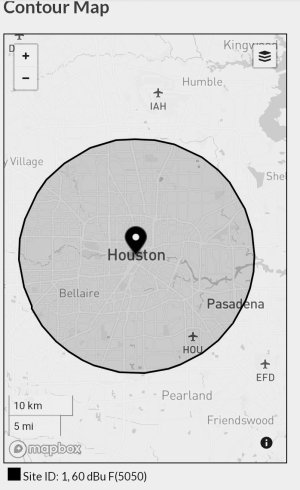
And it will have really nice coverage from downtown with 99 Watts on 89.7 MHz.This is a translator for 1400 KHCB (AM) which is the Spanish language service. Obviously they are wanting a wider presence on FM to add to the existing 101.5 translator on the south side.

-
Get involved.
We want your input!
Apply for Membership and join the conversations about everything related to broadcasting.
After we receive your registration, a moderator will review it. After your registration is approved, you will be permitted to post.
If you use a disposable or false email address, your registration will be rejected.
After your membership is approved, please take a minute to tell us a little bit about yourself.
https://www.radiodiscussions.com/forums/introduce-yourself.1088/
Thanks in advance and have fun!
RadioDiscussions Administrators
You are using an out of date browser. It may not display this or other websites correctly.
You should upgrade or use an alternative browser.
You should upgrade or use an alternative browser.
K218EJ Houston
- Thread starter Engineering
- Start date

What is the problem? In radio, which is the scope of this board, the FCC has specific descriptions and definitions of what "educational / noncommercial" means.Which raises all sorts of questions about these quasi-religious organizations that attach the word "education" to their brand.
KHCB is AM. Who really listens to AM any more?It seems interesting that a flurry of modifications are being submitted, and the license transfer hasn't even consummated.
Also, judging from the proposed coverage map, it doesn't seem like it covers a lot of real estate. Since the primary station is KHCB, isn't that same area already saturated by KHCB anyway?
HAM radio nuts and us bored oldtimers contributing to this forumKHCB is AM. Who really listens to AM any more?
Nope see today I spoke to someone that knows what is going on with KHCB and its really what I have been saying. The translator moving is a noncommercial translator not much sara franco could do with that. So here is now a great deal for good Ol KHCB let me get you a signal out of downtown much better than what you have and you in exchange give us 101.5 to run another format on. 3,2,1 i can assure you this deal was not made out of the kindness of any one's heart. Anyone know if 105.7 is HD ready? From what i was told today this deal has many moving pieces.This is a translator for 1400 KHCB (AM) which is the Spanish language service. Obviously they are wanting a wider presence on FM to add to the existing 101.5 translator on the south side.
KACC use to have a amazing radio program for students a lady i think by the name of kathy was in charge i remember getting invited as a guest a while back to talk to the students and it seemed everyone was having a great time but a few months later she passed away of cancer and the whole program really was never the same.It seems interesting that a flurry of modifications are being submitted, and the license transfer hasn't even consummated.
Also, judging from the proposed coverage map, it doesn't seem like it covers a lot of real estate. Since the primary station is KHCB, isn't that same area already saturated by KHCB anyway?
0
011nerve
Guest
I thought that translator KHCB was getting was owned by Hector Guevara (Sara's ex), not her.
A lot of people if you look at the ratings in the major cities.. David why such a negative attitude toward AM? Oh never mindKHCB is AM. Who really listens to AM any more?
When I lived in Houston I loved listening to KACC. The students really ran it great... sad to hear that it's gone downhillKACC use to have a amazing radio program for students a lady i think by the name of kathy was in charge i remember getting invited as a guest a while back to talk to the students and it seemed everyone was having a great time but a few months later she passed away of cancer and the whole program really was never the same.
In major markets a few heritage AMs with blowtorch signals will pull some decent numbers. But the audience skews very old, and the remainder of the AMs in those places have trouble drawing flies.A lot of people if you look at the ratings in the major cities.. David why such a negative attitude toward AM? Oh never mind
KHCB is a dinky graveyard signal. Nobody is going to confuse it with WCBS, WFAN, KNX, WBBM, WGN, KCBS, etc. HCB knows where the audience is, and it’s not AM.
0
011nerve
Guest
I'm all for the FCC to cancel AM altogether, and give FM signals out to replace it.
The trouble is all the channels are used up by now, at least in the major markets.
The trouble is all the channels are used up by now, at least in the major markets.
D
Deleted member 108832
Guest
...and also the oldest continuously licensed Houston-Galveston facility in the market. Yep, it predates KPRC by 2 years, KTRH (in Houston) by 6.KHCB is a dinky graveyard signal.
It's an afterthought now, but was once the pearl in the Galveston oyster for nearly 7 decades.
All the channels are used up under the current spacing rules. The FCC could always take a page out of the Mexican playbook and change spacing requirements from 800 to 400 kH. But that opens up a massive can of worms.I'm all for the FCC to cancel AM altogether, and give FM signals out to replace it.
The trouble is all the channels are used up by now, at least in the major markets.
Of course, existing operators would likely object to such a proposal on the grounds of "interference", but we all know they simply don't want to increase competition. Then there is the issue of figuring out who gets preference on newly opened channels. Since there isn't enough space for everyone, how does the FCC decide who gets to transition? Are minority owners prioritized? Non profits? Older licenses get the "first here, first served" treatment? At that point, it would make sense to debate opening up the lower 20 channels to commercial operators. It makes very little sense to continue segregating stations in this day and age.
I am 99% certain that the FCC won't change spacing requirements on the FM band. So further speculation is a waste of time. AMs will just have to face their inevitable demise without a lifeboat from the FCC in the next few decades.
That depends on the content. If it's music on AM, the audience has moved to higher-fidelity broadcasts, such as FM, HD, Satellite and Streaming. News/Talk and Sports formats still draw a significant audience, because the frequency response of speech is compatible with the frequency response of AM broadcasting. I think the deciding factor is the quality of the content.KHCB is AM. Who really listens to AM any more?
A big part of the issue is the quality of AM radios. When AM HD was being developed, I attended an NAB engineering session with Bob Orban. He presented a study of the frequency response of a big and wide selection of AM radios, including car radios, home radios and even portables.That depends on the content. If it's music on AM, the audience has moved to higher-fidelity broadcasts, such as FM, HD, Satellite and Streaming. News/Talk and Sports formats still draw a significant audience, because the frequency response of speech is compatible with the frequency response of AM broadcasting. I think the deciding factor is the quality of the content.
His conclusion is that the proposed cut in AM bandwidth to 5 kHz at the high end would make an almost minimum difference as most radios rolled of steeply before that point and only a few got a bit over 5 kHz and none reached 6 kHz. So what you get with the average radio is not going to have any of the harmonic depth of even the human voice. AM is not a viable medium today.
And then, in the top 100 markets, there are only about 180 total stations with a usable (10 mVm) day and night signal over at least 80% of the Nielsen market, so some markets have 4 or 5 good signals, and many have 1 or none.
And that's the problem. Because the FM broadcast band is finite, and there are no available channels, at least in the major markets. I suppose the Commission could refarm Channels 2 through 6, which would open up plenty of real estate, especially since most television stations have migreated to the UHF channels, and those that remain, the low-power stations in particular (Channel 6, for example), are experiencing coverage problems.I'm all for the FCC to cancel AM altogether, and give FM signals out to replace it.
The trouble is all the channels are used up by now, at least in the major markets.
The other option would be to gradually phase-out standard AM broadcasting and replace it with AM-HD, either through a date certain (like with digital television), or as a requirement for license renewal or modification, followed by a migration to full-digital MA3. HD requires a royalty, but MA3 does not. The FCC could assist by requiring all new radios which feature AM to be HD, including radios in cars.
The problem with AM is that it's old technology. The Commission experimented with AM Stereo in the 1980s, but by that time the migration to FM was well underway, and AM Stereo is still AM. Then the Expanded AM Band was introduced, but this also didn't have the desired effect, because (unlike FM) AM was not suffering from a lack of available channels.
Robert Douglas
Banned
So sad to hear all of you people bashing AM radio. It is, along with YouTube, my only form of entertainment. ( OK, well there are a few others, like this forum!)
Just because you don't like the content is not a good reason to be so condescending. It makes y'all sound like WOKE people or something similar. Most of your criteria for good or bad seems to be about whether it will sell to advertisers. Is this forum only about the commercial money making side of radio? Most of my favorite AM stations have tons of advertising. Profitable? I don't know, but they continue to do what they do and they do it well.
Regarding audio, and in fact the future of music radio itself - It is dying. Why? Because of Mr. Bob Orban and people like him (probably all nice and smart people) who have created monsters which produce a form of distortion that no human being can stand for too long when listening to music. AM or FM makes no difference (except in some of these new cars with 4KHZ AM audio, which I agree is despicable). But, even though the letter "S" has been removed from the English/Spanish language in these new AM car radios, at least I can listen to distant stations all over town with way less than a 1 mV/m signal.
There are many kinds of audio distortion; Harmonic, Amplitude, Frequency, Phase, Noise, etc. The Bob Orban system and evil devices like it produce a kind of distortion that is hard to define but is surely killing radio for music programming. It seems to squeeze each frequency band separately into an unsavory mess that makes a mockery of what the musical artist intended. (side note: some modern artists seem to play to the problem by squashing the program material itself!)
So, hifi radio is basically screwed from both the transmitter and the receiver side. What's left of radio will have to go to all talk or maybe die completely. Only the FCC could save it by mandating and enforcing clean audio on both sides.
Just because you don't like the content is not a good reason to be so condescending. It makes y'all sound like WOKE people or something similar. Most of your criteria for good or bad seems to be about whether it will sell to advertisers. Is this forum only about the commercial money making side of radio? Most of my favorite AM stations have tons of advertising. Profitable? I don't know, but they continue to do what they do and they do it well.
Regarding audio, and in fact the future of music radio itself - It is dying. Why? Because of Mr. Bob Orban and people like him (probably all nice and smart people) who have created monsters which produce a form of distortion that no human being can stand for too long when listening to music. AM or FM makes no difference (except in some of these new cars with 4KHZ AM audio, which I agree is despicable). But, even though the letter "S" has been removed from the English/Spanish language in these new AM car radios, at least I can listen to distant stations all over town with way less than a 1 mV/m signal.
There are many kinds of audio distortion; Harmonic, Amplitude, Frequency, Phase, Noise, etc. The Bob Orban system and evil devices like it produce a kind of distortion that is hard to define but is surely killing radio for music programming. It seems to squeeze each frequency band separately into an unsavory mess that makes a mockery of what the musical artist intended. (side note: some modern artists seem to play to the problem by squashing the program material itself!)
So, hifi radio is basically screwed from both the transmitter and the receiver side. What's left of radio will have to go to all talk or maybe die completely. Only the FCC could save it by mandating and enforcing clean audio on both sides.
- Status
- This thread has been closed due to inactivity. You can create a new thread to discuss this topic.