HD does NOT require to be hooked to the internet...that's BS! I've worked many HD stations with no internet.. a digital STL does the job just fineSpeaking In general terms and not about any HD broadcaster in particular, these HD modulators are required to be connected to the internet at all times. An extremely greedy company known as Ibiquity (or whatever they call themselves now) can activate or deactivate the encoding process just like Comcast can turn off a cable box. 97.5 has an HD modulator. Its connected and powered on. Could be Gow refuses to capitulate to Ibiquity's fees?

-
Get involved.
We want your input!
Apply for Membership and join the conversations about everything related to broadcasting.
After we receive your registration, a moderator will review it. After your registration is approved, you will be permitted to post.
If you use a disposable or false email address, your registration will be rejected.
After your membership is approved, please take a minute to tell us a little bit about yourself.
https://www.radiodiscussions.com/forums/introduce-yourself.1088/
Thanks in advance and have fun!
RadioDiscussions Administrators
You are using an out of date browser. It may not display this or other websites correctly.
You should upgrade or use an alternative browser.
You should upgrade or use an alternative browser.
KFNC tower near Winnie nearly unlit.
- Thread starter Fieldtech1
- Start date
You are correct as long as the digital STL can carry ethernet IP traffic along with traditional audio streams. Have you seen the old verizon hotspot they are using to get audio and data to 97.5?HD does NOT require to be hooked to the internet...that's BS! I've worked many HD stations with no internet.. a digital STL does the job just fine
And that's not true either. You can transport the audio to the transmitter any way you want for HD1-HD4. It does not need to be a digital STL, it can be analog phone lines, however digital STL is nicer. You just need the right equipment at the transmitter site to interface with the Importer/Exporter. From the Importer/Exporter you do need a IP connection to the exciter.You are correct as long as the digital STL can carry ethernet IP traffic along with traditional audio streams.
If you are pushing dynamic Pad data then yes you do need an IP connection for that but not necessary if you information is static.
If you have intimate info for this site why are the tower lights such an issue?
The tower elevator is a bucket of rust. Anyone going up must climb the ladder. Strobe beacons and or wiring has failed. New beacons would have to be lifted by hand. We jokingly refer to it as the Leaning Tower of Pisa. You couldn't pay me enough money to try to climb that thingAnd that's not true either. You can transport the audio to the transmitter any way you want for HD1-HD4. It does not need to be a digital STL, it can be analog phone lines, however digital STL is nicer. You just need the right equipment at the transmitter site to interface with the Importer/Exporter. From the Importer/Exporter you do need a IP connection to the exciter.
If you are pushing dynamic Pad data then yes you do need an IP connection for that but not necessary if you information is static.
If you have intimate info for this site why are the tower lights such an issue?
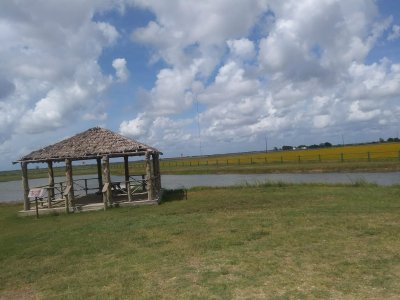
Attachments
That probably explains all the STL problems that frequently plague KFNC. Digital sputter/stutter/dropouts/buffering. One time the audio degenerated into a monotone “robotic voice” which was really bizarre.Have you seen the old verizon hotspot they are using to get audio and data to 97.5?
Not good news for a tower that is 21 years old. The proximity to the coast would explain all the rust issues. Probably gets my vote for “most likely to collapse” the next time a hurricane strikes this area.The tower elevator is a bucket of rust. Anyone going up must climb the ladder. Strobe beacons and or wiring has failed. New beacons would have to be lifted by hand. We jokingly refer to it as the Leaning Tower of Pisa. You couldn't pay me enough money to try to climb that thing

Then Gow’s network “flagship” would be lost and 92.5 would be on its own, so no difference for them.Not good news for a tower that is 21 years old. The proximity to the coast would explain all the rust issues. Probably gets my vote for “most likely to collapse” the next time a hurricane strikes this area.
Not sure if it has expired or not but they had a CP for a booster in Baytown. If there's ever catastrophe they can always move 97.5 to Baytown with reduced powerThen Gow’s network “flagship” would be lost and 92.5 would be on its own, so no difference for them.
When the main tower goes down the booster would have to go down.Not sure if it has expired or not but they had a CP for a booster in Baytown. If there's ever catastrophe they can always move 97.5 to Baytown with reduced power
Loss of primary station's signal. The booster station must be set up to go off the air if the main station's signal is lost. See47 CFR Sections 74.1234(a)(2) and 74.1263(b).
For now.......that's why I'm succeeding.
The truth is that radio is in a decline. Slowly, but surely, you'll eventually begin to feel the effects of people ditching terrestrial radio for better alternatives. Good salespeople that can sell ice to Eskimos are more than capable of keeping stations profitable. But there will be a day when the seasoned salespeople and experienced owners who know how to work local businesses will retire. This new generation is not interested in listening, much less selling/buying air time in radio. You are absolutely right about finding good salespeople. It has even been hard here and we have a great product to sell. I remember some stations where the owner of the business would say 'what's that' when you mentioned the station. I have not had to explain to anybody what we are; not even once (I'm shocked about that). We actually get calls and emails from businesses wanting to advertise a few times a week and about 50% actually buy. I'm glad I found this station!
Seems like a station that is well established. Small and mid sized market radio stations that have established relationships with local businesses will likely be the last stations standing.
Cellular operators upgrading to 5G has kept a lot of tower climbers busy. Dish is also not messing around and continues to build their new cloud-based 5G network.Not bulbs.. strobes...it has an elevator but tower guys are busy everywhere right now

It's a loss of around 9% in the last 22 years. Significant, but still leaving radio with a huge footprint85% reach is sad considering that number was well into the mid 90s just a decade ago. It's a massive shift! Nevermind that this is just "reach". The amount of time listening to terrestrial radio has also decreased as there is now more competition for consumers' attention.
2008 had huge changes due to the introduction of the PPM, which changed time spent listening by over 30% in the top 50 markets, home to nearly 60% of the 12+ population of the US. The decline in radio usage overall began in the late 90's due to... what nobody here mentions... computer gaming!That's great and all, but your gains pale in comparison to what the industry used to be pre-2008 (and it also doesn't tell the whole picture as your gains could be smaller than your competitor's losses).
2008 was a benchmark year, to be sure, as radio was hit with a perfect storm of the PPM, the recession and the introduction of the smartphone.
You are stuck with a definition of radio as being AM and FM. In fact, radio is really any live audio-only program service. Some would say that the word "free" should be attached, but either way radio is a pure audio service.Radio can definitely be profitable today. There's no question about that. But the same may not be said in a decade or two. It is a dying medium which will soon be dominated by non-profits and religious broadcasters.
The issue is that, other than AM and FM, nobody has found a way for free audio services to be profitable. The rights fees for digital streams make any effort to be profitable unsuccessful so far.
That is not a radio problem. Over dinner yesterday, a relative who manages a region for an industrial supply company was telling me how he believes that there is a generational problem: among those under about 45 it is hard to find a self-starting motivated seller. His reaction is to look among people who have been forced into early retirement in businesses that have migrated almost totally to Asia.It wasn't that long ago where we had the discussion about finding good salespeople in radio. The good salespeople who knew how to interact with existing and potential clients are on their way to retirement. Small operators are having a hard time replacing the staff that is slowly trickling out of the industry. Finding someone that is willing to do cold calls and maintain good relationships with local businesses is hard. And when you do find someone, keeping them is harder as the pay just isn't there.
We can say that about walk-in retail, too, just to name one example. But that is a much deeper-seated issue of American society and way beyond the scope of "radio".This industry is in its twilight years.
I really love these N=1 sample sizes.I’m 40 and I don’t listen to terrestrial radio either, only time I listen to it is during my morning drive to work listening to KLTN 102.9.
Nobody is willing to climb that tower, except maybe someone with a death wish.Is it possible that riggers won't climb the tower to replace the bulbs? I've had a few like that over the years.
Appears that CP is for an auxiliary site in Baytown, 3kw @ 172m HAAT.Not sure if it has expired or not but they had a CP for a booster in Baytown. If there's ever catastrophe they can always move 97.5 to Baytown with reduced power
Boosters are used for fill-in coverage where there is terrain blockage. Unless some mountains have sprung up recently between Winnie and Houston that I haven’t noticed, a booster would make no sense and would interfere with the main signal.
Last edited:
Is it to the point where the tower is structurally unsound? Might be time for the FAA and other relevant authorities to take charge. Who would ultimately “condemn” a tower of that height? Usually stations in such situations make the choice to move to a new site and tear down the old location before any calamity happens.Nobody is willing to climb that tower, except maybe someone with a death wish.
I think everyone is on the same page here David. Nobody is confused about the topic.You are stuck with a definition of radio as being AM and FM.
We're talking about terrestrial radio. I think that has been very obvious to everyone involved and the only person that takes issue with this is you.In fact, radio is really any live audio-only program service. Some would say that the word "free" should be attached, but either way radio is a pure audio service.
Respectfully, there is no need to be pedantic and scrupulous about this.
That's for a different discussion.The issue is that, other than AM and FM, nobody has found a way for free audio services to be profitable. The rights fees for digital streams make any effort to be profitable unsuccessful so far.
I'm of the belief that the industry will sort itself out (dare I say record labels decide to cut the middle men out?)
The massive difference here is that younger generations will continue to consume whatever supply your relative manages. The same can't be said about terrestrial radio. New generations (who will eventually become business owners/leaders) don't consume terrestrial radio and won't find any value in it like their fathers and mothers did.That is not a radio problem. Over dinner yesterday, a relative who manages a region for an industrial supply company was telling me how he believes that there is a generational problem: among those under about 45 it is hard to find a self-starting motivated seller. His reaction is to look among people who have been forced into early retirement in businesses that have migrated almost totally to Asia.
Several industries are changing because habits and values are evolving with every new generation of consumers.We can say that about walk-in retail, too, just to name one example. But that is a much deeper-seated issue of American society and way beyond the scope of "radio".
I see radio going the way of the payphone. Nobody in the 80s could have ever predicted a world without payphones in every street corner. But better technology eventually killed it. This is exactly what is happening to terrestrial radio. It won't be long before every radio sold will have some type of IP connectivity. We recently bought a couple of fleet trucks from Chevrolet and were surprised the WT base models had Bluetooth enabled radios.
Where else can they move to? KTHT blocks their path to Devers.Usually stations in such situations make the choice to move to a new site and tear down the old location before any calamity happens.
If y'all are right and the tower is a rust hazard, then it will be interesting to see what Gow does. Is the license worth a new expensive tower?
Government authorities can demand a solution, but they can't take over a tower as far as I know. If a tower owner fails to comply with FAA, FCC and other regulatory agency rules, they can be ordered to do so under penalty. The owner has the option of fixing the problem or taking the tower down.Is it to the point where the tower is structurally unsound? Might be time for the FAA and other relevant authorities to take charge. Who would ultimately “condemn” a tower of that height? Usually stations in such situations make the choice to move to a new site and tear down the old location before any calamity happens.
I'm now rather curious to know if a tower becomes a hazard and the owner does not remedy the situation can some government entity step in and take the tower down or have it repaired. I have never heard of this happening, and would not know even step #1 for such a process to happen. I assume that the first in the order of jurisdiction would be the FAA, but, again, I am just guessing.
Would you argue that remotely voice tracked segments or syndicated programs that have no connection to your city be considered live audio program service? I’ve heard voice tracked segments from people who have no local connection, they’re all pre recorded and not useful for the station because listeners notice the difference and make fun of the station. So radio can still have notoriety, but for all the wrong reasons.You are stuck with a definition of radio as being AM and FM. In fact, radio is really any live audio-only program service. Some would say that the word "free" should be attached, but either way radio is a pure audio service.
- Status
- This thread has been closed due to inactivity. You can create a new thread to discuss this topic.