• Get involved.
    We want your input!
    Apply for Membership and join the conversations about everything related to broadcasting.

    After we receive your registration, a moderator will review it. After your registration is approved, you will be permitted to post.
    If you use a disposable or false email address, your registration will be rejected.

    After your membership is approved, please take a minute to tell us a little bit about yourself.
    https://www.radiodiscussions.com/forums/introduce-yourself.1088/

    Thanks in advance and have fun!
    RadioDiscussions Administrators

Kkht 100.7

2. Salem has two missions: preach the Gospel and elect Republicans. it, it might do something else.

If they're truly interested in electing Republicans, they should distance themselves from Michael Medved and Glenn Beck, who are -not- Christians and who are actively-seeking the election of Hillary Clinton.
 
KCTA is listenable on cheapo radio alarmclocks and radios sitting on desk in cube farms?


I have witnessed anyone listening to radio on an alarm clock in an extremely long time.

I have held a job with no gaps in employment since 2003 and haven't witnessed anyone listening to a radio at work since 2005.

I was speaking about KCTA being listenable in my car.

I was driving through Winnie on Sept 10 around 7pm, and KCTA was booming off the windows of my car so strongly I had to turn down the volume. In addition, I had to look around to make sure I was on I-10 East Freeway and not the SPID.
 
Last edited:
I have witnessed anyone listening to radio on an alarm clock in an extremely long time.

I have held a job with no gaps in employment since 2003 and haven't witnessed anyone listening to a radio at work since 2005.

I was speaking about KCTA being listenable in my car.

I was driving through Winnie on Sept 10 around 7pm, and KCTA was booming off the windows of my car so strongly I had to turn down the volume. In addition, I had to look around to make sure I was on I-10 East Freeway and not the SPID.

I think that Ryan was giving examples of different kinds of home and work radios.

Since around 30% of listening is in the home, and another 30% or more at work (as can be seen from the diary market surveys which break this out) this listening is key to a station's success.
 
If they're truly interested in electing Republicans, they should distance themselves from Michael Medved and Glenn Beck, who are -not- Christians and who are actively-seeking the election of Hillary Clinton.

Salem is a publicly traded company. Salem cares about its stock price above everything else.
 
Michael Medved is not on KKHT. He is on KNTH. Medved is under contract with the Salem Radio Network and is one of the programs KNTH is required to carry. Glen Beck is not on any of our three stations. Therefore, he is not relevant to this part of the conversation. Also not relevant to the discussion is the religious persuasion of Michael Medved. KKHT is the Christian Teach Talk station. KNTH is the Newstalk station and KTEK is the Business Talk station. All three operations make money.


The station does not show in the Houston ratings. It has a pretty miserable signal indoors where there is man-made interference.

And I've never had a potential client want to tune in my station or stations while I was on a call.

Well - yeah - with the pathetic format they program now, I would be surprised if they show up in Corpus Christi ratings, let alone Houston or San Antonio.

Right now, I have a problem with yet another cheap Chinese wall wart gone bad in my house. Even with the abnormally high interference, KCTA punched right in. I found my wife's old 6 transistor radio from 50 years ago, and fired it up just for the heck of it. KCTA punched right in between local 1010 and 1050. It was hard to tell the difference between the three. I think with a decent format, they could probably gain a few listeners in SA, Houston, Brownsville. Even though it isn't as good as it used to be, it was impressive to come in on that old transistor radio.
 
Well - yeah - with the pathetic format they program now, I would be surprised if they show up in Corpus Christi ratings, let alone Houston or San Antonio.

Right now, I have a problem with yet another cheap Chinese wall wart gone bad in my house. Even with the abnormally high interference, KCTA punched right in. I found my wife's old 6 transistor radio from 50 years ago, and fired it up just for the heck of it. KCTA punched right in between local 1010 and 1050. It was hard to tell the difference between the three. I think with a decent format, they could probably gain a few listeners in SA, Houston, Brownsville. Even though it isn't as good as it used to be, it was impressive to come in on that old transistor radio.

Score one point for KCTA.

KCTA may have the best daytime signal in the US. WBAP may have them beat, but it's close.
 
Score one point for KCTA.

KCTA may have the best daytime signal in the US. WBAP may have them beat, but it's close.


KCTA doesn't come anywhere close to having the best daytime signal in the US.

Here are the top 20 signals by square miles by daytime 2 millivolt coverage area:
1. WBAP... 820... Dallas-Ft. Worth... 45,355
2. KRVN... 880... Lexington, NE... 43,666
3. WHB... 810... Kansas City... 42,923
4. KKYX... 680... San Antonio... 40,370
5. KFYR... 550... Bismark, ND... 38,731
6. WNAX... 570... Yankton, SD... 35,544
7. KKOB... 770... Albuquerque... 33,659
8. KTNN... 660... Window Rock, AZ... 32,976
9. KGNC... 710... Amarillo... 32,787
10. KLTT... 670... Denver... 32,325
11. KKSU... 580... Manhattan, KS... 31,992
12. KDWN... 720... Las Vegas... 31,347
13. WIBW... 580... Topeka... 30,850
14. KFRM... 550... Salina, KS... 30,262
15. KRLD... 1080... Dallas-Ft. Worth... 29,793
16. KOA... 850... Denver... 29,456
17. WLW... 700... Cincinnati... 29,250
18. KSJB... 600... Jamestown, ND... 29,243
19. WSCR... 670... Chicago... 29,149
20. KNBR... 680... San Francisco... 29,103

 
KCTA doesn't come anywhere close to having the best daytime signal in the US.

Here are the top 20 signals by square miles by daytime 2 millivolt coverage area:
1. WBAP... 820... Dallas-Ft. Worth... 45,355
2. KRVN... 880... Lexington, NE... 43,666
3. WHB... 810... Kansas City... 42,923
4. KKYX... 680... San Antonio... 40,370
5. KFYR... 550... Bismark, ND... 38,731
6. WNAX... 570... Yankton, SD... 35,544
7. KKOB... 770... Albuquerque... 33,659
8. KTNN... 660... Window Rock, AZ... 32,976
9. KGNC... 710... Amarillo... 32,787
10. KLTT... 670... Denver... 32,325
11. KKSU... 580... Manhattan, KS... 31,992
12. KDWN... 720... Las Vegas... 31,347
13. WIBW... 580... Topeka... 30,850
14. KFRM... 550... Salina, KS... 30,262
15. KRLD... 1080... Dallas-Ft. Worth... 29,793
16. KOA... 850... Denver... 29,456
17. WLW... 700... Cincinnati... 29,250
18. KSJB... 600... Jamestown, ND... 29,243
19. WSCR... 670... Chicago... 29,149
20. KNBR... 680... San Francisco... 29,103

I don't think KRLD belongs on that list. Their daytime signal is almost non-existent here in Houston - it takes a very good radio with great sensitivity and selectivity to even hear a signal. WBAP, on the other hand, is completely static free on a relatively humble Radio Shack 12-650 in my office along I-10. It is really strong in the car. The other directions I have tried KRLD, equally weak. Midland - it took a 400 foot longwire to bring it in clear, WBAP had only the slightest hint of static. Similar results in Lubbock. Comparing them with other DFW powerhouses - 570, 620, 660, 820, even 770 (before IBOC), they are nothing in most directions. I've tried from Oklahoma, Lousiana, the same every direction. I would expect all four of those DFW regionals to appear above KRLD on that list.

I can confirm - KGNC is a monster. At only 10,000 watts, they kick rear as well as any 50 kW station. I drove to Amarillo from DFW a few times, they overtook KEEL very early into the trip - 30 or 40 miles and they were dominant. 50 or 60 miles virtually static free, and stayed that way the rest of the trip. They go way into Colorado as well, haven't checked from Denver or Colorado Springs, but I bet they are still there.
 
KCTA doesn't come anywhere close to having the best daytime signal in the US.

Here are the top 20 signals by square miles by daytime 2 millivolt coverage area:
1. WBAP... 820... Dallas-Ft. Worth... 45,355
2. KRVN... 880... Lexington, NE... 43,666
3. WHB... 810... Kansas City... 42,923
4. KKYX... 680... San Antonio... 40,370
5. KFYR... 550... Bismark, ND... 38,731
6. WNAX... 570... Yankton, SD... 35,544
7. KKOB... 770... Albuquerque... 33,659
8. KTNN... 660... Window Rock, AZ... 32,976
9. KGNC... 710... Amarillo... 32,787
10. KLTT... 670... Denver... 32,325
11. KKSU... 580... Manhattan, KS... 31,992
12. KDWN... 720... Las Vegas... 31,347
13. WIBW... 580... Topeka... 30,850
14. KFRM... 550... Salina, KS... 30,262
15. KRLD... 1080... Dallas-Ft. Worth... 29,793
16. KOA... 850... Denver... 29,456
17. WLW... 700... Cincinnati... 29,250
18. KSJB... 600... Jamestown, ND... 29,243
19. WSCR... 670... Chicago... 29,149
20. KNBR... 680... San Francisco... 29,103

Square miles is a weird way to measure the distance a radio station covers.

I think a better way would be from as far east as you can hear the signal to the farthest west (or in WBAP's case, north to south).

For example, I can pull in KCTA from Kerrville to Breaux Bridge, or 482 miles.

WBAP looks like its listenable from Wichita to Port Aransas, which would be 700 plus miles, so yeah, WBAP is a more powerful signal. I know it can be heard in Port Aransas. I haven't tested Wichita.
 
I'll try to bring this back around, but first an off topic comment.

KFYR in Bismarck has an exceptional signal. Driving south back to Texas from Langdon, North Dakota (the county borders Canada), I listened to the daytime signal one summer day all the way to I-80 in Nebraska just as it was getting dark enough for my headlights to come on. Granted the last 50 miles were pretty rough listening. That was back before they sold to Clear Channel.

Salem has always had a good plan. They sell what few ministries still buy time versus offer a share of contributions. They produce programming that can serve the local market well but can air elsewhere on other Salem stations. In addition that programming can be cleared by other stations.

Salem is a business. Some confuse a broadcaster with lots of Christian stations as being a ministry or owned by people who only want to offer Christian programming. Since they can make Christian programming work for them, they don't fix what is not broken. They utilize other formats like Business Talk and Talk Radio. As I recall they kept KLUP in San Antonio in the format it had when they purchased it because it worked. They offer a news package. In short, the company was smart in that they distributed their eggs in several baskets to create a company that can be viable. I don't work for Salem and I don't own any Salem stock. Being in radio, I've seen what they do and see they have done things right.
 
Square miles is a weird way to measure the distance a radio station covers.

Why? That takes into account differences in directionality and/or different ground conductivity areas within the coverage area.

I think a better way would be from as far east as you can hear the signal to the farthest west (or in WBAP's case, north to south).

Most higher powered stations or low dial position stations, even if nominally non-directional, have irregular coverage areas based on the factors I just mentioned.

For example, I can pull in KCTA from Kerrville to Breaux Bridge, or 482 miles.

This is not about DXing ability, which is often due more to lack of on-channel and adjacent channel interference than actual coverage. In the table posted here, we are talking about 2 mV/m signals, not "ability to be heard". I could occasionally hear 250 watt Honolulu station KIKI on 830 in Ohio years ago... that does not mean the average listener would ever hear it.

WBAP looks like its listenable from Wichita to Port Aransas, which would be 700 plus miles, so yeah, WBAP is a more powerful signal. I know it can be heard in Port Aransas. I haven't tested Wichita.

WBAP's 2 mV/m signal falls on land areas, and it is located in one of the best (highest) ground conductivity areas of the nation.
 
Score one point for KCTA.

KCTA may have the best daytime signal in the US. WBAP may have them beat, but it's close.

Nearly half the KCTA signal falls over water. For practical reasons, that does not count.

The Corpus area is on a coastal swatch with a conductivity of 30, but moving just one county inland, it becomes 15 and then, farther inland, 8. So the signal does well along the coast but is squashed going to the radials lying from about 250° to 30°.

More important, the KCTA 2 mV/m signal covers about 1.5 million people, while the WBAP 2 mV/m covers nearly 9 million.


Nearly half the KCTA signal falls over water. For practical reasons, that does not count.

The Corpus area is on a coastal swatch with a conductivity of 30, but moving just one county inland, it becomes 15 and then, farther inland, 8. So the signal does well along the coast but is squashed going to the radials lying from about 250° to 30°.

More important, the KCTA 2 mV/m signal covers about 1.5 million people, while the WBAP 2 mV/m covers nearly 9 million.

You may not have much regard for DX listeners, but after living in the DFW market for 9 years, I can tell you that they are well aware of their reach and speak to a lot of rural issues from time to time far afield from DFW. And I have heard advertising from local businesses more than 100 miles away from the DFW area on WBAP, so somebody is selling ads in those dozens of small towns way out in their fringes. Or maybe they just click on a link somewhere to advertise on WBAP. But they are doing it.
 
You may not have much regard for DX listeners, but after living in the DFW market for 9 years, I can tell you that they are well aware of their reach and speak to a lot of rural issues from time to time far afield from DFW. And I have heard advertising from local businesses more than 100 miles away from the DFW area on WBAP, so somebody is selling ads in those dozens of small towns way out in their fringes.

The Dallas - Ft Worth radio market consists of 11 counties and is about 120 miles wide.

It is not unusual for at-the-edge of a market low-cost advertisers to use metro stations to bring residents of the metro out to buy. There are car dealers outside the LA area who use LA stations to give their "lower overhead / better prices" message to get folks to make the extra drive.

As to addressing "rural issues" a good portion of the DFW radio market geography is indeed rural, and many people in more urban areas work in agriculture-related fields, so the data is relevant.

Unless an advertiser is hoping to rope urban customers, they are not going to pay big city rates for a small town business.

WBAP no longer seems to show in the Abilene book, and is around a 1 share in the Waco and Kileen markets. Not enough to justify big city rates when there are loads of local stations at local rates.


Why? That takes into account differences in directionality and/or different ground conductivity areas within the coverage area.[SIZE]


It's a weird way to measure in the sense that, "What does 43,655 square miles mean?"

If I drive and lose a signal 300 miles from where I started, that means something. It doesn't tell me the whole story, but I get a general idea of which I can base a comparison.

If a station covers 43,655 square miles, do I divide by four to get an idea of when a signal starts and ends? Six? Eight?

43,655 square miles just doesn't compute.

If there is a formula that would help me know when a signal starts and ends based on square miles, please let me know.
 
It's a weird way to measure in the sense that, "What does 43,655 square miles mean?"

If I drive and lose a signal 300 miles from where I started, that means something. It doesn't tell me the whole story, but I get a general idea of which I can base a comparison.

If a station covers 43,655 square miles, do I divide by four to get an idea of when a signal starts and ends? Six? Eight?

43,655 square miles just doesn't compute.

If there is a formula that would help me know when a signal starts and ends based on square miles, please let me know.

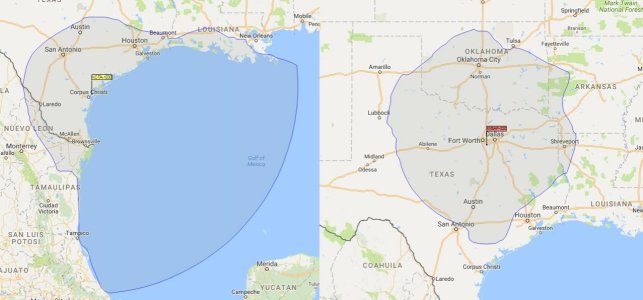
Perhaps it would help you to just see maps of the 2mv coverage areas of stations? KCTA and WBAP are shown here.
 

Attachments

  • coverages.jpg
    coverages.jpg
    81.1 KB · Views: 21
It's a weird way to measure in the sense that, "What does 43,655 square miles mean?"

If I drive and lose a signal 300 miles from where I started, that means something. It doesn't tell me the whole story, but I get a general idea of which I can base a comparison.

If a station covers 43,655 square miles, do I divide by four to get an idea of when a signal starts and ends? Six? Eight?

43,655 square miles just doesn't compute.

If there is a formula that would help me know when a signal starts and ends based on square miles, please let me know.

You are right in the sense that square mile coverage is generally not what is looked at when evaluation of a station coverage is reviewed.

The first, and most traditional metric, would be the coverage map. Huff posted examples. Stations often present absurd maps, though. 0.5 mV/M for example; that is not a usable signal in most situations. Today, in urban areas, 10 mV/m is the considered minimum to look at if you are buying a station. 5 mV/m might be usable in smaller markets, and rural signals down to 2 mV/m could be justified.

Station sales are just as often based on population coverage when a station is not of any value based on revenue or cash flow... what we call "stick value".

Distance from the transmitter is not a metric I have ever seen used other than in generalizations like "you can hear is for 50 miles up and down I-95".

Again, the reason distance is not used is that most stations cover different distances in different directions due to the differences in ground conductivity. Also keep in mind that dial position, watt for watt, is a major factor with 1 kw on 550 covering about the same as 50 kw on 1500, given identical transmission conditions of tower height (same wavelength fraction) and conductivity.
 
Great explanation, David.

If I'm in charge of sales for WBAP, I would not stump in Austin or OKC.

As a fan of radio, however, I'm excited about the clear signal I get from KCTA in Boerne or Lake Charles.

You see things differently than I, having a past/present influence in radio.

I did have a stint on KTSW in 2009 that I'm proud to mention. Other than that, I'm simply a fan and do not view radio signals in terms that you do.
 
Status
This thread has been closed due to inactivity. You can create a new thread to discuss this topic.


Back
Top Bottom