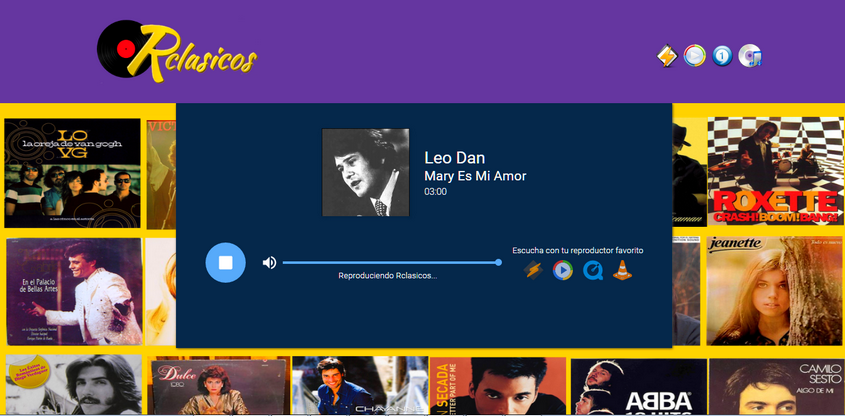
Just like English language stations, Spanish language station playlists depend on the format.
Among formats I have done, both in the US and in various parts of Latin America:
- CHR/Churban: deeper gold than English equivalents, perhaps 140 songs
- Tropical: whether salsa in PR, Merengue in the DR, Cumbia in Mexico and CA, Technocumbia in Perú, Cumbia Villera in Argentina, Vallenato in Colombia, etc: 250 to 600 songs depending on how many currents the genre has.
- Regional Mexican: current based stations around 220 to 280 songs. Gold based (ones that play ranchera) up to 500 songs
- Adult Hits: 600 to 900 songs
- Rock: while only a few exist that play only Spanish language rock, the library is about 500 to 600 songs.
- AC: deeper than CHR, and less reggaetón (if any): 500 to 700 songs.
These are my experiences. Other programmers may be tighter or broader in playlist size. And the popularity of different kinds of music and the total amount of usable gold will vary based on what the market has had on the radio locally.
Research is done exactly the same way as it is done in any country of the world that has commercial radio that does research.
I've been involved with testing in a dozen countries, and have friends who do research in Europe, Australia, SE Asia, and even several places in India and Africa. You define your target audience based on core music tastes, age, gender, income level (very critical in developing nations), recruit listeners or potential listeners and have them score your songs.
Each format tests as many songs as their experience shows will work, plus a lot of "what if" songs, just like the equivalent format in English language radio.
Miami is a market that is approaching 60% Hispanic, so the impact of Spanish language music is much broader and deeper. In LA, about 55% of Hispanics are English dominant and listen less or not at all to Spanish radio. Playlist sizes are dependent on the format, the PD, and the local research.
For example, if in a market there are people who grew up in a variety of different countries, and your format plays a lot of gold, then many songs will not work because they were not hits or were lesser hits in some of the origin nations of your audience.
More of that kind of music originated in Mexico than anywhere else. Then Spain, then Argentina, Puerto Rico, Chile, Colombia, and Venezuela. But few stations play that material any more as people who would have been teens when it was popular are mostly in their late 60's and 70's now, and Latin American ad buys target mostly young adults.
There is a stream from Ecuador that imitates the huge Top 40 station in Quito from the 60's and 70's, Radio Musical. It is a homage "station" that plays a lot of what I programmed on Radio Musical when I owned it, but I have not listened as I have no interest in re-listening to that music 50 or more years later. Radio Musical was, in fact, starting in 1964, the first Top 40 station in South America!
(Nearly all the artists you mention are Argentine... most of the hits in Ecuador back then were from Mexico and Spain. It was not until I started visiting Buenos Aires record companies around 1967 that those artists were exposed in northern South America.)
Final note: "Hispanic" radio stations would only be Spanish language stations in the United States. The term "Hispanic" was invented in the late 70's by the OMB to comply with the legal need for quantification of Latinos with a Spanish language heritage in the US. The term is, after 45 years, recognized in Latin America but thought of as a "crazy gringo" word... just as they are totally mystified (and unable to pronounce)
Latinx today.