True enough. But that's my point; there's room for radio that provides local news coverage. In California, between L.A. city hall politics and a heated gubernatorial race in 2026, there is room for local radio coverage that other media can't cover as well.I was talking about DJs. You're talking about news coverage. Two different things. In Los Angeles, you have KNX and KFI. as well as KPCC.
Radio is not one thing. You have lots of stations, lots of different owners, and lots of ways to approach what they do.

-
Get involved.
We want your input!
Apply for Membership and join the conversations about everything related to broadcasting.
After we receive your registration, a moderator will review it. After your registration is approved, you will be permitted to post.
If you use a disposable or false email address, your registration will be rejected.
After your membership is approved, please take a minute to tell us a little bit about yourself.
https://www.radiodiscussions.com/forums/introduce-yourself.1088/
Thanks in advance and have fun!
RadioDiscussions Administrators
You are using an out of date browser. It may not display this or other websites correctly.
You should upgrade or use an alternative browser.
You should upgrade or use an alternative browser.
Local Layoffs at Audacy (and a Resignation), the 2025 Edition
- Thread starter Joey1986
- Start date
But as I just noted in my previous reply, wouldn't you agree that there is a market for radio to provide, say, discussion of local L.A. politics and the 2026 gubernatorial election?Okay, so there's possibly the justification for two stations in a market, as long as those markets are large enough to justify the costs of news coverage and large enough to have sports teams with significant fan bases.
Fixed that for you.
there is room for local radio coverage that other media can't cover as well.
Other media, such as LAist? Have you gone there? Lots of local LA news and weather. The main thing, though, is that people have to support it.
As I've been saying, broadcast radio is transitioning its audience to other media. That's the entire thrust of what's happening at ESPN LA 710.
Yeah, I am familiar with LAist and I have read it from time to time. Does it attract the kind of numbers that local radio can?Other media, such as LAist? Have you gone there? Lots of local LA news and weather. The main thing, though, is that people have to support it.
As I've been saying, broadcast radio is transitioning its audience to other media. That's the entire thrust of what's happening at ESPN LA 710.
You're right. Smart broadcast radio is transitioning its audience elsewhere.
Yeah, I am familiar with LAist and I have read it from time to time. Does it attract the kind of numbers that local radio can?
It doesn't matter. It's available and people can use it. It's up to people to either listen to the radio or use the site. The options are there.
Public radio isn't in the Nielsen ratings business. They want to attract subscribed members. Apparently they're getting enough members.
It would be nice if the gov't and the FCC had the same concern for local news coverage. Right now they're attacking public radio.

Yeah, I am familiar with LAist and I have read it from time to time. Does it attract the kind of numbers that local radio can?
LAist is local radio. KPCC and LAist merged a little over two years ago:

LAist Is Taking Over Your Radio Dial: KPCC Will Be LAist 89.3
“The British expression is, the best products have the name on the tin,” said Herb Scannell, president and CEO.
 laist.com
In the January ratings, LAist 89.3 (which is how KPCC identifies itself) has a 2.7 share 6+ and is ranked 14th overall:

Los Angeles
Nielsen Audio PPM Monthly Ratings Los Angeles (Market #2) Population: 11,160,800 Black: 783,800 – Hispanic: 4,977,600 Average Quarter Hour Share for Persons 6+, Mon-Sun 6AM-Mid All ratings are Copyright © 2005-2024 The Nielsen Company. All rights reserved. Nielsen radio audience estimates and...
 radioinsight.com

In the SFBA, KQED still identifies as KQED. Its January 6+ share was 10.7, ranked #1, with a cume of 751K.In the January ratings, LAist 89.3 (which is how KPCC identifies itself) has a 2.7 share 6+ and is ranked 14th overall:
In the NYC market, WNYC was 5.2, a tie for #4, with a cume of 687K.
In Washington DC, WAMU was #1 with a 13.4 share and a cume of 620K.
So there are at least a few public stations that do alright using their own call letters as branding. If the brain trust at KPCC thinks that being cutesy with "LAist" branding has more cachet than "KPCC", the statistics (#14 with a 2.7 and 566K, in a month with a sh!t-ton of local disaster news) don't seem to bear that out.

I will share with you some things I found out while being part of the programming and research team of KTNQ, KLVE, KSCA and KRCD in Los Angeles: the vast majority of people who listen to "music stations" don't want their music interrupted with news and talk of any kind.True enough. But that's my point; there's room for radio that provides local news coverage. In California, between L.A. city hall politics and a heated gubernatorial race in 2026, there is room for local radio coverage that other media can't cover as well.
In the morning, music listeners want a bit of human contact... and enough brief news to know that the world has not ended overnight... but songs that make them feel good.
People know not to go to Home Depot or Best Buy for gasoline. They know not to go to music radio for news. But when they want gas, they go to a gas station; when the want news they know where to go on the air or on the web.
And, in the case of what will not be a "heated" governor's race (how can it be heated if the state is an absolute majority Democrat), most people only want the headlines, not the reports on every campaign speech and press release.
In the SFBA, KQED still identifies as KQED. Its January 6+ share was 10.7, ranked #1, with a cume of 751K.
In the NYC market, WNYC was 5.2, a tie for #4, with a cume of 687K.
In Washington DC, WAMU was #1 with a 13.4 share and a cume of 620K.
So there are at least a few public stations that do alright using their own call letters as branding. If the brain trust at KPCC thinks that being cutesy with "LAist" branding has more cachet than "KPCC", the statistics (#14 with a 2.7 and 566K, in a month with a sh!t-ton of local disaster news) don't seem to bear that out.
Which isn't what we were talking about, but okay. As you know, I think the branding is clunky, too, but I don't think there's a case to be made that this number would be better if they called themselves KPCC.
It's worth noting that the 2.7 is up from a 2.0 the month before, and that a cume of 566,000 is within spitting distance of KFI's 613,000.
KQED, WYNC and WAMU always perform well. An English-language NPR News station in heavily ethnic Los Angeles rarely does. This makes them the #11 English-language station in the market and the #10 English-language FM.
As @TheBigA says, they live on donations, not ratings, but I'd imagine they're pretty happy with that book.
And, in the case of what will not be a "heated" governor's race (how can it be heated if the state is an absolute majority Democrat), most people only want the headlines, not the reports on every campaign speech and press release.
Oh, I dunno, David---this guy versus Katie Porter (who announced she's running this week) or versus Kamala Harris (who is considering entering the race) could be pretty darned heated.
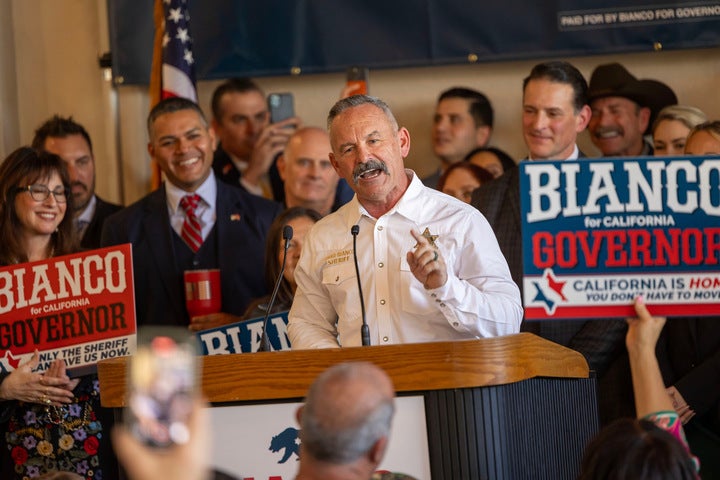
Trump supporting California sheriff launches Republican run for governor in race to succeed Newsom
Chad Bianco, a tough-on-crime Republican Sheriff in California's Riverside County and a 2024 Trump supporter, launches a 2026 campaign for governor in the race to succeed term-limited Gov. Gavin Newsom
Or this guy:
Or this guy:
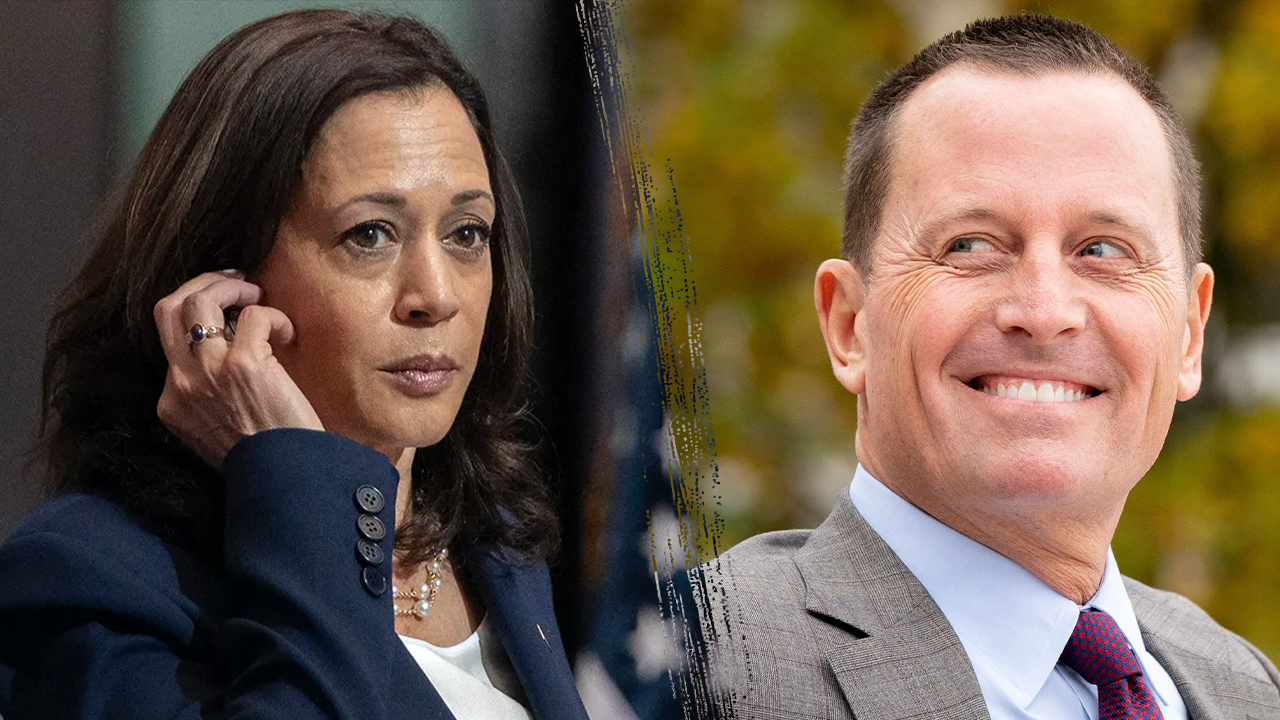
Top Trump official teases 2026 bid for California governor if Harris jumps in race
Richard Grenell, a longtime Donald Trump loyalist who is serving as U.S. envoy for special missions in the president's second administration, is floating a potential bid for California governor if former Vice President Kamala Harris also runs.
The GOP flipped eight California counties from blue to red in the '24 general. There's blood in the water.
Even if the math isn't there for a Republican win in the governor's race, it's gonna be heated.
The fairly broad group of centrist or Republican Hispanics I know have no interest... so far... in the primary. They accept that the Democrat will win, and some I have spoken with will not even bother to vote in either the primary or the general election.Even if the math isn't there for a Republican win in the governor's race, it's gonna be heated.
I can't say that this is a valid sample, but it does reflect what the thinking is. And, returning to radio, most everyone I have talked with says that they are sick of political talk on radio and TV. I wonder how this "overload" of political vitriol will affect the long term interest if newscasts and talk stations don't begin to cover broader subjects.
Another factor is the "what people say to surveys vs. what they really mean" type of response. People may say they are sick of all the political news and won't listen any more, but they really will.
I saw this also with the sex talk show on KTNQ in LA years ago. In perceptual research, people said they hated that show, and would not listen. But when they were asked follow up questions, many could name the exact subjects discussed in the last several shows that they "did not listen to".
I wonder how this "overload" of political vitriol will affect the long term interest if newscasts and talk stations don't begin to cover broader subjects.
Funny you should say that, considering that the oft-criticized NPR covers LOTS of broader subjects. Such as the Iditarod. Mush.
At one time, Cumulus had a policy that its local talk shows had to cover more things besides national politics. Of course that doesn't apply to their syndicated shows.

And in the morning, they hate-listened to Howard Stern!I saw this also with the sex talk show on KTNQ in LA years ago. In perceptual research, people said they hated that show, and would not listen. But when they were asked follow up questions, many could name the exact subjects discussed in the last several shows that they "did not listen to".
I specifically referenced iHeart as having figured things out, but whatever.Really? Have you talked to some of the hosts at iHeart lately? I know this thread is about Audacy, but I wouldn't generalize about radio based on Audacy.
But I would not consider NPR stations to be all talk, as they can often have a variety, ranging from music to news to talk.Funny you should say that, considering that the oft-criticized NPR covers LOTS of broader subjects. Such as the Iditarod. Mush.
And, of course, local politics, particularly in swing states, is a valid subject for local shows.At one time, Cumulus had a policy that its local talk shows had to cover more things besides national politics. Of course that doesn't apply to their syndicated shows.
You obviously don't know of what you speak, regarding how entertainment outlets cover the variety of radio, tv, film, and the union's total 19 active types of work contracts, since you are not a SAG-AFTRA member and do not know the contracts themselves, processes, scope or coverages of said union's jurisdiction.Wow, you flat out tell me I am wrong and then prove my point all in the same post.
With each passing day the union that represents television and radio talent becomes increasingly irrelevant. The only way they survive is with their "closed shop" model. If they actually let talent choose union membership, they would see mass defections and fold up like a tent. And as I said, the most talented will be the first to go.
The simple rule is this in any industry: talented employees don't need the union, but the union cannot survive without them.
FYI, I am a former Teamster, I know of what I speak.
Have viewed and woked them before (a long time ago) in my professional work. They are not that different than other union contracts in other industries. Of course they are specific to the entertainment industry. All union contracts are specific to their industry. So what? Their commonalities are much more significant and relevant than their differences.You obviously don't know of what you speak, regarding how entertainment outlets cover the variety of radio, tv, film, and the union's total 19 active types of work contracts, since you are not a SAG-AFTRA member and do not know the contracts themselves, processes, scope or coverages of said union's jurisdiction.
The overall point remains true. Very talented individuals need the union like a fish needs a bicycle. The ones that are not as talented depend on the union to interfere with a the market on their behalf - to do their bidding for them.
The overall point remains true. Very talented individuals need the union like a fish needs a bicycle. The ones that are not as talented depend on the union to interfere with a the market on their behalf - to do their bidding for them.
Not the market. Someone needs to stand up to management. Not everyone has that ability.
The only reason there is as much live & local radio in LA is because of the union. If it was up to the owners, it would be very different. That's the choice.
It's not a forever thing. There is an expiration date to every contract. I was once in a union, and had a union protected job. After I left, the job was eliminated in a subsequent contract. That's the future.
Why does "someone need to stand up to management"? Nobody does in my profession, and somehow it all works out for everybody. Union not needed - period. Remember, it is management that provided the job in the first place, they can just as easily withdraw it. All employees need to remember that. Don't like it? Start your own company, be your own boss.Not the market. Someone needs to stand up to management. Not everyone has that ability.
The only reason there is as much live & local radio in LA is because of the union. If it was up to the owners, it would be very different. That's the choice.
It's not a forever thing. There is an expiration date to every contract. I was once in a union, and had a union protected job. After I left, the job was eliminated in a subsequent contract. That's the future.
Why does "someone need to stand up to management"?
We're talking about rank & file workers. Not specialists. Dentists or lawyers don't need a union. Radio DJs need a union. Just being good isn't enough in a business where introducing songs isn't a skill.
These pages are filled with posters crying about the changes in radio. Yes we know. Somebody moved the cheese. It happened 25 years ago. Who are they blaming? Management. So obviously there are some radio listeners who feel someone needs to stand up to management. Right now, the only thing that can do it is the union. The government isn't going to impose hiring quotas. And being talented simply isn't enough in most cases. You can hear it every day.
Remember, it is management that provided the job in the first place, they can just as easily withdraw it. All employees need to remember that. Don't like it? Start your own company, be your own boss.
Which is exactly what I did. People hire me for me, not because they have to. I get exactly what you're saying. I didn't like being a cog in a machine. But not everyone can be an owner. Somebody needs to be the worker bees or else nothing gets done.
Even owners need the power of associations to help get things done. Broadcasters have the NAB. It helps to have some help.