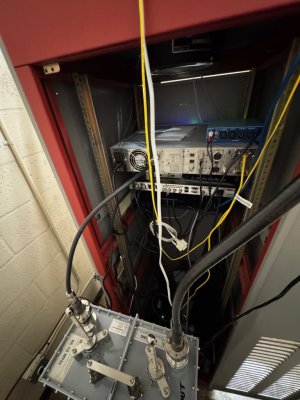
Looking up WZPP-LP on R-L it lists their website as voiceofthecaribbean.com ... and lists their frequencies as 94.3 in Miami and 102.1 in Fort Lauderdale. However I can not find anything listed on either city for them these frequencies. WKLG is near Key Largo or WRLX near West Palm would be major interference issues there anyway.

-
Get involved.
We want your input!
Apply for Membership and join the conversations about everything related to broadcasting.
After we receive your registration, a moderator will review it. After your registration is approved, you will be permitted to post.
If you use a disposable or false email address, your registration will be rejected.
After your membership is approved, please take a minute to tell us a little bit about yourself.
https://www.radiodiscussions.com/forums/introduce-yourself.1088/
Thanks in advance and have fun!
RadioDiscussions Administrators
You are using an out of date browser. It may not display this or other websites correctly.
You should upgrade or use an alternative browser.
You should upgrade or use an alternative browser.
Miami/Fort Lauderdale LPFM caught with 1000 watt ERP!
- Thread starter davideduardo
- Start date


Use bad tools, get bad results.Looking up WZPP-LP on R-L it lists their website as voiceofthecaribbean.com ... and lists their frequencies as 94.3 in Miami and 102.1 in Fort Lauderdale. However I can not find anything listed on either city for them these frequencies. WKLG is near Key Largo or WRLX near West Palm would be major interference issues there anyway.
On FCCdata.org, it's easy to pull up WQPN-LP on 94.3 and WNGK-LP on 102.1.
There's no usable signal from WRLX into Miami, and WKLG, when it's on the air at all, doesn't even get to Homestead, never mind all the way to Broward.
Use bad tools, get bad results.
On FCCdata.org, it's easy to pull up WQPN-LP on 94.3 and WNGK-LP on 102.1.
There's no usable signal from WRLX into Miami, and WKLG, when it's on the air at all, doesn't even get to Homestead, never mind all the way to Broward.
Well no wonder, both stations are listed as "Currently off the air" and hard to confirm that if im no longer in the local area to check. I do like to double check on FccData.org or FccInfo.com
Did see they have a even more LPFMs and more programing under the name / website iandiradio.com :
- 99.7 FM WWRG/WIDT Orlando
- 105.3 WVRO Vero Beach/Port St.Lucie
- 102.3 FM WEXI Miami Dade & Broward
Last edited:

That's EXACTLY why I tell the broadcasters to contact ME first prior to filing a formal complaint with the FCC. I am very well aware that there are those who may have simple misunderstandings. I get questions all the time from LPFM stations asking underwriting questions, and yes, some are simple things like thinking "it's only calls to actions, right?". They are also guided to the REC Compliance Guide.Do you take the same attitude with small town commercial or non comms who may just have a simple mis understanding of a rule or do you turn them in right away?
However, the simple misunderandings aside, I have heard about some very egregious cases, such as the smaller market LPFM that undercut the small owner commercial station for high school football rights and still aired commercials on the LPFM. These types of situations, where the station goes out of their way to violate the Nature of Noncommercial Educational Broadcasting in order for (1) someone to make a profit; and/or (2) so they can put the money back in for more toys that allow them to better compete for ratings with the commercial station. These stations get zero sympathy from me. There's no "get out of jail" free cards for LPFMs here at REC.
I want to see LPFM thrive, through building community connections and providing programming and other services that are compelling to the point where the station becomes sewn into the fabric of the community, where listeners will want to contribute and where businesses will pay because they want to be associated with the station where the businesses' simple support of the station speaks for itself without the need for calls to action, qualitative or other promotional statements.

K.M. Richards
Program Director, The Eighties Channel™
Echoing @Michi's statement, I believe that there are good LPFM operators (Hans Laetz at KBUU-LP in Malibu comes to mind) and there are bad LPFM operators (like the ones that are the subject of this thread).
In between are the small community groups who barely understand the legalities of operating LPFMs. Most of them do try their best, but some simply don't know what they are doing ... like the example Michi gave of the station that ran local high school football with advertising.
LPFMs are not supposed to "compete" with commercial stations, despite the NAB's ridiculous contention that they do. They are designed to be alternatives to what commercial broadcasters can do, because they are freed from the necessity to turn a profit for stockholders. The best LPFM operators know this. The worst ones deserve to have their licenses cancelled.
In between are the small community groups who barely understand the legalities of operating LPFMs. Most of them do try their best, but some simply don't know what they are doing ... like the example Michi gave of the station that ran local high school football with advertising.
LPFMs are not supposed to "compete" with commercial stations, despite the NAB's ridiculous contention that they do. They are designed to be alternatives to what commercial broadcasters can do, because they are freed from the necessity to turn a profit for stockholders. The best LPFM operators know this. The worst ones deserve to have their licenses cancelled.
Here's how I see it: LPFMs are to be unlike commercial stations on funding. Intentionally go where commercial radio doesn't. Go to businesses with budgets too small for the commercial stations.
Programming, I see no restriction whatsoever other than what somebody thinks. There are many places a sole station can super serve a small town that a full power could not do so financially. Such a station might have a mass appeal format complete with local information like the traditional small market station but be obviously non-commercial.
Programming, I see no restriction whatsoever other than what somebody thinks. There are many places a sole station can super serve a small town that a full power could not do so financially. Such a station might have a mass appeal format complete with local information like the traditional small market station but be obviously non-commercial.
Revolution 93.5's signal is exceptional. Maybe they don't get caught as they are simulcasting themselves to the northwest WBGF and WZFL to the southwest. No one to complain and they essentially full market coverage.I get it in east Broward, in Wilton Manors with minimal dropouts.
Did WBGF get to complete the upgrade of their site? They have a CP to move about 5 miles east (from Western Belle Glade to just east of the city). It doesnt look like much much alomg with the power increase (currently 15.5kw - up to 25kw) With similar coverage area from a shorter tower - but moving just a few miles east should see slight improvements, (especially east of I-95) in SE Palm Beach County. For me it was weak and lots of static on 93.5 all around Boynton on my Grundig & car radio. Wasn't decent until going NW toward Royal Palm Bch / Wellington / Loxahatchee, it was finally sounding great with almost no static more than 10 miles inland (West of US-441 - and also along 997 / Krome Ave from Homestead, North to Everglades Entrance / intersection with US-41 - likely WZFL there).Revolution 93.5's signal is exceptional. Maybe they don't get caught as they are simulcasting themselves to the northwest WBGF and WZFL to the southwest. No one to complain and they essentially full market coverage.
Last edited:
Couldn't add another edit to my previous post - but maybe someday I hope that Rev935 can add more coverage / move into the Key West area ... Maybe they can do that if they team up with the other Dance station in the area - Party 105.7 - and then maybe swap signals with WKEY on 93.7. Which would be great as is, but maybe they can so modify / move it to 93.5 to sync on channel with WZFL - but directional to the East - as to not interfere with Islamorada .... and since 105.7 is a stronger signal than 93.7, maybe they would someday gladly (if its worth it 💰💰) and that would be cool 🤷♂️
K.M. Richards
Program Director, The Eighties Channel™
When did this thread stop being about a couple of grossly overpowered LPFMs and instead about three full-power stations that might (or might not) be able to make changes in their facilities?
I think too many LPFM operators have unrealistic expectations about the coverage to expect going into the process. Some of it is spread by engineers that sell whole packages, engineering, license app, sell the equipment as a package and do (or find someone to do) the installation. When the coverage is not what the new licensee expects the obvious solution is just turn up the power. I think the work that REC is doing is admirable but wonder how it is possible to police so many operators who either don't know or don't care what their responsibilities are.
K.M. Richards
Program Director, The Eighties Channel™
I think too many LPFM operators have unrealistic expectations about the coverage to expect going into the process. Some of it is spread by engineers that sell whole packages, engineering, license app, sell the equipment as a package and do (or find someone to do) the installation. When the coverage is not what the new licensee expects the obvious solution is just turn up the power. I think the work that REC is doing is admirable but wonder how it is possible to police so many operators who either don't know or don't care what their responsibilities are.
I bolded and colored what I believe to be the most likely scenario, regardless of how a LPFM got their license in the first place. When you have licensees consisting of people with no previous broadcast experience, they simply don't know any better.
This is going to be a "closing the barn door after the horses escaped" thought, but maybe there needs to be a requirement for LPFMs to have a preset (and not readjustable) TPO that is automatically maintained, and there should be a certification to the FCC that said preset has been put in place by a registered broadcast engineer.
Hasn’t happened in over a decadeThe FCC would have a field day in Houston with LPFM's and Translators.
I have had this in the past, normally "we can't be picked up in location X, can't we just turn up the power?". The problem is two-fold: first, we can't just turn up the power as we have a legal limit; second, even if we could turn up the power, location X is behind terrain and we'd just be heating up the hillside with our power.I think too many LPFM operators have unrealistic expectations about the coverage to expect going into the process. Some of it is spread by engineers that sell whole packages, engineering, license app, sell the equipment as a package and do (or find someone to do) the installation. When the coverage is not what the new licensee expects the obvious solution is just turn up the power. I think the work that REC is doing is admirable but wonder how it is possible to police so many operators who either don't know or don't care what their responsibilities are.
Random punters, in as much as they have any understanding of RF at all, seem to see coverage as a circle around the transmitter site, and "more power" = "bigger circle".
The other one I've had is "some other station is interfering with our signal on the edge of our area", again with power suggested as a solution. I don't even need to write out why that would be a bad idea.
K.M. Richards
Program Director, The Eighties Channel™
Random punters, in as much as they have any understanding of RF at all, seem to see coverage as a circle around the transmitter site, and "more power" = "bigger circle".
Which -- to keep this in the context of the thread topic, is precisely the wrong way any LPFM should be seeing it.

And the initial "let's get an LPFM" process tends to be ridden with the idea that contours beyond 65 mV/m can be counted on for good usable coverage.Random punters, in as much as they have any understanding of RF at all, seem to see coverage as a circle around the transmitter site, and "more power" = "bigger circle".
In the diary, where Home, Away and Car are registered separately, we saw that home listening was, on average, 80% in the 70 dB/u area and 95% in the 65 dB/u area. I have seen so many "rimshot" stations bought by people who think that a weak signal in an already over-radioed market will do well.
In case if anyone wants to understand the likely motivation for WZPP-LP, et al to operate at such "criminal" power levels, now it can be told:
I do support FCC enforcement towards LPFM stations that are violating §73.503 of the rules and §399b of the Communications Act. I do feel that the lack of broadcasters actually filing complaints, the FCC enforcing the rules and actually imposing forfeitures through NALFs (not just consent decrees, lower civil penalties and compliance plans) for the most egregious violators. This will send a message to the LPFM community that commercials (or "pushing the envelope" will be tolerated). Just because a station has an "-LP" suffix, they do not have a "get out of jail free" card from REC.
Yes, there are some LPFMers that are well-intended but they don't know all of the guidelines. These are not like WZPP, et al. I spoke to one station yesterday who was pretty much hung up on "calls to action" being the only taboo, not taking into consideration other categories of underwriting violations (qualitative, quantitative and other methods of promoting as opposed to identifying). When they started to read off examples of what they were saying on the air, I had to stop them noting these other issues. This why REC has a free compliance guide out there. Some entities (NFCB) require stations to pay (through membership) to see content like this.
I do support FCC enforcement towards LPFM stations that are violating §73.503 of the rules and §399b of the Communications Act. I do feel that the lack of broadcasters actually filing complaints, the FCC enforcing the rules and actually imposing forfeitures through NALFs (not just consent decrees, lower civil penalties and compliance plans) for the most egregious violators. This will send a message to the LPFM community that commercials (or "pushing the envelope" will be tolerated). Just because a station has an "-LP" suffix, they do not have a "get out of jail free" card from REC.
Yes, there are some LPFMers that are well-intended but they don't know all of the guidelines. These are not like WZPP, et al. I spoke to one station yesterday who was pretty much hung up on "calls to action" being the only taboo, not taking into consideration other categories of underwriting violations (qualitative, quantitative and other methods of promoting as opposed to identifying). When they started to read off examples of what they were saying on the air, I had to stop them noting these other issues. This why REC has a free compliance guide out there. Some entities (NFCB) require stations to pay (through membership) to see content like this.
There's a CCM station in Florida in a major market run by a major religious organization. That's about as much ID as I'm going to give. Someone must have told them that as long as they say "supported by" or "support comes from" they can basically run what are essentially 30 second spots. Now, I'm in NY listening to the station over the internet, so they may have two feeds, one going OTA and one online, so they may be in compliance with the FCC with their OTA signal. But the internet stream is most definitely not. And yes, I know, the internet stream is not regulated by the FCC.
supposedAll radio stations are supposed to have their equipment "secure".
They have Nautel VX300-LPOK, but you still need to be able to read the meters and control the transmitter. And, I'm sure this transmitter was not type certified for LPFM.