NAB petitions FCC to implement transition away from ATSC 1.0 TV signals between 2028 and 2030
The NAB has requested the FCC update its broadcast rules to implement a full transition away from ATSC 1.0 signals by 2030.
Last I heard around 20% of the audience (including me) enjoy FREE tv. Also I don't have to worry about on of the big programmers getting into a carriage dispute with Google, Direct etc. Its better than paying the cable company. I do stream Netflix but that is instead of going to theater and paying $8 for a bag of popcorn and a Sprite.If a TV tower falls in the forest...
Remember this is about the shutdown of ATSC 1.0. Unless you have a set capable of receiving ATSC 3.0 you will eventually lose OTA reception, assuming the NAB gets its way.Last I heard around 20% of the audience (including me) enjoy FREE tv.
Hopefully the FCC, If they go down this will give out "boxes" like they did during the anologe to digital conversation.Remember this is about the shutdown of ATSC 1.0. Unless you have a set capable of receiving ATSC 3.0 you will eventually lose OTA reception, assuming the NAB gets its way.
The output of a new ATSC 3.0 converter box could be fed into an ATSC 1.0 converter box which would then be hooked up to your old NTSC analog TV.🤯🤣Hopefully the FCC, If they go down this will give out "boxes" like they did during the anologe to digital conversation.
That wouldn't work as an ATSC 3 converter box wouldn't put out an ATSC signal onto coaxial, it would output to HDMI and maybe a composite cable. You would need a HDMI to composite converter as current tuners don't have a composite output.The output of a new ATSC 3.0 converter box could be fed into an ATSC 1.0 converter box which would then be hooked up to your old NTSC analog TV.🤯🤣
What value proposition does ATSC 3.0 offer to a 50+ year old viewer?
NAB is about to blow their foot off with a shotgun by forcing a shutoff of grandma's TV. Good luck. I'd rather give UHF TV spectrum to Tmobile to deploy more 5G.
And data casting? LOL who needs that with cheap low latency 5G everywhere?
Better and easier reception, more channel capacity, and most subchannel networks will be able be broadcast in HD.
None of this is relevant to the viewer. Existing channels work fine, look fine and don't require adding external box to the TV. This upgrade only benefits the broadcasters and forces very anti consumer features like non skippable commercials and no ability to record and save broadcasts in portable format.ATSC 3.0 will allow fewer stations to broadcast more channels. This could free up more channels for another mobile spectrum auction like what happened before with the transition from NTSC to ASTC 1.0.
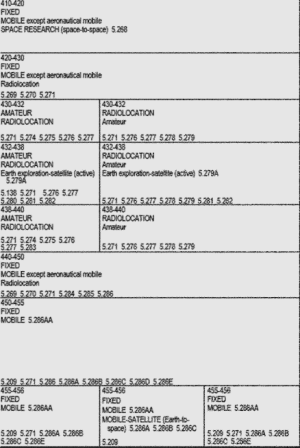
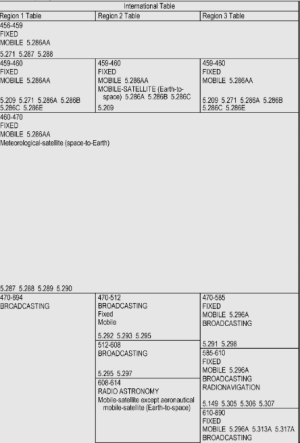
There has been a lot of chatter about the remaining UHF TV spectrum being reallocated for cellular use. However, at what point do the wavelengths become too long for practical use with the antennas in smartphones? The current low end of cellular spectrum is 614 MHz, which is around 48 centimeters. Take that down to 470 MHz and you’re at ~64 centimeters.OTA TV is just getting themselves set up for the loss of the remaining UHF TV spectrum for other (profitable) services.
To reiterate on this, here is bit rate vs. SNR (pdf) study from GatesAir. To get more data rate ATSC 3.0 will require more SNR which will hurt coverage. Already there are anecdotal reports of viewers reporting worse reception. Even at 4096QAM effective data rate is only 39 Mbit/s requiring 23 dB minimum SNR compared to 15 dB for 8VSB at 19 Mbit/s. But broadcasters will probably settle for middle of the road 256QAM for reliability which is only 26 Mbit/s. You are not doing serious 4K + other streams in this bandwidth. This whole 3.0 deal is a ploy to introduce DRM for enhanced revenue possibility for the broadcasters at viewers expense. FCC needs to tell NAB to pound sand.Better and easier reception, more channel capacity, and most subchannel networks will be able be broadcast in HD.
There has been a lot of chatter about the remaining UHF TV spectrum being reallocated for cellular use. However, at what point do the wavelengths become too long for practical use with the antennas in smartphones? The current low end of cellular spectrum is 614 MHz, which is around 48 centimeters. Take that down to 470 MHz and you’re at ~64 centimeters.
I tend to take talk of going even lower than 470 MHz with a grain of salt; plus you are also dealing with decreased data throughput capabilities at those lower frequencies.
It seems cell companies are concentrating on acquiring more mid-band spectrum between 2 and 5 GHz, while losing interest in the so-called “millimeter wave” spectrum above 10 GHz due to range issues.