
That's true in so many businesses. When recruiting employees, I would say, "I don't want rock stars. If all you have is rock stars, you end up with torn-up hotel rooms". The less weird way of saying the same thing was, "I want people that people want to work with". Competence is a part of that; so is the ability to collaborate and work toward common objectives.This is another case of not having to be a genius to run a radio station; you just have to surround yourself with people smarter than yourself and let them work!

-
Get involved.
We want your input!
Apply for Membership and join the conversations about everything related to broadcasting.
After we receive your registration, a moderator will review it. After your registration is approved, you will be permitted to post.
If you use a disposable or false email address, your registration will be rejected.
After your membership is approved, please take a minute to tell us a little bit about yourself.
https://www.radiodiscussions.com/forums/introduce-yourself.1088/
Thanks in advance and have fun!
RadioDiscussions Administrators
You are using an out of date browser. It may not display this or other websites correctly.
You should upgrade or use an alternative browser.
You should upgrade or use an alternative browser.
New Life for REELRADIO
- Thread starter michael hagerty
- Start date
For those with large collections of airchecks that you fear becoming lost to the ether once you're gone:
Why not upload all your MP3s and WAVs to the Internet Archive? In spite of the legal wranglings that have occurred as of late, it is not necessarily the case that potential future difficulties hosting certain kinds of contents, like books for rent, will have any effect on "ephemeral" types of media, or essentially what in the software world is called abandonware. It's also physically the most ideal place to store large volumes of media, as users with accounts may upload files of any kind and size. I have seen individuals create single repositories with thousands of files weighing in at hundreds of gigabytes total. Each collection receives a unique URL, and it can be browsed and downloaded similarly to how web browsers used to display the contents of FTP site directories. (What you upload doesn't get ensnared within fifty megabytes of JavaScript powering multi-layered menus with time-consuming hoops to jump through in order to download each file, like with certain commercial file hosting services.)
Here, for example, is one user's collection of 1940s wartime radio.
https://archive.org/details/WartimeRadio1940
It is rather small at only 160 MB, but by simply clicking the "SHOW ALL" link under "DOWNLOAD OPTIONS," you can directly list and download the individual files the collection consists of in an FTP (or Apache "Index of /") directory listing format:
https://archive.org/download/WartimeRadio1940
If nobody has ever bothered looking, the Internet Archive is swarming with these kinds of accounts, filled with people's personal uploads of all varieties of things. Just for example, when searching the term "aircheck" alone:
https://archive.org/search?query=aircheck
The benefit of using the Internet Archive for storage of audio and video media is that, unlike with Youtube, there is no content ID gestapo. Your files are also preserved as-is without being transcoded (the way Youtube transcodes the audio tracks in all videos to conform to standard, site-wide AAC and Opus bitrates).
To David Eduardo in particular, I am wondering whether a different part of the Internet Archives -- its "Archive-It" collections services -- could in any way help you. It is intended for hosting content at scale, like on behalf of non-profit libraries and other archivist institutions. I would say WRH qualifies as an institution. Have a look at the links below. The service allows searching within collections and distributes content to more than one data center for backup as well as regional internet outage resilience.
https://archive-it.org/
https://help.archive.org/help/archive-it-information/
Why not upload all your MP3s and WAVs to the Internet Archive? In spite of the legal wranglings that have occurred as of late, it is not necessarily the case that potential future difficulties hosting certain kinds of contents, like books for rent, will have any effect on "ephemeral" types of media, or essentially what in the software world is called abandonware. It's also physically the most ideal place to store large volumes of media, as users with accounts may upload files of any kind and size. I have seen individuals create single repositories with thousands of files weighing in at hundreds of gigabytes total. Each collection receives a unique URL, and it can be browsed and downloaded similarly to how web browsers used to display the contents of FTP site directories. (What you upload doesn't get ensnared within fifty megabytes of JavaScript powering multi-layered menus with time-consuming hoops to jump through in order to download each file, like with certain commercial file hosting services.)
Here, for example, is one user's collection of 1940s wartime radio.
https://archive.org/details/WartimeRadio1940
It is rather small at only 160 MB, but by simply clicking the "SHOW ALL" link under "DOWNLOAD OPTIONS," you can directly list and download the individual files the collection consists of in an FTP (or Apache "Index of /") directory listing format:
https://archive.org/download/WartimeRadio1940
If nobody has ever bothered looking, the Internet Archive is swarming with these kinds of accounts, filled with people's personal uploads of all varieties of things. Just for example, when searching the term "aircheck" alone:
https://archive.org/search?query=aircheck
The benefit of using the Internet Archive for storage of audio and video media is that, unlike with Youtube, there is no content ID gestapo. Your files are also preserved as-is without being transcoded (the way Youtube transcodes the audio tracks in all videos to conform to standard, site-wide AAC and Opus bitrates).
To David Eduardo in particular, I am wondering whether a different part of the Internet Archives -- its "Archive-It" collections services -- could in any way help you. It is intended for hosting content at scale, like on behalf of non-profit libraries and other archivist institutions. I would say WRH qualifies as an institution. Have a look at the links below. The service allows searching within collections and distributes content to more than one data center for backup as well as regional internet outage resilience.
https://archive-it.org/
https://help.archive.org/help/archive-it-information/
Last edited:

My site tech is looking at this. It appears that all the search functions, based on an embedded app, would not be allowed to execute on the IA service as they don't appear to allow any kind of app or software to be part of a preserved site. They seem to be preserving collections, not sites.To David Eduardo in particular, I am wondering whether a different part of the Internet Archives -- its "Archive-It" collections services -- could in any way help you. It is intended for hosting content at scale, like on behalf of non-profit libraries and other archivist institutions. I would say WRH qualifies as an institution. Have a look at the links below. The service allows searching within collections and distributes content to more than one data center for backup as well as regional internet outage resilience.
For those with large collections of airchecks that you fear becoming lost to the ether once you're gone:
Why not upload all your MP3s and WAVs to the Internet Archive? In spite of the legal wranglings that have occurred as of late, it is not necessarily the case that potential future difficulties hosting certain kinds of contents, like books for rent, will have any effect on "ephemeral" types of media, or essentially what in the software world is called abandonware. It's also physically the most ideal place to store large volumes of media, as users with accounts may upload files of any kind and size. I have seen individuals create single repositories with thousands of files weighing in at hundreds of gigabytes total. Each collection receives a unique URL, and it can be browsed and downloaded similarly to how web browsers used to display the contents of FTP site directories. (What you upload doesn't get ensnared within fifty megabytes of JavaScript powering multi-layered menus with time-consuming hoops to jump through in order to download each file, like with certain commercial file hosting services.)
Here, for example, is one user's collection of 1940s wartime radio.
https://archive.org/details/WartimeRadio1940
It is rather small at only 160 MB, but by simply clicking the "SHOW ALL" link under "DOWNLOAD OPTIONS," you can directly list and download the individual files the collection consists of in an FTP (or Apache "Index of /") directory listing format:
https://archive.org/download/WartimeRadio1940
If nobody has ever bothered looking, the Internet Archive is swarming with these kinds of accounts, filled with people's personal uploads of all varieties of things. Just for example, when searching the term "aircheck" alone:
https://archive.org/search?query=aircheck
The benefit of using the Internet Archive for storage of audio and video media is that, unlike with Youtube, there is no content ID gestapo. Your files are also preserved as-is without being transcoded (the way Youtube transcodes the audio tracks in all videos to conform to standard, site-wide AAC and Opus bitrates).
To David Eduardo in particular, I am wondering whether a different part of the Internet Archives -- its "Archive-It" collections services -- could in any way help you. It is intended for hosting content at scale, like on behalf of non-profit libraries and other archivist institutions. I would say WRH qualifies as an institution. Have a look at the links below. The service allows searching within collections and distributes content to more than one data center for backup as well as regional internet outage resilience.
https://archive-it.org/
https://help.archive.org/help/archive-it-information/
For the record, the RIAA has an ongoing lawsuit against the Internet archive site for archiving old 78 rpm records without getting permission from the RIAA or its member companies. My best guess right now is that lawsuit will go the same way as the lawsuit filed on behalf of book publishers, meaning that Michael Hagerty's point about the legal limbo of the Internet archive site for unscoped airchecks remains a very valid one.

There are links to audio files on the old site but when you click on a file, it prompts you to login to the site if you still are registered there.
Yeah, but I don't think they'll play even if you do. Site comments indicate that playback has been sporadic.
Some things were lost because, at various times in my life, I didn't have much money and needed to re-use tapes.
This is something that I think you have to be a certain age to appreciate---tape was expensive.
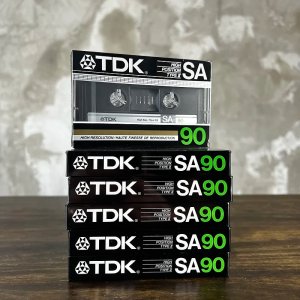
I used TDK SA90s, mainly to create mixtapes for the car (I got a new Civic in '84 and had an Alpine 7167 installed), but that's what I used to record the KKHR airchecks, too.
They were a good midgrade tape---and nosing around online it looks like they were $5.99 apiece, but you could get a brick of six (I remember these) for like $29.99.
That doesn't sound too bad, but adjusted for inflation, that's $18.90 per cassette and $94.61 for the six-pack. Roughly what I paid for my 1TB drive.
That made airchecking a very expensive hobby. If you wanted to get really serious, TDK made an even better cassette at double the price. They also made the S90 for $3.99.
A lot of the people who taped off the radio used the cheapest cassettes they could get their hands on---$1.99 or lower K-Mart specials---and that really shows up in airchecks decades later.
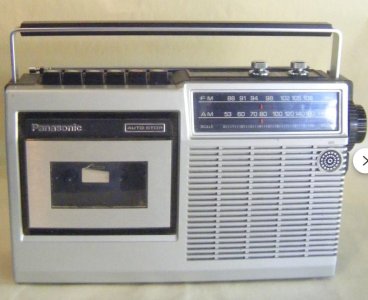
The number of FM stereo stations, well into the 80s, recorded onto bad tape on a portable monaural AM/FM/Cassette machine like this (I actually had one identical to this, and would record my own shows on it just for critiquing purposes, but never anything beyond that) would astound you.
And you're absolutely right...reel-to-reel done right was prohibitively expensive. A good tape deck would equal the cost of your receiver and blank tape was seriously expensive. I considered it when I upgraded my system in 1977, and once I knew the numbers, ran the other way.
For those with large collections of airchecks that you fear becoming lost to the ether once you're gone:
Why not upload all your MP3s and WAVs to the Internet Archive? In spite of the legal wranglings that have occurred as of late, it is not necessarily the case that potential future difficulties hosting certain kinds of contents, like books for rent, will have any effect on "ephemeral" types of media, or essentially what in the software world is called abandonware. It's also physically the most ideal place to store large volumes of media, as users with accounts may upload files of any kind and size. I have seen individuals create single repositories with thousands of files weighing in at hundreds of gigabytes total. Each collection receives a unique URL, and it can be browsed and downloaded similarly to how web browsers used to display the contents of FTP site directories. (What you upload doesn't get ensnared within fifty megabytes of JavaScript powering multi-layered menus with time-consuming hoops to jump through in order to download each file, like with certain commercial file hosting services.)
Here, for example, is one user's collection of 1940s wartime radio.
https://archive.org/details/WartimeRadio1940
It is rather small at only 160 MB, but by simply clicking the "SHOW ALL" link under "DOWNLOAD OPTIONS," you can directly list and download the individual files the collection consists of in an FTP (or Apache "Index of /") directory listing format:
https://archive.org/download/WartimeRadio1940
If nobody has ever bothered looking, the Internet Archive is swarming with these kinds of accounts, filled with people's personal uploads of all varieties of things. Just for example, when searching the term "aircheck" alone:
https://archive.org/search?query=aircheck
The benefit of using the Internet Archive for storage of audio and video media is that, unlike with Youtube, there is no content ID gestapo. Your files are also preserved as-is without being transcoded (the way Youtube transcodes the audio tracks in all videos to conform to standard, site-wide AAC and Opus bitrates).
To David Eduardo in particular, I am wondering whether a different part of the Internet Archives -- its "Archive-It" collections services -- could in any way help you. It is intended for hosting content at scale, like on behalf of non-profit libraries and other archivist institutions. I would say WRH qualifies as an institution. Have a look at the links below. The service allows searching within collections and distributes content to more than one data center for backup as well as regional internet outage resilience.
https://archive-it.org/
https://help.archive.org/help/archive-it-information/
I mentioned this earlier---the record labels and RIAA are very much circling the Internet Archive with ill intent. The Archive faces multiple copyright lawsuits and has lost appeals. There are rounds still to go, but anything you put on the Internet Archive is by no means guaranteed to be there in perpetuity:

The Internet Archive Loses Its Appeal of a Major Copyright Case
Hachette v. Internet Archive was brought by book publishers objecting to the archive’s digital lending library.
In fact, the Archive has removed airchecks when it has received take-down orders from record labels, it has just done so quietly, and does not employ its own people to monitor, as does YouTube.

So does the RIAA want an archive or would they rather the history get erased?I mentioned this earlier---the record labels and RIAA are very much circling the Internet Archive with ill intent. The Archive faces multiple copyright lawsuits and has lost appeals. There are rounds still to go, but anything you put on the Internet Archive is by no means guaranteed to be there in perpetuity:
The Internet Archive Loses Its Appeal of a Major Copyright Case
Hachette v. Internet Archive was brought by book publishers objecting to the archive’s digital lending library.www.wired.com
In fact, the Archive has removed airchecks when it has received take-down orders from record labels, it has just done so quietly, and does not employ its own people to monitor, as does YouTube.
I did a lot of cassette recording in the 1980s and I don’t remember prices being anywhere near those you mention. I tended to buy from record stores that also sold blank tapes. I seem to remember packs of five or six tapes being in the $10-12 range.They were a good midgrade tape---and nosing around online it looks like they were $5.99 apiece, but you could get a brick of six (I remember these) for like $29.99.
That doesn't sound too bad, but adjusted for inflation, that's $18.90 per cassette and $94.61 for the six-pack.
Even in the 1990s and beyond I don’t recall prices that high.
I’ve mentioned this before, but if you find any unscoped airchecks on Internet Archive you particularly enjoy, you should download them. Never know when they might vanish.I mentioned this earlier---the record labels and RIAA are very much circling the Internet Archive with ill intent. The Archive faces multiple copyright lawsuits and has lost appeals. There are rounds still to go, but anything you put on the Internet Archive is by no means guaranteed to be there in perpetuity
So does the RIAA want an archive or would they rather the history get erased?
The RIAA does not want an archive. The RIAA wants to protect the copyrights of the record labels it represents, period.
I did a lot of cassette recording in the 1980s and I don’t remember prices being anywhere near those you mention. I tended to buy from record stores that also sold blank tapes. I seem to remember packs of five or six tapes being in the $10-12 range.
I'm sure that depends on where you lived, how much competition there was and the brand, length and grade of cassettes you bought.
Fuji FL90 was a Type I normal position tape. TDK SA90 was Type II high position.
If Federated (Los Angeles) had a screaming deal on the Fujis at $1.87, the list price was probably $3.49, which is $11.01 adjusted.
I’ve mentioned this before, but if you find any unscoped airchecks on Internet Archive you particularly enjoy, you should download them. Never know when they might vanish.
And the Internet Archive, unless the poster chooses otherwise, allows downloads. It's built into the system (which is part of why the various copyright folks are upset).
The RIAA does not want an archive. The RIAA wants to protect the copyrights of the record labels it represents, period.
Right. Legally, you can only archive something if you own it. Radio stations don't own the music. So they can't archive and then allow free access to music. That's why the airchecks have to be telescoped, removing the music. That takes a lot of time.
Putting airchecks on the internet takes them out of the home where personal use applies, and then makes them available to all. It becomes even worse if those websites have advertising. So the websites can make money, but the owners of the content don't.
Right. Legally, you can only archive something if you own it. Radio stations don't own the music. So they can't archive and then allow free access to music. That's why the airchecks have to be telescoped, removing the music. That takes a lot of time.
Putting airchecks on the internet takes them out of the home where personal use applies, and then makes them available to all. It becomes even worse if those websites have advertising. So the websites can make money, but the owners of the content can't.
Which is why something like REELRADIO, which exhibited airchecks but did not allow (and in fact expressly prohibited) downloading them, was so important.
The RIAA challenged it but eventually relented, and I suspect the terms of use prohibiting copying had a lot to do with that.
I still think the best model is a museum---the Bay Area Radio Museum, run by the California Historical Radio Society and founded by our very own @BossRadioDJ is a great example---and I think more needs to be done to encourage state or regional broadcast museums.
Beyond that, if you want to have airchecks yourself for your own listening and enjoyment and not for publication or sale (don't get me started on the handful of people who stole REELRADIO airchecks and then sell them for $16 a pop on eBay), there is a small but healthy community of folks who are still trading. You can easily find them online.
The RIAA challenged it but eventually relented, and I suspect the terms of use prohibiting copying had a lot to do with that.
Correct. "Copying" is the main element in copyright. The ability to make "CD quality copies" was the main argument for the DMCA.

K.M. Richards
Program Director, The Eighties Channel™
A lot of the people who taped off the radio used the cheapest cassettes they could get their hands on---$1.99 or lower K-Mart specials---and that really shows up in airchecks decades later.
View attachment 9473
The number of FM stereo stations, well into the 80s, recorded onto bad tape on a portable monaural AM/FM/Cassette machine like this (I actually had one identical to this, and would record my own shows on it just for critiquing purposes, but never anything beyond that) would astound you.
In fact, that famous Jimi Fox B-100 aircheck was recorded on one of these:
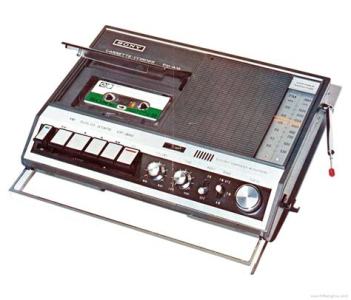
I kept that Sony for a very long time. It was a very durable machine with fairly decent audio quality, all things considered.
So durable, in fact, that there are a couple of them listed on eBay ... and judging from their photos are still in great shape physically. Not bad for something that was first introduced in 1971.
In fact, that famous Jimi Fox B-100 aircheck was recorded on one of these:
View attachment 9474
I kept that Sony for a very long time. It was a very durable machine with fairly decent audio quality, all things considered.
So durable, in fact, that there are a couple of them listed on eBay ... and judging from their photos are still in great shape physically. Not bad for something that was first introduced in 1971.
By the way, K.M., I meant to mention---your B-100 Jimi Fox Summer 1975 aircheck (posted to YouTube by Retro Radio Joe) is one of only two unscoped B-100s of that era that have surfaced so far.
The other, of Dave Conley, was recorded by the late Dave Klayman in April of 1976.
Both are in mono and both and both are missing the "OMIGOD" sounder that the jocks did the live top of the hour ID over---on yours, because Jimi had it in cue and could only hear it in his headphones, and on Klayman's because it's a 23-minute recording that started at 35 past the hour.
What was the "OMIGOD" (for the uninitiated)?
It's called the "OMIGOD" because that was literally the label on the cart in the B-100 control room.
Funny historical note: In listening to older airchecks, the sounder shows up in a series of 1973 "Don't Say Hello" contest promos for KHJ---two years before B-100's launch.
K.M. Richards
Program Director, The Eighties Channel™
What was the "OMIGOD" (for the uninitiated)?
It was similar to the bomb drop sound effect that Jimi later used at KTNQ, except it was ... well, I don't really have words to describe it.
I'll ask Gene Knight, C.C. McCartney, or Shotgun Tom if they can come up with a definition. (Maybe even track down Norbert Gomes himself.)
It was similar to the bomb drop sound effect that Jimi later used at KTNQ, except it was ... well, I don't really have words to describe it.
I'll ask Gene Knight, C.C. McCartney, or Shotgun Tom if they can come up with a definition. (Maybe even track down Norbert Gomes himself.)
I can save you the effort---it's the final ten seconds of Quincy Jones' "Money Runner" from the "Dollars" soundtrack:
They just added an ascending synthesizer "swoosh" to the beginning of it.