
K.M. Richards
Program Director, The Eighties Channel™
Yeah, that's it, all right.

I'm sure that depends on where you lived, how much competition there was and the brand, length and grade of cassettes you bought.
Fuji FL90 was a Type I normal position tape. TDK SA90 was Type II high position.
If Federated (Los Angeles) had a screaming deal on the Fujis at $1.87, the list price was probably $3.49, which is $11.01 adjusted.
Type 1 normal bias cassettes were the cheapest, using a standard ferric-oxide tape formulation, and exhibiting the dullest sound, along with what was normally a pretty poor signal to noise ratio – lots of hiss, basically.

 planetbotch.blogspot.com
Eons ago I've seen the "Type 0" tapes sold in early dollar type stores for like 69¢ for 3 and had no cases. I mainly used for dictation stuff, got at least Type 1s for music and radio.This was written more than a decade ago, and the author is British, but overall, it's an excellent breakdown of the types and formulations of cassettes available in the 1980s.
While the official Type ranges were I, II, III and IV, the author also mentions what he calls "Type Zero" cassettes---the bargain basement stuff that didn't even meet the standards of Type I. They were the cheapest and a lot of radio got recorded by listeners on those.
Recalling 1980s Audio Cassette Tapes
Another of the many fun memories I carry from my youth relates to the Saturday mornings I’d spend trawling round the city centre record sh...
Eons ago I've seen the "Type 0" tapes sold in early dollar type stores for like 69¢ for 3 and had no cases. I mainly used for dictation stuff, got at least Type 1s for music and radio.
I used those Certrons during my brief sports writing career for postgame interviews and dictation of results or statistics. They were fine for that purpose.Strangely enough, I ran across a YouTube video about those earlier today:
I used those Certrons during my brief sports writing career for postgame interviews and dictation of results or statistics. They were fine for that purpose.
Mark, I would be very interested in a copy of that KCFM aircheck. Could you send me a Direct Message on this page?Most of what I have is what I recorded. Some things were lost because, at various times in my life, I didn't have much money and needed to re-use tapes. For example, I lost most of what I had of St. Louis' KCFM when it had a short-lived "Natural Turn-On" format in 1978-79 that I now believe was a precursor to AAA. KCFM applied beautiful-music formatics to mellow and mellow-ish rock. It struggled, but what really killed it was the station's sale to Gannett, which went right back to beautiful music. I have found one tape remaining of that. My recordings tended to focus on rock formats.

This was written more than a decade ago, and the author is British, but overall, it's an excellent breakdown of the types and formulations of cassettes available in the 1980s.
While the official Type ranges were I, II, III and IV, the author also mentions what he calls "Type Zero" cassettes---the bargain basement stuff that didn't even meet the standards of Type I. They were the cheapest and a lot of radio got recorded by listeners on those.
Recalling 1980s Audio Cassette Tapes
Another of the many fun memories I carry from my youth relates to the Saturday mornings I’d spend trawling round the city centre record sh...
Not only did you need good-quality tapes but you needed good-quality equipment on which to record them, especially equipment that accepted the type II and Type IV cassette types. While most large professional broadcasters had that type of equipment, there were many amateurs, including yours truly, who didn't. I remember trying to record music off of the radio onto a Type II cassette using an old monophonic GE recorder I had that did very well with the better-quality Type I tapes. Unfortunately, with the Type II tapes, you actually lost sound on either one or the other channels when you tried to play them on a stereo recorder, and the sound was somewhat lower in volume (though not bad) when playing these in other monaural recorders.
By the mid-1980s, I had a stereo recorder that could handle the Type II bias tapes. And then out came the Type IV tapes that most of the current home audio equipment could not record--you had to buy a whole new cassette deck for those. I therefore wound up, like the aarticle's author, utilizing mostly Type II cassettes for my radio (mostly music) recordings.
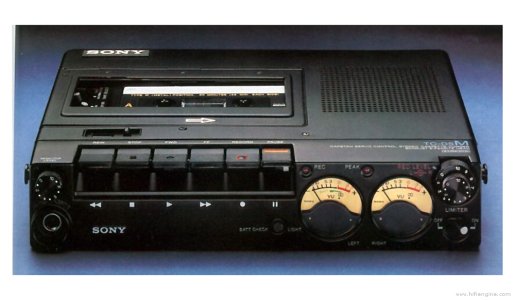
That reminds me of my technique for airchecking with my air talent. I'd review a shift about once a week and find one really good thing and something that could have been done better. I'd write down the counter location on the aircheck cassette tape. The jock would hear the good one first, as often I found that PDs failed to tell their people how good some of their stuff was... so it was not reinforced and not repeated. Then I'd play the weak segment, and ask, "how would you do that if you could do it again?". That let the talent analyze their own performance, and then, often, they would ask for suggestions and my opinion on what might have been done.And, as I mentioned before, but it may have gotten lost, by the mid-70s or so, the number of unscoped airchecks that came from the source (talent/station) was dwindling. Talent critiques were done with skimmers, cassette decks triggered by the mic switch.
That reminds me of my technique for airchecking with my air talent. I'd review a shift about once a week and find one really good thing and something that could have been done better. I'd write down the counter location on the aircheck cassette tape. The jock would hear the good one first, as often I found that PDs failed to tell their people how good some of their stuff was... so it was not reinforced and not repeated. Then I'd play the weak segment, and ask, "how would you do that if you could do it again?". That let the talent analyze their own performance, and then, often, they would ask for suggestions and my opinion on what might have been done.
I reacted this way when I learned about the GM of the leading Top 40 station in DC in the late 60's who had a red bulb in each corner of the studio ceiling. If they flashed, you would get "Johnny, you just ****ed up. You know that, don't you? Or are you an idiot?" And so on. I resolved that any aircheck had to be presented constructively.
I thought I'd drop this in since many collectors don't realize why we did airchecks to begin with.
That is another use of an aircheck, for sure!Thanks for the info. I had thought, from some of the comments I had read on the Reelradio site, that many of the airchecks recorded in studio by the deejays were used by those same deejays as part of their resumes to other radio stations.
For those with large collections of airchecks that you fear becoming lost to the ether once you're gone:
Why not upload all your MP3s and WAVs to the Internet Archive? In spite of the legal wranglings that have occurred as of late, it is not necessarily the case that potential future difficulties hosting certain kinds of contents, like books for rent, will have any effect on "ephemeral" types of media, or essentially what in the software world is called abandonware. It's also physically the most ideal place to store large volumes of media, as users with accounts may upload files of any kind and size. I have seen individuals create single repositories with thousands of files weighing in at hundreds of gigabytes total. Each collection receives a unique URL, and it can be browsed and downloaded similarly to how web browsers used to display the contents of FTP site directories. (What you upload doesn't get ensnared within fifty megabytes of JavaScript powering multi-layered menus with time-consuming hoops to jump through in order to download each file, like with certain commercial file hosting services.)
Here, for example, is one user's collection of 1940s wartime radio.
https://archive.org/details/WartimeRadio1940
It is rather small at only 160 MB, but by simply clicking the "SHOW ALL" link under "DOWNLOAD OPTIONS," you can directly list and download the individual files the collection consists of in an FTP (or Apache "Index of /") directory listing format:
https://archive.org/download/WartimeRadio1940
If nobody has ever bothered looking, the Internet Archive is swarming with these kinds of accounts, filled with people's personal uploads of all varieties of things. Just for example, when searching the term "aircheck" alone:
https://archive.org/search?query=aircheck
The benefit of using the Internet Archive for storage of audio and video media is that, unlike with Youtube, there is no content ID gestapo. Your files are also preserved as-is without being transcoded (the way Youtube transcodes the audio tracks in all videos to conform to standard, site-wide AAC and Opus bitrates).
To David Eduardo in particular, I am wondering whether a different part of the Internet Archives -- its "Archive-It" collections services -- could in any way help you. It is intended for hosting content at scale, like on behalf of non-profit libraries and other archivist institutions. I would say WRH qualifies as an institution. Have a look at the links below. The service allows searching within collections and distributes content to more than one data center for backup as well as regional internet outage resilience.
https://archive-it.org/
https://help.archive.org/help/archive-it-information/
The Suspense Project explores and preserves the amazing and curious history of radio's "outstanding theater of thrills." It is developed episode by episode, in chronological order, providing cast information and other essential background and context. Recordings are in high quality lossless format audio (FLAC) and also great sounding MP3 files. The Old Time Radio Researchers and classic radio enthusiasts and preservationists around the world have generously supported this project with access to their private collections and their historical research. The project began posting recordings at the Internet Archive in January 2023. The series aired from 1942-1962.
If you have any interest in radio drama, there is a page on the Internet Archive called "The Suspense Project". "Suspense" was, in many ways, the last survivor of the so-called "Golden Age" of radio.
That is another use of an aircheck, for sure!
But at most well programmed stations in the era of the cassette or reel tape, an aircheck was mandated by the Program Director with the objective of meeting with talent to review performance.
I wish I had a copy of the old Jacobs form he used at KHJ to critique jocks. It had a bunch of both positive and negative things that would be checked off and a space to recommend improvement. One of the negatives was "Bakersfield sound". In other words, small market, unpolished, not smooth, not right for LA.
Personally, I never did such meetings with written "evidence". That allowed a lot of free discussion without the jock thinking that what they said might go into their "personnel folder".
Thanks for the info. I had thought, from some of the comments I had read on the Reelradio site, that many of the airchecks recorded in studio by the deejays were used by those same deejays as part of their resumes to other radio stations.
BTW one of the reasons why the networks themselves didn't archive this material is because they didn't own it. The radio dramas were owned by the advertisers. They got all the original transcriptions. A lot of them were sold to radio syndicators and other companies that own the rights to all these historic programs. They continue to make them available to radio stations for rebroadcast on Sunday nights or other times. They also sell CDs or other formats that you can buy at Amazon or other places. So this content falls into a similar category as recorded music. At one time there was a group known as Friends of Old Time Radio, and they had an annual national convention.
Since all (or nearly all) of the people who created these shows are now deceased and because many (though not all) of the old advertisers are now out of business or can't advertise on radio anymore
I remember an article in Monitoring Times magazine (now defunct) that described the frustration PDs felt when they received unscoped airchecks. As the PD in the story put it: "I know what the Beatles sound like! What I'm interested in is what YOU sound like!"They were, Ted, but those were almost always scoped (music and commercials edited out). A PD looking for talent wanted to hear the jock, and because he or she were listening to a lot of tapes, quicker was better.
Most recommended an aircheck with a job application be no longer than 4 minutes. That was tough. Here's an hour of Rich Brother Robbin at KCBQ, scoped, that just squeaks in under seven minutes because of the amount of live copy Rich had to read:
Because jocks scoped job application airchecks, they really aren't a source of unscoped material, unless the jock kept the original and edited down a copy. Most jocks didn't do that, and so those originals are lost.

