
• Get involved.
    We want your input!
    Apply for Membership and join the conversations about everything related to broadcasting.

    After we receive your registration, a moderator will review it. After your registration is approved, you will be permitted to post.
    If you use a disposable or false email address, your registration will be rejected.

    After your membership is approved, please take a minute to tell us a little bit about yourself.
    https://www.radiodiscussions.com/forums/introduce-yourself.1088/

    Thanks in advance and have fun!
    RadioDiscussions Administrators

New Life for REELRADIO

None of that changes the copyright situation. Content doesn't become public domain because someone dies or the company goes out of business. The ownership of that content is transferred to new entities.

Guys, here's the thing on old time radio:

Any broadcast created before January 1, 1978 was covered by the Copyright Act of 1909, not the Copyright Act of 1976.

The 1909 Act provided for 28 years of protection and (IF filed for, one additional 28-year extension) before a copyrighted work entered public domain.

So---IF a broadcast from 1969 was copyrighted AND the copyright extended in 1997, that extension expires this year.

Most never opted for the extension past the 28-year mark.

Everything from the so-called "Golden Age" is in the public domain, with the exception of any copyrighted and licensed musical performances, which were addressed differently by the Copyright Act of 1976.
 
Everything from the so-called "Golden Age" is in the public domain, with the exception of any copyrighted and licensed musical performances, which were addressed differently by the Copyright Act of 1976.

Maybe. If you have access to the original broadcasts, they may be in the public domain. But if you recorded it off the air from a repackaged version of the original shows, then the copyright date begins with the more recent date. The Turtles made that case with the remastered versions of their 60s hits.

The other point that gets made is that people who record stuff off the air don't have ownership of the content. Just the raw tape it was recorded on.
 
Maybe. If you have access to the original broadcasts, they may be in the public domain. But if you recorded it off the air from a repackaged version of the original shows, then the copyright date begins with the more recent date. The Turtles made that case with the remastered versions of their 60s hits.

I remember that, but this is a little different.

If a repackaged version of the oldtime radio shows were offered for sale, it would still be a repackaging of things already in the public domain---which the Turtles' stuff wasn't.

There was, in the VCR and DVD era, a cottage industry of selling cheap compilations of popular old TV series, episodes for which either copyright was mistakenly never filed, or had expired and not been renewed. That did not start a new copyright clock.
 
That is another use of an aircheck, for sure!

But at most well programmed stations in the era of the cassette or reel tape, an aircheck was mandated by the Program Director with the objective of meeting with talent to review performance.

I wish I had a copy of the old Jacobs form he used at KHJ to critique jocks. It had a bunch of both positive and negative things that would be checked off and a space to recommend improvement. One of the negatives was "Bakersfield sound". In other words, small market, unpolished, not smooth, not right for LA.

Personally, I never did such meetings with written "evidence". That allowed a lot of free discussion without the jock thinking that what they said might go into their "personnel folder".

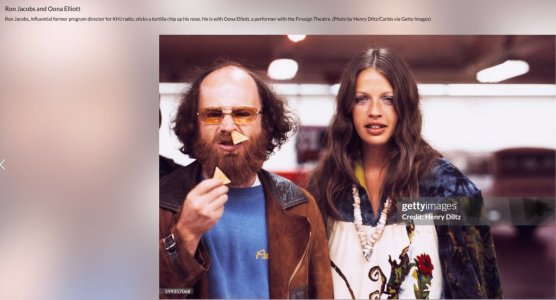
Having corresponded with Ron Jacobs a few times, I can only imagine what a critique would have been like.

I'd have gone home, poured a good scotch and then pulled this out of the drawer:

Screenshot 2025-06-28 at 10.09.22 AM (1).jpeg
 
I wish I had a copy of the old Jacobs form he used at KHJ to critique jocks. It had a bunch of both positive and negative things that would be checked off and a space to recommend improvement. One of the negatives was "Bakersfield sound". In other words, small market, unpolished, not smooth, not right for LA.
SiriusXM has a channel called Bakersfield Sound on its app! The reference is not to small-market DJs but to the country music sound identified most frequently with Buck Owens and Merle Haggard.
 
SiriusXM has a channel called Bakersfield Sound on its app! The reference is not to small-market DJs but to the country music sound identified most frequently with Buck Owens and Merle Haggard.

I think the thing that pissed Jacobs and Drake off enough to use the "Bakersfield" reference is that KAFY was one of the knockoff Drake stations, copying elements of the formatics, but cheaping out on the jingles and not hiring Drake to consult:

 
If a repackaged version of the oldtime radio shows were offered for sale, it would still be a repackaging of things already in the public domain---which the Turtles' stuff wasn't.

Unless at the time they were repackaged, they were still covered by the original copyright. Seems to me there was a legal battle about the old Lone Ranger radio shows.
 
Unless at the time they were repackaged, they were still covered by the original copyright.

Which is a hypothetical that doesn't apply here. IF the newest episode of "Suspense" (the last of the network radio dramas) had its initial copyright renewed in 1990, that extension expired in 2019.

The vast majority of these old time radio programs never applied for extensions, so a 1941 radio drama that did not avail itself of the extension entered the public domain in 1969.

Seems to me there was a legal battle about the old Lone Ranger radio shows.

The battle over the Lone Ranger was over the rights to the character, not the broadcasts.

 
Which is a hypothetical that doesn't apply here. IF the newest episode of "Suspense" (the last of the network radio dramas) had its initial copyright renewed in 1990, that extension expired in 2019.

The vast majority of these old time radio programs never applied for extensions, so a 1941 radio drama that did not avail itself of the extension entered the public domain in 1969.

I worked on a documentary done after that and the radio shows we spotlighted were still covered under someone's copyright. As a result, we needed to get clearance to use it.
 

Okay. You're not being specific, leaving me to guess, based on the specifics laid out in the 1976 Copyright Act.

There is one possible exception I can find in the law.

A broadcast first aired prior to January 1, 1978 but still within its first 28-year protection window on that date, was entitled to an additional 47 years, for a total of 75.

IF a (let's just say) February, 1950 or later broadcast requested a renewal in 1978, that renewal would be for 47 years. So the earliest of those broadcasts would just now be seeing their copyright extensions expire this year---assuming they availed themselves of the renewal.
 
Here is a link to my favorite old-time radio shows spot:


It's clearly a non-profit (in fact, all but one of the old-time radio sites I ever visited was just that), and it has links to a whole variety of old U.S. radio shows and even some more modern stuff from the BBC. In the BBC Section, under Agatha Christie, there are direct links to audio readings of some of Mrs. Christie's books and short stories. Unlike the Internet archive site, I have as yet to read anything about anybody's attempting to close the site down for copyright infringement. And I'm guessing that one of the reasons may very well be that these sites usually do not generate a lot of Internet traffic.
 
BTW one of the reasons why the networks themselves didn't archive this material is because they didn't own it. The radio dramas were owned by the advertisers. They got all the original transcriptions.
Sometimes. There were many network shows that changed sponsors, and were "owned" by the net that presented them. And there were "sustaining" shows which were open to multiple, alternating or "as available" sponsorships.

The networks, generally, did keep the transcriptions of their broadcasts. But one of the issues that we know about is the lack of storage space... the same thing that has plagued Hollywood with the preservation of many older movies.
A lot of them were sold to radio syndicators and other companies that own the rights to all these historic programs. They continue to make them available to radio stations for rebroadcast on Sunday nights or other times. They also sell CDs or other formats that you can buy at Amazon or other places. So this content falls into a similar category as recorded music. At one time there was a group known as Friends of Old Time Radio, and they had an annual national convention.
In general, each show has to be looked at individually. Did the sponsor keep transcripts? Were transcriptions kept at the network? For how long?

We have to remember it was not until the later 1940s that the industry started to use tape recording....


... and the unions objected to transcriptions of any kind being used to compensate for time zones. So some shows may never have been "transcribed"... in particular the ones with live music or variety formats.

Many of those being sold in packages of CDs or flash drives... or even cassettes (still) are done by those who believe the content to be in public domain due to failure to renew copyrights or lack of interest by rights holders to enforce nickel-and-dime business areas.
 
None of that changes the copyright situation. Content doesn't become public domain because someone dies or the company goes out of business. The ownership of that content is transferred to new entities.
But, as I mentioned earlier, the copyrights may not be enforced given the low return prospects and high legal costs. There are thousands of "copyright" videos, audio recordings, books and magazines just on eBay where it is obvious that copyrights are being ignored.
 
I think the thing that pissed Jacobs and Drake off enough to use the "Bakersfield" reference is that KAFY was one of the knockoff Drake stations, copying elements of the formatics, but cheaping out on the jingles and not hiring Drake to consult:

It's unscoped! Grrrrr! I know what the Count Five sounded like! (Honest!) What I'm interested in is what DICK LYONS sounded like!
 
It's clearly a non-profit (in fact, all but one of the old-time radio sites I ever visited was just that), and it has links to a whole variety of old U.S. radio shows and even some more modern stuff from the BBC. In the BBC Section, under Agatha Christie, there are direct links to audio readings of some of Mrs. Christie's books and short stories. Unlike the Internet archive site, I have as yet to read anything about anybody's attempting to close the site down for copyright infringement. And I'm guessing that one of the reasons may very well be that these sites usually do not generate a lot of Internet traffic.
The biggest issue at the Internet Archive concerns its intent to allow time-limited "borrowing" of books. IE created a system that allows users to borrow for a short time such material. Only a few can borrow at any given time, and the content is supposedly not able to be saved or copied. As such, it's like a public library. Book publishers don't like this, of course, and so far they have prevailed in the courts.

With book publishers, the issue is about setting precedent. They see laws as "black and white" and believe that if they allow some older books to circulate this way, others that are still profitable might get dragged into the public domain; the issue is "when is a book not worth protecting... and why?"
 
Having corresponded with Ron Jacobs a few times, I can only imagine what a critique would have been like.
Having worked for a brief time with Jacobs while TR and I and a nice team put together the "World Chart" show aimed at "foreign" markets, I can say I might have wished to shove the chip up his nose myself at times. But once he was back in Hawai'i, we became web "buddies" and he even sent autographed copies of his book and the beautiful print of the Melrose building and it adjacent radiostaurant.


Back
Top Bottom