• Get involved.
    We want your input!
    Apply for Membership and join the conversations about everything related to broadcasting.

    After we receive your registration, a moderator will review it. After your registration is approved, you will be permitted to post.
    If you use a disposable or false email address, your registration will be rejected.

    After your membership is approved, please take a minute to tell us a little bit about yourself.
    https://www.radiodiscussions.com/forums/introduce-yourself.1088/

    Thanks in advance and have fun!
    RadioDiscussions Administrators

November 2025 Bay Area Radio PPM Ratings

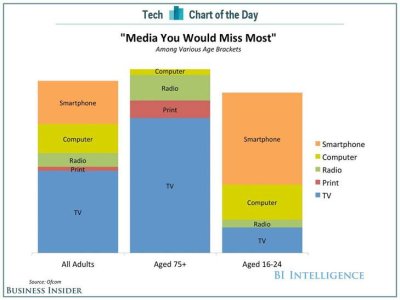
In my Facebook Memories this morning...a chart I posted 11 years ago:

515381346_10229128596935312_6150337616828246683_n.jpg

So, adding 11 years, All Adults is missing those who've died since and added people who were 7-17 then, with even less connection to radio, Aged 75+ is now Aged 86+ and Aged 16-24 is now Aged 27-35.

27-35 is the beating heart of 18-49 and a solid chunk of 25-54. And you can see for yourself.

The ship sailed a loooooong time ago.
 
But the same thing is true with the streaming services run by radio companies like iHeart and Audacy.

It depends on which channel or station. Any curated service, including Sirius and Pandora, has a certain about of repetition.

On the other hand the on-demand streaming services allow users to pick their own music and make their own playlists. However, there's usually a fee for this.
 
You're right. There is no reason. Streaming is...infinite. There are a million choices that wouldn't give you repetition. You've just chosen the most radio-like of the options and this is the result.
The only reason I'm choosing streaming in the first place is that my coworkers and I can't stand non-stop Christmas music for over a month.
 
So streaming is better for the consumer/listener than traditional radio in every way, yet it costs like 300% more to operate and has tons more restrictions.

How is that better for the people running the show? If the broadcast royalties alone are driving smaller operators into bankruptcy, paying that and so much more to stream doesn't seem to make a lot of sense to me. Ad revenue is down across the board, unless you're Amazon, Google, Meta, etc., who collectively have effective control over 98%+ of the Internet. Nobody else can compete, and they all have to share the remaining ~2% amongst themselves.

While successful for a time, I don't think monopolies (or in this case, the Amazon-Google duopoly) are a sustainable arrangement long-term.

For example, the Old AT&T monopolized the nationwide telecom system for many years until they were broken up into the 7 "baby bells" in 1983. Standard Oil tried it, too, and it was eventually spit apart in 1911. Ditto for the railroads of yore.

And then, of course, there's Microsoft, the most modern example. Though they were not broken up (it almost happened, but MS won an appeal and it was avoided), after the landmark antitrust case concluded and the dust settled in the early 2000s, their influence, particularly in the field of web browsers, faded rather quickly. Incidentally, this period from roughly 2001-2007 was probably the only other time since the early 90s that the internet was relatively free and open to all. This also was the period where Netscape Navigator evolved into Mozilla Firefox, and it enjoyed a stable majority of the browser market share until Google released Chrome in the late 2000s (they also released an open source version, known as Chromium, which was a very shrewd business move because it ensured almost complete dominance, given that virtually all modern, non-Firefox browsers are now based on it).

On my office radio, the only stations that come in are WMGQ (all-Christmas), WAWZ (all-Jesus), WXKW (all-Boomer talk), or WPRB (all-stoner music).
Remind me to never try listening to the radio if I ever happen to go there....

c
 
Last edited:
How is that better for the people running the show? If the broadcast royalties alone are driving smaller operators into bankruptcy, paying that and so much more to stream doesn't seem to make a lot of sense to me.

It depends. The royalty rules don't benefit small streamers, but Spotify seems to be doing just fine.


There are a lot of music rules, but the streaming companies can charge more for things like on-demand streaming. You can't do that with AM/FM.

iHeart reported that it's digital income will exceed its broadcasting income next year. Townsquare is already more than 50% digital.

 
TL;DR: The current model is unsustainable and it unfairly favors a small handful of multi-billion (and now multi-trillion) dollar corporations.

The royalty rules don't benefit small streamers
So the rules are going to eventually lead to a situation where the same three or four corporations who own 90% of broadcast stations will also own most streams, and the small streamers will be completely smothered by the high costs, which are prohibitive to all but those with $1 Billion or more, much as they've been in broadcast radio for the past 30 years or so.

How does this help anyone?

I'm not referring to the listeners, of course. As has been well established by now, they only want what they want when they want it, and they don't care how it happens or how many royalties or operating expenses the streamers have to pay to make it happen, as long as they can get it via their device of choice (currently smartphones, but in a decade or two, who knows).

As someone who has wanted to establish a stream, I find that it's virtually impractical because the costs are so expensive, and no matter how much money I earn, I'll never have enough. That's not fair.

c
 
How does this help anyone?

I don't know. Who says streaming rules were meant to help anyone other than the people who wrote those rules?

The streaming rules are laid out in the Digital Millennium Copyright Act of 1998.

As someone who has wanted to establish a stream, I find that it's virtually impractical because the costs are so expensive, and no matter how much money I earn, I'll never have enough. That's not fair.

What I often suggest is start your stream as part of Live365. They pay all the royalties for you.
 
What I often suggest is start your stream as part of Live365. They pay all the royalties for you.
That helps.

I'm hoping to sign up sometime next year, but I'm wondering if I can still self-host my own streaming server, and like proxy it through theirs so they will still cover the royalties?

I do know I can self-host the music and link my playback software of choice up to their streaming server, which I suppose is the next best thing.

c
 
Maybe the issue is semantic. I suppose it's possible to partially reverse the attrition---but you'll never undo it. At best, maybe you get the people back who abandoned ship but didn't embrace a replacement for audio---haven't bonded with a new technology. And if you got them all back tomorrow, that number goes down every day, because they're all of a certain age, and they're gonna eventually die. Meantime, there's no steady stream of younger people taking their place because...why would they?

Fundamentally, the shift has been about technology. You're not going to abandon your DVR and go back to setting a VCR, and you're certainly not going to go back to "We have to be home and in front of the TV by 8 or we'll miss it." You're not going to throw away your cellphone, re-install a landline and keep a bunch of quarters in the cupholder of your car for payphones.
And that's not what I'm arguing. No, the genie is not going to go back in the bottle. I know that. At the same time, the speed and severity with which the shift has happened can't, in my opinion, be chalked up solely to advancements in technology. People abandon goods and services when those goods and services aren't meeting their needs or desires. I think it's entirely possible that decisions broadcasters made 30 or even 40 years ago made the current situation worse than it could have been. The rate of listener attrition could have been reduced. Instead, it seems to have been accelerated.

This isn't unique to broadcasters. Newspapers had the same problem. They also made some bad decisions. I'm very much in favor of quality journalism, but journalists can be dogmatic about certain things, too, causing them to lose touch with their readers and their readers' interests. The flow of money from classified advertising helped cover things up until Craig Newmark came along.

Let's take a Bay Area radio example: KGO. I've written here before of my reaction to KGO upon moving to the Bay Area. I wondered why anyone would listen to it.

That was in...check this...1999. When I was in my early 40s, still prime for advertising targeting. KGO seemed old-fashioned to me.

KGO actually did try to do something: a sort-of-all-news format. It wasn't as well resourced as KCBS, but there were some good ideas there. The old KGO crowd hated it. Didn't matter, it was too late. So they went back to what they knew, constrained by Cumulus' financial condition. And now it's gone altogether.

Yes, it's hard to abandon something that appears to be successful in favor of something new. I know this from personal experience with a couple of companies. When they finally listened and acted on new ideas, it was too late to do anything other than hold the line (in the best case) or manage decline (in the other).

Nor do I think that eliminating or reducing regulation is going to make things better. Regulation is already much lighter than it was before Mark Fowler came along. Has that helped matters? No. So saying that regulation is holding broadcasting back is a cop-out. All it will do is permit consolidation that will reinforce existing programming and other business habits that clearly aren't working.

What will help? I don't know. At least I admit that I don't know. I'm trying not to be smug here. I left the business almost 40 years ago. But it still has a place in my heart and it hurts to see it go so badly. I really have nothing to contribute here. But I don't think the existing lineup of broadcasters knows, either. So they should stop pretending that they do. They should engage in critical self-reflection and learn from their mistakes instead of repeating those mistakes and hanging on to dogma.

Radio's best chance at fighting off streaming would have been to be able to say---"we give you value that streaming will never be able to match (probably hyper-local stuff)."

But honestly, the vast majority of the audience didn't care. Ask every really good hyper-local midday talk show host who ended up Limbaugh's roadkill.
That was then. Who knows what can be done now? The fallacy of assuming the future will be like the past becomes a trap.

Look at the declining asset values for stations. One can argue that those values had been inflated in recent years. Now that they're coming back to earth, it might be possible for new owners to take more risks...with programming, with services, with business models. Maybe that hyper-local talk show can buy a station and be more local, at least in critical parts of the day.

Radio needs new blood...not more iHeart "guaranteed human" (which would be more accurate if that slogan were "guaranteed layoffs") or other consolidators who are growing only their bureaucracy.

Music? Beloved personalities with 40 shares back in the day weren't getting the other 60 percent (who probably thought the beloved personality was a blowhard who should shut up and play the damn music).
The blowhard has reinvented himself (or herself) as a talk-show host who does nothing but rant and who doesn't take phone calls. It worked for a little while. Now...not so much.

It's not an appealing landscape.

 
Yes, it's hard to abandon something that appears to be successful in favor of something new.

I think everybody in radio is past that point now.

Nor do I think that eliminating or reducing regulation is going to make things better.

Not when radio companies are already transitioning to unregulated platforms. Even NPR has become a digital company.

The government keeps clinging to the scarcity myth, while companies are turning in licenses.

Radio needs new blood...

Once again, the time for that has passed. There is more money to be made making funny videos for TikTok.
 
I think everybody in radio is past that point now.

Not when radio companies are already transitioning to unregulated platforms. Even NPR has become a digital company.

Once again, the time for that has passed.
Then I'm going to ask a blunt (but sincere) question: if you're that hopeless about the business, why do you still engage in it?

I had to ask myself that question almost 40 years ago. It can be hard to accept what the answer might be.
 
Then I'm going to ask a blunt (but sincere) question: if you're that hopeless about the business, why do you still engage in it?

Who says I feel hopeless? I'm very energized about all of the new platforms for radio content. Radio should not be tied to a device. Radio was able to transition from AM to FM. Now it's transitioning from FM to online. It's part of the same process. There are many more opportunities beyond where things are now. I think everyone recognizes that.

Once again, I work in the business now. This is not a past tense thing for me.
 
And that's not what I'm arguing. No, the genie is not going to go back in the bottle. I know that. At the same time, the speed and severity with which the shift has happened can't, in my opinion, be chalked up solely to advancements in technology. People abandon goods and services when those goods and services aren't meeting their needs or desires.

Which they sometimes don't know until something better comes along.

I think it's entirely possible that decisions broadcasters made 30 or even 40 years ago made the current situation worse than it could have been. The rate of listener attrition could have been reduced.

Again---how? As in "ya gonna keep 'em down on the farm"? They've seen Paris.

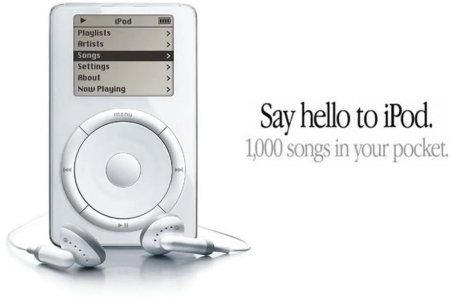
This ad will be 25 years old next year:


0*voJRKT96ThCyoSCv.jpeg
 
Who says I feel hopeless?

Well, you come across that way, at least to me.
I'm very energized about all of the new platforms for radio content. Radio should not be tied to a device. Radio was able to transition from AM to FM. Now it's transitioning from FM to online. It's part of the same process. There are many more opportunities beyond where things are now. I think everyone recognizes that.

Once again, I work in the business now. This is not a past tense thing for me.
It's always good to believe in what you're doing!
 
By the way, how much research (of the variety that broadcasters do) went into that?

I'm not sure what you mean, but I imagine a lot of research about positives and negatives---"what do you want? what don't you want?"---went into that. And that's the kind of research radio did and does.

The race was on to create the digital version of the 1980s Sony Walkman (which could only have 12 songs physically in it at a time) and nobody could get it right. People weren't stampeding to buy the first portable digital music players.

Until Steve Jobs and Apple.

Same deal with the iPhone. Everyone else was trying to figure out how to incorporate a camera and a music player into a cell phone. Apple made an iPod that took pictures and made phone calls.

I don't know what radio could have done in 2001---and then again in 2007---to compete with the iPod and the iPhone. And they ushered in the age of listening to what you want when you want, without interruption---something radio can never offer you.

(To an extent, you could do that with the Walkman, but how many cassettes did you want to stuff in your pockets?)
 
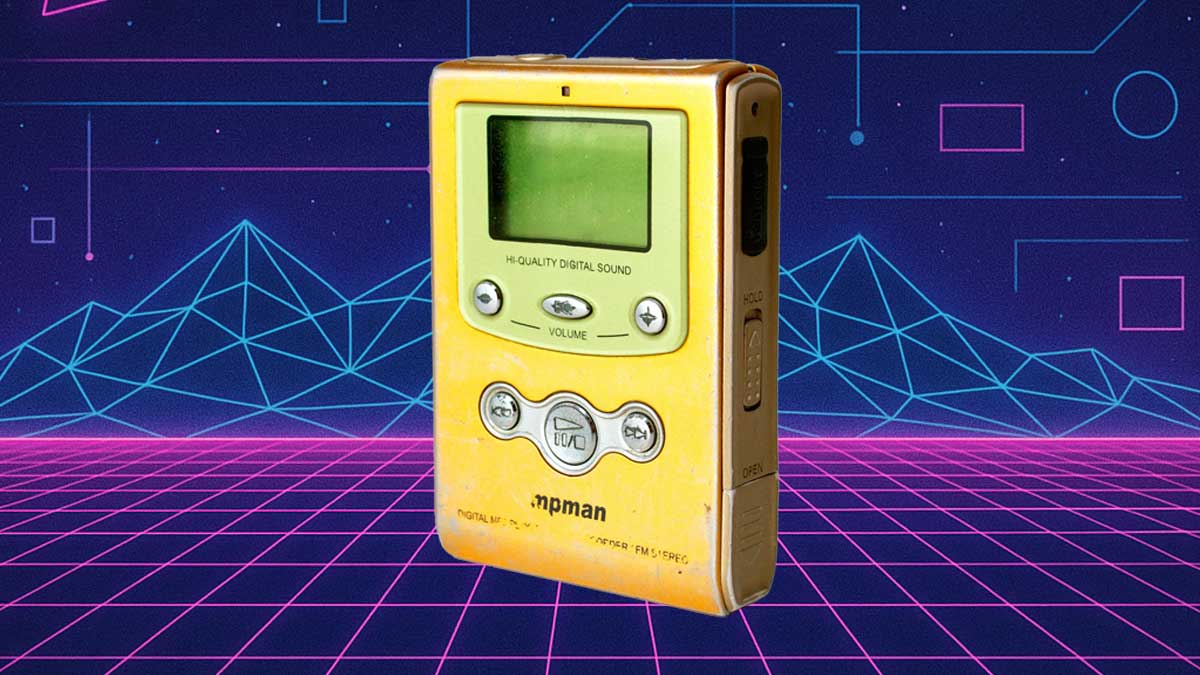
The race was on to create the digital version of the 1980s Sony Walkman (which could only have 12 songs physically in it at a time) and nobody could get it right. People weren't stampeding to buy the first portable digital music players.

Who remembers the Rio?


Sorry to derail things completely

But yes, Steve Jobs changed everything. Several times. Thank you San Francisco.


Back
Top Bottom