
• Get involved.
    We want your input!
    Apply for Membership and join the conversations about everything related to broadcasting.

    After we receive your registration, a moderator will review it. After your registration is approved, you will be permitted to post.
    If you use a disposable or false email address, your registration will be rejected.

    After your membership is approved, please take a minute to tell us a little bit about yourself.
    https://www.radiodiscussions.com/forums/introduce-yourself.1088/

    Thanks in advance and have fun!
    RadioDiscussions Administrators

NPR: North Carolina radio station plans to reject broadcasts of 'inappropriate' Met operas

Here's a commentary that has been written on this subject:
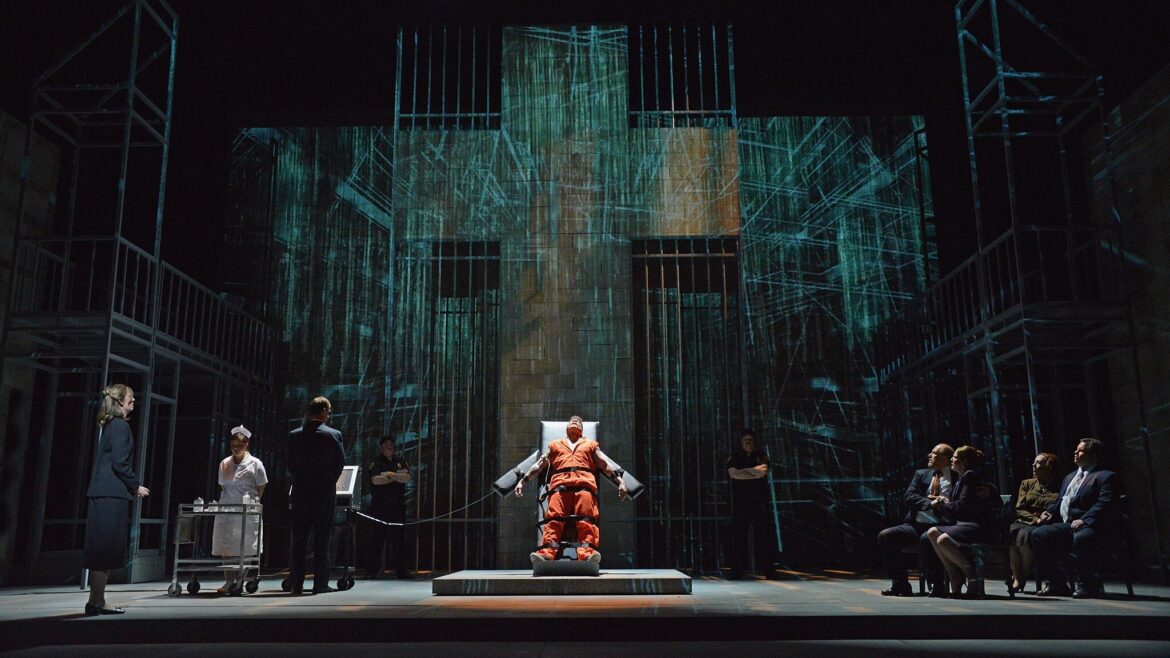

One of the points was that most of the classic operas deal with subjects that most people would consider indecent. So to drop current operas because they deal with indecent subjects ignores all of the incest and sex that exists in the 17th century operas.
 
So, it's a form of Programming Censorship. Management has decided that no one should hear these performances on "Their" Radio station. It comes to close to when some libraries remove certain books from the shelves...
All music programming is "censorship" because the program director determines in the final instance what specific songs get played.

This is not like censoring books in a library because in a library, the librarian has to select a wide range of titles for "everyone's" taste. In a radio station playlist, the program director has to understand that listeners can't leave "one" on the shelf. Every song is played for the entire audience, and ones with limited appeal don't get played.

Radio stations have a format. The programmer excludes songs they believe don't "fit the format". And within the format, they exclude the ones that they feel are not good enough.

Not at all like a library.
 
Here's a commentary that has been written on this subject:


One of the points was that most of the classic operas deal with subjects that most people would consider indecent. So to drop current operas because they deal with indecent subjects ignores all of the incest and sex that exists in the 17th century operas.
The two times I have run classical stations, I programmed them myself. The majority of calls we got about objectionable works had to do with very late 19th century and earlier 20's century pieces. And there were enough "every time you play one of those I turn off the radio. We decided that, with a 1000 album library in the case of the station I owned, we did not need to make people mad and we did not buy those albums or play the ones we had.
 
The two times I have run classical stations, I programmed them myself. The majority of calls we got about objectionable works had to do with very late 19th century and earlier 20's century pieces. And there were enough "every time you play one of those I turn off the radio. We decided that, with a 1000 album library in the case of the station I owned, we did not need to make people mad and we did not buy those albums or play the ones we had.

Were those commercial stations?

I would imagine that a public radio station would have more of a responsibility to, at least try to educate its listeners, rather than just making them comfortable by playing the tried-and-true. But....
 
The two times I have run classical stations, I programmed them myself. The majority of calls we got about objectionable works had to do with very late 19th century and earlier 20's century pieces. And there were enough "every time you play one of those I turn off the radio. We decided that, with a 1000 album library in the case of the station I owned, we did not need to make people mad and we did not buy those albums or play the ones we had.
Really? That's like a reverse request. We all know that people who call Radio stations for requests are something like 1 percent of the actual listeners. You have said that is unreliable because they often request an "Obscure tune that tests poorly". That same logic should apply to complaints on the station playlist. Any station that has "Free Bird" on their playlist is permanently off my list of choices...
 
Early on, NPR's article tried to make it a race/LGBTQ thing. Great for taking the low road! The real prejudice comes from the writer of the article because those words would not have been slung if she wasn't white. Kind of like that fart: the one that smelled it dealt it.

This is a station head that has to make a tough decision based on what they know of their donors and underwriters. The decision was made based on the response and regardless of the criticism, the lady did what she believed was right by her listeners and underwriters. There are some that just want to pick a fight on anything.
 
Early on, NPR's article tried to make it a race/LGBTQ thing.

I guess you're referring to this?

Three of the operas that WCPE plans to reject in the 2023-24 season were written by Black or Mexican composers. This past April, WCPE also refused to broadcast another Met-produced opera written by a Black composer that included LGBTQ themes.

Is there something factually wrong about that? Keep in mind that legislatures are banning books based on similar criteria.
 
Is there something factually wrong about that? Keep in mind that legislatures are banning books based on similar criteria.

Then there was this from the same article:

Other works that WCPE is contesting include Terence Blanchard's opera Champion, which was first staged at the Met this past April. Champion is based on the real-life biography of boxer Emile Griffith, a gay fighter who won several world titles in the 1960s and killed fellow boxer Benny Paret in the ring after he taunted Griffith for his sexuality. WCPE declined to air the Met's Champion broadcast earlier this year because the libretto "contained vulgar language and a theme unsuitable for a general audience." (The Met told NPR that as well providing advance notice and content advisories to stations as needed, the Met mutes curse words and questionable language within the radio broadcasts.)

Note that last sentence - the one in parentheses - so the purported concern over what children will hear (and must we infantilize everything For The Children?) is false. Other statements and quotes in the NPR article indicate to me that this is yet another instance of someone trying to jam their religious beliefs down everyone else's throats. You can use religion to justify just about anything, and it has been used to justify just about anything.
 
You can use religion to justify just about anything, and it has been used to justify just about anything.

And truthfully, there are lots of radio stations that do that all the time, although not usually under the guise of classical music.

Meanwhile, composers from the last 100 years deserve to be heard somewhere.

“The present day composer refuses to die.”​

― Edgard Varèse
 
Were those commercial stations?
Yes, the first one, which I owned, was part of what became a 5 FM and 4 AM cluster. The second was one of Art Kellar's original stations. Both for profit.
I would imagine that a public radio station would have more of a responsibility to, at least try to educate its listeners, rather than just making them comfortable by playing the tried-and-true. But....
But these were not public stations, they were commercially supported stations.
 
Really? That's like a reverse request. We all know that people who call Radio stations for requests are something like 1 percent of the actual listeners. You have said that is unreliable because they often request an "Obscure tune that tests poorly". That same logic should apply to complaints on the station playlist. Any station that has "Free Bird" on their playlist is permanently off my list of choices...
In the case of the classical station I owned, we did surveys at classical concerts, art galleries and the like. We even had advisers from the music department two larger universities in the city and the country's "House of Culture" arts development operation..

In general, people don't call classical stations with "requests" (that makes me laugh, in fact). Most such schedule weeks in advance and have to balance the schedule for very different lengths of pieces and full works. When we got calls, it was about things like "too much baroque" or "too many Germanic composers".

The one I owned was nicely profitable, and was only the second FM in a market of over a million; the station was part of a 9 station local cluster.
 
In general, people don't call classical stations with "requests" (that makes me laugh, in fact). Most such schedule weeks in advance and have to balance the schedule for very different lengths of pieces and full works.

You haven't said exactly when this was, but my guess is that it was more than 40 years ago. There was a time when commercial classical ruled the FM band, and there was an entire social universe built around those FM stations. There were magazines devoted to the music and its presentation, and newspaper columns that listed those music schedules in advance. That way, the fan groups could be sure to listen in to hear their favorite works, and maybe even record them off the air. All that went away by the the 90s.

We're talking here about the Met, and for decades, The Metropolitan Opera broadcasts were sponsored by Texaco. It was NOT a public radio show because the Met wanted to make money, and those commercials made them lots of money. Now the business model of classical music is a bit different, although sponsorship is still very important.
 
Last edited:
You haven't said exactly when this was, but my guess is that it was more than 40 years ago. There was a time when commercial classical ruled the FM band, and there was an entire social universe built around those FM stations.
This began in 1965 with northern South America's first FM, which was an adaptation of "beautiful music" using Latin American folkloric music as the vocals. The second FM was a year later, doing embassy programming daytime and classical from 4 PM onward as well as noon to 2:30 PM when all offices and businesses closed for lunch.

Since there had never been an FM in the market or region before, we defined our own formats. The classical station, after about 6 years, adopted a rock format.
There were magazines devoted to the music and its presentation, and newspaper columns that listed those music schedules in advance. That way, the fan groups could be sure to listen in to hear their favorite works, and maybe even record them off the air. All that went away by the the 90s.
Not where I did classical, first in South America and later in Richmond, VA.
We're talking here about the Met, and for decades, The Metropolitan Opera broadcasts were sponsored by Texaco. It was NOT a public radio show because the Met wanted to make money, and those commercials made them lots of money. Now the business model of classical music is a bit different, although sponsorship is still very important.
The only clients I had were ones I called on and sold. For that station, the pitch was "snob appeal" and nothing else.

We were offered some classical taped shows by the USIS* (Voice of America people), but they were in English and came with the taint of the U.S. Embassy so we did not run those.

* United States Information Service, often called "Useless" and known to have staff that actually reported to The Company.
 
Not where I did classical, first in South America and later in Richmond, VA.

Maybe not there, but had you been in New York City, you would have seen daily listings of WQXR (owned by the NY Times) and WNCN in the local papers. As well as WNYC and WBAI, both of which played a lot of classical music.
We were offered some classical taped shows by the USIS* (Voice of America people), but they were in English and came with the taint of the U.S. Embassy so we did not run those.

You could have carried taped classical programs produced by Sony Electronics and hosted by founder Akio Morito, who was a huge lover of classical music. But they would have been in Japanese. Not useful to you.
 
Maybe not there, but had you been in New York City, you would have seen daily listings of WQXR (owned by the NY Times) and WNCN in the local papers. As well as WNYC and WBAI, both of which played a lot of classical music.


You could have carried taped classical programs produced by Sony Electronics and hosted by founder Akio Morito, who was a huge lover of classical music. But they would have been in Japanese. Not useful to you.
Interestingly, Colombia was a big classical music market in the 60's and 70's, with huge numbers of releases issued there. I had them smuggled into Ecuador as soon as they were released.
 
Interestingly, Colombia was a big classical music market in the 60's and 70's, with huge numbers of releases issued there. I had them smuggled into Ecuador as soon as they were released.
Smuggled? I take it that relations between Colombia and Ecuador weren't exactly friendly at the time?
 
Change of plans, as WCPE announces it will air the full season of The Metropolitan Opera:


Apparently they've heard from a lot of members & supporters who disagreed with the original decision. The MD says "It's been a hard week."

After the reversal, MD Emily Moss told the New York Times, “It was a very hard decision. It’s been a hard day and a hard week.”

As discussed earlier, the station has the option to skip certain broadcasts, so I doubt the pressure came from The Met.
 
Interestingly, Colombia was a big classical music market in the 60's and 70's, with huge numbers of releases issued there. I had them smuggled into Ecuador as soon as they were released.
Interesting to know that. I do recall hearing a lot of Classical Music on Radio Nacional de Colombia on shortwave in the 1960s.
 
The one thing missing in all this is a comment from the station GM, who was quoted in the original article.

I would say that there is a significant probability that the GM is being asked to "consider her position", as the British would say.
 
Status
This thread has been closed due to inactivity. You can create a new thread to discuss this topic.


Back
Top Bottom