• Get involved.
    We want your input!
    Apply for Membership and join the conversations about everything related to broadcasting.

    After we receive your registration, a moderator will review it. After your registration is approved, you will be permitted to post.
    If you use a disposable or false email address, your registration will be rejected.

    After your membership is approved, please take a minute to tell us a little bit about yourself.
    https://www.radiodiscussions.com/forums/introduce-yourself.1088/

    Thanks in advance and have fun!
    RadioDiscussions Administrators

Obsolete Terms Still Used on Radio & TV: Name One!

^^^
ABC began color transmission (film only) it the fall of 1963 using the
RCA TK-26C film chain.


Going kinda OT...however...Don McCroskey of ABC TV answered my question about B&W and Color tech differences.


Kirk Bayne
 
Obsolete terms on radio….hmm…obsolete terms….

How about “radio?” 😉😉😉

(It’s a joke people….but let’s be honest, there’s a sizable number of people for whom receiving the content described as radio has not a darned bit of a radio involved.)
 
Another obsolete term found on Radio-Locator: Bitcaster. It's what the little lightning bolt next to stations that stream stands for. I vaguely recall bitcaster and bitcasting being used in the very early days of internet radio, but to see it still in use today is surprising. I suspect the template R-L uses for its listings hasn't been changed in a long time, if ever.
 
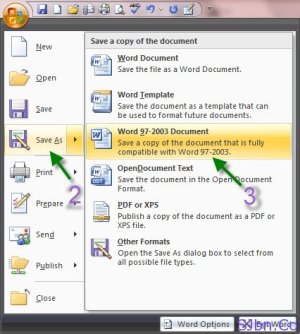
How about the Floppy disk symbol on Microsoft Office products to mean save. Most computers after 2005 phased out the floppy disk drive for USB Ports. That floppy disk symbol is still there nearly two decades since it's been phased out.

 
That happens across all industries when you create an icon to represent a physical object, and that object becomes obsolete or current versions of it no longer bear any resemblance to the icon, what do you do? Creating a new icon may cause more confusion than just keeping the existing one, and it may be difficult to create an icon to represent something that is now just a concept and doesn't actually involve any physical objects anymore.

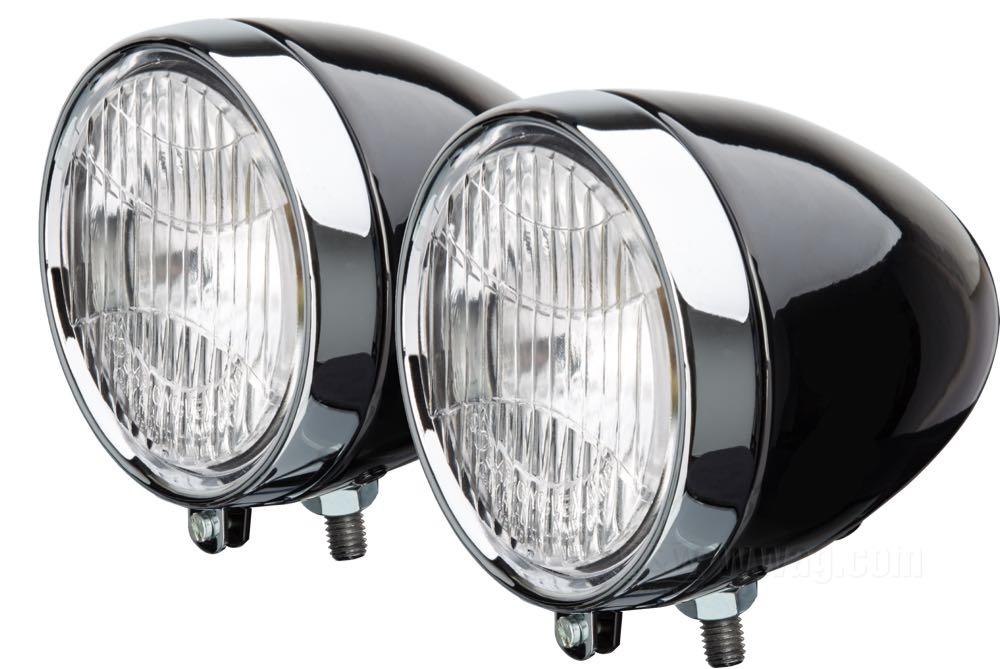
It's the same thing with how the icon for a document file is still a piece of paper, and the directory/folder you keep it in is still represented as a manila file folder. And the universal pictogram for a car's headlights now bears so little resemblance to actual headlights that some people think it's meant to represent a speeding bullet!

14173.jpg

High_Beam.png
 
What I didn't know until I stumbled on that piece I linked to about the CBS Norelco cameras was that Norelco is and always has been Philips, the European electronics giant.

I had assumed that the more recent Philips Norelco brand was the result of a merger. But the real story is that they had to cook up the Norelco name----North American Philips Electrical Company---after Philco sued to keep Philips from marketing products in the US, claiming the names were too similar.

That was 1943 and it stuck until 1981, when Philips bought Philco, and was free to use its own name here.
So my electric shavers are actually Norelcos?
 
That happens across all industries when you create an icon to represent a physical object, and that object becomes obsolete or current versions of it no longer bear any resemblance to the icon, what do you do? Creating a new icon may cause more confusion than just keeping the existing one, and it may be difficult to create an icon to represent something that is now just a concept and doesn't actually involve any physical objects anymore.

It's the same thing with how the icon for a document file is still a piece of paper, and the directory/folder you keep it in is still represented as a manila file folder. And the universal pictogram for a car's headlights now bears so little resemblance to actual headlights that some people think it's meant to represent a speeding bullet!
Now that you mention it... it does look like a speeding bullet.

As for the "save" icon you mentioned that still looks like a floppy disk, I can hear it now... "what's a floppy disk?"
 
It might well have been ABC that was cheap.

For way too long - until 1971 - my hometown TV market had just two stations, NBC and CBS affiliates that shared the ABC secondary affiliation. But most of the ABC programming wound up on the NBC affiliate, including ABC's Movie of the Week. The local newspapers' "action line"-style columns featured frequent complaints about the fact that the Movie of the Week was in black and white. The station's explanation was always, "that's how ABC sends it to us and they refuse to send it to us in color."

Where I spent part of my childhood, it was a one-station TV market, though in many areas one could get two Des Moines stations with an outside antenna. The local station was an ABC affiliate, but carried a few CBS daytime programs. Then it filled the open time on its schedule in the late afternoons with ABC programming that it didn't clear from the usual network feed. It couldn't tape the ABC programming because its microwave relay to Des Moines was occupied with the CBS feed. So ABC supplied programs such as "Dark Shadows" and "Let's Make a Deal" to the local station...on kinescope. In the late 1960s. In black-and-white. Finally, KTVO prevailed upon the network to provide videotapes. Which ABC did...in black and white. The notable thing about that was that the audio quality on those tapes was better than what you'd get from a network feed, in the days when network audio still was limited to 5 kHz audio response.

I have a TV Guide from 1974 that shows Wyoming stations airing out-of-pattern network shows in B&W. They broadcast local news in color, so they clearly had color capability--they must have got monochrome tapes or even kinescopes.
 
I have a TV Guide from 1974 that shows Wyoming stations airing out-of-pattern network shows in B&W. They broadcast local news in color, so they clearly had color capability--they must have got monochrome tapes or even kinescopes.

The networks were fed on AT&T longlines until the late 70s when they switched to satellite. Once again, RCA/NBC had the advantage because RCA launched Satcom. So other nets had to lease time from RCA. Western Union also had a broadcast satellite as well as AT&T.
 
The networks were fed on AT&T longlines until the late 70s when they switched to satellite. Once again, RCA/NBC had the advantage because RCA launched Satcom. So other nets had to lease time from RCA. Western Union also had a broadcast satellite as well as AT&T.
Before satellite distribution, the TV station in Harrisonburg VA was considered a "bonus" station by NBC. They would not pay for an AT&T feed to the station. Therefore the station used an off-air pickup from the NBC affilaite in Washington DC or Richmond VA with the receive antenna on a nearby mountain and relayed to the studio via microwave. You would occasionally get local ads for DC or Richmond when the control operator missed a switch.

Anyone know of other examples?

BTW: Mutual was the first radio network to distribute by satellite using Western Union's Weststar. Always thought the was a pretty classy name.
 
"Podcast." A terrible invention of a word created by combining 'iPod' with 'Broadcast.'

Well, the iPod only existed for a historically fleeting 21 years, and is obsolete now.


Nonsense. The iPhone is an iPod, renamed to highlight its added functionality.

Nokia and the others were trying to figure out how to make their phones play music while Apple made its music player make phone calls.

The word now used to describe on-demand audio was already obsolete, almost from the moment podcasts really took off with the masses.

AirPods have roughly half of the smartphone earpiece market today and have sold nearly 200 million pair in the last seven years.
 
Last edited:
I believe they also never said the current temperature was 77 -- they always rounded it down to 76 or up to 78 degrees, to avoid giving free promotion to 77 WABC.

There's an aircheck of Beaver Cleaver (TV writer/producer Ken Levine) doing a fill-in on 99X in New York...running down the local temperatures "....and in Brooklyn, it's 77...uh-oh....."
 
It used to be a standing order every year that TV crews would report from post offices the night federal income taxes were due. Not every branch remained open until midnight, just key ones, and there would be footage of cars wrapped around the building and of police directing traffic as people scrambled to get their forms in the mail before the deadline. How long after online filing grew in popularity did post offices stop staying open until midnight on April 15th? I can't remember the last time I saw news coverage.
 
A curiously retro term has crept into NFL and college football play-by-play in recent years. "Third and 4 from the 20. Let's see what (coach/offensive coordinator) dials up here!" This is usually accompanied by a shot of an intense-looking individual on the sideline, poring over a chart on a clipboard and covering his mouth to prevent lip-reading. We never heard this "dialing" talk when we were still using dial telephones, or even dial-up internet. So why is it so prevalent now?
 
It used to be a standing order every year that TV crews would report from post offices the night federal income taxes were due. Not every branch remained open until midnight, just key ones, and there would be footage of cars wrapped around the building and of police directing traffic as people scrambled to get their forms in the mail before the deadline. How long after online filing grew in popularity did post offices stop staying open until midnight on April 15th? I can't remember the last time I saw news coverage.

Not seeing news coverage and not being open are two different things.

Turns out post offices don't stay open late anymore, though that only began as a blanket policy from the USPS this year:


I do find stories from previous years about which post offices are open late, and it looks like it's been a dwindling number over the last decade as more and more people file online.

I think your sense that the news coverage of the big lines at the post office on tax night has vanished is correct----but that the newsrooms decided that it was of less importance as time went on and they quit before the Postal Service did.
 
Before satellite distribution, the TV station in Harrisonburg VA was considered a "bonus" station by NBC. They would not pay for an AT&T feed to the station. Therefore the station used an off-air pickup from the NBC affilaite in Washington DC or Richmond VA with the receive antenna on a nearby mountain and relayed to the studio via microwave. You would occasionally get local ads for DC or Richmond when the control operator missed a switch.

Anyone know of other examples?

BTW: Mutual was the first radio network to distribute by satellite using Western Union's Weststar. Always thought the was a pretty classy name.
I think that there were several instances where this happened and the station either had to use an off-air pickup (as happened in Harrisonburg) or they had to build their own microwave link. Aside from the Harrisonburg example that you gave, I know that WGTU/WGTQ ("Upstate 29 & 8") in Traverse City & Sault Ste. Marie, Michigan used an off-air pickup of WZZM (Ch 13) in Grand Rapids as the source for their ABC network programming.

For a station that built its own microwave relay, one example would be KAYS (Ch 7) in Hays, KS -- they used their microwave relay not just for CBS network programming but also to pick up syndicated programming from Wichita, KS. They were separately owned from the Wichita station, but effectively became a semi-satellite. Of course that is long in the past.
 
From Stax of Wax…

When color was not enough, NBC had “living color” in its pre-program peacock.
How about “turntable” … or, to sound presidential, “record player”.

Excuse me. I have to splice the tape before I thread it on the reel to cue it up.

(If you have to look up these terms, you're just not old enough.)
 
Status
This thread has been closed due to inactivity. You can create a new thread to discuss this topic.


Back
Top Bottom