
It takes two to tango. I think the "strings" that control corporate media are being seen by many. Hopefully independent media becomes bigger.As this thread grows, it becomes more and more like the rest of the ones we have had about the administration's actions ... the focus is shifting to discussing Trump instead of focusing on the actual impacts to our industry.
No wonder Lance keeps having minor coronaries over RD. He's right: There are plenty of other places to discuss politics in general. When I come here, I expect a more focused discussion.
TheBigA shouldn't be feeling the need to make posts like this one:
Actually, that should be a valid presumption, given what he's been doing to tear us -- tear all media -- down.

-
Get involved.
We want your input!
Apply for Membership and join the conversations about everything related to broadcasting.
After we receive your registration, a moderator will review it. After your registration is approved, you will be permitted to post.
If you use a disposable or false email address, your registration will be rejected.
After your membership is approved, please take a minute to tell us a little bit about yourself.
https://www.radiodiscussions.com/forums/introduce-yourself.1088/
Thanks in advance and have fun!
RadioDiscussions Administrators
You are using an out of date browser. It may not display this or other websites correctly.
You should upgrade or use an alternative browser.
You should upgrade or use an alternative browser.
President's Televised Address
- Thread starter TheBigA
- Start date
- Status
- Not open for further replies.
As this thread grows, it becomes more and more like the rest of the ones we have had about the administration's actions ... the focus is shifting to discussing Trump instead of focusing on the actual impacts to our industry.
Which is why my response stuck to broadcasting, and ignored the rest.
They all lean the same way because of stockholders though. They were a part of the resistance his first term because they believed that's where the money was and now they are doing what they are doing for the same reason. There is no yin and yang here.Some do, some don't. You're applying a one-size-fits-all to an entire industry.
Fine. How do we do that?
They all lean the same way because of stockholders though.
Huh? How do the companies know the politics of their stockholders? They don't.
They also don't all lean the same way. Fox News is as much a mainstream media company as any of them, and they also have stockholders.

So let's make it more focused.No wonder Lance keeps having minor coronaries over RD. He's right: There are plenty of other places to discuss politics in general. When I come here, I expect a more focused discussion.
A comparison with Watergate is instructive. There were many fewer media outlets then. There was stronger support both from subscribers in the case of newspapers, and from advertisers for most other media. They could withstand financial pressure. Regulatory pressure was a concern for broadcasters, which is probably one reason they tended to let print media take the lead in breaking stories. Print media also had deeper staffing. Journalists had some standing. The notion of a "fifth estate" performing an oversight function over government didn't seem ridiculous.
Now, all media are under financial pressure. The revenue pie is stagnant or smaller, and it's cut up in far more pieces. Newspapers are considerably weaker, both in terms of finances and content, except for a few nationally oriented media. Even for those national publications, I get the impression that they are sometimes pulling their punches. One bright spot is National Public Radio, but it has faced substantial pressure, too, with the withdrawal of federal funding. That pressure should be an object lesson to proposals from some what I call "capital-J journalism" proponents for government subsidies of traditional news media. He who pays the piper calls the tune.
What we now call "linear TV" is also in a weakened position financially. Some outlets are still trying, both nationally and locally. But there is more competition, for advertising dollars and for attention. New platforms have developed, siphoning away revenues from traditional media. There's an increasing inclination among audiences to read, listen, and watch content that reinforces (or even intensifies) existing beliefs. Cable-TV news started it, but with greatly improved technology and streaming, all you need is a camera and studio, plus a few loudmouths who will say anything and a willingness to jettison traditional controls of editing and standards. Any notion of oversight and independence diminishes more and more. With all of that going on, it becomes increasingly difficult for anyone trying to practice credible, fact-based, independent journalism to stick with it. No matter what you do, someone's not going to like it. Recent ownership maneuvers...think Skydance and Paramount/CBS...will just accelerate these trends.
Then artificial "intelligence" (really, a linguistic guessing model) comes along, making the notions of truth and objectivity even harder to sustain.
As for the Trump speech: let him make his speeches. This one was counterproductive for Trump and had a certain "Emperor's New Clothes" flavor to it. Seeing it probably did more to shift public opinion than a thousand podcasts, op-eds, finger-wagging threads on Bluesky, and so on. People don't like to be shouted at. It's been the progressives who have been doing most of that kind of shouting; it was enlightening to see Trump do it this time.
I think fact-checking is still important, and should have been done for this speech. It's hard to do when, every day, a new distraction is manufactured. If you're waiting for the media to tell you "that's the way it is", you're setting yourself up for disappointment. Support and use whatever fact-checking you can but don't always assume it will be there.
In this new age, media literacy is crucial...and underappreciated. Our educational institutions don't do a particularly good job of helping people learn it. Every one of us now has to be his or her own editor and make judgments for ourselves. That's a skill. Judging whether a media outlet is doing its job is a skill, too.
A comparison with Watergate is instructive. There were many fewer media outlets then. There was stronger support both from subscribers in the case of newspapers, and from advertisers for most other media. They could withstand financial pressure. Regulatory pressure was a concern for broadcasters, which is probably one reason they tended to let print media take the lead in breaking stories. Print media also had deeper staffing. Journalists had some standing. The notion of a "fifth estate" performing an oversight function over government didn't seem ridiculous.
Which is why the entire Watergate story was lead by print, primarily the Post with help from the Times. The problem both of them had was they each owned broadcasting. The Post had started to prepare in the early 70s by adjusting their radio/TV portfolio. Ultimately they were punished by the administration when it passed the newspaper-broadcasting cross ownership rule in 1975. We are fortunate that the Times and Post are still relatively independent.
I think they have to guess based on election results and polling.Huh? How do the companies know the politics of their stockholders? They don't.
They also don't all lean the same way. Fox News is as much a mainstream media company as any of them, and they also have stockholders.
I think they have to guess based on election results and polling.
No! While media companies don't need to know (and don't know) the political views of each and every stockholder, their Boards have a pretty good guess at the political beliefs of their major individual stockholders by the kinds of demands they make on the company.
No! While media companies don't need to know (and don't know) the political views of each and every stockholder, their Boards have a pretty good guess at the political beliefs of their major individual stockholders by the kinds of demands they make on the company.
Just as an aside, after he left the anchor chair, Walter Cronkite had a seat on the CBS board of directors.
The above paragraph is *very* important when discussing this issue. Keep in mind that President Trump during the 2024 campaign got very angry when he found out that the networks were fact-checking what he said during debates and putting the information on screen while he was talking. In addition, many people on the far right have argued that fact-checking is a form of censorship. After Mr. Trump won reelection, Facebook and most other social media dropped their fact-checking mechanisms in order to curry favor with him and to keep from being investigated by Federal agencies that he now controls. This issue and its history is discussed on this week's edition of WNYC's "On the Media," and should be available from the program's website by Monday.So let's make it more focused.
A comparison with Watergate is instructive. There were many fewer media outlets then. There was stronger support both from subscribers in the case of newspapers, and from advertisers for most other media. They could withstand financial pressure. Regulatory pressure was a concern for broadcasters, which is probably one reason they tended to let print media take the lead in breaking stories. Print media also had deeper staffing. Journalists had some standing. The notion of a "fifth estate" performing an oversight function over government didn't seem ridiculous.
Now, all media are under financial pressure. The revenue pie is stagnant or smaller, and it's cut up in far more pieces. Newspapers are considerably weaker, both in terms of finances and content, except for a few nationally oriented media. Even for those national publications, I get the impression that they are sometimes pulling their punches. One bright spot is National Public Radio, but it has faced substantial pressure, too, with the withdrawal of federal funding. That pressure should be an object lesson to proposals from some what I call "capital-J journalism" proponents for government subsidies of traditional news media. He who pays the piper calls the tune.
What we now call "linear TV" is also in a weakened position financially. Some outlets are still trying, both nationally and locally. But there is more competition, for advertising dollars and for attention. New platforms have developed, siphoning away revenues from traditional media. There's an increasing inclination among audiences to read, listen, and watch content that reinforces (or even intensifies) existing beliefs. Cable-TV news started it, but with greatly improved technology and streaming, all you need is a camera and studio, plus a few loudmouths who will say anything and a willingness to jettison traditional controls of editing and standards. Any notion of oversight and independence diminishes more and more. With all of that going on, it becomes increasingly difficult for anyone trying to practice credible, fact-based, independent journalism to stick with it. No matter what you do, someone's not going to like it. Recent ownership maneuvers...think Skydance and Paramount/CBS...will just accelerate these trends.
Then artificial "intelligence" (really, a linguistic guessing model) comes along, making the notions of truth and objectivity even harder to sustain.
As for the Trump speech: let him make his speeches. This one was counterproductive for Trump and had a certain "Emperor's New Clothes" flavor to it. Seeing it probably did more to shift public opinion than a thousand podcasts, op-eds, finger-wagging threads on Bluesky, and so on. People don't like to be shouted at. It's been the progressives who have been doing most of that kind of shouting; it was enlightening to see Trump do it this time.
I think fact-checking is still important, and should have been done for this speech. It's hard to do when, every day, a new distraction is manufactured. If you're waiting for the media to tell you "that's the way it is", you're setting yourself up for disappointment. Support and use whatever fact-checking you can but don't always assume it will be there.
In this new age, media literacy is crucial...and underappreciated. Our educational institutions don't do a particularly good job of helping people learn it. Every one of us now has to be his or her own editor and make judgments for ourselves. That's a skill. Judging whether a media outlet is doing its job is a skill, too.
In this new age, media literacy is crucial...and underappreciated. Our educational institutions don't do a particularly good job of helping people learn it.
Keep in mind that most of our educational institutions are under the control of state politicians, who can use their power to affect what is taught and how it's taught. So you can't assume that the teaching of media is being done in an impartial way. These same state politicians also control their public broadcasting stations, and are starting to exert their political agenda in the programming at those stations.
After Mr. Trump won reelection, Facebook and most other social media dropped their fact-checking mechanisms in order to curry favor with him and to keep from being investigated by Federal agencies that he now controls.
Some of this is also related to the fact that social media companies are protected by Section 230, and can't be sued for content created by users. However, conservatives (including Brendan Carr) are trying to eliminate that protection, and if successful, that will change the way social media companies handle user generated content.
Last edited:
This.Some of this is also related to the fact that social media companies are protected by Section 230, and can't be sued for content created by users. However, conservatives (including Brendan Carr) are trying to eliminate that protection, and if successful, that will change the way social media companies handle user generated content.
Section 230 came close to being eliminated several years ago – I forget precisely when – but it was spared pretty much at the last minute.
If I'm not mistaken, once 230 is gone, not only can the platforms be held liable and sued for their users' content, the users themselves can be sued, too. Or is that already true?
Nevertheless, it would change things drastically.
c

The focus is on the broadcast segment in keeping with the board. None of them are doing meaningful journalism to hold the administration to account. None. In fact, now CBS has buried a story that might look bad because it reported facts. Sometimes facts are bad. That’s how facts work. But now we don’t report them because they would rather capitulate than cover.Some do, some don't. You're applying a one-size-fits-all to an entire industry.
By closing them and slapping reruns of The Honeymooners in place of the evening news. By running a simple message at the front end of stories stating that facts that might anger the regime are excluded from reporting until further notice. By having the “news” chiefs state for the record that they will have their talking heads only say things designed to not counter the regime. Any of those would be closer to honesty than what the networks are doing.Fine. How do we do that?
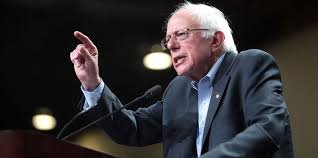
None of them are doing meaningful journalism to hold the administration to account. None.
None? What about MS-Now?

'Bad, fast-talking infomercial': Psaki fact-checks Trump's address
Jen Psaki shares her first reaction and offers some corrections and clarifications to Donald Trump's address to the nation. MS NOW's Catherine Rampell and White House correspondent Vaughn Hillyard join with further fact-checking an analysis.
 www.ms.now
Here's PBS
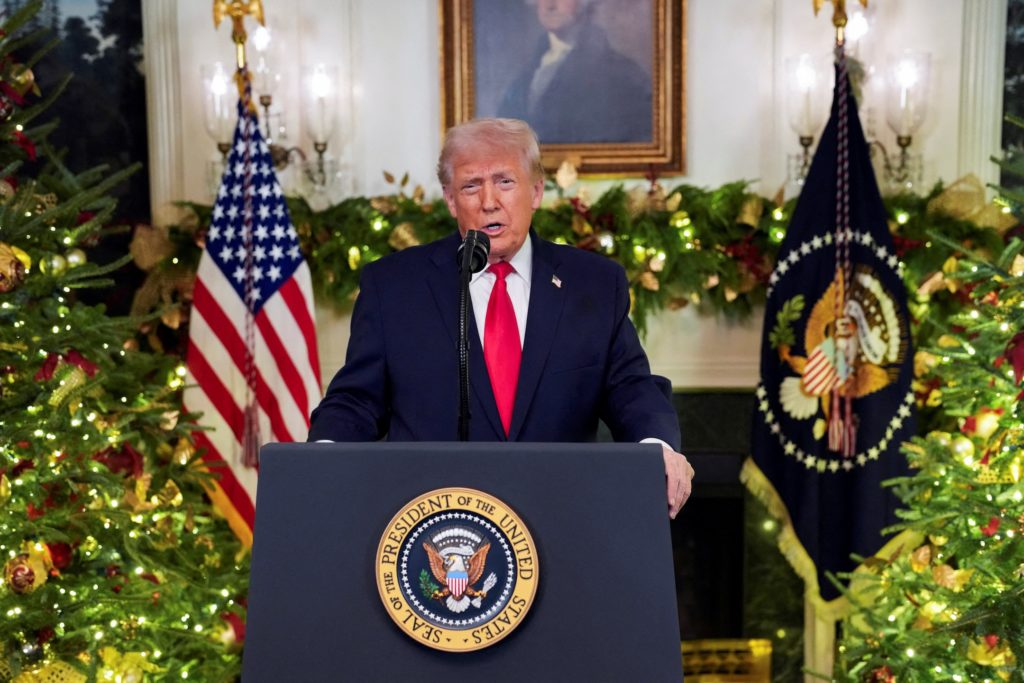
Fact-checking Trump's claims in his politically charged prime-time speech
President Trump addressed the nation Wednesday night in a politically charged prime-time speech. In front of Christmas trees at the White House, he blamed Joe Biden and the Democrats in general for economic challenges and inflation. White House correspondent Liz Landers has this fact check.
 www.pbs.org
Here's ABC

Video Fact-checking Trump's claim that he's brought prices down
President Donald Trump said during his presidential address on Wednesday night that his administration is "bringing our economy back from the brink of ruin."
Here's CBS

Fact-checking Trump's claims about gas prices after his address touting economic policies
President Trump addressed the nation on Wednesday and focused on the state of the economy after almost a year in office for a second term. CBS News' Willie James Inman reports.
www.cbsnews.com
Here's CNN
. Any of those would be closer to honesty than what the networks are doing.
Just turn the TV off. Most people weren't watching the networks at all that night.
Last edited:

I bolded the sentence above about those who claim that fact-checking is a type of censorship. It seems to me that I've heard that claim, as well...and I can't help but think how damaging it is when we have significant number of people believing something that is complete, total nonsense.The above paragraph is *very* important when discussing this issue. Keep in mind that President Trump during the 2024 campaign got very angry when he found out that the networks were fact-checking what he said during debates and putting the information on screen while he was talking. In addition, many people on the far right have argued that fact-checking is a form of censorship. After Mr. Trump won reelection, Facebook and most other social media dropped their fact-checking mechanisms in order to curry favor with him and to keep from being investigated by Federal agencies that he now controls. This issue and its history is discussed on this week's edition of WNYC's "On the Media," and should be available from the program's website by Monday.
Because fact-checking isn't censorship. Fact-checking is the cure to censorship -- it is responding to objectionable speech with more speech. It is also journalists doing their jobs. Because reporters are not supposed to just be stenographers --they're supposed to provide the relevant information that puts news stories into context. And fact-checking is surely a form of context.
Unfortunately, I can understand how it is that media become increasingly wary of doing that fact-checking when it angers a significant chunk of their audience. I can understand it even more when the people is angers are in positions of substantial power over the media companies. I'm not defending it, but I do understand it.
A long time ago in a textbook on broadcasting I saw a reference to "the luxury of integrity". In the context of that textbook, it was referring to rate cutting, double booking, and accepting dubious advertising accounts -- when a broadcaster was doing well, they had the "luxury" of avoiding those practices that also tended to be unhealthy for business over the long run. But when a business is concerned about meeting this month's payroll or being late on the electric bill, desperation sets in and those unethical business practices are tempting when the alternative is to go dark.
Media companies today are not quite that desperate -- but the money is much thinner than it was a couple decades ago, and that has an effect. To start with, it means smaller staffs and fewer resources to do the background work that goes into the best journalism. For another, it means a greater sensitivity to the risk of anything that might cost money (lawsuits) or reduce revenue (advertiser boycotts). Under those circumstances, journalism does suffer.
It makes me wonder...if Watergate happened 50 years later, what would the Washington Post have done with the story?

- https://www.reuters.com/world/us/li...um=notifications&utm_campaign=2025_engagement
 www.pbs.org

 abc7ny.com
There will be another presidential address today given the situation in Venezuela. Expect the networks and wire services to run this one on the alleged capture of President Maduro and how its good for the administration or Venezuela.
U.S. strikes Venezuela and says leader Maduro has been captured and flown out of the country
The legal authority for the attack, which echoed the 1990 U.S. invasion of Panama that led to the surrender and seizure of leader Manuel Antonio Noriega, was not immediately clear.
www.pbs.org
Protests and lawmaker comments: Local reaction to U.S. strikes on Venezuela, Maduro capture
After the U.S. carried out strikes in Venezuela and captured President Nicolás Maduro and his wife, area political organizers are rallying protestors and local lawmakers are voicing their opinions
There will be another presidential address today given the situation in Venezuela. Expect the networks and wire services to run this one on the alleged capture of President Maduro and how its good for the administration or Venezuela.
True too if Watergate happened today then it would not be something the Washington Post or New York Times would run with but more like the Associated Press or Reuters would run with today. Wire services and other non-profit journalism entities would run with something like that today. Also that news entity would have their headquarters outside the US to run with something like that.I bolded the sentence above about those who claim that fact-checking is a type of censorship. It seems to me that I've heard that claim, as well...and I can't help but think how damaging it is when we have significant number of people believing something that is complete, total nonsense.
Because fact-checking isn't censorship. Fact-checking is the cure to censorship -- it is responding to objectionable speech with more speech. It is also journalists doing their jobs. Because reporters are not supposed to just be stenographers --they're supposed to provide the relevant information that puts news stories into context. And fact-checking is surely a form of context.
Unfortunately, I can understand how it is that media become increasingly wary of doing that fact-checking when it angers a significant chunk of their audience. I can understand it even more when the people is angers are in positions of substantial power over the media companies. I'm not defending it, but I do understand it.
A long time ago in a textbook on broadcasting I saw a reference to "the luxury of integrity". In the context of that textbook, it was referring to rate cutting, double booking, and accepting dubious advertising accounts -- when a broadcaster was doing well, they had the "luxury" of avoiding those practices that also tended to be unhealthy for business over the long run. But when a business is concerned about meeting this month's payroll or being late on the electric bill, desperation sets in and those unethical business practices are tempting when the alternative is to go dark.
Media companies today are not quite that desperate -- but the money is much thinner than it was a couple decades ago, and that has an effect. To start with, it means smaller staffs and fewer resources to do the background work that goes into the best journalism. For another, it means a greater sensitivity to the risk of anything that might cost money (lawsuits) or reduce revenue (advertiser boycotts). Under those circumstances, journalism does suffer.
It makes me wonder...if Watergate happened 50 years later, what would the Washington Post have done with the story?
Update the networks are running updates on the Trump address on the capture of now former President Maduro of Venezuela.

 apnews.com

 abcnews.go.com
Live updates: Trump delivers remarks following capture of Venezuela’s Maduro
Venezuelan President Nicolás Maduro has been captured by the United States. U.S. President Donald Trump's administration says he'll face charges on a New York indictment.
apnews.com
Venezuela live updates: Trump to give more details after US strike
Trump said more information about the U.S. operation would be provided at a news conference at 11 a.m. Saturday.
- Status
- Not open for further replies.