
• Get involved.
    We want your input!
    Apply for Membership and join the conversations about everything related to broadcasting.

    After we receive your registration, a moderator will review it. After your registration is approved, you will be permitted to post.
    If you use a disposable or false email address, your registration will be rejected.

    After your membership is approved, please take a minute to tell us a little bit about yourself.
    https://www.radiodiscussions.com/forums/introduce-yourself.1088/

    Thanks in advance and have fun!
    RadioDiscussions Administrators

"Quentin's Theme"?

I did enjoy the overnight beautiful music shows that were still broadcast into the 1980s on some of the 50kw stations mainly because Jay Andres on WGN and especially John McCormick on KMOX sounded so cool.
Those overnight shows were around in the 1960s and early 1970s, with your examples surviving a while longer. There was something quite magical about listening to them on distant AM stations in the middle of the night with the moon and stars above (guessing there are a few out there of a certain age who will nod in agreement.)

Speaking of such shows, does anyone remember the “Nighttime” overnight program hosted by “Dolly Holiday” (real name: Dottie Abbott) and sponsored by Holiday Inn? I remember hearing that on Denver’s KOA 50+ years ago. Relaxing, dreamy music for late night listening.
 
Bonneville launched in '69, according to a history composed by Walter Powers, who worked for Bonneville and its successor Jones Radio Network starting in the mid 70s.

Looks like SRP started in '68, according to a letter by the late Phil Stout, who was the program director for SRP beautiful music... However, every other source puts SRP's service starting in the early 70s. Maybe Mr. Schulke and Mr. Stout spent 2 years behind the scenes before anything was aired.

I had assumed the tape-based syndicators had launched prior to the AM/FM simulcast rule. But I can't find one that did. Interesting.
SRP (then QMI Music Service) offered its Beautiful Music format in March 1969 though some of the stations like WOOD FM on which it was tested were running it before that and continued to do so. Bonneville was launched at the end of 1970 as WRFM Program Services when Marlin Taylor's programming of WRFM was taped so it could be run on other Bonneville-owned FMs. Jim Schulke had first approached Phil Stout to program for his company in the Fall of 1967. He had wanted to get Marlin Taylor but Marlin had no interest in syndicating a format at that point. After a few meetings and a few hours of test programming Stout went to work full-time for Schulke and Richer at QMI in the early Winter of 1968.
 
Those overnight shows were around in the 1960s and early 1970s, with your examples surviving a while longer. There was something quite magical about listening to them on distant AM stations in the middle of the night with the moon and stars above (guessing there are a few out there of a certain age who will nod in agreement.)

Speaking of such shows, does anyone remember the “Nighttime” overnight program hosted by “Dolly Holiday” (real name: Dottie Abbott) and sponsored by Holiday Inn? I remember hearing that on Denver’s KOA 50+ years ago. Relaxing, dreamy music for late night listening.
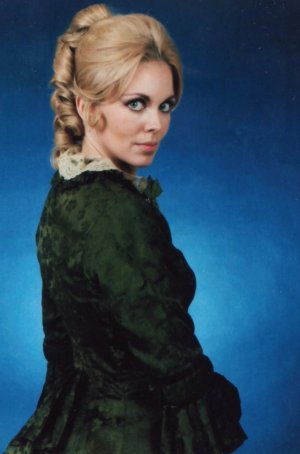
Never hears the American Airlines 1953 - 1970 all night program, but remember Dolly Holiday who in Boston was on WNAC (soon to become WRKO) FM and later on WBOS. Hank Forbes, filling in for Norm Nathan overnights on WHDH, used to play Beautiful Music . But by the 60s the evening or overnight Beautiful Music program on AM had become rather a cliche.
 
Was the 1969 Pop hit instrumental, "Quentin's Theme" (From TV's "Dark Shadows") by The Charles Randolph Grean Sounds played on Beautiful Music Stations? It was on the Ranwood records, a label that would seem to be one of the commercial labels that would release music that could be used on Beautiful Music formatted radio stations.
I recall hearing the Mantovani version on 70s radio. But programmers such as Don Hedman and Bob Concie at IGM were known to go for quirky numbers such as the original on their Good Music format.
 
Shulke (SRP), Bonneville, Churchill, Peters Productions, IGM, FM-100, KalaMusic, RPM, Drake-Chenault come instantly to mind. But most did not begin until the early to mid-70s. In '69 almost all Good Music stations were home-grown.
Well by the later 1960s Alto Fonic out of L.A. and IGM of Bellevue WA were the major tape syndicators. Programatic,, whch Muzak had spun off several years earlier and was operating out of Dallas, was still around as was Magnetronics, a background music company, with its Evergreen Tape Service. Ted Niarhos of WDBN and later WVCG/WYOR offered taped random select programming through his IMB, and Gates Radio as well as SchaferTape offered "starter" libraries, at first created by Alto Fonic for them but later programmed by Stanley Rosick. Triangle Audio Sales (Walter Annenberg's radio stations) through much of the 1960s offered eight hours daily of Beautiful Music as well as 18 hours daily of more "balanced" FM programming to those interested. And from 1966 CBS radio's The Young Sound , a young-leaning Beautiful Music format, was available to qualified outlets as well. The companies you have mentioned did not come into being until, respectively, 1969, 1970, 1977, 1970, IGM 1959 but did not offer Beautiful Music until 1962, FM 100 Plan 1975, KalaMusic 1974, RPM 1970, D-C 1968 (but with respect to Beautiful Music)1975.
 
Wow!
Well by the later 1960s Alto Fonic out of L.A. and IGM of Bellevue WA were the major tape syndicators. Programatic,, whch Muzak had spun off several years earlier and was operating out of Dallas, was still around as was Magnetronics, a background music company, with its Evergreen Tape Service. Ted Niarhos of WDBN and later WVCG/WYOR offered taped random select programming through his IMB, and Gates Radio as well as SchaferTape offered "starter" libraries, at first created by Alto Fonic for them but later programmed by Stanley Rosick. Triangle Audio Sales (Walter Annenberg's radio stations) through much of the 1960s offered eight hours daily of Beautiful Music as well as 18 hours daily of more "balanced" FM programming to those interested. And from 1966 CBS radio's The Young Sound , a young-leaning Beautiful Music format, was available to qualified outlets as well. The companies you have mentioned did not come into being until, respectively, 1969, 1970, 1977, 1970, IGM 1959 but did not offer Beautiful Music until 1962, FM 100 Plan 1975, KalaMusic 1974, RPM 1970, D-C 1968 (but with respect to Beautiful Music)1975.
Wow! That's a lot of Beautiful Music services available, listed here as well as on other posts. Must have been monetarily lucrative.
 
Must have been monetarily lucrative.
Many years ago (late 1970s) a work colleague told me about a job interview (engineer) he had at a TV station that also had AM and FM siblings.

He got a tour of the entire operation, in which the AM was fully staffed with live talent, while the FM ran an automated Beautiful Music format.

While looking at the racks of reel-to-reel tape decks and other equipment that made up the FM outlet, the chief engineer told him: “You know what this is? It’s a money making machine!”

Of course there were many such machines that made money with the format…until they didn’t.
 
Some money was made but it was all so labor intensive so I doubt anyone got rich. Just from peddling taped formats.
Wrong. Most of those companies made fortunes for their syndicators. SRP (Jim Shulke's Stereo Radio Productions) had clients paying $10,000 a month or more in the largest markets. When I used syndicated Beautiful Music in San Juan, PR, in the mid to late 70's we paid $1,200 a month in market 31.

A couple of the Beautiful Music syndicators that did custom recordings (SRP, Bonneville, Independent Beautiful Music Association) spent several hundred thousand a year recording custom music in Europe just for their syndicated content. SRP was billing nearly $1 million a month for its Beautiful Music format in the later 70's, which is about $60 million a year in today's dollars.

And look at Drake-Chenault's installations back in that era: https://worldradiohistory.com/Archive-Modern-Era-Miscellaneous/Drake-Promotional-Brochure.pdf

Those that did multiple formats, like Peters Productions, IGM and Drake-Chenault had their own million-dollar buildings with hundreds of thousand of dollars worth of studio gear and tape duplication equipment.

Part of the reason to use syndicators was to get the best programmed format possible. Stations were not buying a library of songs, they were buying very well done programming, delivered on tape.

Read Marlin Taylor's book: Radio...My Love, My Passion: Marlin R. Taylor: 9781684015924: Amazon.com: Books Marlin was, to me, the best programmer of the Beautiful Music format and the book tells his story.
 
Last edited:
Was the instrumental piano music of Roger Williams used on Beautiful Music stations? Even if not, many of his recordings sound like a good fit to me.
 
Much of the beautiful music provided by Bonneville and other music syndicators was not available for purchase by the general public.
Artists such as John Fox, Pat Valentino and others were recorded specifically for these syndicators. You can find some of the music here: Homepage – Surrey House Music
 
Many years ago (late 1970s) a work colleague told me about a job interview (engineer) he had at a TV station that also had AM and FM siblings.

He got a tour of the entire operation, in which the AM was fully staffed with live talent, while the FM ran an automated Beautiful Music format.

While looking at the racks of reel-to-reel tape decks and other equipment that made up the FM outlet, the chief engineer told him: “You know what this is? It’s a money making machine!”

Of course there were many such machines that made money with the format…until they didn’t.
Sometime in the late 70s or 80s, I read a comment somewhere about a top 40 AM with a beautiful music FM. "Our AM promotes, promotes and promotes all the time. The FM sits in a corner, clicks and whirrs, and is number one every time".
 
Much of the beautiful music provided by Bonneville and other music syndicators was not available for purchase by the general public.
Artists such as John Fox, Pat Valentino and others were recorded specifically for these syndicators. You can find some of the music here: Homepage – Surrey House Music
And the material recorded for one syndicator was not available to others; it was "exclusive" music just for one service.

There were, however, some European libraries available to everyone based on a fee structure, and even the CTL (Canadian Talent Library) had some instrumental material that was very playable but only if licensed and paid for outside of Canada.
 
And the material recorded for one syndicator was not available to others; it was "exclusive" music just for one service.

There were, however, some European libraries available to everyone based on a fee structure, and even the CTL (Canadian Talent Library) had some instrumental material that was very playable but only if licensed and paid for outside of Canada.
Most of the exclusive music had excellent fidelity.
 
Most of the exclusive music had excellent fidelity.
In part, it came to the syndicators as sub-masters, and so what went to stations was taken from a copy of those sub-masters. And they never went through the process of making a disk, which is not totally loss-less.
 
Status
This thread has been closed due to inactivity. You can create a new thread to discuss this topic.


Back
Top Bottom