• Get involved.
    We want your input!
    Apply for Membership and join the conversations about everything related to broadcasting.

    After we receive your registration, a moderator will review it. After your registration is approved, you will be permitted to post.
    If you use a disposable or false email address, your registration will be rejected.

    After your membership is approved, please take a minute to tell us a little bit about yourself.
    https://www.radiodiscussions.com/forums/introduce-yourself.1088/

    Thanks in advance and have fun!
    RadioDiscussions Administrators

Radio Layoffs and "Back-up Careers"

Quality of life has been a factor all along. There are some people who wanted a bigger stage, and that's fine. But that wasn't everyone.

I've told my story many times. I was a union engineer in NYC making a 6 figure salary, and hated every minute of it. No stage bigger than NY. I found out that the union rules were different in other markets. So I quit and got a job in another market where the work rules were better. That's all it took. Of course then I decided I didn't want to be in engineering anymore. So I moved again. Rinse and repeat. Change from NABET to AFTRA.
 
I've told my story many times. I was a union engineer in NYC making a 6 figure salary, and hated every minute of it. No stage bigger than NY. I found out that the union rules were different in other markets. So I quit and got a job in another market where the work rules were better. That's all it took.

I almost stayed in Reno. I was happy and while I'd never get rich, I'd be comfortable and I loved living in the Sierra. Then new management came along and made it clear on day one they weren't people I wanted to work for...so, off to Las Vegas and then Phoenix in the space of 18 months. From Market 134 to Market 11.

If the new guys had been nice, I might never have done that. Things happen for a lot of reasons.
 
And, y'know, making the big time didn't necessarily spare you the transient thing. Charlie Tuna worked at SEVENTEEN radio stations in Los Angeles---and that's not counting one in San Diego that he used to tread water after his deal at KHJ fell apart four years after he got to L.A.
 
And, y'know, making the big time didn't necessarily spare you the transient thing. Charlie Tuna worked at SEVENTEEN radio stations in Los Angeles---and that's not counting one in San Diego that he used to tread water after his deal at KHJ fell apart four years after he got to L.A.

Back then, there were lots of owners, so if you pissed off one, there were others who might hire you. That changed with consolidation. But as I said, today the companies don't hold a grudge. If you left on good terms, you can get hired in other markets owned by the same company.
 
Back then, there were lots of owners, so if you pissed off one, there were others who might hire you. That changed with consolidation.

I've actually seen in my career, guys get canned from middays in a small market and be on the air in afternoon drive or evenings on the competition the same day.

It was easier to do---no EEO requirements, no HR department. All you needed was an in, an opening and a competing GM who wanted to throw a middle finger at the folks who canned you just as much as you did.

But as I said, today the companies don't hold a grudge. If you left on good terms, you can get hired in other markets owned by the same company.

Or even back at the same station, in a different role. Case in point: Alex Silverman, who left as KNX PD last spring and now is back as an anchor and reporter. Again, relationships are key.
 
This brings up an issue that hasn't been discussed yet: People today want to stay in the same markets. That's not the way this business used to work.
Actually, staying put wasn't the way a lot of businesses used to work, particularly at the managerial level, but elsewhere, too. IBM, Sears, General Electric, and others used to move their managers around to different locations. General Electric was doing this into the 2000s. Those moves were considered essential for rising up in the company. The managers' families were expected to go along with it. This is less common now because family dynamics have changed. Spouses now usually have their own careers to consider. Concerns over family disruption are more of a factor. As I can attest from personal experience, uprooting your family to a new location can be difficult for everyone involved. Spouses are now far less likely to put up with it.

It wasn't just for people at advanced levels. I grew up in three states -- Iowa, Missouri, and New Mexico -- because my parents moved around for better teaching jobs. Ask me where I'm from and I'm likely to sound like the Rand McNally Road Atlas. Adjusting to the moves was hard especially as I got older. Many families today prioritize things differently. Many companies have adapted. Broadcasters often haven't.
 
While I would tend to agree that not having a Plan B makes landing another job in radio more likely, I'm not sure that's sound career advice. I knew a few people who took that approach and found themselves flipping burgers, bagging groceries, or waiting tables out of desperation. To the best of my knowledge, none ever worked in radio again. I don’t care how good you are. At some point, you just got lucky, and most people aren’t that lucky. The radio job market has a lot more talented people than it has openings for them. Talent alone won’t get you very far.

And just in case anyone takes my earlier post the wrong way---while I'm glad I didn't have a Plan B (because I would have used it decades ago at the first sign of trouble), I'm saying that from the vantage point of a comfortable retirement after a fulfilling career that I had very little to do with. Most of the truly great stuff just fell into my lap. I had the talent and work ethic to make the bosses glad they hired me, but...

And, as these most recent layoffs show, you'll never work hard enough to escape the ax. I was lucky enough to get back on the horse quickly after the January, 2020 iHeart layoffs and retire on my own terms from Capital Public Radio four years later. But if I'd stuck around? Especially with the CPB fading away and funding a huge question mark? It could easily have happened again.
All true. And I can speak as someone who made a 30-year career in another field, had mostly fantastic luck, and now have a worry-free retirement. It's easy to say, "it worked for me; it can work for you". Every circumstance is different, however. So I don't want to be arrogant or flippant about it. Changing careers is not an easy move to make. What I think is fair to say is that broadcasting, and radio in particular, is a business in decline.

If it keeps on raining, the levee's going to break
When the levee breaks, have no place to stay


(You can tell I like that song, can't you?)

Right now, radio's got a deluge going and a lot of levees are breaking.
I started in radio as a teenager and have been in radio consistently for the past, what is this year, 40.years. I have moved around the USA to 15 different states, moved up the radio ladder from part time to regional programmer, where I am today.
{...}
Over the past 5 years, since the COVID scare, I have really become dissolutioned with the industry more than ever. Companies have made very foolish decisions, taking advantage of people who are loyal to the business and/or the company. You get "silent promotions",taking on more than is sustainable while the company cuts all support for you. For me, it came when I asked if I could help which was greeted with much fanfare and a very healthy raise. The money was great, sure. But it is true, money doesn't make you happier. All it means in radio today is we will make more money but lose any semblance of work-life balance.
{...}
I made the decision at that moment I am done with radio. I am tired of being in situations where I have to prioritize my career over my family. I started to look for.jobs, sharpen my resume and LinkedIn profile. I have come to find that what we do in radio has amazing transferable skills in so many other lines of work. For.so many years, I feared leaving radio that I would be leaving something I have loved since I was a kid and done for over half my life. I used to be scared that I would be stuck not being able to do anything of substance that I would be stuck in a dead end career that I would hate. But now I am excited because I know what I am worth. I am talking to companies that are looking for people just like me and encourage work/life balance and pay just as good, if not better
What came up time and time again in my second career were these attributes honed in journalism and broadcasting:
  • Communication skills
  • Being able to ask good questions
  • The ability to find things out
  • Skepticism about corporate pronouncements (i.e., what's the real story)
  • The ability to create, maintain, and fix relationships
  • Being able to write emails that make sense (a lot of executives can't do that!)
  • Leaving voice mail greetings that people really loved
Conversely, if I knew what I know now about business and finance, I would have proceeded down a far different path in radio or TV. (I just might have taken that sales job in Quincy, Illinois.) But I didn't know...a journalism-school education can be quite weak in those areas...and what happened, happened...and it worked, though with a lot of luck along the way.

While it seems like radio is trying as hard as it can to eliminate the need for people, there will still be some need for succession planning, even if the main "transport layer" of choice becomes streaming and on-demand. And those in the business today will eventually quit or retire. So there ought to be consideration for how radio's business moves will appear to people entering the workforce. From my own interaction with college students today, I can tell you they're not nearly as naïve as many of us were.
 
As I can attest from personal experience, uprooting your family to a new location can be difficult for everyone involved.

Not only difficult but also expensive. Some companies don't pay moving expenses.
What I think is fair to say is that broadcasting, and radio in particular, is a business in decline.

My view is it's changing. At one time, the goal in radio was to run a tight board. Today with digital, that's not really a factor. My advice to people is to be willing to adapt. There's a thread on the Cleveland board about a student run college radio station. The university made a deal with the local NPR station to take over operations. The students are angry. They've been offered jobs and internships at the public station, but they want to keep what they had. They're obviously living in a cocoon. Radio isn't what it was in the 70s. The students have some money they raised from listeners, and it's probably enough to start an online station. They could do their shows from their dorm room instead of the university-owned studio. They're in their 20s, so they know this is a viable alternative. But once again, they only know what they know, and they're angry that it's going away. My advice to them is: Get used to it.
 
Here's another thing...which requires some context.

Earlier this month, I spent a night in Centerville, Iowa, one of the places I grew up. It had a local radio station, KCOG, which mostly played what we'd now call adult-contemporary as filler between the usual small-town news and features (for example, "What's New in Pink and Blue?"). Even back then, more than 50 years ago, Centerville was struggling a bit. It was the center of a coal-mining area and the mines were playing out. The last one closed in 1971, when I was in junior high school. It's also an agricultural area, and has suffered through the depopulation that's been happening in that area of the country as farms consolidate. But it's still a regional trade center, and the city square still has local businesses of substance...a pharmacy, a menswear store, a shoe store, a sporting goods store, an historic hotel that's been throughly remodeled, a bank, a couple of restaurants, a couple of bars, and the ever-ubiquitous cellphone stores.

KCOG put an FM on the air in 1974. The station is now KMGO. KCOG is still around, too, and even has a translator. There appears to be very little local content on either station. The AM is hot AC; the FM is country. The stations' studios and offices are on the city square.

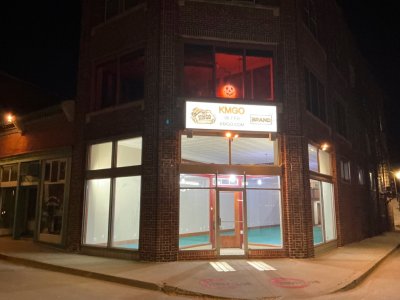
KCOG used to hire high-school students to staff some of its air shifts. I doubt they do that any more. Moreover, this is what the studios and offices look like:

KMGO.Storefront.2025.10.01.jpeg
Aside from the jack-o'-lantern above the KMGO sign, the space is totally empty. It's fully lit (I took the picture at night) which shows it up even more. Those walls are probably hiding something, but what kind of image does this present to a community? What kind of image does this present to a high-school student thinking about a future career?

It would be too obvious to stretch for a metaphor here.
 
This is probably a point I should have made further back, but----California also had a pretty good farm club system going in the 60s and 70s.

You'd start in a small market. I think Bishop was the smallest town in California that had its own radio station in 1971, when I began, but really anything under 15,000 people.

In those days, that was Escondido, Oceanside, Palmdale, Lompoc, Bishop, Mendocino-Fort Bragg. Ukiah should have been in that category, but its proximity to San Francisco and the strength of their signals usually meant you needed experience to work there, so it really belonged in the fifth tier.

Fifth tier was Palm Springs, Santa Maria, San Luis Obispo, Monterey.

Fourth tier was Ventura/Oxnard, Santa Barbara, Santa Rosa.

Third Tier would be Bakersfield, Fresno, Stockton, Sacramento.

Second Tier, San Jose, Riverside/San Bernardino and Orange County.

And at the top...San Diego, San Francisco and Los Angeles. (Sorta---there were HUGE differences in pay scale between the three. Unless you were a star, San Diego didn't pay a whole lot better than the second tier).


There are people---not many, but they exist---who never had to leave the state. Bobby Ocean went Concord-Monterey-Fresno-San Diego-San Francisco-L.A.-San Francisco, and there are others.
 
Last edited:
What I think is fair to say is that broadcasting, and radio in particular, is a business in decline.

If it keeps on raining, the levee's going to break
When the levee breaks, have no place to stay


(You can tell I like that song, can't you?)

Right now, radio's got a deluge going and a lot of levees are breaking.

This afternoon, Kara and I decided to go to one of my old station's anniversary bashes. While it was a fun show and a good way to spend a Sunday afternoon, especially considering the Chiefs weren't on until this evening, in some ways, it was kind of a sad event. When I worked there (and for several years afterward), we always had the big venue in town. It was usually on a Friday or Saturday evening, and it was always sold out. If you were in the standing room only crowd, it was shoulder-to-shoulder.

Today's event was at the smaller sister venue, and it was, at most, half full. I suspect we were among very few who paid for our tickets. While I tend to think radio is evolving more than dying, I don't think it's going to have those connections indefinitely. They've been shrinking for a long time, and this afternoon made clear just how much.
 
Here's another thing...which requires some context.

Earlier this month, I spent a night in Centerville, Iowa, one of the places I grew up. It had a local radio station, KCOG, which mostly played what we'd now call adult-contemporary as filler between the usual small-town news and features (for example, "What's New in Pink and Blue?"). Even back then, more than 50 years ago, Centerville was struggling a bit. It was the center of a coal-mining area and the mines were playing out. The last one closed in 1971, when I was in junior high school. It's also an agricultural area, and has suffered through the depopulation that's been happening in that area of the country as farms consolidate. But it's still a regional trade center, and the city square still has local businesses of substance...a pharmacy, a menswear store, a shoe store, a sporting goods store, an historic hotel that's been throughly remodeled, a bank, a couple of restaurants, a couple of bars, and the ever-ubiquitous cellphone stores.

KCOG put an FM on the air in 1974. The station is now KMGO. KCOG is still around, too, and even has a translator. There appears to be very little local content on either station. The AM is hot AC; the FM is country. The stations' studios and offices are on the city square.

KCOG used to hire high-school students to staff some of its air shifts. I doubt they do that any more. Moreover, this is what the studios and offices look like:

View attachment 10633
Aside from the jack-o'-lantern above the KMGO sign, the space is totally empty. It's fully lit (I took the picture at night) which shows it up even more. Those walls are probably hiding something, but what kind of image does this present to a community? What kind of image does this present to a high-school student thinking about a future career?

It would be too obvious to stretch for a metaphor here.
Are there staff (other than our pumpkin friend doing overnights) in the upstairs space? I know a local newspaper building like this - it still had a functioning office upstairs, but its downstairs which formerly functioned as a reception ended up empty, because they got rid of the receptionist and so there was no use for a space that the public could just walk into. As I understand it, they now rent it out as a retail unit while the paper carries on in the rest of the building.

A lot of radio stations used to have reception areas where the public could wander in - it never served much of a purpose, it was good for radio geeks who could drop by and get stickers or swag, but the idea that "people will walk in with news stories or requests!" never really panned out. Most stations nowadays operate from behind locked doors in business units.
 
Are there staff (other than our pumpkin friend doing overnights) in the upstairs space?
If there are, there aren't many. The stations have very little local content. I've been either through Centerville or have stayed the night several times in the past couple of years and have heard nothing local on those stations except for a few commercials.

To complete the feeling of emptiness, when you walk too closely to the building, a recorded message barks out: "You are being recorded."
Welcoming, that.
 
If there are, there aren't many. The stations have very little local content. I've been either through Centerville or have stayed the night several times in the past couple of years and have heard nothing local on those stations except for a few commercials.

To complete the feeling of emptiness, when you walk too closely to the building, a recorded message barks out: "You are being recorded."
Welcoming, that.
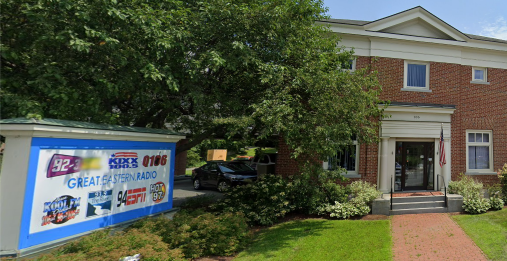
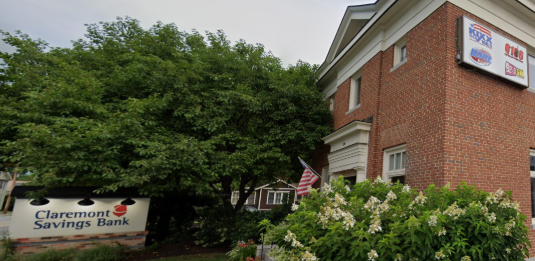
Similarly, the building that once housed a bunch of studios for Great Eastern Radio's family of stations in West Lebanon, NH, now has a bank as its main tenant, with the radio operation on the top floor. I don't think any studios remain, and not even all the stations survived the trip from the big sign out front to the tiny one on the side.

Previous left, current right:
 

Attachments

  • gerthen.png
    gerthen.png
    357.1 KB · Views: 19
  • gernow.png
    gernow.png
    353 KB · Views: 18
I'm a little late to the conversation, but I will try to write something of less than novel length about my own experience, and I hope to touch on many of the points the rest of you have made.

First, as I think many here already know, I got into radio via television ... but I wasn't even yet in high school when I started in TV. I was part of the infamous, ill-fated experiment in local UHF television in my hometown, KKOG-TV Ventura CA, which led the school district to experiment with video in the classroom at my junior high (based, I was told by the faculty advisor, on their having a student there with experience). That led me to a good working relationship with the local cable company as they started to get into local origination.

It was because I became the staff announcer for "Cable Channel 6" that the host of our live coverage of the Ventura County Fair Parade -- which conveniently passed right in front of the cable company's office and studios -- told me to get my Third Phone and that he would hire me for his then-new FM in the market. I did, he did, and I stayed four years before he arranged for me to take over a vacant position at another FM which was in the process of being acquired by the 50kW AM top-40 powerhouse. While that only lasted about a year (they got rid of the entire FM staff within six months of moving us into their building), another station which had been failing ever since the demise of NBC's NIS format, running a terrible automated MOR format called me literally the day after I was let go, and was offered my first PD gig as a result.

I was only 23 on that day. And we went from no-show to #5 in 12+ first book after we created the market's first A/C station. In 1981, the owners sold out, I disagreed with the new owners' proposed direction and submitted my resignation effective the day of their new format's launch. They went Chapter 7 in less than a year-and-a-half; I was hired within a week to be APD at an automated top-40 FM/Country AM. Stayed there for a couple of years, then took a break to be the marketing director and part-time salesperson for a mail-order home satellite equipment sales organization.

The FM side of the station I had been PD of went AOR under its latest owners, before the CEO at corporate HQ decided he didn't want a rock station. They went CHR on Labor Day weekend and I was brought in to do weekends, largely because there wouldn't be anyone there to program the automation, which was now running Standards for the AM. By mid-December, I was PD, also doing AM drive, and having an argument with the GM over my trying to implement a corporate directive to make the FM more A/C. I literally walked off in mid-shift over it.

The existing A/C in the market immediately hired me for weekends and utility. After a brief diversion to the Antelope Valley in 1986 (don't ask, the main reason was not radio-related, but once my presence was detected, I had a six-month gig doing middays on a Country FM and PM drive on the A/C AM.

And then the GM of the station that hired me in 1981, who by then owned the FM I had started off at in 1973, asked me to be the Chief Operator and forced me on his son's Urban format, doing middays. (That was also the only time I used an airname that was not based on my legal name in some way.) And when, inevitably, I had enough of the son, I started nosing around, and Steve Smith at Y97 inSanta Barbara hired me for weekends and utility (this worked out great because I was still living in my childhood home in order to help out my mother and grandmother and could literally get to the Y97 studios in 30 minutes due to being only a couple of minutes from the 101), while I continued as Chief Operator only at the other station. When Steve moved on to San Jose, I got moved into his PM drive show, the consultant who was acting as PD, Mike Schaefer kept me there, and he leaned on my programming experience by putting me in charge on weekends while he was back home in Hollywood. But the GM did not like me and found a weak excuse to fire me ... just as the book came out showing my shift with a 23 share, the juxtaposition causing Schaef to quit.

While still doing my Chief Operator thing part-time, the owner's son was tragically killed in a head-on collision, the entire station fell apart immediately, and I ended up being acting GM for close to a month. By that time, an AM that rimshotted L.A. was moving closer in and hired me to handle the pre-wiring and equipment installation. By the time I finished that, the owner said he wanted to go Talk and hired me as OM/PD/morning show host.

Unfortunately (for him) he breached my contract 90 days into the new format, the station that I had by then worked at three times previous had gone Country the same week, and my old friend heard my cryptic signoff on my last shift, and offered me AM drive beginning the next day. (I was only off the air for 21 hours between jobs.) By the time he sold and we all got politely shown the door -- the new owners let us take the format off with dignity, and I was the last voice heard before the format change -- I was APD/MD in addition to my airshift.

After that, I traded on my experience and reputation and got into consulting. It has had its ups and downs (I moonlighted at Pacific Bell for about four years in their customer service center ... only the second job I have had outside of broadcasting), but I have never been in danger of eviction and I am proud to say that today is the beginning of the fourth year of The Eighties Channel™ running on my Albuquerque client's KRKE.

To quote the Grateful Dead ... what a long, strange trip it's been.
 
When I began in the early 2000s in Australia, it was really the last decade of the independent stations/small networks, before more of them where gobbled up by the large networks.

My first two paid gigs were actually at community radio stations, or as you'd say in the US, public access stations. Both were government funded positions, with the main duties being either station admin or PD, but I'd also fill in a lot on air. Colac (the first station) was a population of about 12,000 for the town (about 50,000 for the licence area), while Bordertown was about 2,000 for the town (around 15,000 for the licence area).

Then I jumped into commercial radio and headed out to Charleville, Queensland - 10 hours drive west of Brisbane, next nearest "town" a good hour away, population about 3,500 (about 7,500 for the licence area). It was part of the small, independent, radio group "Smart Radio Network" - a husband and wife ran small business. Traditional AM/FM combo - FM playing the 80s, 90s, 00s, while the AM played 60s-00s (the more recent music being on the softer side) and country, with a syndicated talk show in the 9am slot, and rural news at Midday. They even had some 1611 and 1629 AM stations (the "X Band" in Australia) that played a Hot Country format (and I did the breakfast show on in my second stint there). We had local announcers 6am-6pm each weekday.

I loved working in that station, as the owners would give staff the freedom to do whatever we wanted when it came to trying new ideas "as long as it pays for itself". I did two stints there, but would leave after a period of time (both times) as the pay was low and I would always get home sick for Melbourne (I'm a big city kid). For an American context, it would be like growing up in Brooklyn, then working in a tiny Arizona town.

Some other stations I had short stints at included Power FM on the New South Wales' South Coast - I quit there after a month, as the station had two towns it was based out of. I was meant to go to the bigger town, the beautiful Batesman's Bay, but at the last second the PD complained to the Manager that they wanted me where they were located, in the smaller Bega. It was also creatively frustrating, as we only had one production studio (with PC that was compatible with the on-air system for both stations) and when I came in after working hours so I could have some time in there to improvement some bits for my show, I got told off by the PD and was told not to come in outside working hours!

Someone else mentioned mining towns, well I worked Emerald, Queensland in 2008/2009, in the heart of coal mining country. I was the only live overnight shift in a small regional market anywhere in the country! Simply, the mining companies were paying the network big bucks to the fund the shift. Although it was an AM station (with FM repeaters in the mines) we were told to play "anything the miners want". This includes Metallica and Rage against the Machine (on AM!), and even the odd comedy song, like Adam Sandler's "Piece of sh*t car"! I was probably going to stick it out there a little while longer, with the aim to transfer to another station around the network, but then we (those on the AM side of our AM/FM combo) became 'divested'. In Australian media law, you're only allowed to own a certain amount of radio stations, TV stations and newspapers in any given market. The network sold to another network, which owned the TV station, which meant they had to sell the TV station or one of the AM/FM stations. When we (the AM side) were in the sale process, it meant we couldn't transfer to elsewhere in that network as it would be seen as devaluing the station (rules came in after it happened a few years before with another network).

Then I made the dumbest move of my career. Got an offer to work for a station in my home state, located just a three hour drive from where I grew up - great, I could visit home on the weekends, I thought. The pay was $10,000 less a year than the current gig, but I took the hit thinking "don't worry about the money, you'll be happy as you'll be closer to home". WRONG!

I was warned by another jock (who had worked there) that the SM, (Small) Network PD/MD and Group Manager were snakes, and he was 100% right. He also forgot to mention the incompetent part. I was on a station that was supposedly a rock format, but we were playing Madonna, Kylie Minogue, Taylor Swift, Katy Perry, Spice Girls - like, WTF?! How many times I got stopped down the street by listeners asking me "Why are you guys called [redacted] but play all the new girly pop?". It was so frustrating, especially since I loved that town, and it was close enough to home for me. In the end, management got sick of me pointing out everything they were doing wrong and tried to sack me. Breach of contract, lawyers at ten paces, eventual financial settlement.

It was my last full-time paid on-air gig. I stayed in the industry for another 8 years, working off-air in the production side of things, with the occasional freelance news reading gig. Now, I dabble in it as a volunteer doing my first passion, sports broadcasting. That said, the radio bug is starting to bite again, so I'm starting to build up a couple of internet stations, just as a hobby.

To the OP's original point of a back-up plan.

By luck, working in the railways had been in the family. My father worked on the track gang, my step-father was an Assistant Station Master, and my uncle volunteered at the railway museum.

I ended up joining the railways in the passenger services section about 7 years ago, and although there's the occasional grumble like any job, I love it. A lot of the skills in radio are transferrable to the job, including announcing trains and passing on relevant information (delays, etc). Even setting up for bus replacements almost feels like setting up for an OB!

The best part (despite the shift work) is that it's a good union paying job. I earn at least double than what I would be getting if I worked in radio now, even close to triple from what that last full-time on-air job paid. The railways are also one of those jobs that unless you seriously screw-up, it's a job for life (if you want it to be). The ability to take some nice (and long) holidays, which I wasn't able to in radio, is another benefit.


As a side bar, a few years ago on an Australian radio Facebook group, there was a PD at station (that I had previously worked at) complaining how they couldn't find anyone decent to fill the 6am to 10am slot, and how anyone decent didn't want to move to a regional town to earn their stripes.
I commented in reply "Why would they? To move away from the big city, to a small town, with no friends, no budget for their show to do cool stuff, and do it all on sh*t pay? Years ago, you had no choice. To be a star, you had to do that. Now, with YouTube, Twitch, Instagram and TikTok, people can become a certain level of famous and earn a wage from it, and do it from anywhere they want to in the world".

 
Some time ago I faced a divorce and my Mom died. My support system was gone. The station format got tighter, the only bright spot was I got promoted from evenings to afternoon drive. Problem was, now the PD was picking on every little thing I did. He brought me in one day and said he wasn't ready to offer me a contract. A contract with no benefit to me that would only keep me from working in radio in the market. Never in it with the delusion of making big money I decided to do something else when radio wasn't fun anymore.

Like quite a few on air people my back up career turned out to be IT which had been my hobby. My people skills which many IT guys lack were always given high ratings.

While between IT jobs I did some part-time work in radio. The station I left wanted me to sign a contract for part-time. I didn't and went across town. Radio had changed a lot in 11 years. I found voice tracking interesting and the live shows boring. I decided to leave after a couple years.


Back
Top Bottom