

-
Get involved.
We want your input!
Apply for Membership and join the conversations about everything related to broadcasting.
After we receive your registration, a moderator will review it. After your registration is approved, you will be permitted to post.
If you use a disposable or false email address, your registration will be rejected.
After your membership is approved, please take a minute to tell us a little bit about yourself.
https://www.radiodiscussions.com/forums/introduce-yourself.1088/
Thanks in advance and have fun!
RadioDiscussions Administrators
You are using an out of date browser. It may not display this or other websites correctly.
You should upgrade or use an alternative browser.
You should upgrade or use an alternative browser.
Radio World's new booklet: Maximizing Your AM Infrastructure
- Thread starter davideduardo
- Start date

Without looking at the fybush site, I'm going to say WEBR/WNED/WDCZ 970 Buffalo, NY. 5 self supporters in a line, Lake seen in background, looking North. Didn't look at satellite photo either. Now I'll look.

In terms of launching a signal for the analog audience, AM radio tends to be a bit more physical because the electromagnetic wave length is longer. During daytime local AM propagation is more favorable for broadcasting than FM. I mean signal propagation, not the development of receivers, such as audio quality and interference management.
Risking thread drift, I think use of AM radio as a back-up distribution network for national emergency information is wise, because of benefits of longer wave propagation.
Physicist might say velocity of wave propagation of Earth atmosphere is high.
Economist might say the atmosphere not have to be manufactured, installed or directly paid for.
Statistician might evaluate common failure points and redundant alternate paths within a closed system.
Could a local ISP obtain emergency information from the AM station backbone, then distribute it locally?
Do some content distribution networks cache content locally or regionally to avoid long haul of data?
Risking thread drift, I think use of AM radio as a back-up distribution network for national emergency information is wise, because of benefits of longer wave propagation.
Physicist might say velocity of wave propagation of Earth atmosphere is high.
Economist might say the atmosphere not have to be manufactured, installed or directly paid for.
Statistician might evaluate common failure points and redundant alternate paths within a closed system.
Could a local ISP obtain emergency information from the AM station backbone, then distribute it locally?
Do some content distribution networks cache content locally or regionally to avoid long haul of data?
Last edited:

If an ISP has the caching infrastructure to store it as it comes in (assuming it arrives in an already-digital format), than yes. That technology is over 20 years old.Could a local ISP obtain emergency information from the AM station backbone, then distribute it locally?
If I understand your question, the answer is yes. Akamai is a big player in the field. That's how big-volume websites like the New York Times distribute their web content, and have such responsiveness when a reader clicks on a link. Akamai caches the content regionally, so it's close to multiple regional Internet Exchange interconnection points.Do some content distribution networks cache content locally or regionally to avoid long haul of data?
A parallel to this is shortwave. 40 years ago I noticed many Embassies in Washington DC had a shortwave antenna on a tower. This enabled them to communicate to their country within a reasonable amount of time, independently from US infrastructure, and with their own hardware and whatever coding security they desired.
Recently an applicant filed a petition for rulemaking with FCC, to allow non-voice communications on "shortwave" frequencies between 2 – 25 MHz. The applicant appears to represent financial trading interests, the general narrative is this is the well known goal of reducing latency in communicating trade orders *.

 www.radioworld.com
 www.arrl.org
My view is the decision by the applicant to pursue this is in order to be able to make trades during a major event that disrupts most communication. During an event like this, there may only be a minute or two before ability to execute a trade ends, but if we make it out alive, the trading company got their trade off and positioned to make money.
FEMA and the FCC are doing the right thing to support a reliable AM radio infrastructure.
The FCC and FEMA are doing this to save lives.
I think they should expand the hardened AM broadcast infrastructure network for more ground wave coverage.
*

 arstechnica.com
 www.capacitymedia.com

 www.chicagotribune.com
First world problem, Kelly A?
Recently an applicant filed a petition for rulemaking with FCC, to allow non-voice communications on "shortwave" frequencies between 2 – 25 MHz. The applicant appears to represent financial trading interests, the general narrative is this is the well known goal of reducing latency in communicating trade orders *.
“Market Makers” Want to Expand Their Use of Shortwave - Radio World
The FCC seeks comments on a proposal to use HF spectrum for financial data
www.radioworld.com
ARRL Files Comments Against “Seriously Flawed” HF Rules Petition
The American Radio Relay League (ARRL) is the national association for amateur radio, connecting hams around the U.S. with news, information and resources.
My view is the decision by the applicant to pursue this is in order to be able to make trades during a major event that disrupts most communication. During an event like this, there may only be a minute or two before ability to execute a trade ends, but if we make it out alive, the trading company got their trade off and positioned to make money.
FEMA and the FCC are doing the right thing to support a reliable AM radio infrastructure.
The FCC and FEMA are doing this to save lives.
I think they should expand the hardened AM broadcast infrastructure network for more ground wave coverage.
*
The secret world of microwave networks
Has anyone spanned the Atlantic with floating microwave masts yet? We're not sure...
arstechnica.com
Latency Special: How high frequency trading is driving low latency
Time is money – especially in the cut-throat world of high frequency trading. In an increasingly savage arms race to slash connectivity speeds, an old technology is suddenly taking centre stage. Richard Irving reports.
www.capacitymedia.com
Some high-speed traders convinced microwave dishes serve up bigger returns
The Lakeside Technology Center at 350 E. Cermak Road is a regal, brick building where the Yellow Pages, Sears catalogs and Life magazines were once printed. In the late 1990s, the 1.1 million-square-foot plant evolved into a hub for…
www.chicagotribune.com
First world problem, Kelly A?
Last edited:
In fact, in the 60's and 70's in all of Latin America where I worked the consulates and embassies would have shortwave antennae on their roofs and state of the art gear to "phone home". Part of the issue was confidentiality and part was the slowness of commercial phone service to international locations.A parallel to this is shortwave. 40 years ago I noticed many Embassies in Washington DC had shortwave antennas on towers. This enabled them to communicate to their country within a reasonable amount of time, independently from US infrastructure, and with their own hardware and whatever coding security they desired.
If I wanted to call the US from Ecuador in that era, I'd have to reserve a call a day or two in advance, and only get through if the propagation was good. Embassies had shortwave gear and antennae for various frequencies and could generally get through always, even if code had to be used instead of voice. And the communication was immediate.
On one occasion when it was believed that Martin Bormann was spotted in the Ecuadorian "East" (jungle rain forests) the word got home to the Mossad in about 5 minutes!.
Yes, aerial antennae apparatus, indeed. Don't forget the earth connection. 
My reason for all these posts is illustrating distinction between (content, audience, business interests, national security interests, etc.) and fundamental characteristics of electromagnetic waves. Electric fields do not care about our human concerns.
Although the article may contain flaws, here is Wikipedia piece on very low frequency, which "explains" continued use of "ancient" technology.
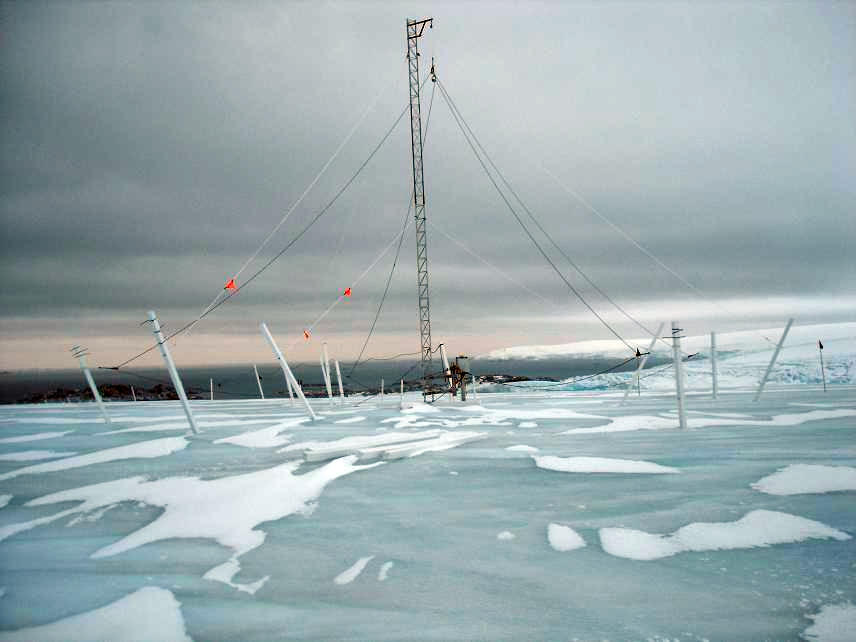
 en.wikipedia.org
And don't stress, your dog can't hear it.
Joking aside, you mentioned confidentiality, which is a benefit to the audience of over the air broadcasting.
My reason for all these posts is illustrating distinction between (content, audience, business interests, national security interests, etc.) and fundamental characteristics of electromagnetic waves. Electric fields do not care about our human concerns.
Although the article may contain flaws, here is Wikipedia piece on very low frequency, which "explains" continued use of "ancient" technology.
Very low frequency - Wikipedia
And don't stress, your dog can't hear it.
Joking aside, you mentioned confidentiality, which is a benefit to the audience of over the air broadcasting.
Last edited:

Except what happens when the general population has finally moved on from AM radio, doesn't even know it exists, nor owns a portable AM receiver? Doesn't that then become just another government-funded 'bridge to nowhere'? To me, it's like the government funding horse-drawn buggy factories in case the U.S. takes an EMP pulse and vehicles all stop running.Recently an applicant filed a petition for rulemaking with FCC, to allow non-voice communications on "shortwave" frequencies between 2 – 25 MHz. The applicant appears to represent financial trading interests, the general narrative is this is the well known goal of reducing latency in communicating trade orders *.
My view is the decision by the applicant to pursue this is in order to be able to make trades during a major event that disrupts most communication. During an event like this, there may only be a minute or two before ability to execute a trade ends, but if we make it out alive, the trading company got their trade off and positioned to make money.
FEMA and the FCC are doing the right thing to support a reliable AM radio infrastructure.
The FCC and FEMA are doing this to save lives.
I actually have quite a bit of behind-the-scenes information about 'IMC/Toggle Communications LLC's proprietary trading over SW proposals and testing that would make the hairs on the back of your neck stand up. A friend of mine has been very involved with fact-gathering. There's a lot of concern both at the Commission, and other government agencies about what they're proposing and testing so far. I'm not at liberty to go into details on this discussion board because it involves a federal investigation.First world problem, Kelly A?
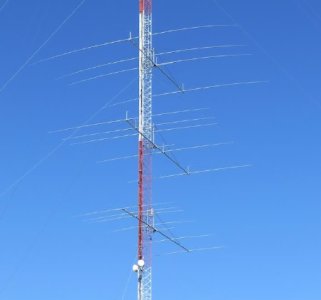
Here's a photo of one of the IMC/Toggle Communications sites:
Attachments
Last edited:
- Status
- This thread has been closed due to inactivity. You can create a new thread to discuss this topic.