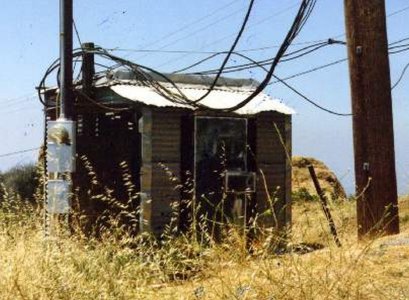
I thought those old hammock antennas were really inverted-L or T systems, with the radiating element being vertical (or close to it), and the multiple "hammock" wires there for top loading (and increasing bandwidth?). They have to be worked against ground, even when using a counterpoise on top of a building, and most of the polarization is vertical. They could still work if designed right.

-
Get involved.
We want your input!
Apply for Membership and join the conversations about everything related to broadcasting.
After we receive your registration, a moderator will review it. After your registration is approved, you will be permitted to post.
If you use a disposable or false email address, your registration will be rejected.
After your membership is approved, please take a minute to tell us a little bit about yourself.
https://www.radiodiscussions.com/forums/introduce-yourself.1088/
Thanks in advance and have fun!
RadioDiscussions Administrators
You are using an out of date browser. It may not display this or other websites correctly.
You should upgrade or use an alternative browser.
You should upgrade or use an alternative browser.
Saving AM Radio
- Thread starter BruceB
- Start date
1230 in Los Angeles was still using one of those until not that many years ago. Today they diplex off of the 1580/930 complex on Alvarado St in the Echo Park area.
IIRC, they shut down that antenna and moved in 2009. From the pictures and descriptions I've seen (from Fybush and others), it was essentially an Inverted-L, with 4 end-fed horizontal wires connected to a single vertical wire, using an ATU and worked against ground. I believe it was the last AM station to use this type of antenna, at least up to now. Being an Inverted-L, the horizontal wires radiated a bit, skewing the pattern away from purely omnidirectional.1230 in Los Angeles was still using one of those until not that many years ago. Today they diplex off of the 1580/930 complex on Alvarado St in the Echo Park area.
A properly installed T antenna's pattern will be omnidirectional and the horizontal wires will not radiate. They'll act strictly as a capacitance hat.
We're all being civil, so it couldn't be on 7200.
That's tame. The infamous Renegade repeater is where you get the worst of the worst. They are also on Broadcastify but beware it's users are highly offensive.
You wouldn't be talking about the pride of the Southern California airwaves, now would you?That's tame. The infamous Renegade repeater is where you get the worst of the worst. They are also on Broadcastify but beware it's users are highly offensive.
Well, I just did something I thought I'd never do. I have only a few buttons for AM radio in the car, but I use them.
A local station has a translator on 101.7 but I gave up on it when they dropped most 60s music in favor of the 80s. Now I have a button for that translator because when I go to the mountains next week, the stronger signal of Bigfoot is gone and I have to go back to my previous choice for classic country. And its translator at 101.7 has a better signal than the really weak AM station. This is possible because it's on a mountain.
And I took the AM station in my area off my list and replaced it with Bigfoot, which can still be heard in a much smaller area without the simulcast.
A local station has a translator on 101.7 but I gave up on it when they dropped most 60s music in favor of the 80s. Now I have a button for that translator because when I go to the mountains next week, the stronger signal of Bigfoot is gone and I have to go back to my previous choice for classic country. And its translator at 101.7 has a better signal than the really weak AM station. This is possible because it's on a mountain.
And I took the AM station in my area off my list and replaced it with Bigfoot, which can still be heard in a much smaller area without the simulcast.

Here's a story about a possible trend to omit any analog receiver capability (AM & FM) from some vehicles, starting with some Rivian & Tesla models.

 www.thetruthaboutcars.com
People Are Angry Rivian's New SUV Won't Play Radio In The Woods
Discovery of an early owner’s manual shows that the incoming Rivian R2 midsize electric SUV will omit built-in AM and FM radio hardware entirely, forcing owners to stream broadcast channels via an integrated iHeartRadio internet application.The play follows an industry trend toward eliminating...
www.thetruthaboutcars.com
Then there’s the Slate EV SUV (Jeff Bezos’ auto entry) that does not have any audio equipment on its bare bones base model. The entire sales concept is the ability to add only the features you want at additional cost.Here's a story about a possible trend to omit any analog receiver capability (AM & FM) from some vehicles, starting with some Rivian & Tesla models.
Actually, since we're talking about antennas for AM stations, 80 or 160 would be more appropriate. At night, you can usually find several groups of old-timers and/or radio-tech wizards discussing all aspects of AM ham operation on their old National and Johnson boat anchors. Having been an apartment dweller all of my adult life, I can barely imagine the kind of antennas they describe, especially the ones for 160.
IIRC horizontal polarized AM is basically line of site kinda reminds me of FM.I thought those old hammock antennas were really inverted-L or T systems, with the radiating element being vertical (or close to it), and the multiple "hammock" wires there for top loading (and increasing bandwidth?). They have to be worked against ground, even when using a counterpoise on top of a building, and most of the polarization is vertical. They could still work if designed right.

They get good local coverage if well tuned and with a decent ground. I ran one with 1kw on 670 in Quito for a while and it make it about 60 to 70 myiles in every direction, despite terrible volcanic rock conductivit.IIRC horizontal polarized AM is basically line of site kinda reminds me of FM.
And DXers in up to around the 80s heard lots of horizontal wire antenna stations with even low power at great distances. When I bought nominally 500 watt HCSP1 595 in San Juan de Amaguaña, I found a file cabinet with hundreds of DX reports from the US, Europa and Oceania... and that was a terribly installed station with wire hung between two eucalyptus trunks with a couple of buried car radiators as ground.
wire hung between two eucalyptus trunks with a couple of buried car radiators as ground.
Was the former owner's chief engineer this guy?


For the Slate, that's reasonable since it is intended to be a very basic model to which you can add options. That said, it is a shame that one of those options doesn't appear to be a radio. They do offer an optional Bluetooth system, and it would be nice if they could offer an inexpensive and simple way to tie a radio into that system.Then there’s the Slate EV SUV (Jeff Bezos’ auto entry) that does not have any audio equipment on its bare bones base model. The entire sales concept is the ability to add only the features you want at additional cost.
It's not new, but I like my 2006 Pontiac Vibe.
It covers all the basics really well, and the radio in particular covers AM, FM, CD, and optionally Sirius/XM (there also exists on the closely related 03 and 04 Toyota Matrix an AM/FM/CD/Cassette version of the base radio which is 100% compatible with all 03-08 Vibes (05+ Matrices used a different, Toyota-designed system which isn't compatible)).
The only things it doesn't do are hands free calls, and it has neither Bluetooth nor an aux input of any kind, but a simple Bluetooth-enabled FM modulator solves those problems easily, and as a bonus, it won't track you as most modern cars do.
c
It covers all the basics really well, and the radio in particular covers AM, FM, CD, and optionally Sirius/XM (there also exists on the closely related 03 and 04 Toyota Matrix an AM/FM/CD/Cassette version of the base radio which is 100% compatible with all 03-08 Vibes (05+ Matrices used a different, Toyota-designed system which isn't compatible)).
The only things it doesn't do are hands free calls, and it has neither Bluetooth nor an aux input of any kind, but a simple Bluetooth-enabled FM modulator solves those problems easily, and as a bonus, it won't track you as most modern cars do.
c
And if it passes, that "AM Radio in Every Vehicle Act" will make it worse. Instead of including AM radio, they'll just remove the radio receiver function entirely.Here's a story about a possible trend to omit any analog receiver capability (AM & FM) from some vehicles, starting with some Rivian & Tesla models.
We already saw that happen with DVD/VCR combo units two decades ago. When they were required by the FCC to include a digital TV tuner beginning in 2007, the vast majority of them opted to remove the TV tuner entirely.
And if it passes, that "AM Radio in Every Vehicle Act" will make it worse. Instead of including AM radio, they'll just remove the radio receiver function entirely.
As it is, it's becoming more difficult to find. I just rented a 2026 Chevy SUV, and the AM/FM function wasn't default or labeled in any way. The normal function for the entertainment system was to detect an external device. It also offered me Sirius/XM, but the subscription wasn't active. It wasn't until I hit the Audio button twice did it offer me AM/FM.
Bad UI design affects all sorts of basic functions in new vehicles. The 2026 Mazda CX-5 now buries even the odometer in a touchscreen menu.As it is, it's becoming more difficult to find. I just rented a 2026 Chevy SUV, and the AM/FM function wasn't default or labeled in any way. The normal function for the entertainment system was to detect an external device. It also offered me Sirius/XM, but the subscription wasn't active. It wasn't until I hit the Audio button twice did it offer me AM/FM.
I just thought it jet lag. A couple of months ago I got a Mazda one night at the Cleveland airport on a rain storm. I had to use Google to figure out to blue tooth my phone. I always take a picture of the odometer. Google had those instructions too instead of guessing.
Mazda is my last choice for a rental car.
I would pay extra for a simple on off volume knob, a tuning knob, and a clearly marked scan button for a car radio in a rental. Also a built-in dashboard holder for your phone for navigation would be nice too. I am used to my phone and the nice girl that Goggle maps uses tells me when to turn in a strange city. I really don't want to learn about an entertainment system in a car I am using for 3 days.
Mazda is my last choice for a rental car.
I would pay extra for a simple on off volume knob, a tuning knob, and a clearly marked scan button for a car radio in a rental. Also a built-in dashboard holder for your phone for navigation would be nice too. I am used to my phone and the nice girl that Goggle maps uses tells me when to turn in a strange city. I really don't want to learn about an entertainment system in a car I am using for 3 days.
Bingo! I'm not a fan of Car Play or Android Auto either. I believe it's safer to tap what you're used to on the phone. By limiting what you can access I believe CP and AA are causing confusion and more distraction.Also a built-in dashboard holder for your phone for navigation would be nice too. I am used to my phone and the nice girl that Goggle maps uses tells me when to turn in a strange city. I really don't want to learn about an entertainment system in a car I am using for 3 days.