• Get involved.
    We want your input!
    Apply for Membership and join the conversations about everything related to broadcasting.

    After we receive your registration, a moderator will review it. After your registration is approved, you will be permitted to post.
    If you use a disposable or false email address, your registration will be rejected.

    After your membership is approved, please take a minute to tell us a little bit about yourself.
    https://www.radiodiscussions.com/forums/introduce-yourself.1088/

    Thanks in advance and have fun!
    RadioDiscussions Administrators

Seattle's "Rock" Station

Thanks for clarifying David, but you have to admit, that was 20 years ago. How many stations, including in Philadelphia, that has made a big talent investment in mid-days since 2001? How much was carryover from the morning?
The issue seems not to be talent related, as in the demos under 40, approximately, it does not seem to matter. And middays has always been a place where talent is not personality-based, but sort of "human warmth" and that can pretty easily be done by a good voice tracker.
And to that point, we discussed earlier that Eastern listening habits are different than West, Middle, or South.
There were no differences in PPM levels, market to market, that were not directly correlated to average commute times. East, West, South, Midwest... all the same.
Covid was an unusual situation. In car has seen increases during drivetimes again and mid days has leveled or gone back to pre-pandemic habits.
No daypart is exactly the same, but per Nielsen we are now near 90% PUR recovery.
 
Last edited:
The issue seems not to be talent related, as in the demos under 40, approximately, it does not seem to matter. And middays has always been a place where talent is not personality-based, but sort of "human warmth" and that can pretty easily be done by a good voice tracker.
But the comment that I replied to, suggested bolstering mid days and evenings with special shows. Juice ain't worth the squeeze.
There were no differences in PPM levels, market to market, that were not directly correlated to average commute times. East, West, South, Midwest... all the same.
Was talking about listening habits depending on programming, not just as it relates to PPM.
 
But the comment that I replied to, suggested bolstering mid days and evenings with special shows. Juice ain't worth the squeeze.
Much of that is caused by the apparent lack of interest by younger listeners in things like talking heads on the radio.
Was talking about listening habits depending on programming, not just as it relates to PPM.
Every market has a different blend of formats. The first determining factor is the number of full power FMs in the market.

Then the size of the Black, Hispanic and Asian communities comes into play; in particular a larger Black and /or Hispanic segment has a huge influence on the music played on non-ethnic stations. That is why the format lineup in Baton Rouge is not the same as in Boise or Sioux Falls.

Even subtle things like climate, blue vs. white collar make up of the work force and the like affect things.
 
Of course. Smart programmers will try to gain high level understanding of who is actually listening, then target them, while at the same time look for openings for new listerners. A balancing act for sure. Frankly, it has always been this way, and nothing has really changed except to the variety of formats, which makes it somewhat more difficult. The general idea though really hasn't changed.
 
Thanks for clarifying David, but you have to admit, that was 20 years ago. How many stations, including in Philadelphia, that has made a big talent investment in mid-days since 2001? How much was carryover from the morning?

And to that point, we discussed earlier that Eastern listening habits are different than West, Middle, or South.

Covid was an unusual situation. In car has seen increases during drivetimes again and mid days has leveled or gone back to pre-pandemic habits.
I'm just saying that if midday listening is higher than other dayparts, in the top 48 markets(give or take), it should qualify as "primetime"!
 
I wonder if this isn’t a modern version of WNBC from the 80’s. I know it is ancient history, but this station really was a talk station that played music occasionally. Don Imus and Howard Stern were the morning/afternoon anchors. It was more about the hosts than the music. Are we hearing a similar format here? (I don’t know the answer to that as I no longer live in Seattle and can’t listen as much as I would like)
 
Don Imus and Howard Stern were the morning/afternoon anchors. It was more about the hosts than the music.

But they were mainly playing music. Imus and Howard didn't become talk show hosts until after WNBC.

Actually in Imus' case the station changed format to sports, and he stayed with the new format.

In fact I think Howard played music for a short while at K-Rock until he dropped it.
 
Do you really want to program a station using songs whose biggest fans were in their 20s some 30 years ago?
A lot of the listeners to KISW are probably in their 40s and 50s, so what else are they going to play? I know they play some currents, but if you also play classic rock as KISW does, chances are high you're not going to be playing Layla or Won't Get Fooled Again.

You'll probably be playing songs whose biggest fans were in their 20s in 1995.

I personally preferred the now defunct Rock 98.9, but they played music that was more my era -- late 80's-00s rock for classic rock music. Then again, I don't program a station. I'm an outlier, anyway. When I worked in the business I heard so many classic rock songs they became ingrained in my head, I don't want to hear some of them anymore.
 
Yes, 70’s music now is targeted at those 60 plus. Time marches on and like it or not that demo is quickly becoming irrelevant. I guess there will always be outlets for this era but only on pay sites. Terrestrial radio can’t run this because the target audience is simply not available.
 
A lot of the listeners to KISW are probably in their 40s and 50s, so what else are they going to play?

I don't know about "a lot," but I can tell you the station is #2 with people 18-34. The sandwich shop I go to is staffed by two guys in their 20s, and the music they listen to all the time is classic rock. The other day I heard the debut album by The Who.

Yes, 70’s music now is targeted at those 60 plus.

Actually that's not true. It depends on which 70s music we're talking about. If it's disco, you may be right. If it's David Gates, you may be right. If it's Riders On The Storm by The Doors, it's not. The Doors music was originally targeted at mostly young men in their early 20s. Amazingly that's still true today. The Doors are a staple at KISW, and the station is #2 with people 18-34.
 
Yes, rock artists who had hits in the 70’s are certainly the exception and I certainly don’t discount them. But top40 in the 70’s was mostly hooky pop songs. I grew up in this era and it was definitely pop-a-loosa.
 
Yes, rock artists who had hits in the 70’s are certainly the exception and I certainly don’t discount them. But top40 in the 70’s was mostly hooky pop songs. I grew up in this era and it was definitely pop-a-loosa.

Which is why so many classic hits stations are playing more rock and less pop.
 
The biggest hits of the early 71 chart were “Knock three times” by Tony Orlando. Followed by the Osmonds with “One bad apple”. Then “ Me and Bobbie McGee by Janis Joplin. Interesting how these songs were so different.
 
The biggest hits of the early 71 chart were “Knock three times” by Tony Orlando. Followed by the Osmonds with “One bad apple”. Then “ Me and Bobbie McGee by Janis Joplin. Interesting how these songs were so different.
Well, bubblegum still ruled pop. The acid of the '60s was wearing off, Nixon was in charge. And the music of that year sounded like it.

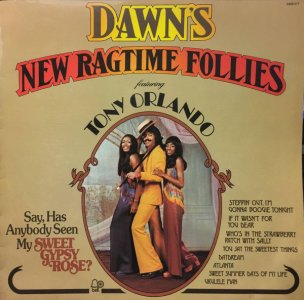
And if you thought "Knock Three Times" was square, you had no idea what you were in for a couple years later. No idea at all....

NixonsCampaignMusic.jpg
 
Well, bubblegum still ruled pop. The acid of the '60s was wearing off, Nixon was in charge. And the music of that year sounded like it.

And if you thought "Knock Three Times" was square, you had no idea what you were in for a couple years later. No idea at all....

View attachment 3222
Remember the musical nostalgia mini-boom of 1966-68? "Winchester Cathedral," "Hello Hello," "My Mammy," "Ding! Dong! The Witch is Dead," even a revival of "Mairzy Doats." And, of course, Paul McCartney's "Honey Pie" and "When I'm Sixty-Four" on Beatles albums.
 
The biggest hits of the early 71 chart were “Knock three times” by Tony Orlando. Followed by the Osmonds with “One bad apple”. Then “ Me and Bobbie McGee by Janis Joplin. Interesting how these songs were so different.
NOW look what you've done! Pretty soon they'll start expounding on the merits of The Beach Boy's Kokomo, or Muskrat Love from the Captain and Toenail.
This thread is going straight down the drain...
 
Status
This thread has been closed due to inactivity. You can create a new thread to discuss this topic.


Back
Top Bottom