• Get involved.
    We want your input!
    Apply for Membership and join the conversations about everything related to broadcasting.

    After we receive your registration, a moderator will review it. After your registration is approved, you will be permitted to post.
    If you use a disposable or false email address, your registration will be rejected.

    After your membership is approved, please take a minute to tell us a little bit about yourself.
    https://www.radiodiscussions.com/forums/introduce-yourself.1088/

    Thanks in advance and have fun!
    RadioDiscussions Administrators

Shortwave radio ratings

Last night home, I extended the telescopic antenna of my Tecsun R-9700DX receiver, and I tuned-in to some shortwave radio broadcasts. Most of them were on the 49m band (around 6 MHz) and they were coming-in relatively good in Montreal, Canada. Programing in English from all was exclusively religious. And one Spanish of what appeared to be commercial mainstream.

I wonder, who are the listeners that these English religious shortwave broadcasters target?

I'm not talking about DX hobbyists that will go out of their way to collect QSL cards with expensive receivers and long wire antenna on the roof...

I'm talking about a "normal" listener with a shortwave radio and a whip antenna.

Where do they "Advertise" their station? At churches? At places of worship? I'm asking because I haven't seen any promo. Nor heard anybody that his favourite (religious) show is on shortwave...

Do you have any regular listeners (again, not hobbyists/DXers, but real listeners) ?

International Shortwave Broadcasting is a very expensive undertaking and I scratch my head, who are their listeners and how they make it financially viable?

Asking for a friend...
 
I would not worry about shortwave. The general public doesn't have enough receivers to make it financially viable. Preachers can reach more folks on TV or streaming on the Internet. Also the low orbit satellite business is growing so soon nowhere on earth with significant population will not have internet access via the little satellite receivers.
 
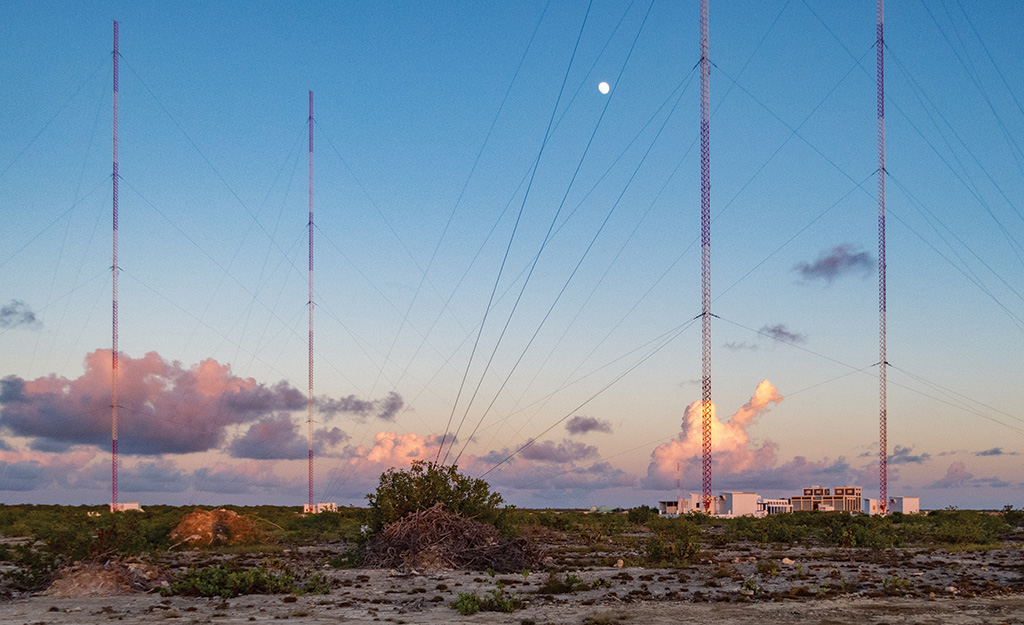
I understand your point of view, but my question still stands. WHO are the regular listeners these private shortwave radio stations have? Operating a 100 kW shortwave transmitter feeding an HF Curtain Array Antenna is not cheap. What's the business model behind this?
 
I understand your point of view, but my question still stands. WHO are the regular listeners these private shortwave radio stations have? Operating a 100 kW shortwave transmitter feeding an HF Curtain Array Antenna is not cheap. What's the business model behind this?
Probably the best person to ask would be Jeff White, of WRMI, Radio Miami International. Having said that, the answer beats me. A lot, if not most , of the religious broadcasters you hear are less than mainstream, such as Brother Stair.. I can't even fathom people listening to him domestically. "Self, I think I'm going to move to a compound in Virginia and do unpaid stoop labor because of this guy on the radio.
 
You can usually listen to a station for several hours over a couple of days to get an idea who is paying for time or buying funding commercials. You are correct about the electric bill $$. Plus I don't know if commercial AM controller equipment would eliminate the expense of having an engineer on site 24 / 7. The biggest AM transmitter I ever worked on was only 5kw. Maybe one of the retired engineers lurking on this site has more info on high power AMs.
 
I understand your point of view, but my question still stands. WHO are the regular listeners these private shortwave radio stations have? Operating a 100 kW shortwave transmitter feeding an HF Curtain Array Antenna is not cheap. What's the business model behind this?
Private U.S. shortwave stations use the brokered time business model. The owner/operators themselves don’t care whether anyone is actually listening as long as the check clears from the programmers that are buying time. They are selling the potential of having an audience, not an actual quantifiable listener base.

Outside of the die-hard shortwave listening community, the audience for these stations is microscopic to nonexistent, and I say that as someone who has been a shortwave listener for almost 60 years.
 
You can usually listen to a station for several hours over a couple of days to get an idea who is paying for time or buying funding commercials. You are correct about the electric bill $$. Plus I don't know if commercial AM controller equipment would eliminate the expense of having an engineer on site 24 / 7. The biggest AM transmitter I ever worked on was only 5kw. Maybe one of the retired engineers lurking on this site has more info on high power AMs.
At a 100 kw AM in South America I worked with for many years we had a 100 kw main and a 30 kw backup, and a generator. All could run automatically. No engineer was needed, although one came in once a day to just check all the readings and the physical plant.
 
International Shortwave Broadcasting is a very expensive undertaking and I scratch my head, who are their listeners and how they make it financially viable?
I had many friends at HCJB in the 60's when they were running several 100 kw and several more 50 kw SW transmitters. They did have listening around the world, but got most of their financing through a missionary alliance in the US. The idea was to "Herald Christ Jesus' Blessing" in rural areas where the was little radio to be listened to or in totalitarian nations where religion was prohibited or restricted.

As local radio grew worldwide, HCJB decided to close almost all of its operations, just keeping a transmitter site in SE Asia to bring the "word" to China. The rest was delegated to local stations.
 
I understand your point of view, but my question still stands. WHO are the regular listeners these private shortwave radio stations have? Operating a 100 kW shortwave transmitter feeding an HF Curtain Array Antenna is not cheap. What's the business model behind this?
The business model is mostly suckling at the teat of religious organizations with more money (or in some cases more aspirations) than sense.

I don't think I've ever known a shortwave listener who wasn't a DXer or a Ham operator. You have to very specifically buy a shortwave radio; the receivers you'll find at Best Buy, Walmart, and similar stores only rarely tune shortwave.
 
A few years ago I know there was a popular right-wing commentator that was on shortwave. I actually heard that from someone who was not a DXer or radio freak, but a conspiracy theorist. Can't remember who the host was, but I remember checking it out and yes - it was there. Somewhere in the 4 MHz range and broadcasting from a station in Tennessee, IIRC.

I found this in a Google search - it's 3 years old, so probably even less relevant:

I was thinking there was a "shortwave" section in Radio Discussions too. But it's not there. I'm sure the pirates are gone from the SW bands too.

Dave B.
 
The business model is mostly suckling at the teat of religious organizations with more money (or in some cases more aspirations) than sense.

I don't think I've ever known a shortwave listener who wasn't a DXer or a Ham operator. You have to very specifically buy a shortwave radio; the receivers you'll find at Best Buy, Walmart, and similar stores only rarely tune shortwave.
In much of the "Third World" shortwave was used domestically, both by governments and private broadcasters, to reach beyond just the bigger cities. Up through the 60's, nearly all larger portable radios had SW.
 
As far as ratings go, for all the reasons stated above and more, in my 30+ years of worldwide ratings research, I have never seen a shortwave station listed in any specific listening report. Shortwave stations typically operate(d) targeting distant lands, niche audiences, or audiences in nations/regions where economies were not developed enough to the point to even support any sort of audience research.

That's not to say no one's listening, and in certain situations (like Cuba), there may be appreciable audiences.
Here is some great info here:
 
A few years ago I know there was a popular right-wing commentator that was on shortwave. I actually heard that from someone who was not a DXer or radio freak, but a conspiracy theorist. Can't remember who the host was, but I remember checking it out and yes - it was there. Somewhere in the 4 MHz range and broadcasting from a station in Tennessee, IIRC.
Probably a replay of Alex Jones when he was on WWCR 4840.
 
As local radio grew worldwide, HCJB decided to close almost all of its operations, just keeping a transmitter site in SE Asia to bring the "word" to China. The rest was delegated to local stations.
That transmitter facility is actually in Australia, targeting South and Southeast Asia, as well as Korea and Japan. The current schedule does not show any programming directed at China. Some of those transmissions are audible, albeit weakly, here in North America.

HCJB was rebranded as Reach Beyond some years ago. More info about Reach Beyond Australia here: Welcome to Reach Beyond in Australia - Reach Beyond Australia
 
That's not to say no one's listening, and in certain situations (like Cuba), there may be appreciable audiences.
Here is some great info here:
That is a very old article, perhaps from 20+ years ago. It quotes VT Communications which is long gone from the shortwave transmitter operation business.

Always beware of puffery from businesses promoting themselves.
 
I started listening to shortwave in 1977, when the Cold War was in full swing. Back then, you could hear VOA, BBC, Radio Moscow, and a couple of other stations nearly 24 hours per day. Most other stations (Radio Canada, Deutsche Welle, Radio Nederlands, etc.) operated on more of a "block" format--the station would transmit an hour of programming in English, then an hour in some other language, usually the native language of the station or perhaps Spanish)

The stations that had relays in the Atlantic, Carribean, etc. were easier for me to receive on the US West Coast. If not, reception was hit-or-miss. Spain and Sweden usually came in rather well, but Italy and Greece were hard to hear, and France, of all places, was rare (most of their programming was directed to Africa). Stations in South Africa, Australia and New Zealand were relatively easy to hear, as were some of the bigger operations in South America (Voz do Brasil, HCJB out of Ecuador, etc.)

Many of the national broadcasters ran shortwave for reasons of prestige, but were always complaining about budgets being cut back. Case in point: Radio Sweden sent out its DX-newsletter, "Sweden Calling DXers" to anyone who wanted it. It used to come once per week, then once every two weeks, then once a month. Multiple issues were printed with smaller type on a sheet of paper as well. Also, stations stopped sending out details on QSL cards, or perhaps stopped sending out cards altogether.

Eventually, as the Cold War faded, most of the bigger broadcasters started broadcasting via local relay stations in foreign countries. Internet streaming also became more prevalent. Eventually most of the national broadcasters seriously reduced or eliminated their shortwave operations.

That leaves the private stations. Some of these, like Trans World Radio, HCJB, or Family Radio, were purpose-built to broadcast religious programming in compliance with "The Great Commission" (Matt 28:19 - "Go therefore and make disciples of all nations...") So, if one person hears the broadcast, and decides to become a Christian, the station, and its sponsors, has done its job.

Other private stations, however, are more like the "dollar-a-holler" local AM. Give them a tape, pay their fee, and they'll broadcast it. It's a mix of religious programs, political/conspiracy cranks, and the occasional hobbyist that just wants to hear their voice on the air, and play a few of their favorite records.

In past years, there were attempts to program US-based shortwave stations as one would a local AM/FM. KUSW out of Salt Lake City, for example, played rock music all day. WRNO in New Orleans tried to do the same. There were a couple of stations on Guam(?) Saipan that broadcast to Japan. All gone now.

Some smaller countries (former Eastern Bloc?) still offer programming on shortwave. Then there are the pirates, mostly hanging out around 6950 kHz on weekends or major holidays....
 
Last edited:
While countries can surely jam shortwave or any other radio station, some nations ban websites that contain any information they don't want citizens to know about. Given some countries being as insular as they are, it is easy enough to track a cell phone and to pull up a website address (should that person break through). Shortwave might be the best way in even with today's technology.
 
While countries can surely jam shortwave or any other radio station, some nations ban websites that contain any information they don't want citizens to know about. Given some countries being as insular as they are, it is easy enough to track a cell phone and to pull up a website address (should that person break through). Shortwave might be the best way in even with today's technology.
But the question remains - even in a country that blocks outside information, why would anyone want to listen to the crap on commercial shortwave?
 
SW is seeing a tiny tiny tiny bit of a renaissance with hobbyists who are now leasing time on WRMI, WBCQ, Wooferton, Issoudun, Rohrbach and Bulgaria. bNot very much but some renaissance... with the advent of the internet making it easier to deliver programming and a bit of a decline in programmers, its easier to lease time.

When I want to buy time on WRMI, i just email Jeff white, tell him what day/time i want, what area I want to target and ask what frequenbcies he has available.

Im on SW once a week via Bulgaria because of a generous benefactor paying for the time carrying an hour of KSKO live programming

All in all, this isnt going to stave off SW stations continuing to drop like flies.

Belarus was on SW until 2016, DW dropped almost all of their sw broadcasts.

RRI cut back from 2 frequencies at a time for each language service to one.

China is still going gangbusters but its more of useless show of soft power and cluttering up the frequencies along with jamming then actual listenership.

Where SW will hang on for at least a couple years is places like Brazil where 100kw on 11780 reaches parts of the amazon no other signal can reach
 
Status
This thread has been closed due to inactivity. You can create a new thread to discuss this topic.


Back
Top Bottom