• Get involved.
    We want your input!
    Apply for Membership and join the conversations about everything related to broadcasting.

    After we receive your registration, a moderator will review it. After your registration is approved, you will be permitted to post.
    If you use a disposable or false email address, your registration will be rejected.

    After your membership is approved, please take a minute to tell us a little bit about yourself.
    https://www.radiodiscussions.com/forums/introduce-yourself.1088/

    Thanks in advance and have fun!
    RadioDiscussions Administrators

St. Louis Public Radio: How KDHX fell apart

KWMU, St. Louis Public Radio, has released a report describing the events that led to the demise of community open-access station KDHX. KDHX was sold last year to the operator of contemporary-Christian station KLJY, "Joy FM", which began programming the 88.1 frequency last month. There was no joy among musicians and others in the St. Louis area, however. The STLPR report traces the problems back to 2019:

{quote}
It was also a place where some Black music professionals felt unwelcome behind the scenes and described what they called a toxic atmosphere riddled with racism, allegations that surfaced publicly in 2019.

Public battles over accountability, diversity and the essence of the radio station’s identity led to the silencing of a once-vital public voice. Last year, KDHX’s board of directors, led by attorney Gary Pierson, pushed through the sale of the station’s FCC license and other assets to a Christian radio network for $8.75 million — even as supporters of the financially challenged station raced to raise enough money to save it.

The station’s already precarious finances were ravaged by public disputes that inspired some listeners to picket their favorite radio station.


{end quote}

KDHX ended up in bankruptcy.

The article at KDHX: How a community radio station in St. Louis unraveled, which I've quoted immediately above, is actually a prelude to two audio segments which effectively comprise a documentary. Disclaimer: I haven't listened to the audio yet, but I plan to.

Comment: It's a sad turn of events when a station such as KDHX is replaced by yet another monotonous religious broadcaster, even if it's one that's locally based. Some of the former KDHX volunteers have turned to streaming as "Community Radio St. Louis". It remains to be seen if that can be a replacement for a broadcast frequency when it comes to this type of programming, particularly when it comes to getting the necessary financial support (though overhead should be lower with a streaming-only operation).

As has been previously reported, the KDHX call letters are now on the former KXEN (1010 kHz).
 
Unless the same kinds of charges emerge about other community stations (KBOO in Portland, OR, for example), I'm inclined to think of the situation at KDHX as a one-off. What does worry me more is the current FCC, under the direction of the current U.S. president, not issuing radio station licenses to groups and individuals that do not support him or his policies. It's (most likely) unconstitutional I know, but when has that stopped the current U.S. leader from doing anything.
 
I agree. Makes me wonder if this concept of community radio espoused by Lorenzo Milam and others is possible today.
Milam himself wrote about several instances of community radio disputes almost causing some stations to fall apart, so I don't think he would have been totally surprised, even if the station that truly fell apart was the descendant of KDNA.

Double Helix has made quite a few miscalculations over the years. St. Louis went without such a station for around 15 years because they thought it would be easier to revive KDNA in the noncommercial band than it turned out to be. They also tried to get the St. Louis city school board to allow them to program KSLH, which by the 1980s had been sadly neglected, operating only a few hours a day. The board instead sold the station to Bott. Another lost opportunity.

What I would be most concerned about now is whether a streaming-only operation would get enough financial support from listeners to keep going. The overhead is lower, but the support may be lower, too. And how long will they be able to keep volunteers interested in programming the stream? I think it will be interesting to see how this plays out.
 
Unless the same kinds of charges emerge about other community stations (KBOO in Portland, OR, for example), I'm inclined to think of the situation at KDHX as a one-off.
In Missouri, KKFI (Kansas City) and KOPN (Columbia) have had their moments but now seem to be doing OK for the most part.
 
What I would be most concerned about now is whether a streaming-only operation would get enough financial support from listeners to keep going. The overhead is lower, but the support may be lower, too. And how long will they be able to keep volunteers interested in programming the stream? I think it will be interesting to see how this plays out.
The fundamental problem with a "community radio stream" is discovery. No one will know it exists, ergo they won't listen, won't volunteer, and won't donate.

KDHX was one of 35 or so options on the FM dial in the St. Louis metro area, which allowed people to find it pretty easily. And they still couldn't keep the lights on. Shrink the audience to 5% of its former level, and those problems don't get easier.
 
I encourage folks to listen to the STLPR documentaries. Very fascinating.

One thing that has been occurring with shocking regularity recently in public/community media is folks trying to push themselves into a position of power and stay there while money mysteriously gets sloughed away. We’ve seen it in Sacramento where luckily the station’s licensee caught it before it completely destroyed local NPR there.

I’ll let y’all decide after giving them a listen, but the one thing that I’ve always said is “follow the money”.

Currently, there’s probably close to $5 million in a bank account from the KDHX sale, with no clear plan for broadcast, despite a guarantee for HD radio carriage (which I don’t need to remind you permits them to program a FM translator). The people still involved directly with KDHX declined to be interviewed for this STLPR story.

It seems the folks in charge of KDHX (and arguably their bank accounts) aren’t winning the hearts and minds of the public.
 
I've just finished listening to the podcasts at the provided link and I was reminded of several things, few of which have to do directly with radio but all of which have to do with management and today's political and business environment in the U.S. To put it bluntly, there are always people out there who are out to gain power and advantage over others. Unfortunately, you will not always be able to spot these people and sometimes you will agree with them on this or that issue and not realize until it's too late that the road they are taking down is a road that leads nowhere. It is therefore wise, especially in volunteer and community organizations (such as community radio stations) to get as much background on nominees to the Board of Directors before you ever elect them to try to make sure that they will serve the needs of the whole organization and not their personal desires. Sadly, KDHX had a Board of Directors that appears to have been more interested with gaining power and control over others than actually serving the organization as a whole.
 
After hearing the episodes, my first thought is: this material is ripe for an opera, and not the kind of opera you'd get in summer at the Muny.

The debacle went beyond the usual angry-volunteer setup that so many community stations have had. From the reporting, it appears the whole trouble began when the station spent too much money on nice studio and office space that it couldn't sustain financially. It wouldn't be the first such station that's happened to. But then mix in the accusations of 2019 involving racism (sadly, an integral part of St. Louis' history) and harassment, followed by a devious yet thin-skinned board and leadership interested primarily in its own self-preservation, plus alienated contributors withdrawing their support, as well as angry volunteers, and you get a toxic brew.

There were several stunners in the piece. One was that Vince Schoemehl tried to mediate a last-minute solution. Getting a plugged-in former mayor involved meant that the power structure of St. Louis was concerned about the situation, that it went beyond just a bunch of volunteers upset that they couldn't feature their micro-genres (a great coinage by Jeremy Goodwin, by the way) as they had been doing for years. I believe this involvement meant there was real concern about damage to culture in St. Louis. Another was the loss of Tom Ray's support. If you're not from St. Louis, you wouldn't know how significant his business, Vintage Vinyl, has been to the St. Louis music scene. Ray also helped get the station on the air in 1987.

So what's left of KDHX appears to be a pile of cash and unused rights to an HD channel. The volunteers who split off have created their own streaming channel. It sounds, from Goodwin's reporting, that there is a solid financial base available to support that channel. As I've mentioned elsewhere in this thread, it will be interesting to see if that support materializes. The type of programming that the channel is featuring should be readily adaptable to podcasts and the like. One thing that isn't clear is whether Community Radio St. Louis will have the savvy to leverage some of the possibilities that open up with the move to a digital platform, and whether that in turn can help it get the financial support that it will need to continue.

What a mess.
 
Ironically, the former KXEN (now KDHX), along with its co-owned KWUL, are only streaming online, and have been doing so for several months.

I intend to listen to this program in the next week. The implosion of KDHX and its sale to the godcasters is similar to the sleight of hand behavior the Lutheran Church Missouri Synod had with KFUO-FM/Classic 99--selling to the same godcaster.
 
I intend to listen to this program in the next week. The implosion of KDHX and its sale to the godcasters is similar to the sleight of hand behavior the Lutheran Church Missouri Synod had with KFUO-FM/Classic 99--selling to the same godcaster.
The LCMS, though, didn't pretend to be a community organization open to public input and involvement. And, as you probably know, a common saying in the St. Louis area is that the Lutherans there can be even more uptight about doctrine than the Roman Catholics. Remember the doctrinal split in the LCMS that led to Seminex? That went on for years.
 
The LCMS, though, didn't pretend to be a community organization open to public input and involvement. And, as you probably know, a common saying in the St. Louis area is that the Lutherans there can be even more uptight about doctrine than the Roman Catholics. Remember the doctrinal split in the LCMS that led to Seminex? That went on for years.
Yes, I am aware.

In 1988, I spent time working at KFUO-AM, and saw a lot of reading material that echoed the uptight doctrine they had too.

The similarity I cite is the classical music community working to save the station from the sale to Gateway. The board of directors at the LCMS were determined to sell the station to that specific group.
 
Well, they're a church with a specific doctrine. Presumably the Gateway group had a similar doctrine. The LCMS would be very unlikely to sell to a Catholic group, for example.
While KFUO-FM was owned by the LCMS, the station itself was a commercial operation. Those who had been interested in saving Classic 99 were interested in purchasing the station and either keeping it commercial or taking it public with a classical format. That group was shut of the deal entirely.

At least there was enough support to get another classical formatted station in 2012, with an HD-2/translator fed station in 'Classic 107.3'
 
Ironically, the former KXEN (now KDHX), along with its co-owned KWUL, are only streaming online, and have been doing so for several months.

I intend to listen to this program in the next week. The implosion of KDHX and its sale to the godcasters is similar to the sleight of hand behavior the Lutheran Church Missouri Synod had with KFUO-FM/Classic 99--selling to the same godcaster.

You raise a good point that is not explored in this piece; namely, where did Gateway come up with the money to bid $5 million higher than K-Love, Inc. for the station. I mean there must be some very wealthy people behind that operation and that is probably worth some investigative reporting in and of itself.
 
Yes, I am aware.

In 1988, I spent time working at KFUO-AM, and saw a lot of reading material that echoed the uptight doctrine they had too.

The similarity I cite is the classical music community working to save the station from the sale to Gateway. The board of directors at the LCMS were determined to sell the station to that specific group.
It's not as if KFUO lacked for money. If I had 100 dollars for every obituary ever published in St. Charles or Warren counties that urged memorials in the form of donations to KFUO, I'd be able to buy a private jet.
 
You raise a good point that is not explored in this piece; namely, where did Gateway come up with the money to bid $5 million higher than K-Love, Inc. for the station. I mean there must be some very wealthy people behind that operation and that is probably worth some investigative reporting in and of itself.
The latest dated financial figures I found were here: Gateway Creative Broadcasting (Accredited Organization Profile) - ECFA.org - dated May 31, 2024. So they would exclude the period during which KDHX was publicly up for sale. Still, they give you an idea of how much money Gateway is able to raise in a given year. Unfortunately, the formatting, which looks straightforward, really isn't. So I did a little reformatting of key figures:

REVENUE
Cash Donations $6,735,934
Noncash Donations $22,445
Other Revenue $2,355,799

Total Revenue $9,114,178

EXPENSES
Total Expenses $8,982,230

EXCESS (or Deficit)
for the year $131,948

Revenues and Expenses are rarely equal.
[More Info]

Total Assets $22,896,559
Total Liabilities $10,397,731
Net Assets $12,498,828
Nonprofits need operating reserves.

{end of excerpt}

ECFA is open only to evangelical organizations. LCMS is not a member; there likely are doctrinal differences.

Gateway (at least on the Joy 99 website) doesn't publish its financial statements or IRS Forms 990 directly, though the tax forms are available from the IRS. The one for 2025 may not be due yet. There isn't one on the IRS website.

(edited to fix some questionable grammar and to clarify where the excerpt ended and where my further comments started)
 
Okay. I did a little digging using the Startsearch website.

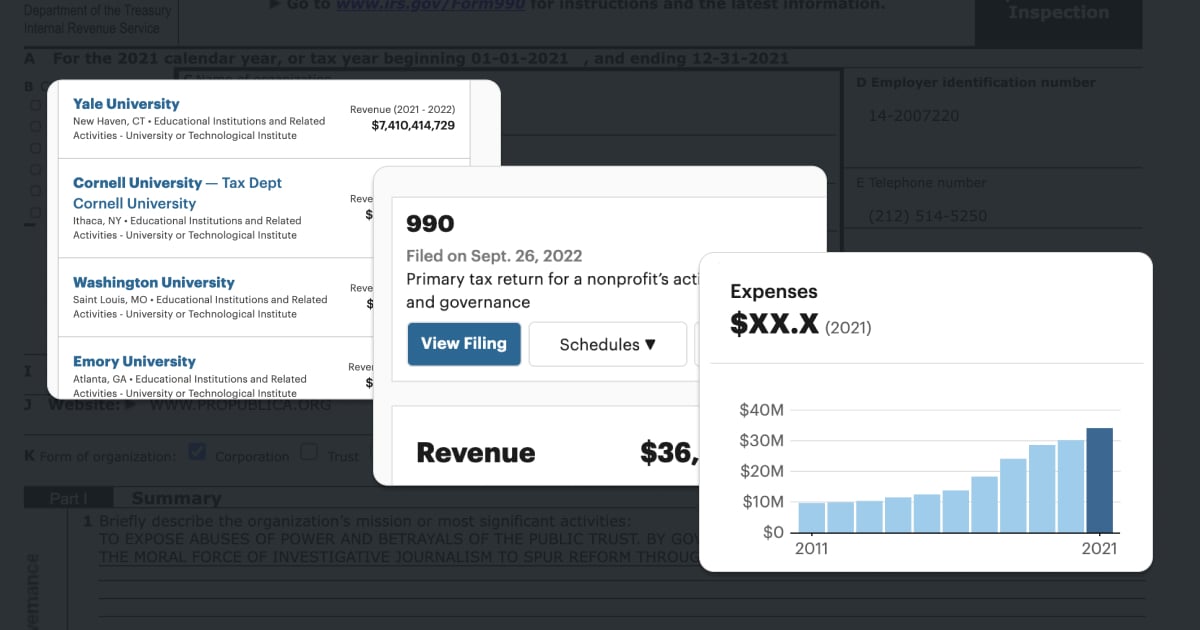
First, here is Propublica's take on Gateway. Note that the latest tax information is from 2024. Also note that contributions have been steadily increasing since tax documents were available. Finally, I note with some interest that, at least with the 2024 information, additional payments were a little more than what the organization was paying its officers.


Second, Here is Gateway's accredited profile from ECFA. Note that the address listed is in Winchester, VA, and not St. Louis, MO.


Finally, here is a profile of Sandi Brown, the vice-president and co-host of the morning show on co-owned KLJY-FM. There is a single sentence in the profile that says she worked before joining Gateway with Focus on the Family.


I'm willing to bet that Focus on the Family is one of Gateway's main contributors. And, as far as I know, nothing illegal is going on here.

One more thing. While the radio documentary gave K-Love Inc.'s bid for the station as $4 million, that in fact was a starting bid. The bankruptcy sale was an auction with K-Love Inc.'s final bid being $8.5 million or just $500,000 below the winning bid of Gateway.
 
One more thing. While the radio documentary gave K-Love Inc.'s bid for the station as $4 million, that in fact was a starting bid. The bankruptcy sale was an auction with K-Love Inc.'s final bid being $8.5 million or just $500,000 below the winning bid of Gateway.
This is how Goodwin described it (at 33:48 into part two of the series):

So...the station did say yes to that key loan from K-Love. And then it agreed to sell the broadcast license for up to 4.8 million dollars, more than twice the station's debt. But then competing Missouri Christian station Joy FM entered the chat, and it won the KDHX asset auction with a bid of nearly nine million dollars. As the save-KDHX movement raced to raise more money, {audio clip: "The momentum is what's really astonishing"}, KDHX pushed the judge to approve the sale quickly. It warned in court that the offer might go away if there were delays.
{end quote}

I believe that description is accurate, though compressed. Goodwin didn't go into deep detail about the mechanics of the auction, and I don't think it was really necessary to do so. What was most of interest in the series were the machinations that the KDHX board went through to get to that point. The auction was anticlimactic.
 
the machinations that the KDHX board went through to get to that point. The auction was anticlimactic.
It sounds to me like they wanted to get out of the station ownership business.

Not unlike the situation in San Jose that ended with k love getting the station, and the staff moving online.


Back
Top Bottom