
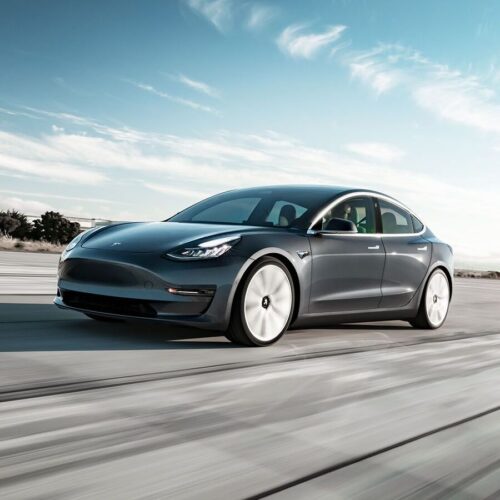
Forget AM radio for every vehicle. These new Tesla models won't even have FM.

-
Get involved.
We want your input!
Apply for Membership and join the conversations about everything related to broadcasting.
After we receive your registration, a moderator will review it. After your registration is approved, you will be permitted to post.
If you use a disposable or false email address, your registration will be rejected.
After your membership is approved, please take a minute to tell us a little bit about yourself.
https://www.radiodiscussions.com/forums/introduce-yourself.1088/
Thanks in advance and have fun!
RadioDiscussions Administrators
You are using an out of date browser. It may not display this or other websites correctly.
You should upgrade or use an alternative browser.
You should upgrade or use an alternative browser.
Tesla removes radios from new entry-level EVs
- Thread starter Theater of My Mind
- Start date
I've said it many times on this board... AM radio gets so much flack from people here about how dead it is (and they're not necessarily wrong), but FM really isn't much better off. I'm actually surprised it's taken this long for a car company to remove radio entirely from the dashboard.Forget AM radio for every vehicle. These new Tesla models won't even have FM.
Will people even notice? I'm not sure. Pretty much anytime I've driven a car with Apple CarPlay (my folks both have it in their cars), I haven't had much use for radio aside from a couple of unique small market stations with interesting music and personalities. I just stream. That's coming from someone who primarily listens to LPs at home - I don't have a way to stream music in my house unless I listen through my phone speaker, so I'm not some big streaming advocate.
And if I don't want to stream my own playlists, there are many others that are easily searchable. And I can skip songs I don't like, too, all with no commercials. Apple Music has "essentials" playlists for decades, genres, etc. Considering so many stations are practically jukeboxes at this point, I can just "tune in" to a playlist that's closer to what I actually want to hear.
Yes, I know there are still old cars on the road without CarPlay. I drive one daily. But these new cars do have it and people do use it. I'm sure Tesla has data on exactly how many times someone tunes in a radio station vs pulls up a stream or whatever. I think the takeaway is this: If there was a big demand for FM radio and it was still relevant to the general population, Tesla wouldn't be removing it from their cars.
Radio stations in these cars will still be on the dashboard, but they'll be there as streams. Competing with playlists, podcasts, etc. And I actually think that's a good thing. Competition makes for better products. Consolidation eliminated a lot of competition between stations. Now radio's back in the competition game except it's no longer from the cross-town rival (because it's under the same roof now). Radio needs to come up with a better unique value proposition or they'll be left behind. This is yet another example of why radio needs to evolve beyond being just a tight playlist of consensus music...
Edit: Duplicate post due to internet glitch.
Not new. For several years now, on some Tesla models you had to pay $500 extra for a "radio package" to get FM and SiriusXM. Without it, you only get Bluetooth and streaming.
I'm sure Tesla has data on exactly how many times someone tunes in a radio station vs pulls up a stream or whatever. I think the takeaway is this: If there was a big demand for FM radio and it was still relevant to the general population, Tesla wouldn't be removing it from their cars.
No facts or data behind this. We've all gotten to know how Elon Musk behaves. He doesn't want a radio in his car. That's all that matters to him.
18 years ago, Steve Jobs felt the same way about FM chips in his iphone.
The fact is that iHeart and Audacy own their own streaming platform. This is why. They know the future isn't AM or FM.
I've said it many times on this board... AM radio gets so much flack from people here about how dead it is (and they're not necessarily wrong), but FM really isn't much better off. I'm actually surprised it's taken this long for a car company to remove radio entirely from the dashboard.
Will people even notice? I'm not sure. Pretty much anytime I've driven a car with Apple CarPlay (my folks both have it in their cars), I haven't had much use for radio aside from a couple of unique small market stations with interesting music and personalities. I just stream. That's coming from someone who primarily listens to LPs at home - I don't have a way to stream music in my house unless I listen through my phone speaker, so I'm not some big streaming advocate.
And if I don't want to stream my own playlists, there are many others that are easily searchable. And I can skip songs I don't like, too, all with no commercials. Apple Music has "essentials" playlists for decades, genres, etc. Considering so many stations are practically jukeboxes at this point, I can just "tune in" to a playlist that's closer to what I actually want to hear.
Yes, I know there are still old cars on the road without CarPlay. I drive one daily. But these new cars do have it and people do use it. I'm sure Tesla has data on exactly how many times someone tunes in a radio station vs pulls up a stream or whatever. I think the takeaway is this: If there was a big demand for FM radio and it was still relevant to the general population, Tesla wouldn't be removing it from their cars.
Radio stations in these cars will still be on the dashboard, but they'll be there as streams. Competing with playlists, podcasts, etc. And I actually think that's a good thing. Competition makes for better products. Consolidation eliminated a lot of competition between stations. Now radio's back in the competition game except it's no longer from the cross-town rival (because it's under the same roof now). Radio needs to come up with a better unique value proposition or they'll be left behind. This is yet another example of why radio needs to evolve beyond being just a tight playlist of consensus music...
Sorry but I'm not buying your reply or the mindset behind it. Beyond Elon Musk's personal preferences (noted above by TheBigA), there is the little matter that to use the streaming services, you have to have the money to pay for Internet access while you're out on the road. You also have to have the money to pay the extra fees if you exceed the streaming hour limits set by the Internet service providers. This is the kind of crap that political conservatives were arguing for back in the 1990s when the DMCA came into effect, and it needs to be pointed out that a whole lot of people really don't earn enough money to support this kind of thing.
So no! There is absolutely no way that I am supporting this point of view.
Tesla doesn't want to sell many (or ANY, frankly) of these decontented cars- not a ton of margin there. By offering them, they are showing a lower price point for entry, but that doesn't mean these models will be readily available for delivery OR that many folks will want them in the end. These are known as "showroom loss leaders" to get folks interested in your brand, so that you eventually buy the next model/trim level up for an additional $7500 or whatever. This is not unique to Tesla BTW- the practice has been in the auto business forever...I learned how to drive in one of these types of cars. The legendary 1979 Chevy Chevette with no AC, no carpeting, and roll down windows. It DID have an AM radio however.
I’m curious if those Teslas that “don’t have AM/FM radio” actually have the hardware installed, but it is an extra cost to actually activate it.Not new. For several years now, on some Tesla models you had to pay $500 extra for a "radio package" to get FM and SiriusXM. Without it, you only get Bluetooth and streaming.
Many Android phones sold in the U.S. some years back had FM receivers, but they were not activated by the carriers. Critics claimed those carriers wanted to maximize fees for streaming costs at a time most customers had data limits or had to pay a per-GB cost.18 years ago, Steve Jobs felt the same way about FM chips in his iphone.
In the 2010s I had a HTC One M7 which supposedly included an FM receiver, but there was no way to activate it with my carrier. Models sold outside the U.S. had those radios enabled.
Internet access “on the road” is through cellular providers, where unlimited data plans are pretty much ubiquitous these days. Data caps were an issue in the past but not today.there is the little matter that to use the streaming services, you have to have the money to pay for Internet access while you're out on the road. You also have to have the money to pay the extra fees if you exceed the streaming hour limits set by the Internet service providers.
I realize there are still some carriers (MVNOs) that offer low cost data limited plans. If an unlimited data plan is going to bust your budget, then you probably can’t afford a Tesla anyway.
My first “new car” was a 1978 Chevette, the cheapest ($3299) car on the market at the time. Crank windows and no A/C, but It came with an AM radio, to which I added a Radio Shack FM converter. That arrangement was okay, but a year later I installed a AM/FM/cassette stereo, as did many people back then. Actually got 120,000 miles out of that silly car.The legendary 1979 Chevy Chevette with no AC, no carpeting, and roll down windows. It DID have an AM radio however.
We also had a Honda Civic during that era which did NOT come with a radio, as they were an add-on option. I also installed a stereo in that vehicle. Those were the days when it was easy to install them yourself.
We tend to forget that many years ago an AM radio for a car was an extra cost option, much like A/C.
Many Android phones sold in the U.S. some years back had FM receivers, but they were not activated by the carriers. Critics claimed those carriers wanted to maximize fees for streaming costs at a time most customers had data limits or had to pay a per-GB cost.
Story about FM chip in iphones:

The Story Behind Apple's Secret IPhone FM Radio Chip
Apple's decision to not activate its iPhone FM radio chip in older models highlights challenges with hardware, streaming, and regulatory concerns.
 methodshop.com

Back in the prior decade, I had three Motorola "Moto G" cellphones in a row (the original, followed by the G4 and G6 - I still have all three of them sitting around here in need of fresher batteries). Each had the FM chip in it, and there was an app that controlled it and allowed the possessor to tune in local FM stations. AM was a no-go, due to the internal RFI from the phone itself, but FM did function adequately. It was just that the phones used their headphone cord as the antenna, so it was sensitive to how that cord was oriented. It needed to be fully extended, not hanked up. It also needed to be either vertically oriented, or horizontally oriented relative to the direction to each station's tower. So it was functional, but most of the time the quality of the product just wasn't worth the effort.

K.M. Richards
Program Director, The Eighties Channel™
Back in the prior decade, I had three Motorola "Moto G" cellphones in a row (the original, followed by the G4 and G6 - I still have all three of them sitting around here in need of fresher batteries). Each had the FM chip in it, and there was an app that controlled it and allowed the possessor to tune in local FM stations.
I have a "moto g play" 2021 version, and it lacks the FM radio app. I suspect that the growing use of wireless earbuds and Bluetooth are responsible, since I also remember the earphone cable being the antenna.

K.M. Richards
Program Director, The Eighties Channel™
I should point out that the only reason I have my Motorola is that it was deeply discounted at my carrier for porting over my service to them; before that I had a Huawei, right around the time that there was considerable concern over them and a growing possibility that it would be deactivated over those concerns.
I ended up donating the old phone to a charity which refurbishes them and distributes them to military families. I don't know if the Huawei was acceptable or if it was instead destroyed.
But it still works fine some four years later, and since most of what I use it for is texting and apps for ordering food ahead of my going to the drive-thru window, it's still quite acceptable, even without FM.
I ended up donating the old phone to a charity which refurbishes them and distributes them to military families. I don't know if the Huawei was acceptable or if it was instead destroyed.
But it still works fine some four years later, and since most of what I use it for is texting and apps for ordering food ahead of my going to the drive-thru window, it's still quite acceptable, even without FM.
You're right - I don't have access to that data. However, Tesla is a publicly traded company. The CEO isn't a king. He's still accountable to shareholders, etc.No facts or data behind this. We've all gotten to know how Elon Musk behaves. He doesn't want a radio in his car. That's all that matters to him.
18 years ago, Steve Jobs felt the same way about FM chips in his iphone.
The fact is that iHeart and Audacy own their own streaming platform. This is why. They know the future isn't AM or FM.
I think you missed the broader point I was trying to make. If Tesla removed phone connectivity for entertainment from the dashboard, it would be a huge story. It would be all over the internet and newscasts.
I've heard the FM removal story a few places, but when I google "Tesla Removes FM Radio" I don't get a single major news publication coming up in the first page of results. Or second page, for that matter. I get pages for auto enthusiasts and from radio-related publications. To use a word that is used to often here, outliers. I changed that search up a few ways and still didn't get a single "mainstream" news publication like CNN, Fox, WP, AP, etc.
My takeaway? Not a big deal to most people. They don't care. It's not relevant to them. The people who do care are outliers at this point. If this was something the average American cared about, Google would be reporting search results from mainstream news sources.
You are right about iHeart believing the future isn't on AM or FM. Here's the thing, though. If that's the case... why does it even matter that Tesla is removing FM radios? It's not the future anyway...
Okay hold up. If someone can't afford a phone plan and are spending $35k on a new electric car, they might want to rethink their spending habits as someone else here mentioned.Sorry but I'm not buying your reply or the mindset behind it. Beyond Elon Musk's personal preferences (noted above by TheBigA), there is the little matter that to use the streaming services, you have to have the money to pay for Internet access while you're out on the road. You also have to have the money to pay the extra fees if you exceed the streaming hour limits set by the Internet service providers. This is the kind of crap that political conservatives were arguing for back in the 1990s when the DMCA came into effect, and it needs to be pointed out that a whole lot of people really don't earn enough money to support this kind of thing.
So no! There is absolutely no way that I am supporting this point of view.
It was also mentioned that most phone plans today have unlimited data. Absolutely. "Internet access out on the road" is included in your phone plan when you stream to the dashboard through a service like Apple CarPlay. There aren't "streaming hour limits" anymore, either. At least not that I'm familiar with.
My family has a pretty standard Verizon plan. My fiancée has a pretty standard plan from a budget phone carrier. The only time she uses the radio is when my show is on. Otherwise, it's Spotify all the way. In a car that's 10 years old. She's never talked of any streaming limits or anything like that. I've never run into them either. Maybe this was a factor 15 years ago but it's not today.
Listen, y'all - I'm not some radio hater. I love radio. Grew up listening to it. And I'm probably one of few people under 30 who still regularly listen to the AM band. But that makes me an outlier, and that's what I'm trying to say. It's easy to exist in the little "FM bubble" that seems to exist here, which is that AM is Ancient Modulation and FM is Future Modulation. In a lot of ways, FM is just AM with "no static at all." Heck, I even had a phone charger that wiped out FM reception when it was a plugged in. Even interference isn't limited to AM anymore. It's not an "AM" problem. It's a "broadcast radio" problem in the broader sense.
What I'm trying to say is that unless radio finds a unique way to bring people to the airwaves, the future won't be on the airwaves. It'll be streaming. If we want to just keep treating radio as "well, it's not the future so whatever," it won't be the future. The future is arriving already, and this story (to me, at least) is proof of that.
Think this'll just be a Tesla thing? I doubt it. Just wait another year or two. Weren't they the first (of quite a few) to remove AM radio, too?

Tesla is a publicly traded company. The CEO isn't a king. He's still accountable to shareholders, etc.
You obviously haven't been following the ongoing drama between the CEO and his board over his pay.
My takeaway? Not a big deal to most people. They don't care. It's not relevant to them. The people who do care are outliers at this point. If this was something the average American cared about, Google would be reporting search results from mainstream news sources.
Because it's just one car company, and a fringe car company that only makes electric cars. That's a smaller subset of people than those who listen to radio. If GM, Ford, or all car companies made the same decision, it would be news. But the fact is that most radio stations stream, and so the content is still available by streaming.
Factually speaking, the usage of traditional radio devices is declining, and the purchase of new radio devices has just about ground to a halt. That's a different issue than the one you're making. You need to separate the device issue over the "radio" issue. Radio companies aren't in the device business, and the big ones decided a long time ago to pursue other ways of distributing their content.
What I'm trying to say is that unless radio finds a unique way to bring people to the airwaves, the future won't be on the airwaves. It'll be streaming. If we want to just keep treating radio as "well, it's not the future so whatever," it won't be the future. The future is arriving already, and this story (to me, at least) is proof of that.
The future isn't in AM & FM. We all know that. We've known it for 15 years. The radio companies have no emotional attachment to towers and transmitters. The radio companies don't own their frequencies. They just rent them from the government. Radio companies have been in a process of diversifying from broadcasting to digital media. This isn't anything new. Companies are turning in licenses. They've been shutting down stations. It's happening. The radio companies are the ones doing this, not car companies. Maybe it's time for you to adjust your definitions of what radio is.
When you say "radio has to find a unique way..." who are you talking about? There is no minister of radio who speaks for all companies. Sure the NAB is out there complaining about it. But there's not much the NAB can do.
Broadcast Leaders Call Out Tesla’s 'Misguided' FM Radio Cut - Radio Ink
Tesla’s elimination of FM radio from its new Model 3 and Model Y trims has drawn backlash from broadcasters.
 radioink.com
None of the people quoted in the article own radio stations. The companies that do have already begun the transition.
No, purely cost-cutting. Thanks in part to Elon Musk, the tax credit on EVs went away. So Tesla introduced a cheapened-out model to help make up for the resulting price increase.Technical question. Wasn’t there interference with EVs and radios. Could that be driving this decision.
You know, BigA, I agree with pretty much everything you said there (aside from the part about Tesla, but I think it's time to agree to disagree). It's funny, while I was typing up my last post, I was thinking about the definition of radio, but didn't want to get into a semantics debate.You obviously haven't been following the ongoing drama between the CEO and his board over his pay.
Because it's just one car company, and a fringe car company that only makes electric cars. That's a smaller subset of people than those who listen to radio. If GM, Ford, or all car companies made the same decision, it would be news. But the fact is that most radio stations stream, and so the content is still available by streaming.
Factually speaking, the usage of traditional radio devices is declining, and the purchase of new radio devices has just about ground to a halt. That's a different issue than the one you're making. You need to separate the device issue over the "radio" issue. Radio companies aren't in the device business, and the big ones decided a long time ago to pursue other ways of distributing their content.
The future isn't in AM & FM. We all know that. We've known it for 15 years. The radio companies have no emotional attachment to towers and transmitters. The radio companies don't own their frequencies. They just rent them from the government. Radio companies have been in a process of diversifying from broadcasting to digital media. This isn't anything new. Companies are turning in licenses. They've been shutting down stations. It's happening. The radio companies are the ones doing this, not car companies. Maybe it's time for you to adjust your definitions of what radio is.
When you say "radio has to find a unique way..." who are you talking about? There is no minister of radio who speaks for all companies. Sure the NAB is out there complaining about it. But there's not much the NAB can do.
What is radio? That's a really great question and it's a definition that is evolving. Is Spotify radio? Apple Music? What about Pandora (at least how it used to be - I don't know what it's like currently)? I'm not really sure. I think the line between "radio" and "streaming service" is a pretty blurry one at this point.
I'd also say that I don't think most people my age (20s) think of "radio" as a stream. They think about the device. To them, streaming is streaming. Not radio.
iHeart isn't really in the radio business. They're more in the streaming business. Or, that's how I see it and how I think most of my 20-something peers think about it.
I think the line between "radio" and "streaming service" is a pretty blurry one at this point.
I'm just wondering what you mean when you say: " unless radio finds a unique way to bring people to the airwaves." Who would do that? The government? I think the decision has already been made. The people had a choice, and they went with phones. There's nothing anyone in radio can do that will get them to replace their phones with radios. The people have to WANT to be brought to the airwaves, and right now, it appears they don't.
K.M. Richards
Program Director, The Eighties Channel™
Technical question. Wasn’t there interference with EVs and radios. Could that be driving this decision.
I am going to add to @TheBigA's answer with my own personal experience, as I have in similar threads on the subject in the past.
I own a 2015 EV, specifically a smart (the brand name is not capitalized) which was manufactured by Daimler, the parent company of Mercedes-Benz. It is still running today because its original owner only put 13,300 miles on it in under five years by using it only to drive between home and a commuter rail station, where he was able to let the car charge while he was at work.
I only need the car for running errands and going to/from the many doctor appointments that you might expect a 69-year-old to have. As a result, the mileage still hasn't broken 19,000 and the battery pack is now two years out of warranty but still operating at over 50% of its original efficiency (I have a mechanic who understands that model -- he specializes in Mercedes, but branched out during the years that the smart was being actively marketed in the U.S., and he knows how to run a test of the battery pack through the diagnostic port during the annual maintenance process).
That car has absolutely zero difficulty in receiving AM. In fact, whatever process the Daimler engineers used to filter out any electrical interference from the car itself works so well, this is the best AM reception I have heard in decades, EV or no.
So when Elon