• Get involved.
    We want your input!
    Apply for Membership and join the conversations about everything related to broadcasting.

    After we receive your registration, a moderator will review it. After your registration is approved, you will be permitted to post.
    If you use a disposable or false email address, your registration will be rejected.

    After your membership is approved, please take a minute to tell us a little bit about yourself.
    https://www.radiodiscussions.com/forums/introduce-yourself.1088/

    Thanks in advance and have fun!
    RadioDiscussions Administrators

Trump funding cuts to PBS/NPR

Status
Not open for further replies.
Kevin Martin of Ideastream says-“I think we could certainly fill that revenue hole. That, to me, is the easy part of the equation,” Martin said. “The harder part is that if PBS and NPR go away, then there’s a big question about national content: How do we acquire it, how do we produce it and how do we make it available to the 3.6 million people in Northeast Ohio?”>

How about create more local programming? I realize in the case of WVIZ, that becomes much more problematic, given the expense and the hours to fill, although comparing the amount of local offerings WVIZ had 10-15 years ago, to almost nothing does not reflect well on a company that has 130 employees in NEO. The only shows WVIZ has left are "Applause", which basically has one local segment a week and "NewsDepth" which is for a very specific audience. WVIZ seems to have stopped producing any specials years ago.

Radio is where it has become even more apparent. WSKU has a large staff which produces just one local news talk show, and a podcast for which they use outside help. Arts and culture coverage has been diminished. Long one are the days of "Around Noon" or "The Sound of Applause." They never produce any local specials for radio. They tied themselves to the NPR wagon, and now are stuck. The only real local programming happening is on WCLV and JazzNEO.
 
Kevin Martin of Ideastream says-“I think we could certainly fill that revenue hole. That, to me, is the easy part of the equation,” Martin said. “The harder part is that if PBS and NPR go away, then there’s a big question about national content: How do we acquire it, how do we produce it and how do we make it available to the 3.6 million people in Northeast Ohio?”>

The fact is they're not "going away." Martin knows this. Station GMs run the NPR board. They will decide what happens next. The stations pay for NPR programming. So as long as that continues, NPR News remains in some way. In addition to NPR, there are several other major public radio content providers: PRX and APM. Neither of them are political targets. So one way to solve the problem is to rebrand the news service and make it separate from NPR. That's actually how PBS works. The station GMs met last week among themselves, and then with their representatives on Cap Hill. My sense is they have a plan. We'll see how it plays out.

The politicians think public radio is this big top-down operation, like the federal government. It's not. It hasn't been in over 40 years. It's all locally run. Just pulling the federal funding won't change much at the station level. The problem will be for CPB, because it's totally dependent on federal funds. Not NPR or PBS.
 
Here's the fact that the politicians aren't talking about: The only way NPR and PBS go away is for congress to repeal the public broadcasting act that created them. They don't have enough votes to do that. All they can do is cut the federal funding. That primarily hurts the stations. If Martin says he can replace that money, then there's no problem. The problem will be at smaller stations in states that are more dependent on federal funds.

Bigger picture: Federal funds for almost everything are going away. Colleges, highways, libraries, public schools, disaster agencies, and even medical programs. It's all going away. So who will now pay for those things? The states. How do the states get money? State taxes. The bad news that also isn't being reported is that the state governments know this, and they're planning big tax increases to make up for the loss of federal funding. I'm hearing about big property tax increases to make up for the loss of federal funds. So be prepared.
 
Here's the fact that the politicians aren't talking about: The only way NPR and PBS go away is for congress to repeal the public broadcasting act that created them. They don't have enough votes to do that. All they can do is cut the federal funding. That primarily hurts the stations. If Martin says he can replace that money, then there's no problem. The problem will be at smaller stations in states that are more dependent on federal funds.

Bigger picture: Federal funds for almost everything are going away. Colleges, highways, libraries, public schools, disaster agencies, and even medical programs. It's all going away. So who will now pay for those things? The states. How do the states get money? State taxes. The bad news that also isn't being reported is that the state governments know this, and they're planning big tax increases to make up for the loss of federal funding. I'm hearing about big property tax increases to make up for the loss of federal funds. So be prepared.
The red states just won't do them. Vouchers for private religious schools (and predatory loans to cover what the voucher doesn't cover) that don't have to accept everyone, no disability services, no small-town libraries,no rural hospitals. David Koch's Libertarian dream come true except for an enforced religion (no one noticed that 4 justices voted to overturn the Establishment Clause last week). People or corporations will step up for public broadcasting in the cities. Smaller areas...Fox will be your only source.
 
The politicians think public radio is this big top-down operation, like the federal government. It's not. It hasn't been in over 40 years. It's all locally run. Just pulling the federal funding won't change much at the station level. The problem will be for CPB, because it's totally dependent on federal funds. Not NPR or PBS.
This is a seemingly simple point that most of the "Reds" don't seem to get as they have been swooped up by the campaign to paint all "public radio" as being liberal and biased against them.

The Democratic Party and its most vocal members are spending most of their time on the issues involving university funding, undocumented immigrants and other "big flag" subjects and nobody has made a loud and vocal support of public radio.

If the issue has to do with an imbalance of partisan voices in the programming, that can be dealt with in different ways than just shutting off funding from CPD, NPR, PBS and any other support for non-commercial radio.

I'm afraid that the valid point about the VOA having gone beyond its expiration date has degenerated into a "let's close them all" attitude.
 
This is a seemingly simple point that most of the "Reds" don't seem to get as they have been swooped up by the campaign to paint all "public radio" as being liberal and biased against

The meetings last week were with red state stations and red state reps in ccngress. Oklahoma in particular seems to get it. This will affect them because the state owns the radio stations.
 
This is an overall comment, not only about radio. The nation is trillions of dollars in debt. The government needs to financially cut things to pay down the debt. The Federal Government can't cut things to achieve this without, actually, cutting things. It's too bad, but increasingly necessary.
 
This is an overall comment, not only about radio. The nation is trillions of dollars in debt. The government needs to financially cut things to pay down the debt. The Federal Government can't cut things to achieve this without, actually, cutting things. It's too bad, but increasingly necessary.
If that's the case, why is this monster of a tax bill that got pushed through the House the other night so careful to balance tax cuts for the **wealthiest** people and corporations with Medicaid cuts for the **poorest** Americans? They intend to transfer (IIRC) $1.1 TRILLION from the most vulnerable to people like Elon, Peter Thiel, Zuckerberg, Charles Koch, etc., etc. All the people who least need their taxes cut. What is it? Are their super-yachts in danger of floating off the edge of the Earth?

The nation is in $Trillions in debt because these exact same people & corporations (and hedge funds, investment banks, venture capitalists, etc.) got a huge, massive tax cut 8 years ago that blew a hole in the federal budget. They don't want it to go away. They've gotten used to paying a lower tax rate than their admins pay (to paraphrase Warren Buffet's famous comment).

Turn off Fox and Salem and find some reputable news sources and then you'd know some of these actual facts.
 
This is an overall comment, not only about radio. The nation is trillions of dollars in debt. The government needs to financially cut things to pay down the debt. The Federal Government can't cut things to achieve this without, actually, cutting things. It's too bad, but increasingly necessary.
That "Big Billionaire Bill" adds billions to the debt for tax cuts for the wealthy. Don't preach austerity to me then have a big military parade.
 
That "Big Billionaire Bill" adds billions to the debt for tax cuts for the wealthy. Don't preach austerity to me then have a big military parade.
We are getting way outside the scope of this board: Broadcasting.
 
Turn off Fox and Salem and find some reputable news sources and then you'd know some of these actual facts.
"Reputable" is a matter of perspective. You don't like the statements made by the Fox commentators. Others do like them and find them factual and in agreement with their personal viewpoint.

Because two people disagree on a topic does not mean either of them is wrong.

I have described in other threads how there was a group of us in Ecuador who would get together after every local event that made it to international news outlets and services: AP, UPI, FrancePress, Reuters, Pravda, Prensa Latina, Time, Newsweek, etc.

Our group included correspondents for several of those sources as well as a couple of us from local radio and newspapers.

What was amazing is that the variety of reporting on events we ourselves had witnessed was amazing. Social and political perspectives made us wonder, in some cases, if the medium was even describing the same event. But each was simply taking the perspective of the journalist, the medium they represented and the audience they were talking to.

None were wrong. They just looked at different aspects and from different perspective.
 
This is an overall comment, not only about radio. The nation is trillions of dollars in debt. The government needs to financially cut things to pay down the debt. The Federal Government can't cut things to achieve this without, actually, cutting things. It's too bad, but increasingly necessary.
Except this destruction of government services is also coming with generous tax cuts to billionaires that don't deserve them. It's not about the debt or any of that nonsense... it's all about wanting another Guilded Age solely on the backs of hardworking Americans who will suffer.

And his supporters, whose lives will equally be hurt, don't care and never will.

(Yes, I know this is also outside the limits of broadcasting, but I find this viewpoint particularly galling and offensive tbh.)
 
"Reputable" is a matter of perspective. You don't like the statements made by the Fox commentators. Others do like them and find them factual and in agreement with their personal viewpoint.

It gets back to the court decision about the fairness doctrine. It was ruled unconstitutional. For that same reason, shutting down NPR because of the content is also unconstitutional. The courts ruled that the government can't determine what's fair or what's biased. So defunding public broadcasting because the president says it's biased is unconstitutional. Otherwise, we'd have the president telling us what news we can watch.
 
This is an overall comment, not only about radio. The nation is trillions of dollars in debt. The government needs to financially cut things to pay down the debt. The Federal Government can't cut things to achieve this without, actually, cutting things. It's too bad, but increasingly necessary.

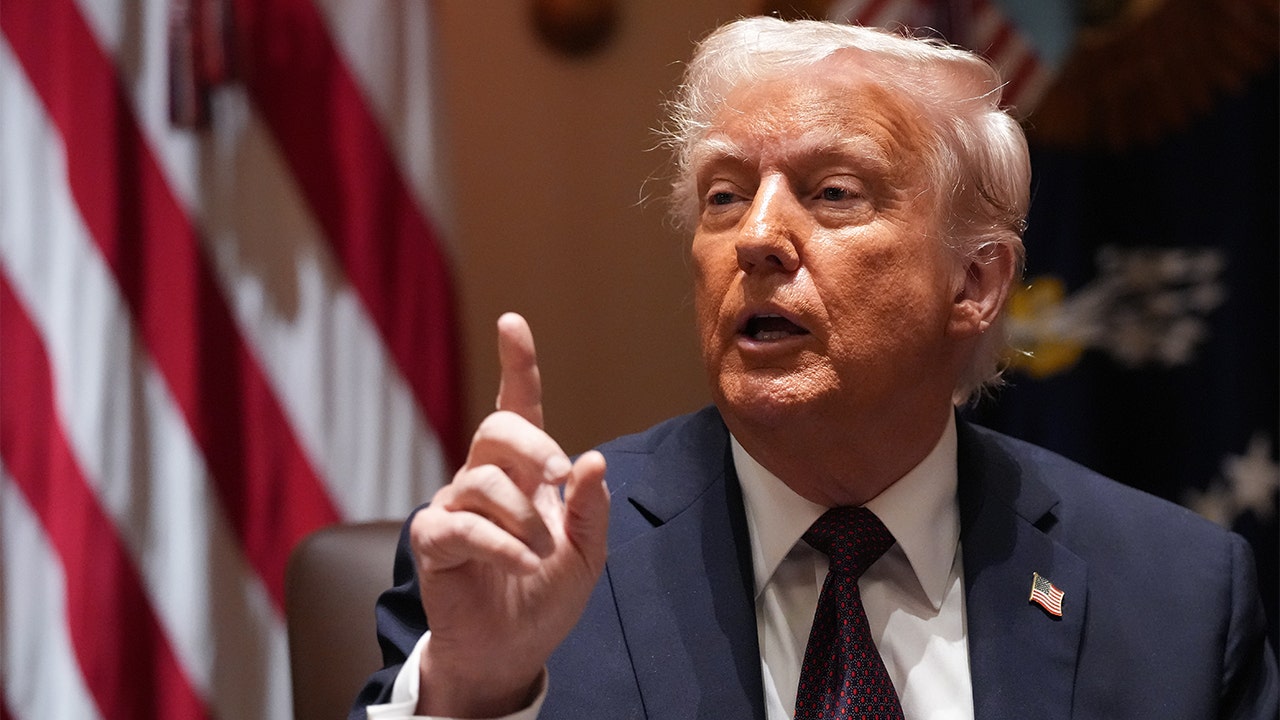
Keep in mind that this is not being done to save money. Here's what the president told Fox News:


He wants to control the press. That's not allowed.
 
"Reputable" is a matter of perspective. You don't like the statements made by the Fox commentators. Others do like them and find them factual and in agreement with their personal viewpoint.
But are they factual? Especially when so many of them have been continually disproven?

Opinion and viewpoint are subjective. Facts and objective. Someone finding a Fox commentator factual does not make them factual. A Fox commentator sharing provable facts is factual.

This is one of the biggest issues in the nation right now. A person's viewpoint does not make everything on the other side a lie, or "fake news" as it's said these days. But when millions of Americans are consuming a news product that prioritizes viewpoint over fact, you have the issues that are being discussed here.
 
Turn off Fox and Salem and find some reputable news sources and then you'd know some of these actual facts.
I suspect you'd paint the guys on Red Eye Radio with that same broad brush, but you might be surprised to learn that they strongly agree with you about the national debt.
 
A person's viewpoint does not make everything on the other side a lie, or "fake news" as it's said these days. But when millions of Americans are consuming a news product that prioritizes viewpoint over fact, you have the issues that are being discussed here.

It's becoming harder to separate the two. Everyone has a right to their opinion. The president has a right to complain about the press and call it biased. But he can't use the power of the government against the press. He can't use funding as a weapon. He also can't determine what's fair or biased. That is beyond his first amendment right. His rights end where NPR's rights begin. That applies to many things.

The other thing that's relevant to this discussion is that congress considered all of this when they created NPR & PBS. What if we get a president who wants to interfere? The concern actually was about a democrat president like LBJ, not the current situation. Their solution was that the president couldn't interfere in the funding process, and neither could congress. The funding for CPB is done two years in advance. So they're already funded through 2026. That can't be changed. Plus the money goes to an independent agency (CPB) not to NPR directly. So if there's an issue, the congress is supposed to take it up with CPB. So far that hasn't happened.
 
Status
Not open for further replies.


Back
Top Bottom