• Get involved.
    We want your input!
    Apply for Membership and join the conversations about everything related to broadcasting.

    After we receive your registration, a moderator will review it. After your registration is approved, you will be permitted to post.
    If you use a disposable or false email address, your registration will be rejected.

    After your membership is approved, please take a minute to tell us a little bit about yourself.
    https://www.radiodiscussions.com/forums/introduce-yourself.1088/

    Thanks in advance and have fun!
    RadioDiscussions Administrators

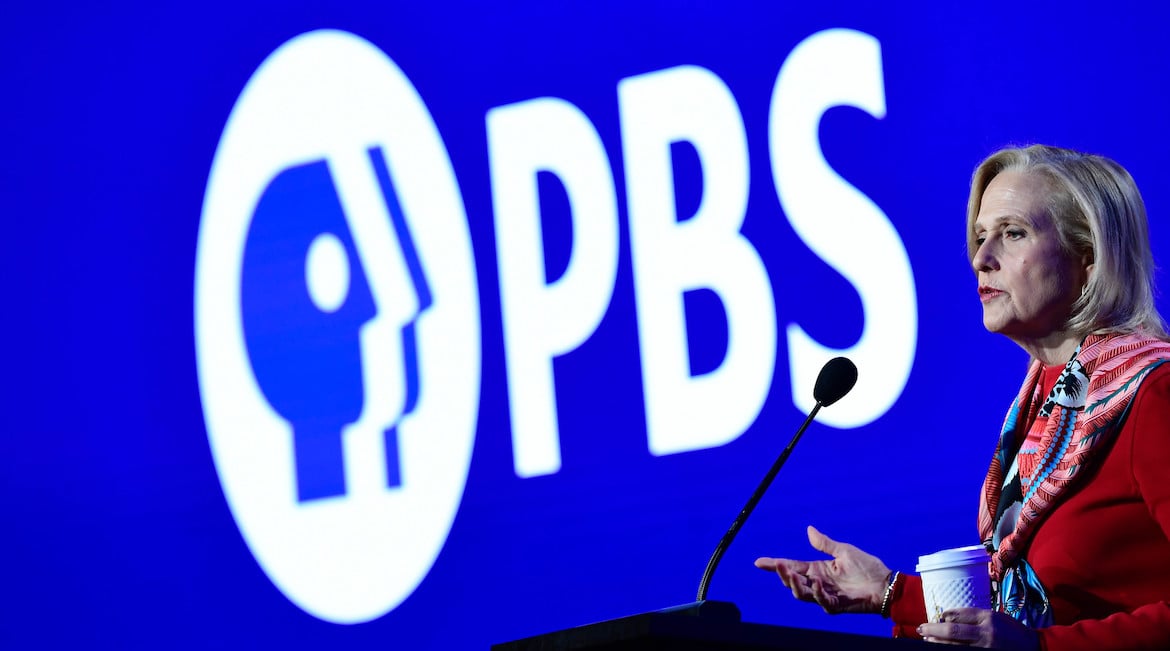
Trump funding cuts to PBS/NPR

Status
Not open for further replies.
While sponsors may not specifically tell stations what to do, creating programming to garner listeners to attract advertisers is recognizing client needs and wishes, e.g. few 60s songs on classic hits stations because advertisers don't want that demo.
But say your biggest advertiser, a big car dealer for example, calls up and says they don't like a particular song and threaten to pull their ads if you don't take it off, how altruistic might most stations be?
When WHK was attempting to renew the Browns contract, Art Modell told them he didn't like the kind of audience their country format attracted, so poof...they suddenly became rock and roll oldies. There were other reasons and Modell bought WWWE and moved the team there anyway (He was good at moving things, wasn't he?) the point is advertisers have power, both subtle and covert.


Update Lakeland PBS of Bemidji, Minnesota and PBS sues Trump Administration for the same reasons NPR sued Trump over funding and political interference.

 
People pay directly for streaming services. If broadcast radio stations could send listeners a bill, they wouldn't need advertising.

This thread is about public radio. On average about 7% of public radio listeners actually send them money. That's what happens with the honor system.

If people don't HAVE to pay, they won't. Even for commercial-free radio.
Yes, they pay directly for streaming IF they want no ads. Most streaming services have a "free" version which comes with some ads but no where near 10-18 minutes at one time.
 
Yes, they pay directly for streaming IF they want no ads. Most streaming services have a "free" version which comes with some ads but no where near 10-18 minutes at one time.

Streaming services are national with no local expenses. Lot cheaper than local radio with local transmitters, studios, staffs, and FCC regulations.

But once again, if people want to escape commercial breaks, they can listen to public radio.
 
Yes, they pay directly for streaming IF they want no ads. Most streaming services have a "free" version which comes with some ads but no where near 10-18 minutes at one time.
As I said, I have never heard a station with 10 to 18 minutes of commercial at a time. Maybe in the whole hour, although 18 is very uncommon except at some news/talk station.
 
Less now than years ago.

[citation needed]

The NPR program clocks haven't added any additional underwriting credit time in at least 15 years.

No network break is longer than :60, and it's always a single voice.

Local stations vary, of course, but in my experience it's very rare for any local credits to exceed :60 in any single break.

If I am remembering the clock right (it's been over a year now), the most underwriting it was possible to fit into an hour of Morning Edition was about 9 minutes total network and local, and it was rare that we were that full.

No comparison to commercial stations that can do that much in a single stopset sometimes, with a cacophony of voices and sound effects and disclaimers.

It's disingenuous to claim otherwise.
 
[citation needed]

The NPR program clocks haven't added any additional underwriting credit time in at least 15 years.
Indeed. There's 2 minutes 20 seconds of network underwriting during an hour of Morning Edition.

Local stations obviously add their own.
 
Indeed. There's 2 minutes 20 seconds of network underwriting during an hour of Morning Edition.

Local stations obviously add their own.

And for contrast, I just happened to put on an aircheck I recorded of morning drive from August of last year on iHeart's KLOU St. Louis.

I timed out a single break at just over 9 minutes. Four of those :60s were the SAME political PAC ad, alternating with car dealers and lawyers. I'm sure the traffic department wouldn't have been happy about that if there were still a local traffic department, but that's largely outsourced now and I guess the PAC's money was good for that saturation buy.

That dumped out into what was somehow a double studio sponsorship, the (car dealer) studios, brought to you by (law firm), then a legal ID, 20 seconds of PPM-friendly morning show chatter and then Bohemian Rhapsody.

Say anything you'd like about non-commercial radio - a mess of a break like that would be impossible in that universe.
 
And for contrast, I just happened to put on an aircheck I recorded of morning drive from August of last year on iHeart's KLOU St. Louis. I timed out a single break at just over 9 minutes. Four of those :60s were the SAME political PAC ad, alternating with car dealers and lawyers.
Sounds a lot like iHeart's WYYY Syracuse. Two breaks an hour, each 9-11 minutes, with some of the spots running twice per break. ("Hello Syracuse, it's Dave Anthony!" for some car dealership.) They're only tolerable if I have the station on in the background while working; I can't imagine putting up with those stopsets while driving.

Usually my FM listening is to WSUC-FM's relay of non-com WRVO Oswego with underwriting announcements for interesting sponsors such as the Cornell Daily Sun student newspaper and a local deli. I actually quite enjoy hearing these; I couldn't possibly say the same for iHeart's spot breaks. The two things simply are not comparable.
 
I'm pro making money in radio and I think the double sponsorships sound bizarre. So, one sponsor for the studios, and one for the air? One station I listen to often doesn't have an outside sponsor for their traffic reports, but the "traffic center" is sponsored. So "from the (sponsor) traffic desk, here's (reporter) who then will give the report, read an internal promo (one of their sister stations) and then it's "from the (sponsor) traffic desk.."

I get we need the revenues. But it sounds bad in delivery, and you can't tell me plenty of listeners catch it and roll their eyes.

And separation is practically gone. Especially on weekend logs, where you can tell they've hit schedule and gone home. Not that the logs are scheduled in market these days.
 
[citation needed]

The NPR program clocks haven't added any additional underwriting credit time in at least 15 years.

No network break is longer than :60, and it's always a single voice.

Local stations vary, of course, but in my experience it's very rare for any local credits to exceed :60 in any single break.

If I am remembering the clock right (it's been over a year now), the most underwriting it was possible to fit into an hour of Morning Edition was about 9 minutes total network and local, and it was rare that we were that full.

No comparison to commercial stations that can do that much in a single stopset sometimes, with a cacophony of voices and sound effects and disclaimers.

It's disingenuous to claim otherwise.
By "years ago" I was referring to the early years of Public Radio.
 
WKSU is right now doing another fundraising drive this week
Nothing wrong with that. That is what they should be doing. People who like WKSU and WVIZ can send in their money to support it. Just like people who support Sirius XM if you like it purchase it if you don't then don't. This whole thread started cause a few people got upset that Federal tax money isn't going to fund PBS/NPR. It never should have to begin with.
 
I'm pro making money in radio and I think the double sponsorships sound bizarre. So, one sponsor for the studios, and one for the air? One station I listen to often doesn't have an outside sponsor for their traffic reports, but the "traffic center" is sponsored. So "from the (sponsor) traffic desk, here's (reporter) who then will give the report, read an internal promo (one of their sister stations) and then it's "from the (sponsor) traffic desk.."

I get we need the revenues. But it sounds bad in delivery, and you can't tell me plenty of listeners catch it and roll their eyes.

And separation is practically gone. Especially on weekend logs, where you can tell they've hit schedule and gone home. Not that the logs are scheduled in market these days.
and from the Kroger Tower!
 
This whole thread started cause a few people got upset that Federal tax money isn't going to fund PBS/NPR. It never should have to begin with.

There is no line item in the federal budget for NPR/PBS. That was handled by Ronald Reagan when the public broadcasting act was amended in 1983. The funding goes to CPB. They give money to lots of things, including WKSU. All of that is in doubt now because of the president. On Thursday, he sent a letter to congress telling them to rescind money they already appropriated to CPB. He's claiming it's money for NPR/PBS. It's not. It's money for WKSU and other local stations around the country. That's why WKSU is holding a fundraiser.

 
Status
Not open for further replies.


Back
Top Bottom