• Get involved.
    We want your input!
    Apply for Membership and join the conversations about everything related to broadcasting.

    After we receive your registration, a moderator will review it. After your registration is approved, you will be permitted to post.
    If you use a disposable or false email address, your registration will be rejected.

    After your membership is approved, please take a minute to tell us a little bit about yourself.
    https://www.radiodiscussions.com/forums/introduce-yourself.1088/

    Thanks in advance and have fun!
    RadioDiscussions Administrators

Trump to PBS and NPR: I’m cutting you off…

But it doesn’t change the point about why should taxpayer dollars be involved at all? If some taxpayers find value in the programming, they can individually donate.

Because congress wanted to send money to their home districts. Now those states have budget shortfalls and people are getting laid off. They will go on unemployment, paid for with taxpayer dollars. Taxpayer dollars go to tobacco farmers. Why? Because congress sends money to their home districts.

There are lots of things federal taxpayer dollars pay for that you don't know about. If you did, you'd hit the ceiling. But the government doesn't tell you because they know people would respond like you. You pay for electric car charging stations. Do you own an electric car? Then why should you pay?
 
Last edited:
Here's another example of a local radio station that lost $500K in CPB funding that didn't air any NPR News:


The intent was to hurt NPR. The reality was it hurt lots of diverse local music radio stations that are suddenly faced with a financial crisis.

This is happening at a time when advertising and sponsorship revenue is also down.

I understand some people don't think taxpayer dollars should be used for radio. But this sudden elimination wasn't the right way to do it.
 
Country musician Ketch Secor, leader of the Old Crow Medicine Show, has been named the host of "Tennessee Crossroads" on Nashville's PBS station.

He was also a central part in the Ken Burns documentary on Country Music.

He spoke with Rolling Stone about the importance of PBS today:


Free version here:


"PBS is a vital part of television broadcasting. It's where kids learn their reading, writing, and arithmetic, and I want to make sure that the next generation of kids have that same opportunity… We can be right, left, or center, it don't even matter. This is an opportunity for us to expand our work."
 

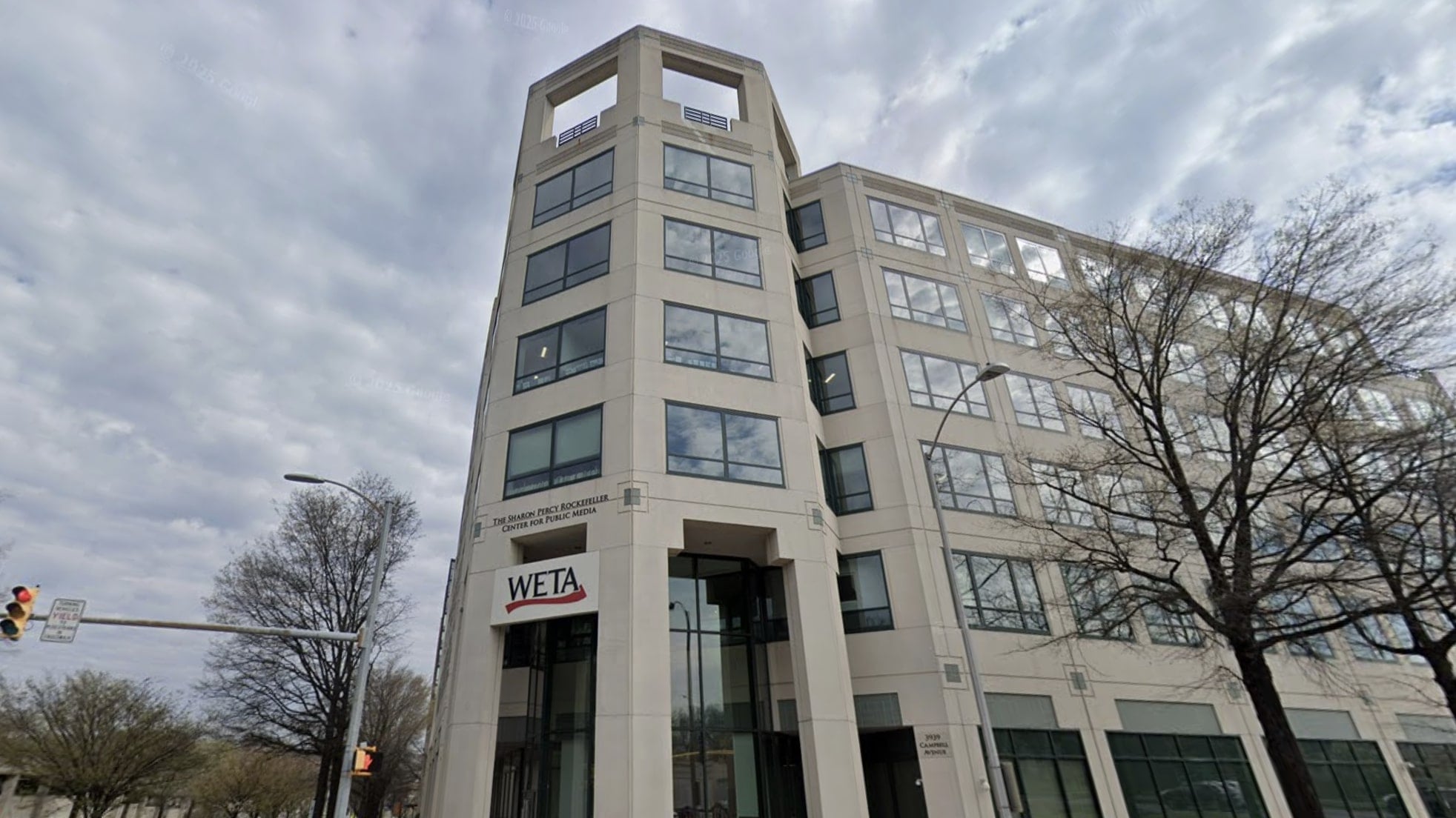
WETA-TV cuts 21 staff members. These positions affect some of the local productions at the station. WETA-TV is best known nationwide for the PBS Newshour.

“These cuts extend the reduction in workforce we have been managing over the past year through reorganization, attrition, retirements, a conservative approach to hiring new positions, restructuring to eliminate nine senior leadership posts, and less reliance on external contract and temporary positions,” Rockefeller wrote.


WETA also canceled its local television shows If You Lived Here, Get Out of Town, and WETA Best Bets, and ended publication of Telly Visions, its website and podcast about British television and culture.


Separately, WETA plans to reduce the circulation of its monthly print magazine, which goes to members who donate at least $35 every month. Mary Stewart, VP of external affairs, said in an interview that WETA will assess members’ interest in a digital-only version. “We’ll definitely send it to people who want it,” she said of the print magazine.
 

Tucson's Arizona Public Media cut staff. The cuts will go through til October.

Arizona Public Media in Tucson is laying off six workers and will leave 11 open positions unfilled.

Station leaders informed staff of the workforce reduction Sept. 8, according to COO Gene Robinson. The dual licensee is licensed to the University of Arizona.
The job cuts affect three departments: original content production, program operations and marketing/communications. The six employees who were laid off will leave their jobs Oct. 9.

The downsizing responds to the rescission of CPB’s federal funding for fiscal years 2026 and 2027. CPB Community Service Grants for AZPM’s radio and television stations topped $2.4 million in FY24, according to CPB’s website. Those funds provided about 15% of the organization’s revenues of more than $16 million for that year, according to an audited financial statement.

WNIN announces cuts all for the same reasons.


There are lots of things federal taxpayer dollars pay for that you don't know about. If you did, you'd hit the ceiling. But the government doesn't tell you because they know people would respond like you.
Very valid observation. Except that you can't keep stuff like that hidden away forever. People have been finding out, and their response at scale is what you are observing today in our body politic.
 
Connecticut Public Television shut down uts secondary PBS station "CPTV Spirit" at the end of June.

 
Very valid observation. Except that you can't keep stuff like that hidden away forever. People have been finding out, and their response at scale is what you are observing today in our body politic.
... and the increasing transparency is a very good thing and as it should be, as over the decades a sense of entitlement and presumption to taxpayer funding creeps in across government programs. While I'm no fan of either party, this transparency was and is sorely needed.
 
... and the increasing transparency is a very good thing and as it should be, as over the decades a sense of entitlement and presumption to taxpayer funding creeps in across government programs. While I'm no fan of either party, this transparency was and is sorely needed.

Keep in mind that all CPB funding WAS transparent. Every year, CPB went to congress asking for money. They presented a justification for the appropriation. It was all done in public session, and broadcast live on C-SPAN. There was no presumption or entitlement. Every year, there was a request for funding, and it was either granted or amended. Some years they received less than what they requested. Afterwards, all of the specifics were posted on CPB's website. In fact, it's all there right now. No secrets. Nothing hidden. We know how much each station received, and now we know how much they will lose. We're seeing the results as thousands of people are losing their jobs.

People don't know a lot of this because they don't follow the actions of their government carefully. They assume everything is just fine. That's what I was saying. None of this was hidden. It was all out in the open. People don't know because people don't care.
 
Keep in mind that all CPB funding WAS transparent. Every year, CPB went to congress asking for money. They presented a justification for the appropriation. It was all done in public session, and broadcast live on C-SPAN. There was no presumption or entitlement. Every year, there was a request for funding, and it was either granted or amended. Some years they received less than what they requested. Afterwards, all of the specifics were posted on CPB's website. In fact, it's all there right now. No secrets. Nothing hidden. We know how much each station received, and now we know how much they will lose. We're seeing the results as thousands of people are losing their jobs.

People don't know a lot of this because they don't follow the actions of their government carefully. They assume everything is just fine. That's what I was saying. None of this was hidden. It was all out in the open. People don't know because people don't care.
I was referring to transparency across all government programs and taxpayer funding. Not sure why evaluating taxpayer funded programs is a controversial topic. The saying used to be, "Once a government program is created, you could never kill it." Hopefully those days are gone, regardless of who's sitting in the White House.

Nearly 50 years of using taxpayer funds for public broadcasting is a good run. But as a lot of posters to this forum like to proclaim quite often that the radio/TV broadcasting medium is in its death throes (and even proclaim that they themselves have abandoned it for streaming), time marches on, and what was relevant 50 years ago isn't always relevant yet today.
 
I was referring to transparency across all government programs and taxpayer funding. Not sure why evaluating taxpayer funded programs is a controversial topic. The saying used to be, "Once a government program is created, you could never kill it." Hopefully those days are gone, regardless of who's sitting in the White House.

It's subject to a vote. That's how we do things in this country. The reason some programs continue is because people in congress vote for them. The cutting of public broadcasting money was a party line vote imposed by the man in the white house. Republicans who have always voted for the appropriation voted for recission because the president threatened them. Otherwise it wouldn't have happened. They voted to take money away from their home states, causing their own constituents to lose their jobs. Is that what you want?

Transparency is there all the time. You have to do the work. You have to watch what people are voting for. There have always been people in congress who voted against CPB funding. They weren't in the majority. This barely passed by a few votes. Next time it comes up, it might not happen, and the funding will return. This decision wasn't permanent.

But as a lot of posters to this forum like to proclaim quite often that the radio/TV broadcasting medium is in its death throes (and even proclaim that they themselves have abandoned it for streaming), time marches on, and what was relevant 50 years ago isn't always relevant yet today.

The airwaves are owned by the public. No user names, no passwords, no subscription fees, no internet plan required. It's all open for everyone to use. That's what taxpayer funding provides. The alternative is more power for big tech companies and big cell phone companies. So instead of paying taxes, you pay AT&T and Apple. In the end, you still pay.
 
It's subject to a vote. That's how we do things in this country. The reason some programs continue is because people in congress vote for them. The cutting of public broadcasting money was a party line vote imposed by the man in the white house. Republicans who have always voted for the appropriation voted for recission because the president threatened them. Otherwise it wouldn't have happened. They voted to take money away from their home states, causing their own constituents to lose their jobs. Is that what you want?

Transparency is there all the time. You have to do the work. You have to watch what people are voting for. There have always been people in congress who voted against CPB funding. They weren't in the majority. This barely passed by a few votes. Next time it comes up, it might not happen, and the funding will return. This decision wasn't permanent.


The airwaves are owned by the public. No user names, no passwords, no subscription fees, no internet plan required. It's all open for everyone to use. That's what taxpayer funding provides. The alternative is more power for big tech companies and big cell phone companies. So instead of paying taxes, you pay AT&T and Apple. In the end, you still pay.
You aren't forced to pay AT&T and/or Apple, but you don't have that option with taxpayer funded programs.
 
You aren't forced to pay AT&T and/or Apple, but you don't have that option with taxpayer funded programs.

Once again, the funding isn't for the programming. The stations raise money locally for the programming.

The stations have to specify how the government money is used. It's laid out on their financial forms, available at their websites.

If a certain show doesn't attract enough listener dollars, it gets dropped.

If they don't use the money properly, it's a federal crime. Misuse of federal funds.

You want full transparency? There it is.
 
Once again, the funding isn't for the programming. The stations raise money locally for the programming.

The stations have to specify how the government money is used. It's laid out on their financial forms, available at their websites.

If a certain show doesn't attract enough listener dollars, it gets dropped.

If they don't use the money properly, it's a federal crime. Misuse of federal funds.

You want full transparency? There it is.
You missed my point and I wasn't just referring to program funding. One gets to choose on their own whether to pay AT&T, Apple, etc., for communication services. However, prior to the defunding, taxpayers had no choice in the matter as it relates to public broadcasting, regardless how the funding was used/allocated within the public broadcasting system.
 
Where's the transparency for the agencies that fund wars and give subsidies and contracts to the defense industry, big oil and big tech?

I bet all that costs us more than $1.35 a year, and we don't get "transparency" for that.


Back
Top Bottom