• Get involved.
    We want your input!
    Apply for Membership and join the conversations about everything related to broadcasting.

    After we receive your registration, a moderator will review it. After your registration is approved, you will be permitted to post.
    If you use a disposable or false email address, your registration will be rejected.

    After your membership is approved, please take a minute to tell us a little bit about yourself.
    https://www.radiodiscussions.com/forums/introduce-yourself.1088/

    Thanks in advance and have fun!
    RadioDiscussions Administrators

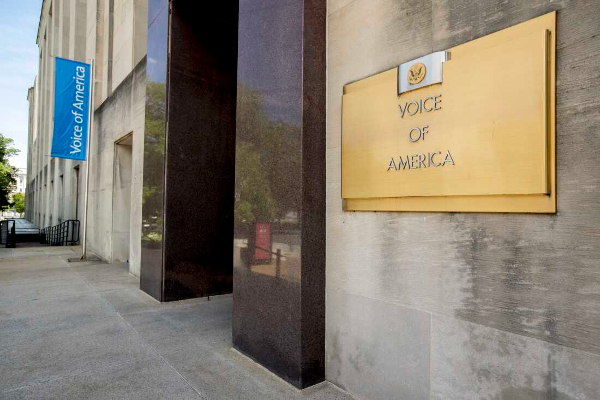
VOA

However the origins of international shortwave broadcasting go back much further, to the late 1920s and early 1930s.
Yes, but then the usage was far less political, except for the broadcasts from Russia and Germany. After WW II, nearly all the services were in some way polarized with "The West" or the rest or sympathetic to one side. Heck, even little Portugal's broadcasts were famous for their pro-Western and "anti commie" stances.
Soft power projection and connecting with the colonies drove the earliest broadcasts. As storm clouds gathered over much of the world with the expansion of fascism in the 1930s more countries jumped into the game, each with its own political message. The advent of World War II brought in the U.S. and a few more countries.
But one of the major uses of SW even in the 30's was to cover the "home nation" with ones like the classic Radio Prado in Riobamba, Ecuador, being the first national radio voice for that country way, way back in the 30's... even before HCJB began saving indigenous souls.
The shortwave broadcast structure was solidly in place by the time the Cold War became a thing.
But with a very different focus in most places. SW stations intended to serve all or much of a single nation began to die by the 60's, just two decades after WW II was over.
 
In Mexico, with Radio Formula and TV Azteca, the material is used in the most important programs. In the case of TV Azteca, they even provide remote links with VOA reporters, and it's very common to see them on channels like ADN40 and important programs like hechos With Grupo Formula, the article capsules are used in most radio programs.
What are they doing to substitute for that content?
 
Yes, but then the usage was far less political, except for the broadcasts from Russia and Germany.
Mussolini’s Italy was among the first to realize the propaganda potential of an international shortwave service, with the old EIAR (RAI predecessor) launching broadcasts in 1930. They were also perhaps the first to put some stylistic effort into materials mailed to listeners.
Heck, even little Portugal's broadcasts were famous for their pro-Western and "anti commie" stances.
Cue the opening notes of Beethoven’s 5th Symphony to begin the broadcast of “The Voice of the West”.

The broadcasts always ended with “Good night, and thank you. The West can and will win” followed by the last notes of the symphony’s first movement.
But one of the major uses of SW even in the 30's was to cover the "home nation" with ones like the classic Radio Prado in Riobamba, Ecuador, being the first national radio voice for that country way, ended with way back in the 30's... even before HCJB began saving indigenous souls.
My comments were about international shortwave services, which were always sort of a parallel universe to domestic shortwave services. While domestic services began their decline around 1970, international services remained quite robust through the 1980s, with some trims in the 1990s. It was after 2000 that the decline snowballed.
SW stations intended to serve all or much of a single nation began to die by the 60's, just two decades after WW II was over.
Perhaps a parallel with today. Back then it was FM that displaced domestic shortwave. Now we have the Internet displacing FM.
 
Perhaps a parallel with today. Back then it was FM that displaced domestic shortwave. Now we have the Internet displacing FM.
Interestingly, 1966 was the year I both put on the air Ecuador's first FM station and turned in the license to a tropical band station I had obtained as part of the purchase of its sister AM operation.
 
She is 68 now. When she was "growing up" was in the 50 to 60 years ago... in the 1970's mostly. That was the heyday of international shortwave radio.
I agree.

However, the article does point out that even today, there are people without cell phones and Internet access, and too far from cities for decent FM reception, to which access to SW is still quite important. Their numbers are infinitesimal and are continually shrinking, but they're out there, and until Internet is universally available 100% of the time and is 100% reliable* (or as close as is reasonably possible), we should, in my opinion, try to keep some legacy services available (SW, etc.) as necessary to fill in the gaps, however small they may be. Shortwave may be obsolete and mostly fallen into disuse, but it is fairly simple (if not cheap) to implement, the technology is well proven with predictable (if not always reliable) performance, and it's pretty easy to access. One need not necessarily have a "proper" electronic radio to receive signals (in theory, a well designed improvisational "crystal" radio set with a big enough antenna and tuning coil could receive at least some of the stronger signals, which is better than nothing), but of course a proper radio does help.

c

*Services such as Starlink help close this gap, but even if the Starlink signals are there, if some populations can't get the necessary equipment to access them (whether it be due to cost or logistical issues, or perhaps a governmental ban), what good is it to them?
 
Last edited:
However, the article does point out that even today, there are people without cell phones and Internet access, and too far from cities for decent FM reception, to which access to SW is still quite important. Their numbers are infinitesimal and are continually shrinking, but they're out there, and until Internet is universally available 100% of the time and is 100% reliable* (or as close as is reasonably possible), we should, in my opinion, try to keep some legacy services available (SW, etc.) as necessary to fill in the gaps, however small they may be.
What is not being considered is that the people in those rural areas of underdeveloped nations are not likely to be of the education level and cultural level to find any kind of international broadcast of any interest.

I have not been involved at all recently with any station or nation in Africa, but in Latin America the folks you find in far-off rural areas are not interested in the VOA or anything similar. The wealthy landowners have satellite dishes and the like, and everyone else in those areas is not going to find any reason to listen.
 
What is not being considered is that the people in those rural areas of underdeveloped nations are not likely to be of the education level and cultural level to find any kind of international broadcast of any interest.
As I mentioned in a post on another thread, international media are targeting the educated and professional classes in their target countries, as those people have actual influence over various aspects of society, government and business. Those people are found in the cities and have access to modern distribution platforms.
 
An issue of replacing any FTA broadcasting technology with the internet is in the first letter: Free. I know of very few free internet connections, and these typically exist in a developed municipality, not in far off lands. Yes, for some there is a monthly economic barrier to accessing the internet and thus streaming services that may not happen with FTA broadcasting other than perhaps a one-time equipment purchase.

This does not touch on any internet censorship at the provider level that some governments impose as well.
 
An issue of replacing any FTA broadcasting technology with the internet is in the first letter: Free. I know of very few free internet connections, and these typically exist in a developed municipality, not in far off lands. Yes, for some there is a monthly economic barrier to accessing the internet and thus streaming services that may not happen with FTA broadcasting other than perhaps a one-time equipment purchase.
Yet in Latin America and what I know of Sub-Saharan Africa, those with mobile phones have some kind of web connection. In many if not most nations, in the cities phones have replaced banks and people use apps to even buy at the street markets and to get non-salaried day wages.


Ghana is reporting that the VOA is now off the air in their country due to the same reasons we mentioned earlier.
 
The last news updates on the app and web page were on March 15, but neither have been completely shut down as yet.
 
Status
This thread has been closed due to inactivity. You can create a new thread to discuss this topic.


Back
Top Bottom