• Get involved.
    We want your input!
    Apply for Membership and join the conversations about everything related to broadcasting.

    After we receive your registration, a moderator will review it. After your registration is approved, you will be permitted to post.
    If you use a disposable or false email address, your registration will be rejected.

    After your membership is approved, please take a minute to tell us a little bit about yourself.
    https://www.radiodiscussions.com/forums/introduce-yourself.1088/

    Thanks in advance and have fun!
    RadioDiscussions Administrators

WAAF

That goes back to my entire point. So you denounce my point, then support it? I'm scratching my head. The labels force out new music from certain formats more than others, and FM radio only focuses on new music from certain formats. I love how radio people refuses to acknowledge where they are somewhat guilty in the topic at hand.

First, record labels do not "force out" anything. They release songs they think will make them money. If they release more songs of one kind than another, it is because they know where the money is.

But that is a record label concern that radio has no control over.

Radio stations that play music focus on formats that will attract an audience big enough and of the right age range to be of interest to advertisers. Within a broad genre like rock, if not playing much new music gets more audience than playing more current music that is what stations will do.

There is no part of the steps to build an audience for advertisers that requires playing new music at all.

The problem within some sub-genres of rock is that the audience for new music exists, but it is further fragmented into polarized groups. So while an alt rock station may find consensus songs within its gold library, finding more current consensus songs is (and has been for over a decade) very hard. For every song that one part of the alt audience likes, several other parts will dislike it.

So, rather than playing more new music, those stations are very selective in the new music. And since the labels don't give any backing anymore... not even T-Shirts for giveaways or artist visits for interviews or promotions... there is no incentive to take risks of any kind.

Stations in the larger markets spend lots of money trying to find out which songs to play; there is no desire to not play as many songs as possible... but there is a desire not to play songs that will run off significant audience groups.
 
Last edited:
Radio stations that play music focus on formats that will attract an audience big enough and of the right age range to be of interest to advertisers. Within a broad genre like rock, if not playing much new music gets more audience than playing more current music that is what stations will do.

There is no part of the steps to build an audience for advertisers that requires playing new music at all.

The problem within some sub-genres of rock is that the audience for new music exists, but it is further fragmented into polarized groups. So while an alt rock station may find consensus songs within its gold library, finding more current consensus songs is (and has been for over a decade) very hard. For every song that one part of the alt audience likes, several other parts will dislike it.

So, rather than playing more new music, those stations are very selective in the new music. And since the labels don't give any backing anymore... not even T-Shirts for giveaways or artist visits for interviews or promotions... there is no incentive to take risks of any kind.

Stations in the larger markets spend lots of money trying to find out which songs to play; there is no desire to not play as many songs as possible... but there is a desire not to play songs that will run off significant audience groups.

So what's the solution for WAAF and their flagging ratings, then? A significant number of their recurrents are being played by competitor stations. Their selection of 70's and 80's rock can wind up on up to three other stations in the market, and the 90's music can wind up on two others. Even some of the 2000's music can wind up on WBOS.

They are the only station in the market playing currents and music from approximately 2002-onward. They're also the only station touching alternative metal, 90's and otherwise (excluding Metallica's alt-metal phase). On paper, without access to the specific numbers, it would make sense for WAAF to evolve into being a full active or becoming the only station in market to touch alternative without ditching the active rock in the process.

KFMA and KPNT do quite well in their markets. WCYY's been slipping lately but historically they do pretty good in their market as well. In Green Bay, an active rocker consistently hovers around the top five.

Boston is a rock town like Tucson, St. Louis, Portland (Maine), and Green Bay. What does WAAF have to lose at this point when DJs are quitting on-air out of frustration?
 
Last edited:
What does WAAF have to lose at this point when DJs are quitting on-air out of frustration?

I suspect the DJ quitting was not about music policy.

I think they know exactly what happens every time they play a current rock song in morning drive. They can see real time ratings, and if people were tuning in for more new music, that's what you'd hear.


First, record labels do not "force out" anything. They release songs they think will make them money. If they release more songs of one kind than another, it is because they know where the money is.

But that is a record label concern that radio has no control over.

Radio stations that play music focus on formats that will attract an audience big enough and of the right age range to be of interest to advertisers. Within a broad genre like rock, if not playing much new music gets more audience than playing more current music that is what stations will do.

There is no part of the steps to build an audience for advertisers that requires playing new music at all.

The problem within some sub-genres of rock is that the audience for new music exists, but it is further fragmented into polarized groups. So while an alt rock station may find consensus songs within its gold library, finding more current consensus songs is (and has been for over a decade) very hard. For every song that one part of the alt audience likes, several other parts will dislike it.

So, rather than playing more new music, those stations are very selective in the new music. And since the labels don't give any backing anymore... not even T-Shirts for giveaways or artist visits for interviews or promotions... there is no incentive to take risks of any kind.

Stations in the larger markets spend lots of money trying to find out which songs to play; there is no desire to not play as many songs as possible... but there is a desire not to play songs that will run off significant audience groups.

I still respectfully disagree with your finding that radio has no fault in this. I again and again present new music that is currently being played on XM in every format (the ones that aren't retro channels). To say that the music isn't out there or that the record label doesn't aggressively push out the songs has a point, but isn't 100% true. Many FM rock radio stations, like WAAF, took a hard line stance on only playing new songs by bands who were big in the 80s or 90s, or by a band that (yes) the record company pushed the hell out of. That's flawed.

I used to be a participant in your big market research. I used to get calls quarterly and rate songs that were being played on WBCN, WFNX, and WAAF. I moved states 11 years ago, and I lost contact with them, as they called me. Obviously, I didnt know who commissioned the survey. It was flawed. There were times where I would hear a five second part of a song that hardly got airplay on any of the stations, and I had to rate it and say if I think it's been played enough. Honestly, when that happened, I ensured to tell them that I rarely to never heard on any or all of the stations.

That's how your stations determine what new they should play. I stand by my original reply to CTListener. The issue with rock stations is that we are aiming for a specific demo, yet playing overplayed and now officially classic rock songs. Men 25 have no connection to My Hero or Smells Like Teen Spirit. I have that connection, but 25 year olds don't. So they go to where they can connect, to the music that resonates with them. That is newer songs. Let's face it, FM radio's decision to abandon mostly all new rock songs caused the exodus of rock as a popular format. Notice how I say "a popular", not "the popular". Your research methods are flawed. Your decisions to remain "stuck in the 90s" was a bandaid that ran its course 9 to 10 years ago, and since needed to be changed.

And, if you want to build a crowd in the future, the only way to do it is to start with new acts now, and let the younger ages find it and grow onto to it. That's the edge that currently Pop and Country has, those stations are playing anything and almost everything new. Rock stations simply aren't, and the answers I get are that its the listeners fault (the all like rhythmic), it's the record company's fault (they don't aggressively push out rock music), but it's never FM radio's fault (as even though XM proves that there is enough new rock to fill the playlist of it's new rock channel).

I was asked before what is rock, as it was stated by the person who I was debating to be a fragmented format. This was in one of the PLJ threads in the New York section. My answer is define your station. Are you a hard rock station, a current rock hits station, a metal station (I never see metal being commercially viable), a punk station? I say start with current rock hits, leave the 80s and 90s to WBOS and the 70s and 80s to WZLX. Let them be classic rock. Make WAAF be current. Get some new acts out there. Give it time to grow. I know I sound like A Field of Dreams, but your industry pillaged and destroyed new rock a long time ago. Like Wall-E, they decided to go back to the 90s, still claim that they were still current rock stations, and just not come back and actually play current rock. Well, it's time to come back and acknowledge new music. Not just a new song by the Foo Fighters. I like the Foo Fighters, but FM needs to acknowledge new music in rock.

Also, someone said that I assume people want to hear rock. I stand by my statement that the main reason for it waning is that since 2006, the FM radio industry enacted a format model that at the time tried to bring in the most listeners, but over the last 13 years became it's own death sentance. Where post 9/11 we culturally were a society focused on nastolgia. We aren't so much anymore, musically going to what is new. We did that, and its run its course. I assume that people want to hear new rock, because I have yet to see it pushed and fail. Your industry has failed to provide the listeners with it, with your flawed research and broken algorithms, regarding rock specifically. As I said before on this site, country figured it out. The answer was new music. Not just new music by the 30 year established band. Actual new music, by new acts from this decade.

 
Last edited:
And through all of this, I stand by my original assertion that rock is a genre in a death spiral, at least in terms of commercial viability among significant numbers of listeners advertisers want to reach. More rhythmic genres -- hip-hop, rap, and danceable pop -- caught the imagination of young suburban America. This all began right around the dawn of the '90s, and music once thought to be limited in appeal to black urban males now knows no geographical or demographic limits. When I see a car/SUV with rap pounding from its stereo pull up to park, quite often a couple of white dudes pop out. I've worked with white males in their 30s and even 40s who care nothing of rock, new or old, as hip-hop was the music of their youth. To me, what is happening to rock is obvious, and the arguments of what may well be its last significant generation are starting to sound as out of touch as those of my parents' generation (I'm in my mid-60s) when "that noise" started to show up on stations that had been playing big bands and crooners.

I love the rock of my generation and the generation that followed, and always will. But rock was still young and fresh and growing then, and had a huge postwar generation -- at least the Caucasian portion of it -- to appeal to. But all musical trends run their course. By the mid-'90s, rock had run out of ideas that would resonate with its traditional demographic target, the 18-34 males who were finding more rebellion and anger being reflected in the rhythms and words of rap than in cookie-monster-vocals metal or too-cool-for-the-room "college music." (said in the dismissive tone of Beavis & Butt-head) Will there always be a place for rock? I suppose, just as there is still a place for Sinatra-style crooners and big bands. Just not on big-signal commercial radio. To expect radio to play new music in a genre with diminishing appeal to the young is nothing more than raging against the dying of the light.

Yes, I just quoted Beavis & Butt-head and Dylan Thomas in the same paragraph. Lord, forgive me.
 
I still respectfully disagree with your finding that radio has no fault in this. I again and again present new music that is currently being played on XM in every format (the ones that aren't retro channels).

Bad example People pay between $5 and $15 a month to listen to SiriusXM. How much do you pay for FM? Nothing! So you want to hear the music people pay for, but you want it for free. It's not gonna happen. Advertisers pay so you can listen to FM. If you paid for FM, you'd get what you want. This is why some more niched music formats are going to non-commercial radio. That's how you can pay for the music format you want to hear.

Your industry has failed to provide the listeners with it, with your flawed research and broken algorithms, regarding rock specifically.

That's not our job. Our job is NOT to provide listeners with music. You want new music? Pay for it. Buy it yourself. Our job is to sell advertising. We don't use "algorithms." That's Pandora and Spotify, and yes I agree, they're broken. But your argument is with them, not us.
 
I agree that the research methods used by FM music stations - in my cases - are terribly flawed. I suspect many stations no longer do any research of any kind on a local level, especially in markets outside of the top 50

Huh? The stations themselves don't have to do the research. They can either get it from their corporate office, or they can get it from a consultant. In most formats, they also get it from the record labels. I can show you dozens of emails from labels quoting research about their songs. But since the labels don't invest in rock, it's not being done. The easiest way for any station to do music research is to look at streaming charts. You can see very quickly and easily what music is connecting with the most people. But it's less effective with rock because the music is so fragmented. There are only a handful of consensus songs.
 
Two of the most popular bands right now, Neck Deep and The Story So Far, don't see even a smidgen of radio play, they usually won't even make the "new music" hour on Sunday night on the stations that still do that. If FM radio isn't playing two popular bands that make noise on the Billboard 200, how can we expect the younger, 18-34 demographic to have any interest in tuning in?

Not to mention that Greta Van Fleet is one of the most popular bands at the moment (though they do have a large periphery demographic of nostalgics who love their Led Zeppelin resemblance). And I know for a fact that despite repeated, heavy alt pushes by their label, alt-formatted radio stations have literally sent responses back to Greta's record label that basically amount to, as Violent Femmes once said, "kiss off".

FM Radio isn't the only problem that is hurting rock, but it plays a role. There are stations that make the disparate sounds of alternative and rock work for them right now, even though Breaking Benjamin and Bishop Briggs couldn't be further apart in sound. While not every market has that type of tolerance, that's where flexibility comes in. Some markets will want to rock, others will prefer a poppier sound, and some will like everything. But most stations are subscribing to a national, generic sound that is failing to connect with people.

If rock is to survive, it needs to go on the offense and stop playing defense. Jazz had a chance of a revival in the 1980's with the acid jazz movement that had a few hits, but a lot of jazz stations were in full defense and would not introduce the sound out of fear of alienating their existing audience. The end result was jazz aging into irrelevancy by the 2000's.

Rock will go the way of jazz if it doesn't get on the offensive and soon. The 2020s will basically be the genre's last chance.
 
Last edited:
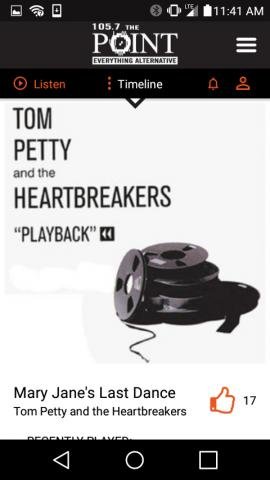
Screenshot_2019-09-21-11-41-50.jpg

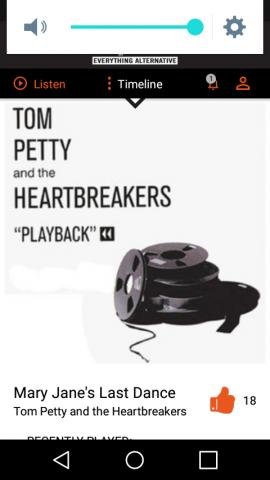
Also this is for MarkV, who asked about Tom Petty on alternative. Yes, it does indeed happen.
 

Attachments

  • Screenshot_2019-09-21-11-36-20.jpg
    Screenshot_2019-09-21-11-36-20.jpg
    16.6 KB · Views: 14
Two of the most popular bands right now, Neck Deep and The Story So Far, don't see even a smidgen of radio play, they usually won't even make the "new music" hour on Sunday night on the stations that still do that.

"Most popular?" Based on what? You give two bad examples. First of all, they're both mostly pop bands, not really rock. They haven't released new music in a while. They're not headlining shows. The shows they're doing aren't well attended. On the other hand, Greta Van Fleet is getting lots of radio play. They're in the airplay chart right now with "Lover, Leaver." They're on Lava Records, and even though I've been critical of labels, Lava is doing more than the other majors to sign quality bands. Jason Flom knows how to promote rock music and has been around for a long time. If music is going to grow, the impetus has to come from the music industry.
 
"Most popular?" Based on what? You give two bad examples. First of all, they're both mostly pop bands, not really rock. They haven't released new music in a while. They're not headlining shows. The shows they're doing aren't well attended. On the other hand, Greta Van Fleet is getting lots of radio play. They're in the airplay chart right now with "Lover, Leaver." They're on Lava Records, and even though I've been critical of labels, Lava is doing more than the other majors to sign quality bands. Jason Flom knows how to promote rock music and has been around for a long time. If music is going to grow, the impetus has to come from the music industry.

I dunno, look at Neck Deep's and The Story So Far's album statistics and you tell me if they're not mainstream. If I was at home and could access their Spotify statistics I'd share them too. Both bands have at least one #1 album on the alternative album chart as well.

Also Neck Deep released a single to radio this year and The Story So Far sent three from their 2018 album to radio. Deaf ears all around. Don't use your ignorance of their existence to suggest that they haven't released music recently. I'd also argue that The Story So Far falls under the "punk" side of pop-punk way more.

(This is their third radio single for the record).
 
Also Neck Deep released a single to radio this year and The Story So Far sent three from their 2018 album to radio. Deaf ears all around. Don't use your ignorance of their existence to suggest that they haven't released music recently.

You're saying they are "two of the most popular bands right now." I asked based on what? There are lots of more popular bands than those two. I looked at the two links you provided, and neither show any songs released in 2019. Neck Deep has ONE Top 10 in 2017, and Story So Far's latest was a year ago, and it peaked at #19. How does that make either of them "most popular?" Just because YOU like them doesn't mean they're popular. Radio is not a personal music service. Radio is not in the music marketing business. You want to listen to these bands, you can stream them any time on your own personal device.
 
Last edited:
I assume that people want to hear new rock, because I have yet to see it pushed and fail.

I have. I know a station that plays ALL new music. They don't wait to get new music from record labels. They seek out new music from the bands themselves. They promote themselves as a place to hear the new stuff first. But they're a college-owned non-commercial FM station that doesn't depend on advertisers for support, and they don't care about ratings. Which is good, because they barely show up in the ratings. But they are popular among their narrow niche of fans. They hold lots of events around town, publicized to only their members, they charge admission, and promote new bands. That's how they make money. That model works for them, but it wouldn't work for WAAF. So I have seen a station that does what you want, but you'd have to take an active interest in keeping it on the air.
 
You're saying they are "two of the most popular bands right now." I asked based on what? There are lots of more popular bands than those two. I looked at the two links you provided, and neither show any songs released in 2019. Neck Deep has ONE Top 10 in 2017, and Story So Far's latest was a year ago, and it peaked at #19. How does that make either of them "most popular?" Just because YOU like them doesn't mean they're popular. Radio is not a personal music service. Radio is not in the music marketing business. You want to listen to these bands, you can stream them any time on your own personal device.

I realized why we're having a miscommunication. I meant two of the most popular bands that receive zero radio airplay. I apologize for forgetting to add that detail.

Neck Deep's video for their 2019 single "She's a God" has 965K views in two months on YouTube. Cage the Elephant's video for "Social Cues" has 2.3 million views in five months on YouTube and it has the benefit of being a top-10 alt and AAA hit.

My point is the bands have a sizable audience radio is not serving right now, and both Neck Deep and The Story So Far skew young. Maybe they've earned their shot.

(Also I'm not a fan of Neck Deep, I'm a fan of Cage the Elephant, so there is no bias in play here. Please don't assume bias simply because I'm making a case to play these artists.)
 
Neck Deep's video for their 2019 single "She's a God" has 965K views in two months on YouTube. Cage the Elephant's video for "Social Cues" has 2.3 million views in five months on YouTube and it has the benefit of being a top-10 alt and AAA hit.

YouTube views is an ineffective gauge of popularity. I can set my player on repeat and drive up the views to a million, and I don't even have to listen. You can't even use YouTube views as an indication that the music is any good. They receive zero airplay because there's no real demand for their music. If they're as popular as Cage The Elephant, perhaps they should hire a publicist. Especially if they don't get label support. Perhaps that publicist could get them an appearance on Seth Myers or some other late night show. Perhaps they should release a lot more music and drive up views. That's how you create demand.
 
please-make-it-stop-for-the-love-of-god-make-13854903.png
 
What does WAAF have to lose at this point when DJs are quitting on-air out of frustration?

Please. Just. Stop.

One air personality (LB was never a “DJ”) quitting on air has not become a flood.

I strongly suspect LB’s on-air bye-bye had nothing to do with ratings or music. As part of the Hillman morning show, he had very little to do. He would chat about sports and be a “guy” doing “guy” things when called upon. There were enough other people doing the show to carry the load that almost no one noticed during his frequent absences.

When the Hillman show disappeared and LB was paired with Mike Hsu, suddenly he was one of only two. He was an actual part of the show and was expected to contribute. If he had ever known how to do that, it didn’t show. I’d guess he quit because he was put into a role he didn’t know how to perform and it frustrated him.

Now back to your discussion, already in progress...
 
I used to be a participant in your big market research. I used to get calls quarterly and rate songs that were being played on WBCN, WFNX, and WAAF. I moved states 11 years ago, and I lost contact with them, as they called me. Obviously, I didnt know who commissioned the survey. It was flawed. There were times where I would hear a five second part of a song that hardly got airplay on any of the stations, and I had to rate it and say if I think it's been played enough. Honestly, when that happened, I ensured to tell them that I rarely to never heard on any or all of the stations.

You were likely part of a "panel" of listeners that a station had put together. The time-proven length for a hook on such a test is 8". And the objective is to find out how much it is liked as well as whether it is burnt or unfamiliar. Those songs you did not recognize were there for a purpose: to find out familiarity. In this case, a high unfamiliarity score plus good positives among those who liked the song meant "play it" or "play it more".

That's how your stations determine what new they should play.

No, that is not how it's done. There is no research that will tell what new music to play. When a song is dropped, it's up to programmers to determine if a song is an immediate add, a possible add or is probably a stiff. We may immediately add a song by a big artist who recently and regularly has hits. Everything else waits. Sometimes we look at on-demand numbers, and we monitor who else may have added a song to which our initial reaction was "wait and see". If we see momentum, we reconsider the song.

The larger stations that play currents will do call-out (a term like "record player" that needs updating) which may be on the phone or via the Internet. But we don't test a song until it has had 100 to 125 plays on our station or significant momentum on a competitor and new media. We also look at the M-Score of the song (if we are subscribed to that Media Monitors service) and look at the behavior of listeners when the song is played.

I stand by my original reply to CTListener. The issue with rock stations is that we are aiming for a specific demo, yet playing overplayed and now officially classic rock songs. Men 25 have no connection to My Hero or Smells Like Teen Spirit. I have that connection, but 25 year olds don't. So they go to where they can connect, to the music that resonates with them. That is newer songs. Let's face it, FM radio's decision to abandon mostly all new rock songs caused the exodus of rock as a popular format. Notice how I say "a popular", not "the popular". Your research methods are flawed. Your decisions to remain "stuck in the 90s" was a bandaid that ran its course 9 to 10 years ago, and since needed to be changed.

No, the fragmentation into multiple affinity groups among rock listeners did that. What one batch of rock partisans liked, three or four other subsets disliked or even hated. Rock became even more polarized, with few new songs having broad consensus appeal. So if a new song drives off 2/3 of your listeners, do you play it?

Rock has been on a decline among those under 45 for the last 20 years. This has been shown in a number of ways, but principally thorough studies like the decennial Edison Research study that showed a huge decline between 2000 and 2010, with the younger music consumer moving decidedly towards rhythmic material and away from rock.

And, if you want to build a crowd in the future, the only way to do it is to start with new acts now, and let the younger ages find it and grow onto to it. That's the edge that currently Pop and Country has, those stations are playing anything and almost everything new. Rock stations simply aren't, and the answers I get are that its the listeners fault (the all like rhythmic), it's the record company's fault (they don't aggressively push out rock music), but it's never FM radio's fault (as even though XM proves that there is enough new rock to fill the playlist of it's new rock channel).

Nearly nobody goes to the radio with the idea of "learning to like" or "growing into" a kind of music or a bunch of songs. Stations reflect taste, and the stations that do the best job of it get listening. No station can afford to play tune-out songs in the hopes that if they play enough of the often enough they will become accepted.

And stations know that most new rock songs are polarizing and will not ever be liked by more than a fraction of the audience.

Get some new acts out there. Give it time to grow. I know I sound like A Field of Dreams, but your industry pillaged and destroyed new rock a long time ago. Like Wall-E, they decided to go back to the 90s, still claim that they were still current rock stations, and just not come back and actually play current rock. Well, it's time to come back and acknowledge new music. Not just a new song by the Foo Fighters. I like the Foo Fighters, but FM needs to acknowledge new music in rock.

Not if they see that every time a particular song is played, 20% or more of the listeners leave the station. Most new music, because it is polarizing, is toxic.

Also, someone said that I assume people want to hear rock. I stand by my statement that the main reason for it waning is that since 2006, the FM radio industry enacted a format model that at the time tried to bring in the most listeners, but over the last 13 years became it's own death sentance. Where post 9/11 we culturally were a society focused on nastolgia. We aren't so much anymore, musically going to what is new. We did that, and its run its course. I assume that people want to hear new rock, because I have yet to see it pushed and fail. Your industry has failed to provide the listeners with it, with your flawed research and broken algorithms, regarding rock specifically. As I said before on this site, country figured it out. The answer was new music. Not just new music by the 30 year established band. Actual new music, by new acts from this decade.

You are engaging is amateur psychology when the reality is that stations in the rock domain that play too many currents lose audience. There are few new songs that are consensus-appeal releases. Add in the fact that the interest in rock has been on at least a 20 year decline (due to changing tastes, changing demographics and, to some extent, the national mood), and you have a situation where a successful rock station of any kind must focus on the songs "everybody" likes, because radio is a push model. Those with niche tastes within rock now have many pull model choices, so radio can't win them ever.

Rock is highly fragmented. Only genres where there is a lot of appeal for a curated playlist can survive. Country, urban, urban AC, AC, Hot AC, CHR, Regional Mexican, Latin Rhythmic and CC are among the formats where the big songs are plentiful and appeal to a broad and unfragmented audience group.
 
Status
This thread has been closed due to inactivity. You can create a new thread to discuss this topic.


Back
Top Bottom