• Get involved.
    We want your input!
    Apply for Membership and join the conversations about everything related to broadcasting.

    After we receive your registration, a moderator will review it. After your registration is approved, you will be permitted to post.
    If you use a disposable or false email address, your registration will be rejected.

    After your membership is approved, please take a minute to tell us a little bit about yourself.
    https://www.radiodiscussions.com/forums/introduce-yourself.1088/

    Thanks in advance and have fun!
    RadioDiscussions Administrators

What are some TV stations that have kept the same logo for many years...

It has always bothered me that TV stations identify themselves by a channel number that they no longer broadcast on. It was confusing enough at first with cable and satellite frequencies that rarely corresponded with the OTA channel number. Then the shift to digital, band repacks and now streaming should have rendered the old channel numbers irrelevant as brand identifiers long ago.

I get that stations needed to keep the legacy channel number branding at first. But they should have started modernizing that branding, transitioning over time to an updated name/logo with emphasis on the network affiliation instead of a nonexistent channel number.

By now there's no reason for all these stations not to be truthful about the channels where they can be found. My biggest frustration with the PSIP scheme that identifies stations on channel numbers other than where they really are is that it gets confusing when trying to set up and peak and OTA antenna.
 
It has always bothered me that TV stations identify themselves by a channel number that they no longer broadcast on. It was confusing enough at first with cable and satellite frequencies that rarely corresponded with the OTA channel number. Then the shift to digital, band repacks and now streaming should have rendered the old channel numbers irrelevant as brand identifiers long ago.

I get that stations needed to keep the legacy channel number branding at first. But they should have started modernizing that branding, transitioning over time to an updated name/logo with emphasis on the network affiliation instead of a nonexistent channel number.

By now there's no reason for all these stations not to be truthful about the channels where they can be found. My biggest frustration with the PSIP scheme that identifies stations on channel numbers other than where they really are is that it gets confusing when trying to set up and peak and OTA antenna.
I know on the Paramount owned stations the ones that carry CBS affiliations they are known as "CBS News Local edition" like for ones that carry local CBS Newscasts on the CBS News app.

For CW affiliates managed by Paramount that may vary given that some CW affiliates may rebroadcast newscasts from the local main CBS News affiliate in some areas case in point KMAX CW 31 will have Good Day Sacramento on the CBS News Sacramento feed or in Los Angeles KCAL 9 News is included in CBS News Los Angeles feed at some hours. That is how Paramount managed to not include a channel number on their streaming feed.
 
I'd like to see you make that case to the promotions managers in Boston, where WBZ was on pre-transition 30 and moved to 20, while WCVB was on 20 and moved to 33. NBC Boston channel-shares with WGBX, which went from 43 to 32, and which also carries several 2.x subchannels of WGBH (while the former main WGBX 44.1 stream is actually carried by WGBH, now on RF 5.)

As long as you punch in "5" and WCVB comes up, WCVB *is* effectively on "channel 5." 99.999 percent of viewers never knew analog "5" was 76 MHz and don't know now that it's moved around from 518 MHz to 594 MHz, and why should they? The same "channel 5" they've known since 1972 still comes up on "5," whether it's OTA or cable or satellite or streaming.

And that's not even getting into what happens as some signals move around again for ATSC 1/3 lighthouse operation.

If you are setting up an antenna and need the technical details, Trip is right there for you with RabbitEars. For everyone else, it's much more simple for WCVB to go from 5 to 5 to 5 to 5 and WBZ from 4 to 4 to 4 to 4 than to have WCVB go from 5 to 20 to 33 and WBZ from 4 to 30 to 20 to wherever everyone lands for ATSC3.
 
WKBW Buffalo when they were bought by Scripps had the same logo as their sister station in Detroit a circle 7 logo. They have recently changed to a new logo which looks somewhat like their original logo when they went on the air in 1958 but modernized.
Yep the new WKBW 7 logo really threw me after seeing some form of the circle 7 for so many years!

See all their logos on this page: WKBW-TV
 

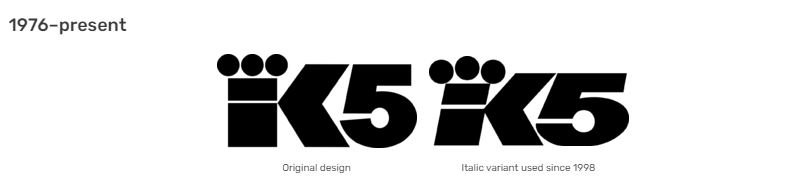
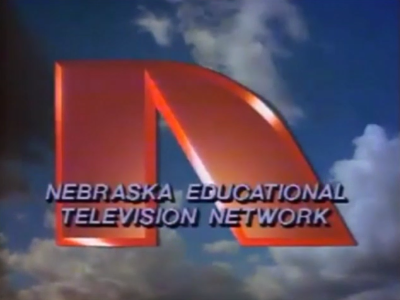
Here's one the 1976-2005 logo of Nebraska public media is longest running logo for the states PBS member station.

Nebraska_ETV_Network_Logo_1990-2.png
 
It has always bothered me that TV stations identify themselves by a channel number that they no longer broadcast on. It was confusing enough at first with cable and satellite frequencies that rarely corresponded with the OTA channel number. Then the shift to digital, band repacks and now streaming should have rendered the old channel numbers irrelevant as brand identifiers long ago.

I get that stations needed to keep the legacy channel number branding at first. But they should have started modernizing that branding, transitioning over time to an updated name/logo with emphasis on the network affiliation instead of a nonexistent channel number.

By now there's no reason for all these stations not to be truthful about the channels where they can be found. My biggest frustration with the PSIP scheme that identifies stations on channel numbers other than where they really are is that it gets confusing when trying to set up and peak and OTA antenna.

As a practical matter, many if not most US TV stations have their branding inextricably tied into their legacy NTSC channel number. It's really a smaller-scale version of how Australian TV networks are branded --- Seven, Nine, Ten, and maybe others. There are just too many stations, with too much goodwill invested in those channel numbers, for it to be feasible in an American commercial broadcasting context (which is popularity-driven because of advertisers). You'd basically be asking them to change their brand. In Europe, OTOH, channel numbers are generally not used, and people haven't been aware of them since the days of rotary tuners --- the only time I ever even saw one of them named online was with the third TV channel, channel 29, in Rzeszow, Poland. (My son's family is from near there.) The model was generally push-buttons which you could tune individually to the desired channel. You could also find this feature on some US TV sets in the 1980s.

I would like to see PSIP numbers, as they show up on tuners, have the actual OTA channel number below, in smaller font, to indicate what channel is being tuned to. The Zenith "grandma box" that you used to be able to get with the vouchers actually had that capability, in a roundabout way, you could open the "manual tuning" function and then tune up and down to each channel, with a signal strength meter on top of that.

Two fun facts: WIS Columbia SC, for several years in the 1990s and 2000s, dropped their channel number (10) and just branded as "WIS, The Spirit of Carolina", then later on began featuring the "10", which is where things stand today. Also, WOAY Oak Hill WV (Beckley/Bluefield) had been on channel 4 since its inception, then, when the digital transition took placed, they were on UHF channel 50, and branded themselves that way. Then, later on, they reverted back to PSIP channel 4.
 
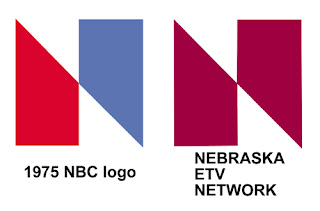
They were the ones NBC got in trouble with for copying their logo too closely in the 70's:

View attachment 3147

If I heard correctly, NBC had to "buy out" the logo, to be able to keep using it, and Nebraska ETV changed.

Something kinda-sorta similar happened when channel 7 in Miami wanted the WSVN calls, already in use by a satellite of WBRA Roanoke, located in Norton VA. WSVN changed their calls to WSBN and let the Miami station take the WSVN calls. I don't know what, if any, financial consideration there was. Sadly, WSBN is now off the air, when Blue Ridge PBS ended the Norton and Marion satellites. This had given a vast portion of southeastern Kentucky a near-local third PBS option (on top of KET and East Tennessee PBS) as well as much-needed in-state PBS to the "chicken's head" part of the Virginia panhandle.
 
My default pic should say it all for my favorite station...

WCKT/WSVN since 1976. However, its legendary for the 1983 circle 7 red version that still stands today. My favorite.

1655757521270.png
 
It has always bothered me that TV stations identify themselves by a channel number that they no longer broadcast on. It was confusing enough at first with cable and satellite frequencies that rarely corresponded with the OTA channel number. Then the shift to digital, band repacks and now streaming should have rendered the old channel numbers irrelevant as brand identifiers long ago.

I get that stations needed to keep the legacy channel number branding at first. But they should have started modernizing that branding, transitioning over time to an updated name/logo with emphasis on the network affiliation instead of a nonexistent channel number.

By now there's no reason for all these stations not to be truthful about the channels where they can be found. My biggest frustration with the PSIP scheme that identifies stations on channel numbers other than where they really are is that it gets confusing when trying to set up and peak and OTA antenna.
Sinclair is all over the place when it comes to this particular issue.

I can see why WBMA+ in Birmingham is still "ABC 33/40" (due to channel assignments within AT&T, DirecTV, etc.). However, when it comes to channel assignments on cable and satellite, I'm not certain on stations like "Fox 28" in Columbus, Ohio, "ABC 4" in Charleston, South Carolina, or "Fox 4" in Beaumont, Texas.
 
Fox 28 in Columbus, now a subchannel of WSYX-6, markets itself that way, because that is what their viewers know, ditto with "Fox 11" in Charleston WV (WCHS-8.2) and "Fox 45" Dayton (WKEF-22.2), the original stations now being primary affiliates of smaller diginets, done this way because of all that de facto duopoly mess with Sinclair and Cunningham. I don't know anything about the situation in Beaumont.

The "ABC 4" situation in Charleston SC is even more of a mess. They went through all of that when WGWG there became "channel 4", and through some kind of intellectual property thing I don't fully understand, ABC 4 then went over to WMMP's 36.2 signal, and WMMP became WCIV, yet WCIV-36.2 still calls itself "ABC 4" because, again, that is how they are known and have been known for years. WGWG's audience must be minuscule by comparison, and as far as their still using channel 4, for PSIP and, to a lesser extent, for marketing, I have to think viewers in Charleston really don't care. The majority of viewers get ABC 4 via cable or satellite anyway, a situation that is true for most if not all TV markets.
 
The majority of viewers get ABC 4 via cable or satellite anyway, a situation that is true for most if not all TV markets.
Yet, its not on Cable channel 4. Its on some different cable slot.
 
Fox 28 in Columbus, now a subchannel of WSYX-6, markets itself that way, because that is what their viewers know, ditto with "Fox 11" in Charleston WV (WCHS-8.2) and "Fox 45" Dayton (WKEF-22.2), the original stations now being primary affiliates of smaller diginets, done this way because of all that de facto duopoly mess with Sinclair and Cunningham. I don't know anything about the situation in Beaumont.

The "ABC 4" situation in Charleston SC is even more of a mess. They went through all of that when WGWG there became "channel 4", and through some kind of intellectual property thing I don't fully understand, ABC 4 then went over to WMMP's 36.2 signal, and WMMP became WCIV, yet WCIV-36.2 still calls itself "ABC 4" because, again, that is how they are known and have been known for years. WGWG's audience must be minuscule by comparison, and as far as their still using channel 4, for PSIP and, to a lesser extent, for marketing, I have to think viewers in Charleston really don't care. The majority of viewers get ABC 4 via cable or satellite anyway, a situation that is true for most if not all TV markets.
Another odd thing about Charleston SC is that ABC is shunted to virtual 36.2 while the MNTV programming service is on 36.1
 
Yet, its not on Cable channel 4. Its on some different cable slot.
The Comcast lineup on TVTV.com (whose channel assignments are often inaccurate anyway) doesn't list ANY Charleston stations on their PSIP OTA channels, and doesn't show listings for WGWG at all.

I know at one time, in the early days of analog cable, it was necessary due to QRM from the broadcast towers, but I've always been irked by cable systems not carrying channels with the same channel number as used for broadcast (and, now, PSIP). I can understand why they would down-convert from a high UHF number, to keep all of the stations in town together on a low channel number tier, but making, for instance, a local channel 10 into "channel 3", a local channel 4 into "channel 8", and so on... well, that's just wrong.

But then you had deeply isolated areas where the TV stations were so far away, that they would carry two stations broadcasting on the same channel from opposite directions, and somehow find a way to install two directional antennas and null out the undesired station respectively, to deliver a clean signal on each one. There was at least one cable system in eastern Kentucky that carried WHTN (now WOWK) from Huntington WV and WLOS from Asheville NC, both channel 13, and obviously one of those couldn't be "cable channel 13". I have to wonder if they installed some kind of shield (maybe fiberglass or mesh wire) in back of each antenna to block each other's channel 13 signal from being interfered with by the other channel 13. That would have been a real hat trick to keep the two signals from "slugging it out" with co-channel interference, and during DX propagation incidents, all bets would have been off.

I know that WSAZ's signal on channel 3 from Huntington WV was highly susceptible to E-skip interference during the summer, and sometimes they would have to run an announcement to the effect of "freak atmospheric conditions may be interfering with your reception of WSAZ and there's not a thing we can do about it". Did any other stations ever do this?
 
Another odd thing about Charleston SC is that ABC is shunted to virtual 36.2 while the MNTV programming service is on 36.1

Could this have been because MNTV was already on 36.1 when it was WMMP?

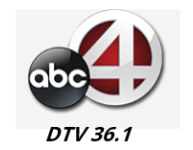
Might be better just to flip them, put ABC 4 on 36.1, and possibly tweak the logo to something like "ABC 4 / DTV 36.1", with the "DTV 36.1" in smaller print below the ABC 4 logo, similar to how ABC Birmingham markets itself as "ABC 33/40" (even though the "33" part is no longer accurate, WSES-33 Tuscaloosa doesn't relay WBMA). They could continue to call it "ABC 4" in promos, news, microphone flags, and so on.

Something like this:

1655877026383.png
 
ABC Birmingham markets itself as "ABC 33/40" (even though the "33" part is no longer accurate, WSES-33 Tuscaloosa doesn't relay WBMA).
However, if tvtv.us is anything to go by, WBMA is on channel 33 on AT&T and University of Alabama cable in Tuscaloosa.

They could continue to call it "ABC 4" in promos, news, microphone flags, and so on.
I just noticed now that WMMP-DT2 is indeed on channel 4 within AT&T, DirecTV, and DISH, plus Charter Spectrum in Summerville.

So it may be fine to advertise a channel number as long as it is used in cable and/or satellite. Besides, only a minority of viewers actually use the terrestrial signal; blows my mind how many broadcasters want to pay for extra electricity that will power 1 MW UHF signals. The likes of WABC, WNYW, WPIX, WPVI, WJLA, and CBLT have gotten by without a blowtorch signal.
 
However, if tvtv.us is anything to go by, WBMA is on channel 33 on AT&T and University of Alabama cable in Tuscaloosa.


I just noticed now that WMMP-DT2 is indeed on channel 4 within AT&T, DirecTV, and DISH, plus Charter Spectrum in Summerville.

So it may be fine to advertise a channel number as long as it is used in cable and/or satellite. Besides, only a minority of viewers actually use the terrestrial signal; blows my mind how many broadcasters want to pay for extra electricity that will power 1 MW UHF signals. The likes of WABC, WNYW, WPIX, WPVI, WJLA, and CBLT have gotten by without a blowtorch signal.
Leaving WBMA on the old channel on Tuscaloosa cable would only make sense, unless they wanted to cluster all major-network affiliates on lower VHF-like channel numbers. Many cable systems do that, so that they can have all of the minimal-service "lifeline" channels on, for instance, cable channels 2 through 16, 2 through 20, and so on.

Many broadcasters market themselves as low-digit stations even though the reality is that they are on UHF and/or have a UHF PSIP channel, such as ABC7 in both Sarasota and Fort Myers (two different stations), NBC10 in Boston, and KESQ-3 (PSIP 42) and KMIR-6 (PSIP 36) in Palm Springs CA. At the end of the day, a low channel number is always preferable to a high channel number. CBS had to do the walk of shame when they were relegated to channel 62 in Detroit.
 
Many broadcasters market themselves as low-digit stations even though the reality is that they are on UHF and/or have a UHF PSIP channel, such as ABC7 in both Sarasota and Fort Myers (two different stations), NBC10 in Boston, and KESQ-3 (PSIP 42) and KMIR-6 (PSIP 36) in Palm Springs CA. At the end of the day, a low channel number is always preferable to a high channel number. CBS had to do the walk of shame when they were relegated to channel 62 in Detroit.
I remember in the San Francisco TV market KNTV the NBC O&O in the Bay Area was initially marketed as NBC3 because of the cable position NBC wanted for cable providers in 2002. However one county had a problem with that Solano County specifically because some parts of the county (Solano-E) area have Hearst owned Sacramento NBC affiliate KCRA3 on Channel 3 Analog. Subsequently it was referred to its OTA signal at VHF 11 until 2008 when it was renamed as NBC Bay Area to take into account both OTA, and Cable. Now NBC Bay Area takes into account being on the TV Streaming apps.
 
I remember in the San Francisco TV market KNTV the NBC O&O in the Bay Area was initially marketed as NBC3 because of the cable position NBC wanted for cable providers in 2002. However one county had a problem with that Solano County specifically because some parts of the county (Solano-E) area have Hearst owned Sacramento NBC affiliate KCRA3 on Channel 3 Analog. Subsequently it was referred to its OTA signal at VHF 11 until 2008 when it was renamed as NBC Bay Area to take into account both OTA, and Cable. Now NBC Bay Area takes into account being on the TV Streaming apps.
I know about the KNTV situation and how their "NBC 3" branding collided with KCRA in Sacramento. I have to wonder if there could be a similar issue with WWSB-40 Sarasota and WZVN-26 Fort Myers, being adjacent markets, both branded "ABC 7".

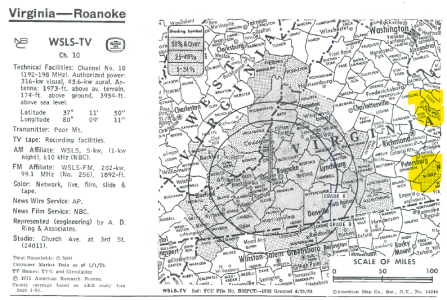
As an aside, there was a year or two in the 1970s when Television Factbook showed strange viewership patterns in counties far away from the market, which has led me to believe that there was some confusion as to which "channel X" the county was actually receiving. A case in point is two counties in far eastern Virginia that are shown as receiving WSLS-10 Roanoke, King and Queen, and Sussex counties:

1656042281022.png

I really have to suspect that these counties were actually receiving WAVY from Norfolk, also NBC, also channel 10, and that someone at ARB assigned them to the wrong NBC affiliate on channel 10. This is just one example.
 
Status
This thread has been closed due to inactivity. You can create a new thread to discuss this topic.


Back
Top Bottom