• Get involved.
    We want your input!
    Apply for Membership and join the conversations about everything related to broadcasting.

    After we receive your registration, a moderator will review it. After your registration is approved, you will be permitted to post.
    If you use a disposable or false email address, your registration will be rejected.

    After your membership is approved, please take a minute to tell us a little bit about yourself.
    https://www.radiodiscussions.com/forums/introduce-yourself.1088/

    Thanks in advance and have fun!
    RadioDiscussions Administrators

Which Daily Newspaper Will Be The Next One To Fold?

Jim1348

Banned
I live in the Minneapolis Saint Paul area. We have two competing daily newspapers. the Minnesota Star Tribune and the Saint Paul Pioneer Press. It will be interesting to see how much longer we will have competing daily newspapers in this area.

Based on research, including data often cited from the Pew Research Center's analysis of news deserts, only about 12 American cities now have at least two daily newspapers owned by competing, independent owners. This represents a sharp decline from the 1970s, when over 100 U.S. cities had competing daily newspapers.

Key Details on the Decline of Newspaper Competition:
  • Monopoly Markets: In most U.S. cities, a single company owns all local daily newspapers, resulting in a lack of direct local print competition.
  • Causes: The rise of the internet, declining print readership, and advertising revenue shifts to digital platforms have accelerated this trend.
  • Impact: The reduction in competition is associated with less coverage of local and state government, reducing accountability.
  • Consolidation: Large newspaper chains have continued to consolidate, with firms like Alden Global Capital buying multiple newspapers, reducing the number of independent, competing voices.


Based on recent, up-to-date industry developments, both the Minnesota Star Tribune and the Saint Paul Pioneer Press are facing intense economic pressure, but they are currently adapting rather than vanishing.

Instead of one immediately swallowing the other, both are transitioning to a new model of operation, including outsourcing their printing, to survive in a digital-first landscape.


Here is the current status of both outlets as of early 2026:

Key Developments in 2025–2026

  • Printing Moved to Iowa: Following a trend of underutilized in-house facilities, the Minnesota Star Tribune closed its Heritage printing plant in Minneapolis in late 2025.
  • Shared Infrastructure: The Pioneer Press, which was already being printed by the Star Tribune, will also move its printing to a Gannett facility in Des Moines, Iowa, in 2026.
  • Different Ownership Paths:
    • Minnesota Star Tribune: Owned by local billionaire Glen Taylor, the paper has been investing in its digital presence and expanding its reach, rebranding simply as the Minnesota Star Tribune in 2024 to emphasize a statewide focus.
    • St. Paul Pioneer Press: Owned by the hedge fund Alden Global Capital (Digital First Media). It has experienced significant, long-term staffing reductions—dropping from over 200 reporters in 2006 to under 30 in 2023.

Will One Vanish?

While industry insiders have long speculated on a merger—or one entity buying the other—the current situation shows both companies trying to survive separately.

  • Pioneer Press Future: Although smaller, the Pioneer Press remains profitable due to extreme cost-cutting, notes media analyst Ken Doctor. Its future depends on whether Alden continues to see it as a profitable investment or decides to divest.
  • Star Tribune Position: The Star Tribune is acting as the aggressor in the market, investing in its newsroom and expanding its scope.
The Takeaway: The print editions of both papers may shrink further or become less frequent, but both outlets are actively pushing to exist as digital products, meaning they are unlikely to "vanish" in the immediate future, despite drastically reduced print operations.
 
Meanwhile, we're seeing an explosion of hyper-local, user-driven online news services using national platforms such as Hoodline.com:


Want local restaurant reviews? At one time, you'd check the local paper. Now you go to Eater.com:


Perhaps the traditional newspaper business model is the problem. Because people still want news, and there are lots of ways to get it.
 
In Boston, the Herald continues to limp along despite combined circulation dipping to just over 25,000 (13,000 print in 2024). I'm surprised it's lasted as long as it has, wouldn't be surprised if it goes online only this year, or even shuts down completely.


In Minnesota specifically the Minnesota Reformer has took the void for statewide news. It’s an affiliate of The States Newsroom a group of statewide news outlets that m cover events from the Governors and State Legislature levels. I don’t know which news outlets in Minnesota specifically is at risk of being shut down at this time.

I seen stuff that in some parts of the country there are newspapers that had to deal with multiple cuts because of issues surrounding their parent companies like Hearst, USA Today Inc, and Alden Global had to make those cuts in response to that years budget.

Then the customers of the affected publications moved to places like Patch News, or in other cases they moved to a local non-profit news site/ Local News wires services that operate like the AP and donated there as a response to the cuts.

In the Washington Post cuts thread we originally mentioned their cuts for 2026 were directed at the outlets Metro, International and Sports desk. We initially thought it was the Washington Post putting their emphasis on competing against USA Today, New York Times, Wall Street Journal and Los Angeles Times for National News readers. But the response became about boycotting the Posts owner Jeff Bezos when the cuts did take place. We did look around on who would take the former readers of the Post but it was a split to multiple places.


Here’s one in New York City where readers look for local news and is viewed by locals as an alternative to NY Post, NY Daily News, New York Times and Newsday. This one is dedicated to city hall news. Note that’s when those
 
Last edited:
...In Minnesota specifically the Minnesota Reformer has took the void for statewide news. It’s an affiliate of The States Newsroom a group of statewide news outlets that m cover events from the Governors and State Legislature levels. I don’t know which news outlets in Minnesota specifically is at risk of being shut down at this time...


Minnesota Reformer.JPEG.png
 

View attachment 11475

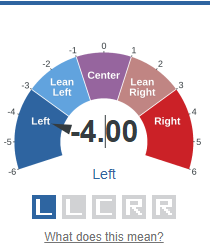
True and here’s one for the parent organization of Minnesota Reformer. It’s left but highly factual in the list.


Here is another one if you are looking for something rated highly factual but on the right wing such as West Central Tribune based in Willmar, Minnesota. The owner is Forum communications Inc.
 
I live in the Minneapolis Saint Paul area. We have two competing daily newspapers. the Minnesota Star Tribune and the Saint Paul Pioneer Press. It will be interesting to see how much longer we will have competing daily newspapers in this area.

Based on research, including data often cited from the Pew Research Center's analysis of news deserts, only about 12 American cities now have at least two daily newspapers owned by competing, independent owners. This represents a sharp decline from the 1970s, when over 100 U.S. cities had competing daily newspapers.

Key Details on the Decline of Newspaper Competition:
  • Monopoly Markets: In most U.S. cities, a single company owns all local daily newspapers, resulting in a lack of direct local print competition.
  • Causes: The rise of the internet, declining print readership, and advertising revenue shifts to digital platforms have accelerated this trend.
  • Impact: The reduction in competition is associated with less coverage of local and state government, reducing accountability.
  • Consolidation: Large newspaper chains have continued to consolidate, with firms like Alden Global Capital buying multiple newspapers, reducing the number of independent, competing voices.


Based on recent, up-to-date industry developments, both the Minnesota Star Tribune and the Saint Paul Pioneer Press are facing intense economic pressure, but they are currently adapting rather than vanishing.

Instead of one immediately swallowing the other, both are transitioning to a new model of operation, including outsourcing their printing, to survive in a digital-first landscape.


Here is the current status of both outlets as of early 2026:

Key Developments in 2025–2026

  • Printing Moved to Iowa: Following a trend of underutilized in-house facilities, the Minnesota Star Tribune closed its Heritage printing plant in Minneapolis in late 2025.
  • Shared Infrastructure: The Pioneer Press, which was already being printed by the Star Tribune, will also move its printing to a Gannett facility in Des Moines, Iowa, in 2026.
  • Different Ownership Paths:
    • Minnesota Star Tribune: Owned by local billionaire Glen Taylor, the paper has been investing in its digital presence and expanding its reach, rebranding simply as the Minnesota Star Tribune in 2024 to emphasize a statewide focus.
    • St. Paul Pioneer Press: Owned by the hedge fund Alden Global Capital (Digital First Media). It has experienced significant, long-term staffing reductions—dropping from over 200 reporters in 2006 to under 30 in 2023.

Will One Vanish?

While industry insiders have long speculated on a merger—or one entity buying the other—the current situation shows both companies trying to survive separately.

  • Pioneer Press Future: Although smaller, the Pioneer Press remains profitable due to extreme cost-cutting, notes media analyst Ken Doctor. Its future depends on whether Alden continues to see it as a profitable investment or decides to divest.
  • Star Tribune Position: The Star Tribune is acting as the aggressor in the market, investing in its newsroom and expanding its scope.
The Takeaway: The print editions of both papers may shrink further or become less frequent, but both outlets are actively pushing to exist as digital products, meaning they are unlikely to "vanish" in the immediate future, despite drastically reduced print operations.
True in parts of the country. However the most common ones whenever we hear about newspapers dying is in small towns and suburban areas for the same reasons. But in some of them they outright died due to the conditions they were in at the time or they merged with another publication in able to survive the competition and changing media landscape.


Here’s one WLIW-FM does a podcast that examines how Shelter Island Reporter on Long Island is affected by the changing media landscape.

Out of Print: The Unmaking of American News is an eyewitness account to the demise of local newspapers. This crisis is a story that’s playing out all over the nation.

Season 1 will dive into the struggles of the Shelter Island Reporter. The paper nearly shut down in 2024 before being granted a one-year reprieve for the 2025 calendar year.

The question is, will the paper survive into 2026, and if so, how?
 
Could be the Detroit News. Now that they have been bought out by Gannett, the publisher of the Detroit Free Press, I have to wonder how long they'll conclude it makes sense to continue with two daily papers.
 

Palisadian Post used to exist and it covered the Pacific Palisades neighborhood of Los Angeles. But in this case this newspaper had left the way they did because they had to deal with other news outlets covering the LA area like Los Angeles Times and Los Angeles Daily News.


I didn't consider this one for the reasons why even the national newspapers like the Washington Post, Wall Street Journal, NY Times, LA Times, and USA Today are facing cuts and some of this is increased competition in places like this most notably the Hill, Politico, AP and Reuters. Interestingly the Albrittons the former owners of WJLA-TV Washington DC and Politico also runs another news organization called NOTUS as a non-profit news organization.


Never considered this one where two non-profit news outlets representing Vallejo, California filled the void left behind by Alden Global Capital cutting news staff at Vallejo Times Herald. In Vallejo or overall Solano County, California is mentioned as a news desert in this one given that the news outlets residents depend on are coming from San Francisco and Sacramento most of the time.

Whenever I think of two non-profit news outlets representing Northern California I would think of the reporters are coming from San Francisco, San Jose, Oakland, Sacramento or as far as Los Angeles whenever a major event takes place here.
 
Palisadian Post used to exist and it covered the Pacific Palisades neighborhood of Los Angeles. But in this case this newspaper had left the way they did because they had to deal with other news outlets covering the LA area like Los Angeles Times and Los Angeles Daily News.
The Post closed because there were few readers left since the homes are mostly gone and the businesses that advertised there had nobody to sell to.

The Post was not a daily. It was a community paper, and did not compete at all with the Times or Daily News. And the Daily News is a San Fernando Valley paper, not an "LA" paper in the strictest sense of the term. Pacific Palisades is nowhere near The Valley.


Back
Top Bottom