
-
Get involved.
We want your input!
Apply for Membership and join the conversations about everything related to broadcasting.
After we receive your registration, a moderator will review it. After your registration is approved, you will be permitted to post.
If you use a disposable or false email address, your registration will be rejected.
After your membership is approved, please take a minute to tell us a little bit about yourself.
https://www.radiodiscussions.com/forums/introduce-yourself.1088/
Thanks in advance and have fun!
RadioDiscussions Administrators
You are using an out of date browser. It may not display this or other websites correctly.
You should upgrade or use an alternative browser.
You should upgrade or use an alternative browser.
Buffalo WKSE Morning show
- Thread starter Radio-Bored-Op
- Start date
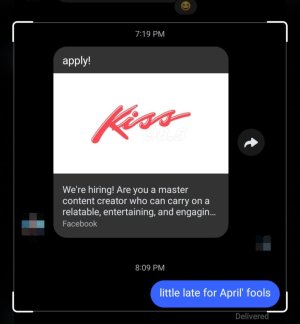
65-75k a year. Good for them. They are saving about 150k a year. They should hire the Uniland janitor. That’s probably about the amount they make. That shows you their “commitment “ to programming.
Honestly, that's more than I thought one could make in a market like Buffalo.65-75k a year. Good for them. They are saving about 150k a year. They should hire the Uniland janitor. That’s probably about the amount they make. That shows you their “commitment “ to programming.
Given that New York state has the highest cost of living per capita, $65-$70k isn't going to draw a lot of attention from any major talent.
I don't know any "major talent" who's going to get up at 3 am 5 days a week to make $65-70k a year.
On the other hand, if you're working in a smaller market, you're likely making less money, and this is a promotion.
This isn't an oldies or classic hits station where they're looking for heritage established talent. They want someone in the demo, preferably in their late 20s, who has a lot of energy, and has built up a fan base somewhere. You don't think making $70K plus benefits is enticing to someone in their 20s? The big deal here is getting paid insurance, because that's not always a given.
Salaries in radio today are based on billings. So this is insight into how much the station bills. They're not going to pay the talent more than the show itself bills. However, if the talent improves the billings, there's potential to make more money. Starting salary is low until they see what you deliver.
This isn't an oldies or classic hits station where they're looking for heritage established talent. They want someone in the demo, preferably in their late 20s, who has a lot of energy, and has built up a fan base somewhere. You don't think making $70K plus benefits is enticing to someone in their 20s? The big deal here is getting paid insurance, because that's not always a given.
Salaries in radio today are based on billings. So this is insight into how much the station bills. They're not going to pay the talent more than the show itself bills. However, if the talent improves the billings, there's potential to make more money. Starting salary is low until they see what you deliver.
Salaries are not based on billings. Salaries are based on where a company wants its margins to be. A top billing station will look at a big salary as taking away from its profit and margin.On the other hand, if you're working in a smaller market, you're likely making less money, and this is a promotion.
This isn't an oldies or classic hits station where they're looking for heritage established talent. They want someone in the demo, preferably in their late 20s, who has a lot of energy, and has built up a fan base somewhere. You don't think making $70K plus benefits is enticing to someone in their 20s? The big deal here is getting paid insurance, because that's not always a given.
Salaries in radio today are based on billings. So this is insight into how much the station bills. They're not going to pay the talent more than the show itself bills. However, if the talent improves the billings, there's potential to make more money. Starting salary is low until they see what you deliver.
Currently, the radio is not in the getting revenue mode, it’s in the cutting mode. The revenue mode is much harder, the cutting mode is easier
Salaries are based on where a company wants its margins to be.
We're saying the same thing in different ways.
Really? Do you mean at the moment or historically? Because the market has paid far more than that for talent over the years and currently has numerous on-air talent well past that.Honestly, that's more than I thought one could make in a market like Buffalo.
Ideal for any young jock who still has hopes of making it big in a business rife with economic challenges.On the other hand, if you're working in a smaller market, you're likely making less money, and this is a promotion.
The "cutting mode" has a rock bottom where you've cut and saved all you can save and likely ruined your product, whereas the "getting revenue mode" has a ceiling that is dictated by the creativeness and resourcefulness of it's sales/programming departments.Salaries are not based on billings. Salaries are based on where a company wants its margins to be. A top billing station will look at a big salary as taking away from its profit and margin.
Currently, the radio is not in the getting revenue mode, it’s in the cutting mode. The revenue mode is much harder, the cutting mode is easier
The "cutting mode" has a rock bottom where you've cut and saved all you can save and likely ruined your product, whereas the "getting revenue mode" has a ceiling that is dictated by the creativeness and resourcefulness of it's sales/programming departments.
Then again, once you've gone through bankruptcy, and the company founder & his son are gone, you know what the mode is.
I mean today. The revenue just isn't there to support that as a starting salary, even in AM drive.Really? Do you mean at the moment or historically? Because the market has paid far more than that for talent over the years and currently has numerous on-air talent well past that.
Can we assume the salary range doesn't include possible endorsement deals? If the talent is strong, there can be good money for themselves, the account exec and the station.
Can we assume the salary range doesn't include possible endorsement deals? If the talent is strong, there can be good money for themselves, the account exec and the station.
It likely doesn't include a lot of things. It's a starting salary. Everything is negotiable.
It's a 5 hour a day job. The rest of the day, you're either playing golf or watching TV. Lots of spare time to use your voice to make money.
I know morning shows that do the between-period entertainment at hockey games. They get paid for that.
The salary range is an indication of how much the vulture capitalists who now own Audacy value talent. I'm sure that they're looking at the total cost of the morning show, and Nicholas Picholas has been there for a long time. Then there's Wease, right? Don't be surprised if the new show becomes a duo. There's a lot of that going around these days.
The salary range is an indication of how much the vulture capitalists who now own Audacy value talent.
I doubt any of them are even aware of what's going on in Buffalo. I bet you my last paycheck that the talent at WBEN and WGR make a lot of money.
They make good money. Nothing absurd. Audacy has given pay cuts to some of the talk show hosts.I doubt any of them are even aware of what's going on in Buffalo. I bet you my last paycheck that the talent at WBEN and WGR make a lot of money.
Really don't have any need to read after this comment _ nailed it.On the other hand, if you're working in a smaller market, you're likely making less money, and this is a promotion.
This isn't an oldies or classic hits station where they're looking for heritage established talent. They want someone in the demo, preferably in their late 20s, who has a lot of energy, and has built up a fan base somewhere. You don't think making $70K plus benefits is enticing to someone in their 20s? The big deal here is getting paid insurance, because that's not always a given.
Salaries in radio today are based on billings. So this is insight into how much the station bills. They're not going to pay the talent more than the show itself bills. However, if the talent improves the billings, there's potential to make more money. Starting salary is low until they see what you deliver.