K.M. Richards
Program Director, The Eighties Channel™
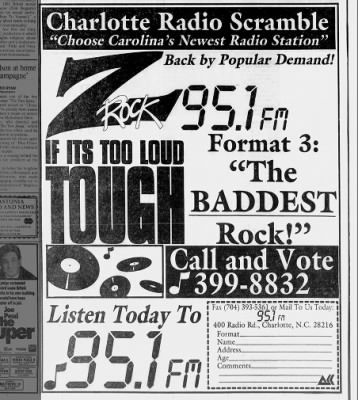
Then a man doing an impression of Ted Koppel came on and said the listeners chose "none of the above". The previous format was oldies, and no one was doing CHR at the time in the market, so the new format, called Double Q, was an alternative leaning version of CHR.
CHR had been one of the choices.
1991 would have been the beginning of what the industry has come to refer to as the "fragmentation of CHR" era, where different "flavors" of the format emerged.
Using your example of "Double Q", that would have been one of the options. There were also Rhythmic/Urban CHR (which was largely rap and hip-hop, although some stations just went more R&B without those genres), CHRock (no pop songs here ... emphasis on the heavy metal and other hard rock), Mainstream CHR (something of the opposite of CHRock, mostly the pop songs and with some stations including the crossovers from Rhythmic/Urban), and ... well, you get the picture.
This has made it more difficult to do a 90s-focused Classic Hits format, because there are relatively few songs that please the majority ... because there isn't a majority. The audience preferences are based on which version of CHR they listened to in that decade. Play a mainstream song and the rock aficionados will change stations. Play a rock song and the opposite happens. Play anything non-Rhythmic/Urban and those listeners go away.
Taking your example again, I would imagine that the CHR "choice" was a Mainstream version.