• Get involved.
    We want your input!
    Apply for Membership and join the conversations about everything related to broadcasting.

    After we receive your registration, a moderator will review it. After your registration is approved, you will be permitted to post.
    If you use a disposable or false email address, your registration will be rejected.

    After your membership is approved, please take a minute to tell us a little bit about yourself.
    https://www.radiodiscussions.com/forums/introduce-yourself.1088/

    Thanks in advance and have fun!
    RadioDiscussions Administrators

WSM-AM Iconic

BruceB

Banned
I just finished watching the Ken Burns documentary County Music and couldn't help but notice how important WSM was in the growth and spread and popularity of country music. because of the location of the transmitter , the station reached a large portion of the US.
It is hard for me to think of another radio station that had such an impact on our nation's culture.
 
It is hard for me to think of another radio station that had such an impact on our nation's culture.

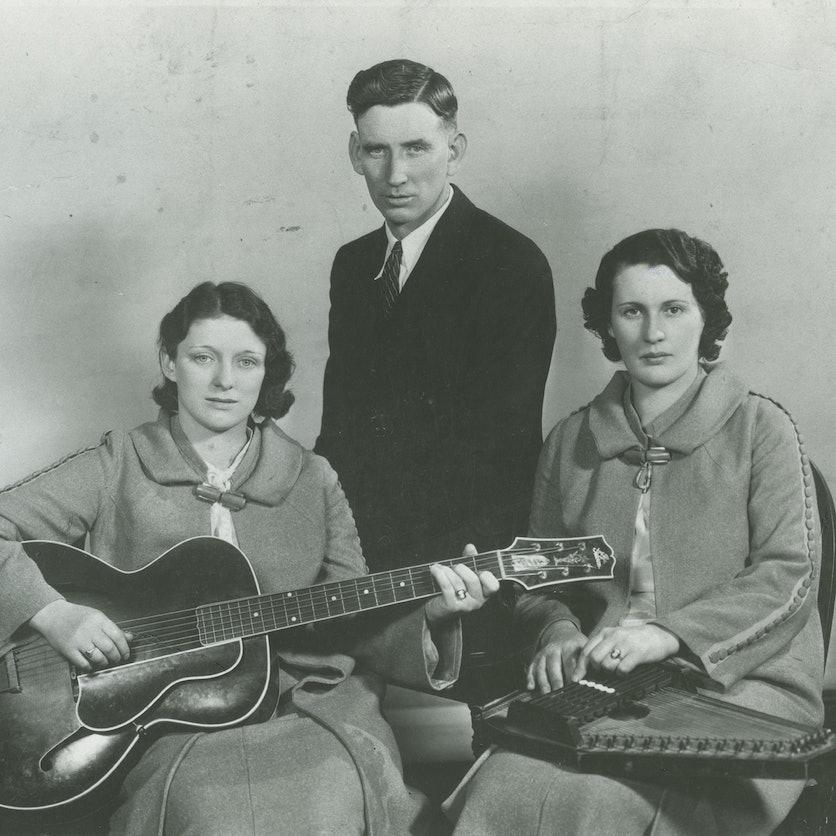
When this comes up, I will often say the difference between WSM & the Opry and everyone else is that WSM & the Opry was a lot more organized. That's often what it takes to get your message across. There were lots of other radio stations doing country music around the country. Ken Burns gave an example of how the Carter Family moved to Texas because they were offered a lot of money from a radio station there. Hank Williams went to Shreveport and the Louisiana Hayride when he got kicked off the Opry. So there were a lot of others, and they're all in the documentary. The one generalization you can make is that radio played a big role in the growth of a lot of music in the 30s and 40s. The Paul Whiteman orchestra and other big bands benefitted. So did Benny Goodman, Bing Crosby, and many other jazz greats who hosted national radio shows. Radio then went on to popularize R&B, R&R, and other forms of music.
 
When this comes up, I will often say the difference between WSM & the Opry and everyone else is that WSM & the Opry was a lot more organized. That's often what it takes to get your message across. There were lots of other radio stations doing country music around the country. Ken Burns gave an example of how the Carter Family moved to Texas because they were offered a lot of money from a radio station there. Hank Williams went to Shreveport and the Louisiana Hayride when he got kicked off the Opry. So there were a lot of others, and they're all in the documentary. The one generalization you can make is that radio played a big role in the growth of a lot of music in the 30s and 40s. The Paul Whiteman orchestra and other big bands benefitted. So did Benny Goodman, Bing Crosby, and many other jazz greats who hosted national radio shows. Radio then went on to popularize R&B, R&R, and other forms of music.
Big A: I see your point, but those other stations were mostly lower power local signals.What I meant was for one station to have that much impact because of that Blow Torch signal.And their location.They could reach a much larger footprint than any of those other stations that Burns referred to.
I'm certain that you know that from the very earliest days of radio, there were stations with programs featuring what was then called "hillbilly music"
 
Big A: I see your point, but those other stations were mostly lower power local signals.

Here's an article about the Carter family and XERA:


KWKH in Shreveport had the same power and central location as WSM. WLW Cincinnati had a country show. So did WWVA in Wheeling.

The other thing to know is that format radio as we know it didn't exist before the 50s. So WSM only played country music at night and during the Opry. The rest of the time, they were a variety station that carried the NBC network most of the time. As recently as the 70s, WSM was a full service MOR station by day, and country at night.

What really differentiates WSM from a lot of others is that it still sounds a lot like it did. It still runs the Opry (although the Opry is now a 5 day a week show instead of just Saturday nights). The station is basically owned by the Opry, and the studio is now located outside the front door of the Opry House. There's just a great connection between radio and music.

 
Last edited:
What really differentiates WSM from a lot of others is that it still sounds a lot like it did. It still runs the Opry (although the Opry is now a 5 day a week show instead of just Saturday nights). The station is basically owned by the Opry, and the studio is now located outside the front door of the Opry House. There's just a great connection between radio and music.
That's why I say WSM should be considered a national historical site should the Opry no longer be able to maintain it. And even when AM eventually fades into the dustbin of forgotten media, WSM is one of those stations that should be kept alive as a historical showpiece contributor to the beginnings of electronic media.
 
That's why I say WSM should be considered a national historical site should the Opry no longer be able to maintain it.

I think the Opry understands the significance of the station to country music and its own existence. If the Opry can't maintain it, then someone has to be able to maintain the Opry, right? They're all interconnected. From what I understand, the members of the Opry have a financial plan for all of that.
 
I think the Opry understands the significance of the station to country music and its own existence. If the Opry can't maintain it, then someone has to be able to maintain the Opry, right? They're all interconnected. From what I understand, the members of the Opry have a financial plan for all of that.
I see a day when AM radio becomes irrelevant but the Opry lives on as a venue and showcase for country talent. You don't need an AM station at that point and accountants who can't justify the expense of keeping an AM station alive could either let WSM fall into disrepair due to budget cuts, or recommend the removal of the Blaw-Knox tower for a physical building expansion, sale, or leased space as revenue. If the site and station are registered as a National Monument, the future of WSM would be much more protected.
 
My GM in Galena, AK was Flyin Brian Landrum, back in 06 and 07. I believe he was the guy who instituted paid streaming (my memory is fuzzy, KIYU was almsot 10 years ago for me!)) and he also floated the idea of a format change.

We talked back in 2016 one day in the office.. AM hadnt taken quite as much of a nose dive.. anbd he basically told me.. WSM is not the cash cow people think it is and if it wasnt for the Opry and Gaylord/Ryman, then WSM would've been doing something different long ago.
 
I see a day when AM radio becomes irrelevant but the Opry lives on as a venue and showcase for country talent. You don't need an AM station at that point and accountants who can't justify the expense of keeping an AM station alive could either let WSM fall into disrepair due to budget cuts, or recommend the removal of the Blaw-Knox tower for a physical building expansion, sale, or leased space as revenue. If the site and station are registered as a National Monument, the future of WSM would be much more protected.

I seem to recall the tower site is in the national register. The station itself has moved several times. The way the Opry and owner Ryman Hospitality is handling WSM is diversifying its platforms. If the tower property itself were to be sold, they could easily move the tower to Opryland. As I said in another thread, Ryman has actually done a lot to preserve WSM, most recently moving the studio to its own building next to the Opry House. Ryman itself is a diversified company, owning hotels, restaurants, theaters (the Ryman Auditorium), and associated merchandising. There are a lot of AM stations in this country with similar heritage. WLW is one that comes to mind. Most of the heritage AMs are owned by iHeart. I'd say WSM is safer than the iHeart AMs.

if it wasnt for the Opry and Gaylord/Ryman, then WSM would've been doing something different long ago.

That is 100% correct. Just 20 years ago, when Gaylord was still in broadcasting, they were about to flip the format of WSM to sports-talk. That plan was dropped when Opry members lined up in protest outside of the studio.

 
Here's an article about the Carter family and XERA:


KWKH in Shreveport had the same power and central location as WSM. WLW Cincinnati had a country show. So did WWVA in Wheeling.

The other thing to know is that format radio as we know it didn't exist before the 50s. So WSM only played country music at night and during the Opry. The rest of the time, they were a variety station that carried the NBC network most of the time. As recently as the 70s, WSM was a full service MOR station by day, and country at night.

What really differentiates WSM from a lot of others is that it still sounds a lot like it did. It still runs the Opry (although the Opry is now a 5 day a week show instead of just Saturday nights). The station is basically owned by the Opry, and the studio is now located outside the front door of the Opry House. There's just a great connection between radio and music.
Big A is spot on about WWVA. Its powerful signal reached well into Canada, resulting in untold numbers of visitors traveling to the Capital Theater to enjoy the greatest Country music performers. Its Saturday night show aired from the early 1930’s until WWVA became a news/talk station, but its spirit lives on via LPFM WWOV.
 
WSM was able to do something by the 1950s that none of those other shows could do and that is make the Opry be seen as the MAJOR LEAGUE. The other shows Louisiana Hayride, Big D Jamboree, National Barn Dance, Midwestern Hayride, WWVA Jamboree were the minor leagues. When you became an Opry member, you had made it.

No one is quite sure how this happened as these other shows originated on 50KW clear channel stations and most also had some network coverage, LA Hayride and Big D were on CBS for example.

One theory is the Opry always came across as a show with individual stars. Roy Acuff, Ernest Tubb, Hank Snow, etc. While some of those other shows took a more cast like approach to their presentation.
 
WSM was able to do something by the 1950s that none of those other shows could do and that is make the Opry be seen as the MAJOR LEAGUE. The other shows Louisiana Hayride, Big D Jamboree, National Barn Dance, Midwestern Hayride, WWVA Jamboree were the minor leagues. When you became an Opry member, you had made it.

No one is quite sure how this happened as these other shows originated on 50KW clear channel stations and most also had some network coverage, LA Hayride and Big D were on CBS for example.

One theory is the Opry always came across as a show with individual stars. Roy Acuff, Ernest Tubb, Hank Snow, etc. While some of those other shows took a more cast like approach to their presentation.
When RCA opened a studio in Nashville,
County artists flocked to it rather than go to NYC.
Stands to reason they would play the Opry on Saturday Night since they were in town anyway. None of those other towns mentioned had this advantage.
 
One theory is the Opry always came across as a show with individual stars. Roy Acuff, Ernest Tubb, Hank Snow, etc. While some of those other shows took a more cast like approach to their presentation.

The Opry did both. They had a cast of regulars plus major recording stars. The other part of it was an infrastructure that didn't exist anywhere else. That started to build in the 40s with other aspects of the music business growing around the Opry. As Ken Burns pointed out, the Opry did a lot of outreach, taking its stars to live shows in areas within the WSM coverage area. So you could hear the show on the radio, attend the show in Nashville, or the show would come to you in Kentucky or Alabama. That made the show even bigger than a radio show.

When RCA opened a studio in Nashville,
County artists flocked to it rather than go to NYC.

Keep in mind the technology behind the studios came from the technicians at WSM and the Opry. One of the first studios in Nashville was Castle Studios, run by Opry engineers. So even then, there was the input of the Opry. Opry artists & musicians lived in Nashville, and wanted to record there. Thus the growth of the Nashville studios. That led to the establishment of Nashville offices of the major record labels. That led to the growth of the songwriting community that fed the artists with hit songs. All of this began with the Opry and WSM.

 
While Castle Studios was the first and was started by WSM engineers, Elvis never cut a record there.

Heartbreak Hotel was cut at the Methodist Television, Radio & Film Commission studio which RCA was using before they built the legendary Studio B. It was at 1525 McGavock Street and unfortunately was demolished in 2006.
 
One advantage Nashville and WSM had over some of the other early Country stations was the music publishers like Accuf Rose set up shop in Nashville

Being owned by National Life was another advantage. They used the Opry in as sales tool. Before air conditioning, insurance agents would go by neighborhoods when the Opry was on and hear who was listening to the Opry. Next week during a cold call and he would identify himself as an agent for National Life and ask them which Opry acts they liked.

Another way radio contributed to early Country music, unused radio studios (often daytimers) were used as recording studios for "unknown" artists.
 
One advantage Nashville and WSM had over some of the other early Country stations was the music publishers like Accuf Rose set up shop in Nashville

One of their biggest signings was Hank Williams. They sold their catalog to Opry owner Gaylord, who later sold it to Sony.
 
Sad, KWKH important to not just the history of country music but also to blues and soul.

The genius of the Opry and WSM is that when they moved the Opry from the Ryman to Opryland, they built a hotel on the property. The reason was so that Opry fans would have a place to stay (since it was a distance from town). They also built a country-themed amusement park, so Opry visitors had something to do during the day. Those two additional revenue streams were critical to the company that now owns WSM. They were NOT done in Shreveport or any other place where you had radio and a music venue. The third thing they did was build a cable TV network based around country music. That part was sold off when they got out of the media business. It's fortunate that they did, since it's worth a whole lot less than the hotels. This is why I often say for radio to survive, it needs a revenue stream beyond :30 spots. WSM has that.
 
Status
This thread has been closed due to inactivity. You can create a new thread to discuss this topic.


Back
Top Bottom