Re: WRNO: During his early heyday, Rush Limbaugh's program was broadcast through WRNO, and apparently some servicemen tuned into it when they were out at sea, because I recall hearing at least one phone call from one who listened to Rush on WRNO while at sea. I have no idea whether the Limbaugh show actually made WRNO any money, but Rush used to mention WRNO a lot during his show.

-
Get involved.
We want your input!
Apply for Membership and join the conversations about everything related to broadcasting.
After we receive your registration, a moderator will review it. After your registration is approved, you will be permitted to post.
If you use a disposable or false email address, your registration will be rejected.
After your membership is approved, please take a minute to tell us a little bit about yourself.
https://www.radiodiscussions.com/forums/introduce-yourself.1088/
Thanks in advance and have fun!
RadioDiscussions Administrators
You are using an out of date browser. It may not display this or other websites correctly.
You should upgrade or use an alternative browser.
You should upgrade or use an alternative browser.
US Domestic Shortwave
- Thread starter Radig
- Start date
Where, and why, do you think anti-Americanism is fairly universal? According to this global poll, which was made when Trump was the president, it's not, and the perception of the US has probably improved since then (I'm sorry for possibly involving US domestic politics)Why would any station, in an era of fairly universal anti-Americanism that has lasted over the last 50 years or more, want to "pirate" VOA programs?


Trump Approval Worldwide Remains Low Especially Among Key Allies
Donald Trump’s international ratings remains poor, and opinion of the U.S. has declined since his election. Yet most people around the world still want the U.S., not China, as the world's leading power.
 www.pewresearch.org
Last edited:
Today, WRNO-FM, now an iHeartMedia-owned talk radio station, is the New Orleans affiliate of The Rush Limbaugh Show.Re: WRNO: During his early heyday, Rush Limbaugh's program was broadcast through WRNO, and apparently some servicemen tuned into it when they were out at sea, because I recall hearing at least one phone call from one who listened to Rush on WRNO while at sea. I have no idea whether the Limbaugh show actually made WRNO any money, but Rush used to mention WRNO a lot during his show.
WRNO was the pioneer in private US international shortwave - I don't recall them, at any time, trying to sell spot advertising anywhere in the trade press or advertising in local, or international, publications.But that is a brokered station, while the New Orleans station was an International Top 40 station trying to sell spot advertising.
And the Weiner station is bottom feeding with really despicable paid religion and extremists.
I was one of the few people (at the time, internationally {smile}, in Ontario, Canada) listening to them on shortwave (MFJ sw convertor) connected to my Datsun 510 car stock receiver!
Allan Weiner, on the other hand, started out on the relative high end. It is only in the recent past that he has dropped into the slime. Had he stayed true, to his concept of what a shortwave station should be, then I would have been pleased to financially contribute to the well-being of his WBCQ station. I decided against contributing, some time ago, specifically because of his overt pro-trump agenda that he pushed each Friday evening on his personal show.
So let me go back to what I'm thinking about:
1. Allow SW domestic broadcasting.
2. Keep it, for now, to low power 1 KW.
3. Encourage DRM.
I'm not against our existing SW stations. They are battling heavy, heavy headwinds, regarding out of date laws.
Keep international broadcasting as a priority, but allow a new low power domestic service.
Lastly, as an example, Brasilia University, in Brasilia, Brazil recently concluded a DRM test transmission on 11910 kHz, from Brasilia, using a 2.1 KW transmitter with a 20 dB gain antenna (!) pointing towards NW. This project tested various DRM modes over several months focussed on their Amazonia region.
I was very pleased to receive mostly flawless DRM transmissions, featuring local Brasilan FM stations, including those in parametric stereo, in the Atlanta, Georgia area throughout their daily broadcast period. It was very, very cool!

Sorry, my error. The format was really rock 40, but was, on SW, a lot more focused than the typical album rock station.I was just trying to guess why you thought that WRNO, "The Rock of the World," was a Top 40 station. As I mentioned earlier, the call sign WRNO stood for "Rock of New Orleans."
In a country where nearly nobody has a personal computer? Remember, Radio Martí is aimed only at Cubans in Cuba as its content is of zero interest elsewhere.Only thing I can think of is that the received signal is fed into a computer with software that decodes the DRM datastream.
I can name a number of nations that are in green or light green that are less than neutral about the US.Where, and why, do you think anti-Americanism is fairly universal? According to this global poll, which was made when Trump was the president, it's not, and the perception of the US has probably improved since then (I'm sorry for possibly involving US domestic politics)
Start with Mexico, Brazil and, definitely, Argentina. The bulk of the South African population, too. Indonesia definitely, and several of the western Europe nations such as France and Spain are not positive. For example, I would never speak English in France, preferring mediocre French or even Spanish.
These attitudes have decades of permanance and one president or another does not affect it; two centuries of the Monroe Doctrine are more at the roots of the causal effects.

That's not a standard by receiver manufacturers in the U.S. And that DRM programming isn't intended for U.S. consumption.Actually DRM has been approved by the USA for shortwave. The VOA is currently transmitting DRM, from their transmitter site near Greensville, NC, with Radio Marti daily on 7345 kHz from 1700z to 0200z.
Jack's national rep tried to sell the SW to US clients. They got nowhere as campaigns are not done internationally. They did, however, pitch to nearly every agency that had a client who also marketed in Latin America, for example. They were selling beach towels in Nome; there was no market.WRNO was the pioneer in private US international shortwave - I don't recall them, at any time, trying to sell spot advertising anywhere in the trade press or advertising in local, or international, publications.
Jack was nowhere near being a pioneer in international shortwave from the US. CBS had an international service to Latin America in the late 30's and many religious groups had stations, including Bonneville International and the Christian Scientists among others.
Really? Where is that stated for SW?And that DRM programming isn't intended for U.S. consumption.
It's not intended by the broadcaster involved. If you have a station, you do not target an area or nation where there are no DRM radios and no consumer interest in buying them... or any SW radio, for that matter.Really? Where is that stated for SW?
Because of that SW stations do not target North America in their transmissions. Of course, I am not sure if you know it, but SW stations, other than low-power local national services (the very few that remain) use highly directional beam antennae to serve the areas they wish to reach based on content, time of the day and language.
The only international SW broadcasters that even think of targeting the US are "alternate economic system" ones like China and, still, Russia. But even those are doing much less than ever.
Last edited:
Understood as problematic, since it was being sold as an international broadcast.Jack's national rep tried to sell the SW to US clients.
Not a stellar strategy to try to sell to the Latin American market considering that the station was beamed NE to Canada and beyond to Europe.They got nowhere as campaigns are not done internationally. They did, however, pitch to nearly every agency that had a client who also marketed in Latin America, for example. They were selling beach towels in Nome; there was no market.
There is no such thing as "international ad campaigns". There are international concepts, taken to each country or region and adapted by local agencies (branches or affiliates of the home office of the shop) for each market.Understood as problematic, since it was being sold as an international broadcast
By "US Clients" I meant US-based companies that marketed in Latin America such as Coca Cola and the like. His rep called on agencies that were the lead shop for a brand, but found that those US shops for US companies did not do the creative or placement or even budgeting for other nations.
(Note: if you are unaware, stations in the US do not have sales offices in major agency cities like NY, Chicago, LA, SF, Dallas and Atlanta. They have a "rep firm" which represents many stations with offices in those places and coordinates buys with agencies and stations. The rep firm for Costello's local AM and FM also tried to pitch the shortwave station and was unsuccessful. Joe had a place in Humacao, PR, when I was managing stations on the Island and I chatted with him a number of times when he learned that I had owned or managed stations in Latin America. He had, though, pretty much given up on making money and the SW was, apparently, more of a hobby by then.)
Even in the US territory of Puerto Rico, in that era there was essentially no placement of business from the mainland US. It was all handled by local agencies, of which there were over 100, who did the local creative and placement, working with the local distributor or office of the brand.
That is not what Jack told me; it was also beamed at Latin America off the other side of the curtain antenna. With the very low power they ran, reception in Europe was hardly reliable.Not a stellar strategy to try to sell to the Latin American market considering that the station was beamed NE to Canada and beyond to Europe.
Jack had found out that in that era English-language rock was on a lot of stations in Latin America, but just with local ads and announcers. At one point in the early 80's, of 22 or 23 FMs in Lima, 17 or 18 played only English rock and pop music. He thought he could do it better and have the prestige of being from the USA.
And Jack had no sales rep in Europe anywhere. Because of the "different country, different language" prevalence in Europe, no ad agency bought for "Europe". They had shops in each nation, intended to adapt campaign strategies and creative to each market.
Last edited:
The DRM transmitter was manufactured in Brazil by BT Broadcast Transmitters which is based Porto Alegre:Lastly, as an example, Brasilia University, in Brasilia, Brazil recently concluded a DRM test transmission on 11910 kHz, from Brasilia, using a 2.1 KW transmitter with a 20 dB gain antenna (!) pointing towards NW. This project tested various DRM modes over several months focussed on their Amazonia region.
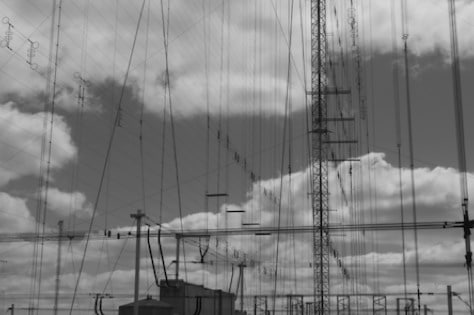
Brazil: EBC to Install Shortwave DRM Transmitter
Will provide coverage to some 7 million indigenous people in the Amazon
 redtech.pro
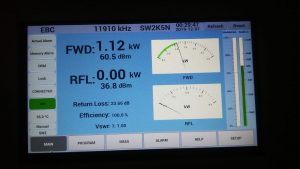
DRM SW Transmissions Start in Brazil - Digital Radio Mondiale
After initial tests carried out at the end of last month, from 2nd December 2020, Brazil is broadcasting in DRM on 11910 kHz from the public broadcaster EBC (Empresa Brasil de Comunicação) HF transmission site to the Amazon region and other parts of the Americas. The test is the result of the...
 www.drm.org
A few months back the BT website listed a number of DRM transmitters between 2.5 and 100kw, but the website is missing some content when I checked a few minutes ago. Wondering if they decided to get out of the SW business, or its just that the website has problems: Home - BT Online
I too heard the DRM datastream on 11910 in Houston, but I don't have any DRM decoding capability.
Supposedly there are over one million computers in Cuba, though anyone's guess as to how many are in the hands of the general public. There has been some liberalization on Internet access the past few years, but still quite restricted.In a country where nearly nobody has a personal computer? Remember, Radio Martí is aimed only at Cubans in Cuba as its content is of zero interest elsewhere.
Yes, the DRM transmission is quite puzzling.
Not really, it's a good (tough) place to try out the technology.Yes, the DRM transmission is quite puzzling.
It appears that the AM and SW transmitter lines have been discontinued. Brazil is moving AM stations, at least as many as possible, to FM. SW is dying, with just over 30 active ones left per this year's WRH. I'm guessing that a lot of the SW stations will go off when the equipment is no longer sustainable such as what happened in decades past in Venezuela, Bolivia, Colombia, Ecuador and Perú, the other Latin American homes of active SW broadcasting in the past.The DRM transmitter was manufactured in Brazil by BT Broadcast Transmitters which is based Porto Alegre:
A few months back the BT website listed a number of DRM transmitters between 2.5 and 100kw, but the website is missing some content when I checked a few minutes ago. Wondering if they decided to get out of the SW business, or its just that the website has problems: Home - BT Online
How would you "try it out" when nobody can listen and nobody can report back?Not really, it's a good (tough) place to try out the technology.
DRM is amply tested, needs no trial, and is now the core system for a huge network of 540 to 1600 band stations in India, where analog modulation will be phased out and DRM on the MW band will be used to get wide coverage of the whole nation with as few transmitters as possible... apparently less than 250 transmitters to cover the whole country and 1.3 billion people.
That is unfortunate. You missed out on a really neat experience.I too heard the DRM datastream on 11910 in Houston, but I don't have any DRM decoding capability.
That doesn't mean that transmissions beamed to a certain area can't be heard elsewhere. Those antennas can have significant back and sidelobes. And the luck of geography can help...for instance transmissions from Madagascar to West Africa can put a good signal into North America as we are "in the beam."SW stations, other than low-power local national services (the very few that remain) use highly directional beam antennae to serve the areas they wish to reach based on content, time of the day and language.
Russia closed its shortwave services in 2014, preferring to concentrate on the RT television channel as well as Radio Sputnik distribution to local broadcasters. China still has a few broadcasts to North America via Cuba, but closed its Albanian relay station (that was well heard here) about 18 months ago.The only international SW broadcasters that even think of targeting the US are "alternate economic system" ones like China and, still, Russia. But even those are doing much less than ever.
Romania, Turkey, Spain, Cuba, North and South Korea, and Thailand are the only other remaining countries that beam English to North America, and reception can be poor to nonexistent on some of those broadcasts.
- Status
- This thread has been closed due to inactivity. You can create a new thread to discuss this topic.