• Get involved.
    We want your input!
    Apply for Membership and join the conversations about everything related to broadcasting.

    After we receive your registration, a moderator will review it. After your registration is approved, you will be permitted to post.
    If you use a disposable or false email address, your registration will be rejected.

    After your membership is approved, please take a minute to tell us a little bit about yourself.
    https://www.radiodiscussions.com/forums/introduce-yourself.1088/

    Thanks in advance and have fun!
    RadioDiscussions Administrators

Someone's paying to be on AM!

I live within listening distance of the Tijuana, Mexico AM's. At night that's about all you will hear on these stations, the majority airing brokered religious programming. I've noticed more of this happening during daytime hours. Is the way AM will be will here in the states? Probably, just at a slower rate.
Mexico understood the death of AM and even had its congress decree that to be a fact. They revised the FM rules to allow second adjacents in the same market, and about 80% of AMs moved to FM. Only in a couple of large markets and along the US border this could not be done; in the border areas due to agreements with the US.

Most of the world allows second adjacent assignments in the same city. Most or many AMs have gone silent throughout the hemisphere, with some like Jamaica, most of the rest of the Caribbean not under NARBA, and nations like Belize have eliminated AM totally.
 
I do get called a lowlife, a scumbag and a person that prostitutes a radio station because the format is brokered time. These are words that have been used.

When I have mentioned there had been times I had preferred not sell a certain client but did because it meant the bills could be paid and payroll met. You imply my owner should just shut the station down. That is a direct quote from more than one.

Do you have any clue how nonsensical the above sounds to someone in the business? If you could have been in my shoes a few days, you'd not think this way.

Nobody will truly offer an answer to these questions but you should answer them yourself.

1) you spend a million or two and have what is now a dying AM station that once did better than it does today. Now you are forced to take an order for (fill the blank: Bro Stair, Infomercials, somebody like Radio Sputnik) to pay the bills and meet payroll. Maybe in a few months you won't need this account. I asked posters if they worked at this station would they be okay not getting a paycheck if I refuse that order in hopes something better comes along later. Nobody had the guts to answer if they'd go without pay.
You: you've told me to pull the plug and turn in the license..my owner should forget about his $1-$2 million investment because you think the station shouldn't sell the client. If you were the owner, would you take your advice to me?

2) I sometimes had to accept an order to pay the bills. I'm called scum and a lowlife. I'm told I'm prostituting the station.
Let's put this in your world. You have a home and the monthly expenses mean you need an extra $100 a week from a part-time job to make it. The only part-time open at the moment is a job that you would prefer not take but it keeps the lights on and your home from being foreclosed upon. Per you name calling, if you take that job you prefer not take you are scum, a lowlife and have prostituted your home to pay the bills. Do you think that is a fair description? Would you lower yourself to pay those bills? Or if you have to take a part time job you don't care for, you should just walk away from your home and let the mortgage company have it. Per your advice, you walk away.
 
Two things of recent concern:
1. Why doesn't the U.S. allow second adjacent stations in the same city? It seems like it should work fine with all the LPs and translators being squeezed in. Even then though, I can't see many stations in big markets being able to move to full FM signals. Here in Portland, I could see the now Sandy licensed 88.7 move into Portland and EMF shutting down the 92.7 signal, 93.5 upgrading and 1520 going away, potentially something at 97.5, potentially something at 100.7, potentially a 101.5 though there's an LP there, shutting down the AM tied to 106.3, and that's it. There are signals on all the other frequencies, most of which are LPs, which I don't think should be forced off air with a rule change.
2. Are there owners who will shut off a station before running brokered programming? It sure seems like we're seeing a lot of AM stations going dark, and from what people are saying, we wouldn't be seeing quite as many if more were brokered.
 
Brokered is not always the way to solvency. I was in a market where there were more brokered stations than there was demand. Before I got out, I saw a station go from about $38,000 to $40,000 a month drop to about $20,000. The last legit offer I got was from a station owner in another major market that would pay $17,000. In fact the guy would have put up a multi-month payment to start. This was a solid broadcaster with a long successful track record who told me $17,000 was the very top. My owners demanded $18,000 regardless of what he said. He was kind enough to respond to me but he stated he had no response to my owners. I left. The station went silent. About 15 months later they sold the station for less than the actual value of the tower site.
 
I would have evolved KIXI to something along the lines of Saga's Pure Oldies stations, or possibly even further into the current KRKO territory. As for brokered programming, I don't quite get it either, though I don't have nearly as negative of a view on the subject as Theater of my Mind does. I've always been of the view that your programming should at least have an audience, no matter how small. It sure doesn't appear that KKNW has much of one though, given that they appear in the ratings maybe once a year. Especially with KKNW being all talk, wouldn't it be more cost effective for the folks leasing time on that station to put their programming online or out as a podcast? I can only speak for myself, but podcasts are about the only thing I listen to as far as talk radio. I do listen to and like some of the stuff on KXL, but rarely do I turn on say Chad Benson at 7:00 P.M. The only reason I listen to MVCR regularly is because I'm usually getting out of bed when they come on, and on the days when I'm awake early, I have nothing to do that would require me to turn the radio off early, so I just stay in bed. Obviously what I propose would mean the end of the 1150 frequency in Seattle, but how much longer would they be able to maintain it if they're already resorting to brokered programming?
I don't think anyone on AM in Seattle is willing to give a 60's, 70's Oldies format another try. That last time, when KVI tried it, was a dismal failure. And that was on a good signal, and was live, and locally hosted. I'm not sure why that type of Oldies doesn't work in Seattle. That rimshot FM KMCQ did the format for a short period, but was done to air something while it was up for sale.
 
There appear to be a few wannabe's out there. AS Kelly A posted, commercial radio broadcasting is a business, with operating expenses that get larger every year. The Commission doesn't really care if we make or lose money.

And this time brokerage thing didn't just pop up yesterday. I worked for an AM station near the Canadian border over 50 years ago that primarily sold blocks of time to preachers who would bring their tapes across the border. We'd play the tapes, listeners would send them money.
 
Hey Bill was that KARI in Blaine WA? If so, at least the preachers didn't have to go too far into the US to get those tapes to you!
Yep, and what I heard on many of the programs was something like "one lady sent us $1,000 to do the lord's work, and the next day $10,000 magically came to her". Nothing better than combining guilt with unearned opportunity. I suppose that's preferable to selling snake oil...
 
At least my time selling ministries was not the type you describe bossbill. If anything, most of mine seemed to be simply sincere and broke. I had a few regional and smaller national ministries and they were fine but not rolling in money. The few I encountered who were on a power trip were always trouble. Everything was an issue and they never lasted more than a couple of months.

The craziest was this guy that had a church on it's way to mega status. About 2,000 attended weekly then. The guy wanted me to displace two paid programs to give him the time slot, then expected me to accept $200 cash as full payment for ten 30 minute programs a day weekdays for 8 months because he would be helping me far more than we'd be helping them. The nerve of some!

What we ended up with was mostly a bunch of local folks doing some pretty quality stuff on low quality equipment. I had one guy who used the built in mike on a portable cassette deck and would stop and continue or revise his recording. Horrible but they were buying the time, so if it was okay with them it was okay with me.

The preachers were great fun. One was an attorney that told the best lawyer jokes. Some were funny such as the guy who wore white slacks one Sunday and took a whiz before walking past the pews to the pulpit noticing a couple of pee drops visible on his white slacks. He felt everybody noticed but I suspect nobody did. Most were just regular guys but their job was pastoring a church.
 
Yep, and what I heard on many of the programs was something like "one lady sent us $1,000 to do the lord's work, and the next day $10,000 magically came to her". Nothing better than combining guilt with unearned opportunity. I suppose that's preferable to selling snake oil...
Sounds like something from the ol' 'Tom Reed Ministries'.
Total slimeball.
 
There appear to be a few wannabe's out there. AS Kelly A posted, commercial radio broadcasting is a business, with operating expenses that get larger every year. The Commission doesn't really care if we make or lose money.
And apparently neither does 'Theater of My Mind' If you make money, even to cover expenses, you're just a greedy whore.
And this time brokerage thing didn't just pop up yesterday. I worked for an AM station near the Canadian border over 50 years ago that primarily sold blocks of time to preachers who would bring their tapes across the border. We'd play the tapes, listeners would send them money.
Exactly. I don't know of any station owner/group that wants to have their AM station(s) only doing paid programming. In a perfect world, they would have a format and listener base that would bring in real sales that has grown potential. Unfortunately, as we've said here many times; options for AM stations have circled closer to the drain with the AM audience. Some here think it's a flippant matter of shutting off stations and turning in the license when things get tough. For some small to medium station owner's with more than one AM, it's the equivalent of living in your car after becoming homeless, then having your car towed away.
 
And apparently neither does 'Theater of My Mind' If you make money, even to cover expenses, you're just a greedy whore.

Exactly. I don't know of any station owner/group that wants to have their AM station(s) only doing paid programming. In a perfect world, they would have a format and listener base that would bring in real sales that has grown potential. Unfortunately, as we've said here many times; options for AM stations have circled closer to the drain with the AM audience. Some here think it's a flippant matter of shutting off stations and turning in the license when things get tough. For some small to medium station owner's with more than one AM, it's the equivalent of living in your car after becoming homeless, then having your car towed away.
Not to be rude here Kelly, but I have a genuine question to ask you. You mention in this thread that it’s not a solution to simply shut off an underperforming AM signal, but have mentioned before that many of the underperforming AM signals that are currently in operation should be shut down. It just seems a bit inconsistent, and from my perspective, I can see an argument to be made for both sides. Since you are an engineer, can you provide your take on what the optimal solution is for an owner in this situation? Again, this isn’t meant to come off as rude. I am genuinely curious what an owner should do with a station that has limited use.
 
Not to be rude here Kelly, but I have a genuine question to ask you. You mention in this thread that it’s not a solution to simply shut off an underperforming AM signal, but have mentioned before that many of the underperforming AM signals that are currently in operation should be shut down.
I think if you went back and looked at my comments that a certain station should be shut down, that station would qualify as a smaller, lower-power, non-group-owned, sub-market of a major market. In the example of Seattle/Tacoma, many of these AM stations have struggled for decades to stay afloat. Finally putting a bullet in them would at the least help reduce needless band congestion for a medium which has gone past the point of struggling to remain relevant, when it's pretty clear what the ultimate outcome will be.
It just seems a bit inconsistent, and from my perspective, I can see an argument to be made for both sides. Since you are an engineer, can you provide your take on what the optimal solution is for an owner in this situation?
As I've mentioned prior; since 1996 larger group owners like iHeart (formerly Clear Channel), Cumulus, Townsquare, Emmis, etc., purchased big blocks of stations across the country, many of them AM's. All the stations, AM and FM, are included as part of a group' total debt load when purchased. From a group corporate perspective, each group within the market was/is expected to provide a certain percentage of cash flow, and when acquired, that contribution included the AM stations based on their performance at that time. As we all have seen and for various reasons, AM stations in particular simply haven't seen any audience growth, and the existing audience is dying off, literally. And yet, the original debt load which includes the original purchase of the AM stations doesn't decrease at a lesser rate. A large group really don't want to go back to it's Board or lenders and ask to forgive big chunks of that debt tied to AM stations while they bolster their digital and streaming portions of the business to make up the difference. In the meantime, if the national sales side of the group can wrangle some regional or national 'paid/block' programming dollars to keep some cash flow tied to the lot of AM stations, then that's what one has to do. The alternative, is sell off the land under the AM transmitter site for a one time quick cash infusion at a higher multiple than a broker would value the AM station. That's a win.
Again, this isn’t meant to come off as rude. I am genuinely curious what an owner should do with a station that has limited use.
Your question is totally valid, not rude at all. Always pleased to explain my comments because it might help someone understand how this business works.

 
The flip side of this is being done at WOEZ "Easy 93.7" in Hilton Head, SC

"WOEZ will be the prototype for an initiative created by Christian to try to bring listening back to overnights. Christian states that WOEZ will begin airing sounds of rain and thunder in the background to help listeners fall asleep from either 11pm or 12am until 5am....."
Now read that back carefully; "WOEZ will be the prototype for an initiative.....to try to bring listening back to overnights....to help listeners fall asleep"

Wouldn't it just be easier to just sign-off at midnight until 5am altogether? Hell, save on the power bill on top of the music licensing too?

Because, let's face it; When you're trying to get listeners by putting them to sleep in 2022, there might be a little miscalculation.

How are they going to hear your sponsor's spots if they're asleep?

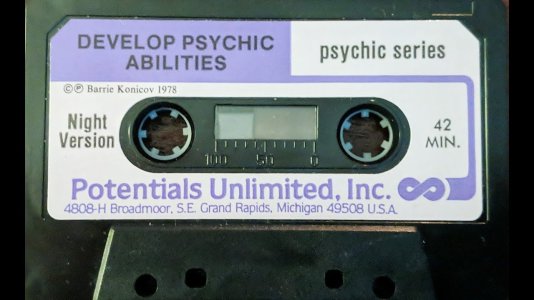
Kinda reminds of a particular specialty sub-genre of the '70s/'80s cassette tape industry; The Subliminal Help Tape. Where reaffirming messages were supposedly hidden in recordings of nature and non-descript piano music.

maxresdefault.jpg
 
Maybe I am missing something here but major casinos that the use in house music for decades is othing new🇦🇴The real change is targeting an asuiencdas he’d are a more similad
 
Last edited:
Everyone's missing the promo opportunity here. It isn't during the actual overnight hours.

This will probably be sold as a package that consists of x number of promo messages through the day when people are awake. "Nature sounds to help you sleep overnight sponsored by...."
 
Exactly. any billing they can get by sponsoring these nature sounds is a plus.

Signing off is a good way to have more transmitter issues. One reason stations opted for 24/7 was they found if you left the transmitter on the whole air chain was less stressed than if it was turned on and off daily.

It makes sense to be on the air when a WOEZ listener tunes in. If you're not there, they change stations. 24/7 is better

Music licensing won't change. Rates are based on market by station revenue. The nature recording are not likely licensed with conventional music licensing agencies but are home recordings or the station secures rights from the entity that recorded the, rain, surf or whatever. Signing off for hours when there is zero revenue does not change licensing fees.

I think this is a very unique idea and I look forward to hearing about how it works for them.
 
I think if you went back and looked at my comments that a certain station should be shut down, that station would qualify as a smaller, lower-power, non-group-owned, sub-market of a major market. In the example of Seattle/Tacoma, many of these AM stations have struggled for decades to stay afloat. Finally putting a bullet in them would at the least help reduce needless band congestion for a medium which has gone past the point of struggling to remain relevant, when it's pretty clear what the ultimate outcome will be.

As I've mentioned prior; since 1996 larger group owners like iHeart (formerly Clear Channel), Cumulus, Townsquare, Emmis, etc., purchased big blocks of stations across the country, many of them AM's. All the stations, AM and FM, are included as part of a group' total debt load when purchased. From a group corporate perspective, each group within the market was/is expected to provide a certain percentage of cash flow, and when acquired, that contribution included the AM stations based on their performance at that time. As we all have seen and for various reasons, AM stations in particular simply haven't seen any audience growth, and the existing audience is dying off, literally. And yet, the original debt load which includes the original purchase of the AM stations doesn't decrease at a lesser rate. A large group really don't want to go back to it's Board or lenders and ask to forgive big chunks of that debt tied to AM stations while they bolster their digital and streaming portions of the business to make up the difference. In the meantime, if the national sales side of the group can wrangle some regional or national 'paid/block' programming dollars to keep some cash flow tied to the lot of AM stations, then that's what one has to do. The alternative, is sell off the land under the AM transmitter site for a one time quick cash infusion at a higher multiple than a broker would value the AM station. That's a win.

Your question is totally valid, not rude at all. Always pleased to explain my comments because it might help someone understand how this business works.
Thank you for the very detailed explanation, Kelly. It seems many concepts from accounting apply in this scenario, as sunk costs are often perceived as a reason to maintain an unprofitable business operation. For the major radio companies that purchased these dying AM signals, shutting down would surely not be the optimal solution. I’m forgetting the concept that applies, but from a business perspective it also makes more sense (in certain situations) to maintain the unprofitable operation of one asset if it is included in a portfolio, because removing it from the portfolio will make the other assets appear weak.

Back to the radio perspective. I imagine you would say that it makes sense for KKNW to run brokered programming, as it supports the other operations of Hubbard on a signal that is at least usable. On the other hand, small class D signals with no audience may want to throw in the towel at this point.
 
Please understand brokered stations don't have to have an audience. The programmer creates the audience.

Brokered radio works about like this: consider a corner strip center with 4 designated retail spaces. The owner (radio station) leases the retail spaces to 4 different tenants (radio program people purchasing time from the station). When they sign the lease they build out the inside space to their liking and open up for business, paying a monthly fee for the retail space. The landlord or radio station does not provide the tenant's customers (radio listeners) or their product (programming). The owner (radio station) only provides a venue to reach the community for a price.

I sadly had to tell potential clients that I was not offering a price break because they said they could bring lots of listeners to the station. I said it didn't matter if you had one or a million listeners. Simply put I had to sell X number of hours monthly at my published rate to reach the figure my owner wanted each month. The trick is if you can get enough people to call you about buying time because other than calling programmers on other brokered stations (which rarely works), there is no way to prospect for clients. They have to call you.
 
Status
This thread has been closed due to inactivity. You can create a new thread to discuss this topic.


Back
Top Bottom