
There was an old radio promotions joke following the WKRP-who knew turkeys couldn't fly-bit. The joke was which was going to be the first station to try dropping frozen turkeys from a helicopter?Is there a joke about frozen turkeys? I only know about the WKRP episode with live turkeys(Oh, the humanity)!

-
Get involved.
We want your input!
Apply for Membership and join the conversations about everything related to broadcasting.
After we receive your registration, a moderator will review it. After your registration is approved, you will be permitted to post.
If you use a disposable or false email address, your registration will be rejected.
After your membership is approved, please take a minute to tell us a little bit about yourself.
https://www.radiodiscussions.com/forums/introduce-yourself.1088/
Thanks in advance and have fun!
RadioDiscussions Administrators
You are using an out of date browser. It may not display this or other websites correctly.
You should upgrade or use an alternative browser.
You should upgrade or use an alternative browser.
The Future - AM + Streaming only (no FM & HD)
- Thread starter kfbkfb
- Start date
- Status
- Not open for further replies.
That's assuming people will get off the ground clutching their phone and out of the fetal position long enough to read instructions on some device.Battery powered AM (&FM?) radios (using AA batteries) could be stockpiled by FEMA, writing on the radios would explain how to use them.
And who's going to be broadcasting to these giveaway radios? As BigA mentioned, there are no government owned radio stations other than NOAA Weather. Not every local station is staffed 24/7, especially in an emergency. We've seen examples of that time and time again.Radios could be dropped and/or passed out at food and water centers, depending on the situation, aircraft based or ground based transmitters could be used.
Uh, wireless network is already here. It's called cell and PCS networks. It's the same one's you think should be replaced by 100 year old AM radio.I'm thinking fairly long term - when all radio and TV stations are off the air and all of the transmitting towers have been dismantled and all communications (point-to-mass and 1:1) use a single national wireless broadband network.
Radio stations need power and staff to run them. Not all have generators, let alone with enough fuel to power them for potentially several days. And if there's no power to run gas/diesel/propane pumps, these stations can't get their generator tanks refueled.Anyway, considering that software continues to get more and more complex, it could be that a bored teenage hacker could take down part of the power grid and/or the (future) national broadband network for an extended period of time, and giving away emergency radios and maintaining a some means of transmitting to them seems like a necessary expense.

And who's going to be broadcasting to these giveaway radios? As BigA mentioned, there are no government owned radio stations other than NOAA Weather. Not every local station is staffed 24/7, especially in an emergency. We've seen examples of that time and time again.
To that point, I made some observations duirng last night's severe weather outbreak in my old stomping grounds.
As near I can tell, no radio stations in the fatal Louisville, IL to Spencer, IN tornado (some 100 miles) were providing any storm coverage at all.
I did hear an EAS alert go out over WCLS/Spencer-Bloomington. But the audio was garbled to the point of being nearly unintelligible.
I couldn't check WNDI/Sullivan, IN because they do not stream. WTYE-FM/Robinson, IL's stream was down when I checked, so perhaps I was too late and they had lost power or internet service -- they did have coverage this morning.

AM radio is just one of many tools in the tool kit to use for mass communications systems, an assembled-on-site moderate power AM transmitter (provided by FEMA) seems like it wouldn't be very efficient (transmitter site not properly prepared to provide the strongest possible signal), but it might be the only way to communicate emergency info (to free FEMA AM radios).
The temporary FEMA AM transmitter (possibly a design that could be transported and assembled/operated using a flatbed truck) could be operated by the National Guard as needed (maybe only a few hours per day).
Kirk Bayne
The temporary FEMA AM transmitter (possibly a design that could be transported and assembled/operated using a flatbed truck) could be operated by the National Guard as needed (maybe only a few hours per day).
Kirk Bayne

Dennis Quaid documentary 'Grid Down, Power Up' explores dangers of sudden electric grid failure
Film star Dennis Quaid joined "Jesse Watters Primetime" to tout his documentary on the catastrophic danger a power grid outage would have on the United States.
...a power grid outage that would send the United States "back to the 1880s."
($50 Billion could buy a lot of AM (&FM) portable battery powered radios
 )
)Kirk Bayne

No, it could not. An AM station needs a lot of tower to broadcast at all efficiently. If they used one of the "short" antennas, you would find that the coverage would be severely limited.The temporary FEMA AM transmitter (possibly a design that could be transported and assembled/operated using a flatbed truck) could be operated by the National Guard as needed (maybe only a few hours per day).
Also remember that a shorter tower only works well at the high end of the dial, but at those frequencies, coverage is very limited. 1 kw at 550 into a quarter wave tower covers as well as 50 kw at 1600 also into a quarter wave tower.
You can push power into a bad antenna with a bad ground, but it will not cover very much, and that is not the objective of an emergency service.
But the biggest issue is the lack of any kind of radio in 1/3 of all homes and residences. There is no way to get radios and enough batteries to people in an emergency, even if the government warehoused hundreds of thousands. The logistics of getting them out of storage, equipped with batteries and then distributed would take days. The critical time in most emergencies is immediately after a tornado, hurricane, earthquake, or major fire.
Indeed, if you want something at all portable, FM is a much better choice. The receivers are much smaller, the transmitter could easily be on wheels with a retractable mast (similar to the RPU trucks TV & radio broadcasters used to use)
But height is the key to FM. Unless the truck has a "retractable 300 foot tower" or something like that, it won't cover much of anything.Indeed, if you want something at all portable, FM is a much better choice. The receivers are much smaller, the transmitter could easily be on wheels with a retractable mast (similar to the RPU trucks TV & radio broadcasters used to use)
An RPU mast is perhaps 30 feet up, fully extended. With, let's say, a 1 kw to 2 kw transmitter that can be powered by a portable generator, you might cover a mile or so around. And even with a small tower and transmitter, you are talking about a sizable truck that may have access issues into the disaster zone.
But, just as the viability of this thread, what Kirk is suggesting amounts to dropping portable AM radios that don't exist, via drones onto people below. Adding to the increasingly bizarre fantasy; the drones will be flying via autonomous AI, will warn people below, and provide operational instructions via binaural speakers attached to the drones using quadraphonic audio mixed by Sony Labs.But the biggest issue is the lack of any kind of radio in 1/3 of all homes and residences. There is no way to get radios and enough batteries to people in an emergency, even if the government warehoused hundreds of thousands. The logistics of getting them out of storage, equipped with batteries and then distributed would take days. The critical time in most emergencies is immediately after a tornado, hurricane, earthquake, or major fire.
He still hasn't addressed the lack of government-owned radio stations, nor how even local public or commercial stations would be staffed 24/7 and ready to go on with emergency information at a moments notice. But why let details like that get in the way of a completely Loony Toons idea?
You forgot Dolby V2 5.1 audio...But, just as the viability of this thread, what Kirk is suggesting amounts to dropping portable AM radios that don't exist, via drones onto people below. Adding to the increasingly bizarre fantasy; the drones will be flying via autonomous AI, will warn people below, and provide operational instructions via binaural speakers attached to the drones using quadraphonic audio mixed by Sony Labs.
Napoleon apparently wanted HDTV on Elba, too.
Elmer Fudd has a Ph. D. in physics, so he and his assistant, Bugs, could whip something together.He still hasn't addressed the lack of government-owned radio stations, nor how even local public or commercial stations would be staffed 24/7 and ready to go on with emergency information at a moments notice. But why let details like that get in the way of a completely Loony Tunes idea?
I am tempted to go into moderator mode and say, "Th.. th... that's all, folks" to this thread.
If you're really interested in exploring this type of idea, which, as others have pointed out, has many flaws, there are other, more simple ways of doing something similar, with technologies and resources that are already in place and available.AM radio is just one of many tools in the tool kit to use for mass communications systems, an assembled-on-site moderate power AM transmitter (provided by FEMA) seems like it wouldn't be very efficient (transmitter site not properly prepared to provide the strongest possible signal), but it might be the only way to communicate emergency info (to free FEMA AM radios).
The temporary FEMA AM transmitter (possibly a design that could be transported and assembled/operated using a flatbed truck) could be operated by the National Guard as needed (maybe only a few hours per day).
Kirk Bayne
The idea of having small, battery-powered radios and transmitters ready for deployment in an emergency would mean that you'd need a ton of them staged every 20 or 30 miles so they could be deployed quickly, or there would potentially be a very long delay, possibly of several hours or a day of having them deployed and the transmitters set up if you only have, say, 5 or even 10 sets for the entire country. Keep in mind that, for metro areas, you'd need at least hundreds of thousands of radios. The logistics of dropping the radios is also difficult. Do you drop them into parking lots which means residents in a disaster-ravaged area somehow need to find a way to go to a distribution area to get them, or do you drop them randomly which means the risk of radios being dropped and caught in trees, landing in bodies of water or where they cannot be retrieved. You've then got to stock fresh batteries, then restock the end users with batteries after the first group dies, you must test all parts of all those systems at least annually, etc.
Alternatively, wind-up AM and FM radios already exist. I know, I have one and I used it during the last larger-scale natural disaster I was involved in. The thing can run on A/C power, batteries or you can just wind up a crank on the side and use it for hours. Mine also has a light, an emergency blinking light and can also charge my cell phone using the wind-up power. No batteries needed. You don't need to keep fresh batteries in stock, you don't need to replace batteries when they die. I got mine as a "gift" when I pledged to my NPR radio station. I was so impressed that I then bought additional wind-up radios from Amazon for friends and family.
So why not simply have everyone include a wind-up radio with their storm preparedness kit? If you want to go further, take the money the government would need to spend storing battery powered radios and the means to deploy them, and use that $$ to have an annual distribution day where you'd hand out a ton of these things in various cities and towns, especially in areas where tornadoes, hurricanes and similar are likely to affect residents. Or better yet, if people really want or need them, they can register on the internet and one will be sent to them if they've not already asked for one within a certain period of time.
Regarding transmitters, rather than having portable ones that would need to be assembled, along with inadequate portable towers in the field, instead just fund the use of existing stations with adequate transmitting facilities. So if a disaster hits in Atlanta, the government would have a contract in place saying they takeover whichever station(s) reach the most amount of people and the largest overage area(s) and voila! People tune to those stations using their wind-up radios.
Again, still lots of questions and things to be worked through, logistically, financially and otherwise, but some of these ideas I think are much simpler and more efficient than the original one proposed.
NOTE: I edited my original post in a few areas, as when I saw @DavidEduardo's comment about shutting this thread down and putting it out of it's misery, I quickly posted my comments, then went back and edited/updated.
Last edited:
'Why you cotton pickin', Lilly-liver'd, cowpoke! I dare youuu!I am tempted to go into moderator mode and say, "Th.. th... that's all, folks" to this thread.
(Yosemite Sam reference)
EMP would knock out power to those radio stations, too. Honestly, even a nanny state has no responsibilty to keep every last soul out in the boondocks aware of every detail of every emergency. There will be casualties. Accept it.^^^Dennis Quaid documentary 'Grid Down, Power Up' explores dangers of sudden electric grid failure
Film star Dennis Quaid joined "Jesse Watters Primetime" to tout his documentary on the catastrophic danger a power grid outage would have on the United States.www.foxnews.com
...a power grid outage that would send the United States "back to the 1880s."
($50 Billion could buy a lot of AM (&FM) portable battery powered radios
Kirk Bayne
IMO 1-2 miles in any direction would be adequate as a means of post-disaster communication. For example, two of the towns with significant damage in yesterday's tornados, Wynne AR and Sullivan IN would be completely covered if the transmitter was close to the center of town and the land is relatively flat.But height is the key to FM. Unless the truck has a "retractable 300 foot tower" or something like that, it won't cover much of anything.
An RPU mast is perhaps 30 feet up, fully extended. With, let's say, a 1 kw to 2 kw transmitter that can be powered by a portable generator, you might cover a mile or so around. And even with a small tower and transmitter, you are talking about a sizable truck that may have access issues into the disaster zone.
How many households have such a kit? I'll bet that if I surveyed my 20 closest neighbors, I might find two homes with some sort of "survival kit" with preserved food, batteries, a lamp, a knife, water treatment kit and such stuff.So why not simply have everyone include a wind-up radio with their storm preparedness kit?
Personally, I go for the "Puerto Rico Hurricane Survival Kit" (tm) which is two cases of Corona, at least 4 bottles of Don Q and plenty of bags of Doritos. If that does not hold you, the theory goes, you are likely dead already.
I have bought about 6 emergency radios, two of 'em with crank-operated power and one with solar. I can't remember where we "safely stored" any of them.If you want to go further, take the money the government would need to spend storing battery powered radios and the means to deploy them and use that to have an annual distribution day where you'd hand out a ton of these things in various cities and towns, especially in areas where tornadoes, hurricanes and similar are likely to affect residents.
They have done that, but few stations are staffed for emergency coverage. The only way that would work is if such stations could be fed automatically by an agency of the gov'ment if those folks could quickly get their act together (which we know they can't...)Regarding transmitters, why not have the government mandade, and fund, use of existing stations with adequate transmitting facilities?
And how would you get that truck with the generator, collapsible tower and studios and transmitter to the right location after a disaster closes roads or causes flooding or chemical hazards? What if the closest such gear is 100 or 200 miles away?IMO 1-2 miles in any direction would be adequate as a means of post-disaster communication. For example, two of the towns with significant damage in yesterday's tornados, Wynne AR and Sullivan IN would be completely covered if the transmitter was close to the center of town and the land is relatively flat.
You'd literally have to have one of these trucks in every county (several in large counties) and keep them maintained regularly as well as training and refreshing that training for staff. Logistics probability of success score = a large negative number.
You'd literally have to have one of these trucks in every county (several in large counties) and keep them maintained regularly as well as training and refreshing that training for staff. Logistics probability of success score = a large negative number.
And places like Wynne, Arkansas, and Rolling Fork, Mississippi would be at the very bottom of the priority list for that. Been to both. Wynne is struggling, Rolling Fork has barely a pulse.
Last week we saw, I think 3 "zombie threads" shut down in a single day between David and Frank. I was impressed. Maybe between this thread and the ones by the dude who's decided which companies should just take over which stations in a given market and what should be transmitted on each, if it's "God's will" or some such, we can top that number this weekend??I am tempted to go into moderator mode and say, "Th.. th... that's all, folks" to this thread.
Believe that's called: 'Race to the bottom'.Last week we saw, I think 3 "zombie threads" shut down in a single day between David and Frank. I was impressed. Maybe between this thread and the ones by the dude who's decided which companies should just take over which stations in a given market and what should be transmitted on each, if it's "God's will" or some such, we can top that number this weekend??
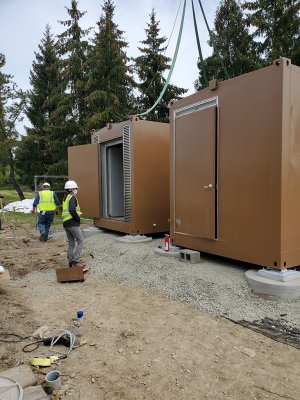
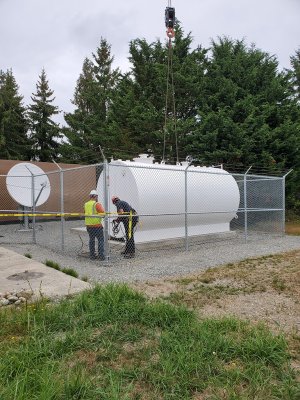
How about something like this?
Big 6000 Gallon Diesel tank
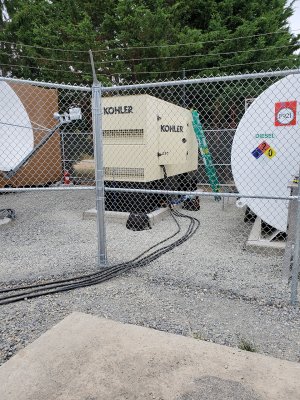
Generator to run your 50KW transmitter
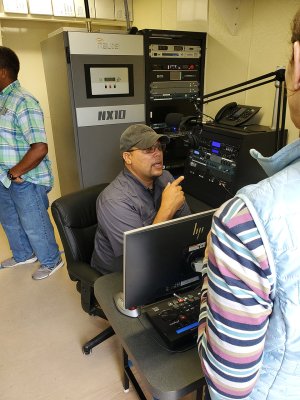
Self contained studio with 10KW transmitter in case the 50KW gets hurt. Satellite feed from FEMA to an ENDEC in the module with the transmitter/studio.
Complete with high tech security! OK I just wanted to include a picture of my dog.
For what its worth I have a hunch that some of this infrastructure may already be in place. I think the weakest link would be the humans that would have to run it. And maybe the fact that most are AM stations, just had to point that out before others do.
Big 6000 Gallon Diesel tank
Generator to run your 50KW transmitter
Self contained studio with 10KW transmitter in case the 50KW gets hurt. Satellite feed from FEMA to an ENDEC in the module with the transmitter/studio.
Complete with high tech security! OK I just wanted to include a picture of my dog.
For what its worth I have a hunch that some of this infrastructure may already be in place. I think the weakest link would be the humans that would have to run it. And maybe the fact that most are AM stations, just had to point that out before others do.
- Status
- Not open for further replies.